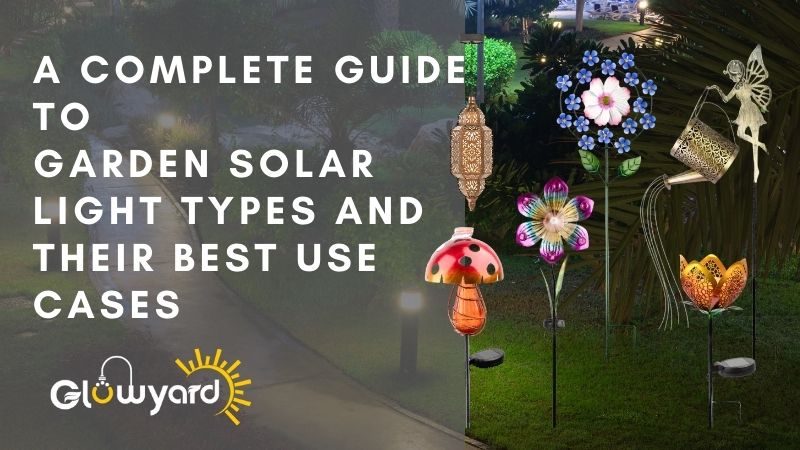
A Complete Guide to Garden Solar Light Types and Their Best Use Cases
Choosing the right garden solar light is not just about style. Different types are designed for different outdoor spaces and lighting purposes.
Some work best for pathways and borders, some are better for walls or fences, and others are mainly chosen for decorative atmosphere. If buyers choose the wrong type, they often end up with lighting that looks attractive in photos but does not fit the actual space.
This guide explains the most common types of garden solar lights, where they are usually used, and how to choose the right one for your project.
Why Does the Type of Garden Solar Light Matter?
Two solar lights can use the same basic technology and still perform very differently in real use.
The main reason is simple: shape, mounting method, panel position, lighting direction, and intended application all affect the result.
For example:
- a pathway light is usually designed for ground-level guidance
- a wall light is usually designed for mounted perimeter lighting
- a string light is usually designed for decorative ambiance
- a spotlight is usually designed for focused accent lighting
That is why “garden solar light” is only a broad category. The right choice depends on where the light will be used and what the buyer wants it to do.
Main Types of Garden Solar Lights
Below are some of the most common types found in outdoor residential and decorative lighting.
| Type | Typical Use | Main Strength |
|---|---|---|
| Stake Lights | Pathways, borders, flower beds | Easy placement and decorative guidance |
| Pathway Lights | Walkways, drive edges, garden paths | More structured path illumination |
| Wall-Mounted Lights | Fences, walls, gates | Space-saving mounted lighting |
| Hanging Solar Lights | Pergolas, hooks, trees, porches | Decorative suspended lighting |
| String Lights | Patios, events, outdoor seating | Atmosphere and visual warmth |
| Decorative Solar Lights | Garden accents, themed decor, ornaments | Appearance-first lighting |
| Spotlights | Plants, statues, facades | Focused accent lighting |
If you are still at the beginner stage and want the basic definition first, read What Are Garden Solar Lights?.
1. Stake Lights
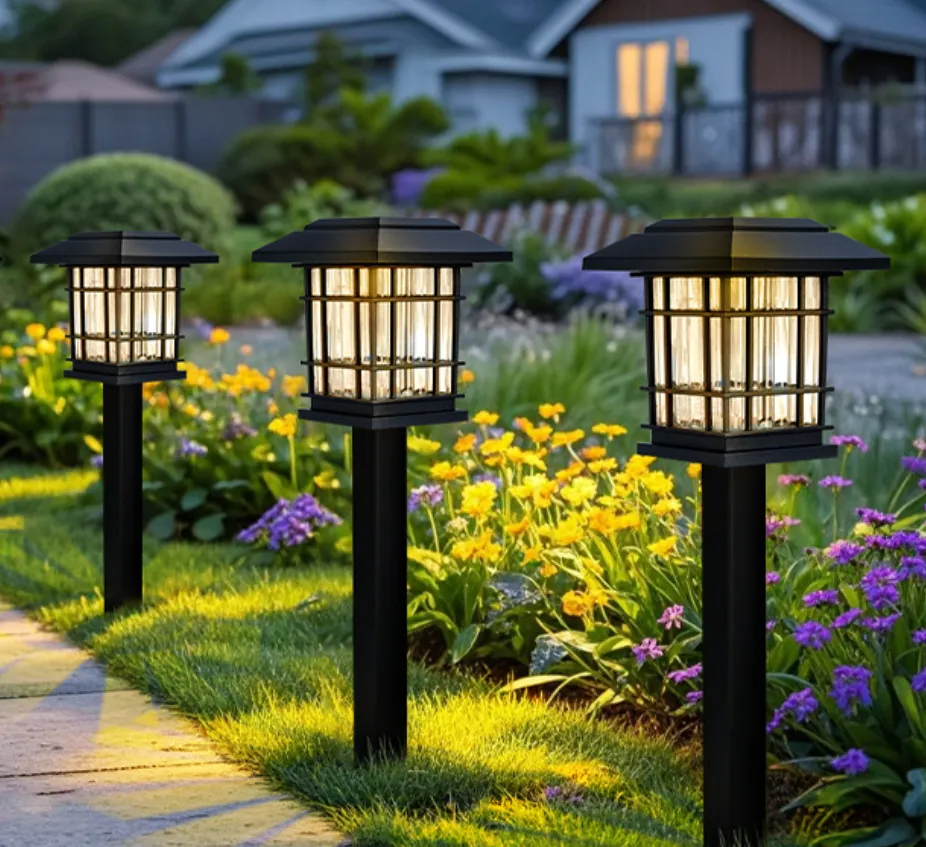
Stake lights are among the most common garden solar lights. They are inserted directly into the ground and are often used in flower beds, borders, and garden paths.
Best use cases
- outlining garden edges
- decorating flower beds
- creating a soft pathway effect
- seasonal garden decoration
Main advantages
- easy to install and reposition
- suitable for many decorative layouts
- available in many styles and materials
Watch-outs
- brightness is usually moderate rather than strong
- placement stability depends on soil condition
- heavy shade can reduce charging performance
Stake lights are often chosen when buyers want a flexible and visually friendly way to add solar lighting without permanent installation.
2. Pathway Lights
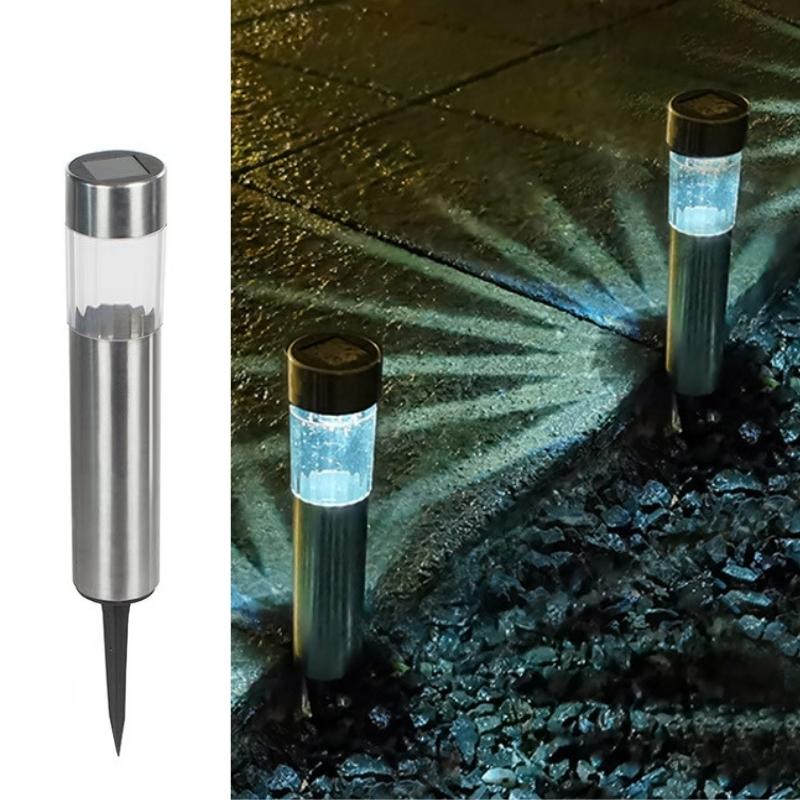
Pathway lights are designed more specifically for guiding movement along walkways, paths, and drive edges.
Compared with more decorative stake lights, pathway lights are usually selected when layout consistency matters more.
Best use cases
- walkways
- front garden paths
- drive edges
- entrances and connecting paths
Main advantages
- cleaner spacing and more regular layout
- better for directional guidance
- often easier to standardize across a project
Watch-outs
- not all pathway lights provide strong brightness
- cheap models may create uneven lighting
- design choices may be narrower than decorative categories
If the goal is to define a path clearly, pathway lights are often a better fit than purely decorative products.
3. Wall-Mounted Solar Lights
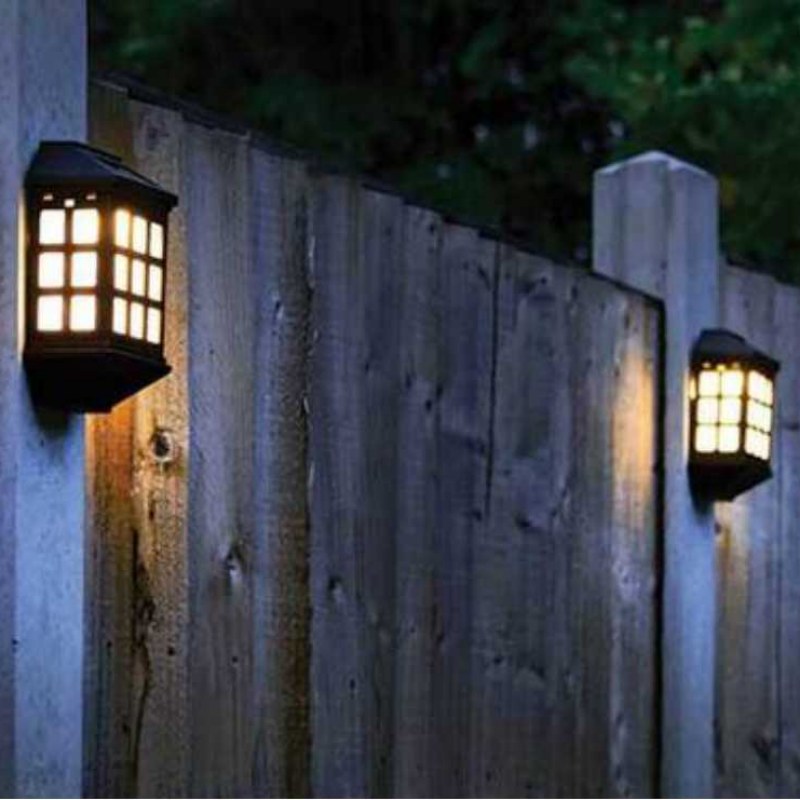
Wall-mounted solar lights are fixed onto walls, fences, posts, or gates rather than placed in the ground.
They are commonly used where buyers want lighting without taking up ground space.
Best use cases
- fences
- garden walls
- gate areas
- small perimeter zones
Main advantages
- saves floor or ground space
- can help light vertical surfaces or entry zones
- often easier to integrate into existing structures
Watch-outs
- performance depends heavily on sun exposure at the mounting point
- some decorative wall models prioritize style over output
- mounting surface and angle can affect charging efficiency
Wall-mounted lights are usually a practical choice when the installation area is limited or when the lighting needs to stay off the ground.
4. Hanging Solar Lights
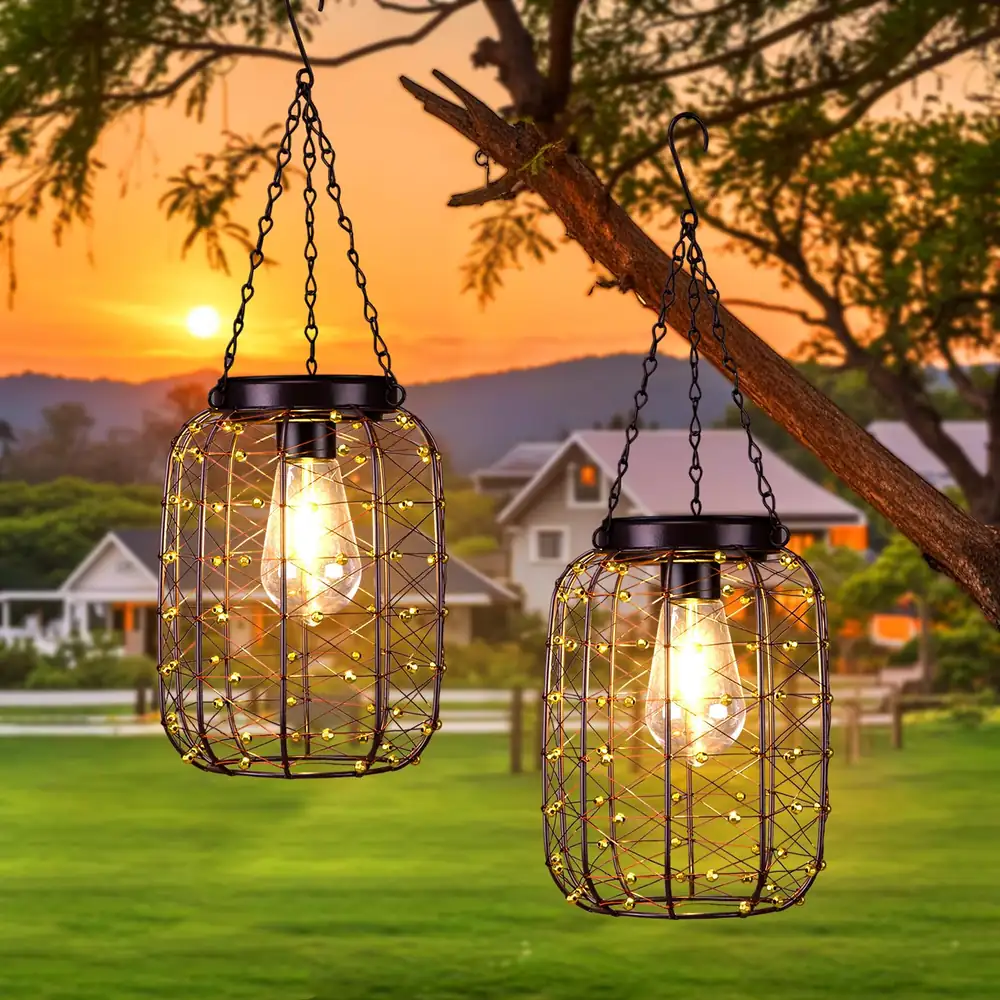
Hanging solar lights are typically suspended from hooks, pergolas, porches, branches, or decorative stands.
They are popular because they combine lighting with visual character.
Best use cases
- pergolas
- patio corners
- shepherd hooks
- porches
- garden feature areas
Main advantages
- strong decorative appeal
- easy to pair with themed or seasonal styling
- suitable for small focal points and atmosphere building
Watch-outs
- some models are more decorative than functional
- hanging position affects sunlight exposure
- wind movement can affect placement and visual stability
For many buyers, hanging solar lights are less about task lighting and more about creating a pleasant outdoor mood.
If you want a product-focused example, see Hanging Solar Lights.
5. String Lights

Solar string lights are widely used for ambiance, especially in patios, outdoor seating areas, events, and seasonal decoration.
They are one of the most atmosphere-driven categories in outdoor solar lighting.
Best use cases
- patios
- balconies
- garden seating areas
- holiday decoration
- casual outdoor gatherings
Main advantages
- strong decorative atmosphere
- easy visual impact
- suitable for soft, warm outdoor settings
Watch-outs
- usually not suitable for functional lighting needs
- charging performance depends on where the panel is placed
- lower-end products may suffer from weaker battery life or shorter runtime
String lights are best treated as decorative accent lighting rather than general outdoor illumination.
6. Decorative Solar Lights
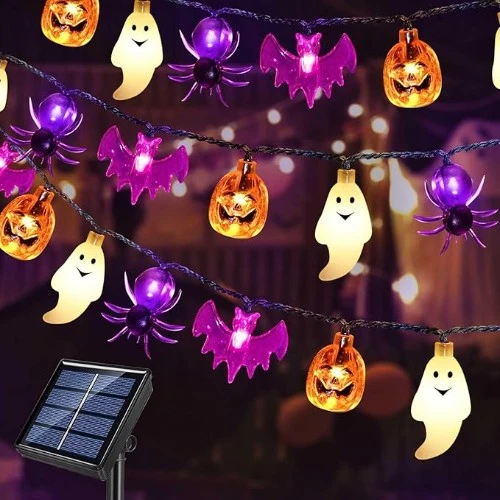
Decorative solar lights are products where design is a primary selling point. This category includes figurines, themed lights, floral styles, lantern-style products, and many other visually driven designs.
Best use cases
- ornamental garden corners
- themed seasonal displays
- flower beds
- gift-oriented outdoor decoration
- personality-driven garden styling
Main advantages
- high visual variety
- strong retail appeal
- suitable for style differentiation
Watch-outs
- decorative appearance does not always mean strong lighting performance
- materials and weather resistance vary widely
- some products are better as accent pieces than as daily-use lighting
This category is especially important for buyers focused on outdoor decoration rather than purely functional lighting.
If you want to browse a wider category example, see Decorative Garden Lights.
7. Spotlights
Solar spotlights are designed to direct light toward a specific object or area.
They are usually chosen when the goal is to highlight a feature rather than provide general garden atmosphere.
Best use cases
- statues
- plants and shrubs
- walls and facades
- focal-point landscaping
- signs or feature objects
Main advantages
- focused beam direction
- stronger accent effect
- useful for visual emphasis
Watch-outs
- not ideal for broad decorative coverage
- panel positioning matters a lot for consistent charging
- lower-quality products may underperform in runtime or brightness stability
Spotlights are often a better option when buyers want to make one part of the garden stand out.
How Should Buyers Choose the Right Type?
A simple way to choose is to start with the intended result.
Choose based on purpose
| If your goal is… | The better type is often… |
|---|---|
| Outline paths or borders | Stake lights / pathway lights |
| Add atmosphere to a seating area | Hanging lights / string lights |
| Use existing vertical surfaces | Wall-mounted lights |
| Highlight a feature object | Spotlights |
| Add visual personality to the garden | Decorative solar lights |
Then check these practical factors
- Sunlight availability — the panel must receive enough daylight
- Desired brightness — decorative lighting and functional lighting are not the same
- Mounting condition — ground, wall, fence, hook, or hanging point
- Weather exposure — rain, UV, and seasonal outdoor conditions matter
- Material and build quality — housing, battery, and sealing affect long-term performance
If waterproof performance is part of the buying decision, read IP44 vs IP65 vs IP67.
If material durability matters more, read Resin vs Iron vs Plastic vs Glass.
Which Types Usually Work Best for Retail and Bulk Orders?
From a product and sourcing perspective, some types are often easier to scale than others.
Common bulk-friendly categories
- stake lights
- pathway lights
- wall-mounted lights
- decorative lantern-style lights
- selected seasonal decorative styles
These categories are often easier to standardize in packaging, display, and product line planning.
Categories that need more style selection
- decorative figurines
- hanging statement pieces
- themed seasonal products
- novelty lighting with strong design dependence
These usually need more attention to market fit, display appeal, and style preference.
For buyers planning OEM or private-label development, the right category is not only about use case. It is also about retail positioning, packaging, and repeatability.
If that is your focus, you can continue with OEM vs ODM for Solar Garden Lights: Which Model Is Right for Your Business?.
Conclusion
Garden solar lights include several different product types, and each one is designed for a different outdoor purpose.
Stake lights and pathway lights are usually better for ground-level guidance.
Wall-mounted lights are better for vertical surfaces and perimeter areas.
Hanging lights and string lights are better for ambiance and decoration.
Spotlights are better for highlighting features.
Decorative solar lights are better when style matters as much as function.
The right choice depends less on what looks attractive in isolation and more on where the light will be used and what the buyer expects it to do.
If you want to decide whether solar lighting is worth the investment overall, read Are Solar Garden Lights Worth Buying?.


![do solar lights work in winter at cemeteries [2026 guide]](https://glowyard.com/wp-content/uploads/2026/03/Do-Solar-Lights-Work-in-Winter-at-Cemeteries-2026-Guide.webp)