
How Long Do Solar Batteries Last in 2026? (Real Lifespan, Degradation & ROI Guide)
When sourcing outdoor solar lights, one question matters more than most:
How long will the battery actually last in real use — not just on paper?
For distributors, importers, and project buyers, battery lifespan is not just a technical detail. It directly affects:
- replacement cycles
- warranty risk
- after-sales cost
- customer satisfaction
- total cost of ownership (TCO)
In 2026, battery technology has improved significantly — especially with LiFePO4 — but real-world lifespan still depends heavily on application conditions, usage patterns, and system design.
This guide focuses on what matters most:
- real lifespan vs datasheet claims
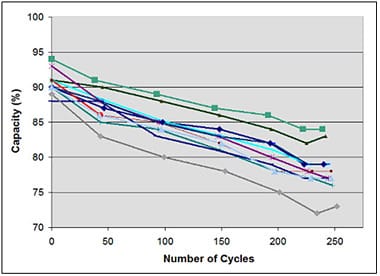
- how batteries degrade over time
- what shortens lifespan in outdoor use
- how to extend usable life
- and which battery delivers the best ROI
Real Lifespan: Years vs Cycles vs Reality
Battery lifespan is usually described in two ways:
- Years (calendar life) → how long before replacement
- Cycle life → how many charge/discharge cycles before capacity drops
Typical lifespan ranges in the 2026 market
| Battery Type | Typical Lifespan | Cycle Life | Real Outdoor Expectation |
|---|---|---|---|
| LiFePO4 | 8–12+ years | 3000–6000+ | 5–8 years |
| Lithium-ion (NMC/NCA) | 6–10 years | 1500–3000 | 3–6 years |
| NiMH | 2–4 years | 500–1000 | 1–3 years |
| Lead-acid | 2–5 years | 300–800 | 1–3 years |
The key point is simple:
Real outdoor lifespan is almost always shorter than datasheet lifespan.
Datasheets usually assume:
- stable temperature
- ideal charging
- controlled discharge
- clean laboratory conditions
Outdoor solar lights face something very different:
- summer heat
- winter cold
- cloudy periods
- shading
- storage cycles
- variable usage patterns
That is why buyers should treat datasheet life as a reference point, not a field guarantee.
Battery University also notes that elevated temperature and deeper cycling both accelerate aging in lithium batteries, which is one reason real-life results often come in below ideal lab numbers. See Battery University on prolonging lithium-based batteries.
Battery Lifespan Is Really a Degradation Story
Most batteries do not “suddenly die.”
They usually degrade gradually until performance drops below what the product or customer can accept.
What degradation looks like in the field
In real outdoor products, degradation usually shows up as:
- shorter nightly runtime
- earlier shutoff
- dimmer light output
- weaker rainy-day resilience
- larger performance gaps between older and newer units
This is why buyers often notice battery aging as a performance problem first, not as a complete battery failure.
A common industry benchmark is that batteries are treated as reaching end-of-life when usable capacity falls to around 80% of original capacity. NREL documents use that 80% threshold in battery aging work and planning models, which makes it a useful reference point for evaluating real outdoor lifespan. See NREL on battery end-of-life around 80% capacity.
Typical degradation pattern
A simplified field pattern often looks like this:
- Year 1 → close to original capacity
- Year 2 → early but manageable loss
- Year 3 → visible runtime reduction begins in weaker systems
- Year 4+ → complaints rise if the product started with little design margin
That does not mean every battery follows the same curve. It means buyers should evaluate lifespan as a degradation curve, not a fixed number.
If your concern is already runtime rather than lifespan, read our companion guide on how battery choice impacts night runtime.
What Shortens Battery Life in Outdoor Solar Lights?
Battery chemistry matters, but chemistry alone does not decide lifespan.
In outdoor solar lighting, lifespan is usually shortened by a combination of battery type, system matching, environment, and use pattern.
1. High temperature
Heat is one of the most common hidden causes of battery aging.
Hot climates, sealed housings, poor ventilation, and continuous summer exposure can all accelerate degradation.
Why it matters:
- chemical reactions speed up at higher temperature
- long-term capacity drops faster
- batteries lose useful life even if the light still “works”
This is one reason lower-cost batteries often disappoint faster in hot outdoor environments.
2. Deep discharge
Frequent deep discharge creates more stress on the battery.
That means:
- fewer total cycles
- faster capacity loss
- shorter useful product life
Battery University also highlights that partial discharge generally reduces stress and can help prolong lithium battery life, while deeper discharge and elevated temperature tend to shorten it. See Battery University on discharge depth and cycle life.
3. Inconsistent charging
Outdoor solar lights rarely receive perfect charging every day.
Real products deal with:
- cloudy weather
- tree shade
- wall shadow
- winter sun angle
- dust on the panel
That creates unstable charging patterns, which can shorten battery life over time.
This is especially important in year-round products where charging conditions are already weaker, such as cemetery installations under trees or outdoor lights in partially shaded decorative settings.
4. Poor system matching
Battery lifespan is not only about the battery cell.
It also depends on:
- panel size
- controller quality
- LED load
- charging profile
- cutoff strategy
- enclosure design
A poorly matched system can shorten battery life even when the battery chemistry itself is decent.
5. Cold weather and seasonal stress
Cold temperatures do not always damage a battery the same way heat does, but they can sharply reduce usable capacity and make weak systems look “aged” much earlier.
NREL has also noted that battery capacity at 0°C may fall significantly below nameplate conditions, which helps explain why winter complaints often appear before buyers think the battery is “old.” See NREL on low-temperature battery capacity impact.
Different Outdoor Products Need Different Lifespan Expectations
Not every outdoor solar light needs the same battery-life target.
A short-season decorative item does not need the same lifespan strategy as a year-round memorial product.
A practical way to think about it:
- decorative garden products → medium lifespan may be acceptable if style and price lead the sale
- cemetery and memorial products → long-term stability matters much more because failure becomes visible through winter, shade, and year-round exposure
- seasonal / holiday products → shorter lifespan may still be acceptable if the product is low-cost and short-cycle
That is why battery-life planning should always follow the application first.
For products that must stay dependable in year-round outdoor conditions, especially in remembrance settings, our grave & cemetery solar lights manufacturer page is the most natural application page behind this topic.
How to Extend Solar Battery Lifespan
Battery lifespan is not only something you buy.
It is also something you design for.
Practical ways to extend usable battery life
Use the right chemistry
LiFePO4 usually offers the strongest overall lifespan for outdoor solar products.
For a full chemistry comparison, see which battery is best for outdoor solar lights.
Design with margin
Avoid systems that are sized “just enough” under perfect conditions.
Better systems usually:
- avoid deep discharge more often
- maintain runtime longer
- age more gracefully
Control heat
Where possible:
- reduce sealed hot enclosures
- improve ventilation
- avoid unnecessary internal heat build-up
- consider product placement and housing design
Improve charging quality
Stable charging management helps extend life.
That includes:
- better controller logic
- proper cutoff thresholds
- avoiding chronic undercharge or over-discharge
Protect the structure
A battery can be shortened by structural weakness as much as by chemistry.
Moisture ingress, poor sealing, and unstable connections can all shorten effective life.
That is why battery-life planning should be judged together with waterproof design. For that side of the decision, see IP44 vs IP65 vs IP67.
Which Battery Usually Lasts Longest?
If the question is purely lifespan, the short answer is:
| Battery Type | Lifespan Ranking |
|---|---|
| LiFePO4 | Longest |
| Lithium-ion | Medium |
| NiMH | Shorter |
| Lead-acid / legacy chemistries | Weakest in compact outdoor use |
But battery life alone is not the whole decision.
If you are comparing battery selection rather than lifespan, the better place to go deeper is our guide to Lithium vs NiMH vs NiCd.
Lifespan vs Cost: Which Battery Has the Best ROI?
This is where many B2B decisions become clearer.
A cheaper battery does not always mean a cheaper product over time.
Simple ROI comparison
| Battery Type | Initial Cost | Lifespan | Replacement Frequency | Long-Term Cost |
|---|---|---|---|---|
| LiFePO4 | Higher | Long | Low | Best |
| Lithium-ion | Medium | Medium | Medium | Good |
| NiMH | Low | Short | High | Often worse over time |
The key insight is:
Cheaper batteries are often more expensive in the long run.
That is because they may create:
- more replacements
- more maintenance
- more complaints
- weaker perceived quality
- lower repeat business
For distributors and importers, battery ROI usually matters more than the lowest cell price.
What Buyers Should Ask Suppliers About Battery Lifespan
If battery life is important to your product line, do not stop at the word “lithium.”
Ask suppliers:
- what chemistry is used?
- what cycle-life range is realistic in outdoor use?
- what derating is expected in hot and cold conditions?
- what does the supplier consider end-of-life?
- what field data exists beyond the datasheet?
- what charge controller strategy is used?
- how much energy margin is built into the system?
The more a supplier can answer these questions with real testing and clear assumptions, the more credible the lifespan claim becomes.
Build Product Lines Around Lifespan, Not Just Battery Specs
From a manufacturing perspective, battery lifespan affects far more than the battery itself.
It influences:
- product positioning
- warranty strategy
- replacement expectations
- customer satisfaction
- long-term profitability
At Glowyard, we usually see the strongest results when buyers evaluate lifespan as part of the full outdoor-light system — not as an isolated battery number.
If you are building an outdoor solar product line and want longer battery life with more stable real-world performance, explore our broader capabilities as an outdoor lighting manufacturer.
Conclusion
Solar battery lifespan is not a fixed number.
It is the result of:
- battery chemistry
- temperature
- discharge depth
- charging conditions
- system design
- real outdoor exposure
In 2026, lithium-based batteries — especially LiFePO4 — still offer the best long-term lifespan for most outdoor solar lighting applications.
But the real advantage comes from something bigger:
designing for lifespan, not just choosing a battery
For B2B buyers, that means looking beyond datasheets and focusing on real degradation, realistic field conditions, and long-term ROI.


![do solar lights work in winter at cemeteries [2026 guide]](https://glowyard.com/wp-content/uploads/2026/03/Do-Solar-Lights-Work-in-Winter-at-Cemeteries-2026-Guide.webp)