Are Solar Garden Lights Worth Buying?
Yes — solar garden lights are worth buying when the installation area gets decent sunlight, the product quality is reliable, and the lighting goal is decorative or light functional use rather than strong security-style brightness.
For many buyers, they are a practical choice because they are easy to install, low in running cost, and visually flexible. But they are not automatically the best option for every garden, every budget, or every use case.
Whether they are truly worth the money depends on a few practical questions:
- how much sunlight the location gets
- how bright you expect the light to be
- whether the product is mainly decorative or more functional
- the quality of the panel, battery, housing, and sealing
This guide explains when solar garden lights are worth buying, when they are not, and how to avoid low-value purchases.
If you want the basic introduction first, read What Are Garden Solar Lights?.

The Short Answer: Are Solar Garden Lights Worth It?
Solar garden lights are usually worth buying when you want:
- simple installation without wiring
- decorative or pathway lighting
- lower ongoing energy cost
- a cleaner and easier outdoor setup
They are usually not the best choice when you want:
- very strong brightness for security-style lighting
- reliable performance in heavily shaded areas
- the cheapest possible product with no quality screening
- long runtime without checking panel and battery quality
So the real answer is not “solar lights are always worth buying.”
It is this:
Good solar garden lights are worth buying when the product quality and the use case match each other.
When Solar Garden Lights Are Worth Buying
Solar garden lights are usually a good purchase in the following situations.
1. You want decorative or pathway lighting
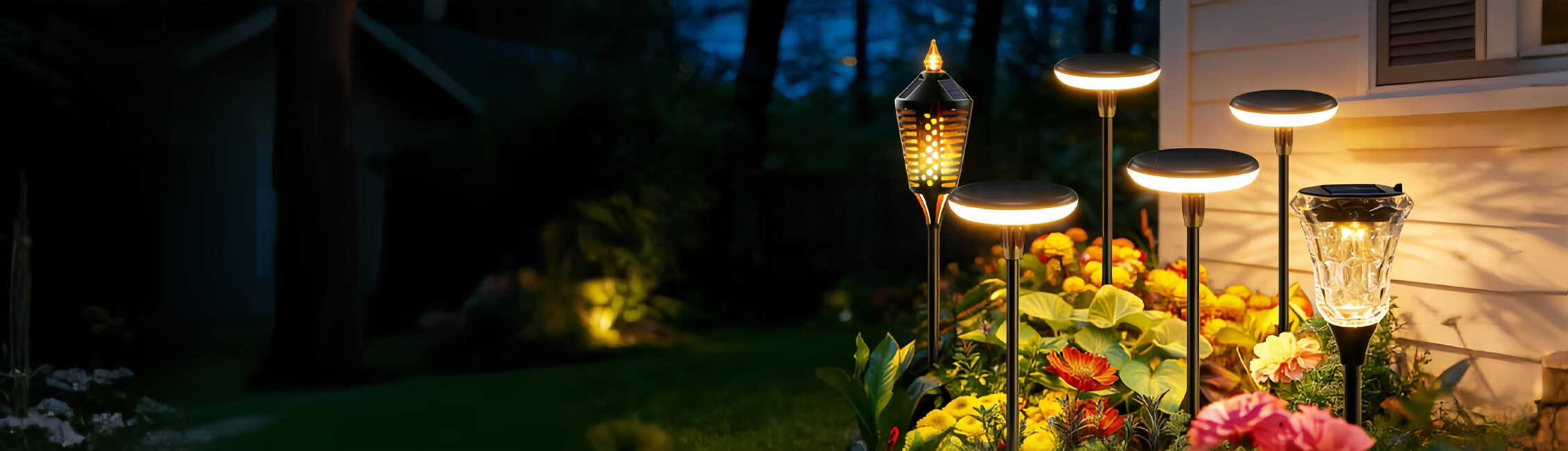
They are especially suitable for:
- pathways
- flower beds
- borders
- patios
- small accent areas
- decorative lantern or stake lighting
In these spaces, buyers often do not need extremely high brightness. What matters more is visual effect, convenience, and enough illumination to guide movement or create atmosphere.
2. Your garden gets decent sunlight
A solar light can only perform well if it charges properly during the day.
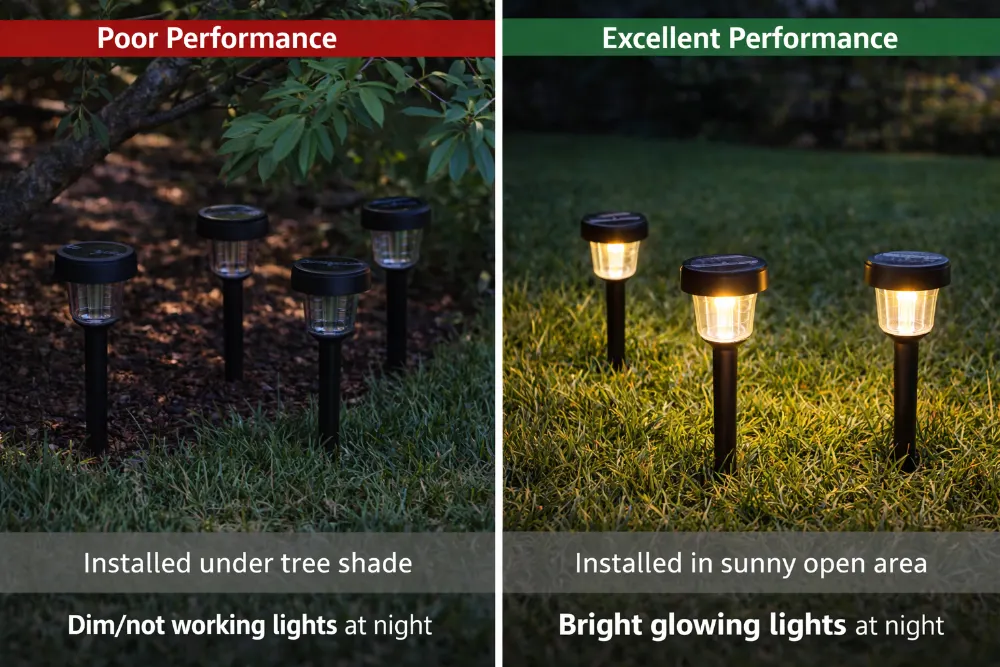
Open paths, patios, borders, and sunnier garden areas usually give better results than locations under dense trees, building shadow, or year-round limited daylight.
3. You want easier installation
One of the strongest reasons solar lights are worth buying is installation simplicity.
They usually avoid:
- cable routing
- trenching
- outdoor electrical setup
- fixed wiring work
For many homeowners, that convenience alone makes them attractive.
4. You want lower running cost over time
Good solar lights still cost money upfront, but they usually reduce electricity use later because they run on stored solar energy rather than drawing grid power every night.
That makes them especially appealing for buyers who want long-term decorative lighting without adding much operating cost.
5. You care about flexibility in layout
Many solar garden lights are easier to reposition than fixed wired lights.
That can be useful when:
- garden layouts change
- decorative displays are updated seasonally
- some areas need more light than others
- buyers want to test placement before committing
When Solar Garden Lights May Not Be the Best Choice
Solar lights are not automatically the best fit in every situation.
1. The garden is heavily shaded
If the installation area receives very limited sunlight, charging may be weak and night performance less reliable.
In that case, even a good-looking solar light may not feel worth the money.
2. You expect strong functional brightness
Many standard garden solar lights are designed for:
- decoration
- mood lighting
- border definition
- pathway guidance
They are often not designed to replace powerful wired floodlights or strong security lighting.
If the expectation is too high, the product may feel disappointing even if it is working normally.
3. The product quality is too low
Cheap solar lights often fail for predictable reasons:
- weak batteries
- poor sealing
- low charging efficiency
- fragile stakes or housings
- unrealistic runtime or brightness claims
In those cases, the issue is not that solar lights are a bad category.
The issue is that low-quality products are not worth replacing repeatedly.
4. Runtime matters, but the buyer does not check the components
A solar light may look attractive in photos and still be a poor purchase if:
- the panel is too weak
- the battery is poor quality
- the output is mismatched to the battery size
- the runtime claim is unrealistic
That is why value depends on both appearance and internal configuration.
Who Should Buy Solar Garden Lights — and Who Probably Shouldn’t?
Solar garden lights are often a good fit for buyers who:
- want decorative or pathway lighting
- have decent sun exposure in the installation area
- prefer simpler setup without wiring
- value lower running cost
- are willing to choose better components instead of the cheapest listing
They are often a poor fit for buyers who:
- need strong security-style brightness
- want highly reliable performance in deep shade
- expect all solar lights to perform like wired systems
- buy based only on low price and ignore specifications
This is often the clearest way to judge value:
not “Are solar lights good or bad?” but “Are they right for this specific need?”
What Determines Whether Solar Garden Lights Are Worth the Money?
The difference between “worth buying” and “not worth buying” usually comes down to product quality.
1. Solar panel quality
The panel affects how efficiently the light charges during the day.
In general:
- monocrystalline panels are usually more efficient
- polycrystalline panels are usually more affordable but less efficient
For a deeper comparison, see Monocrystalline vs Polycrystalline.
2. Battery type
The battery determines how well the light stores energy and how stable it performs over time.
Common battery types include:
- lithium-ion
- NiMH
- NiCd
Battery quality affects runtime, seasonal stability, and long-term value.
For more detail, see Lithium vs NiMH vs NiCd.
3. Brightness and runtime
A light may look attractive but still not be worth buying if:
- brightness is too weak for the intended use
- runtime is too short
- the claim sounds unrealistic for the panel and battery size
Buyers should ask:
- Is this mainly decorative lighting?
- Is it for path guidance or stronger visibility?
- How many hours of runtime are actually needed?
- Is the claimed performance believable?
4. Waterproofing and weather resistance
Outdoor lights need to survive rain, humidity, and seasonal weather changes.
A product is more likely to be worth the money if it has:
- a realistic IP rating
- better sealing
- outdoor-suitable materials
- lower risk of water ingress
For practical guidance, see IP44 vs IP65 vs IP67.
5. Material durability
A cheap housing can crack, fade, yellow, or become brittle outdoors. That quickly turns a low purchase price into poor value.
This is especially important for plastic components. If you want to understand that part better, see How to Improve the Durability of Plastic in Solar Garden Lights Under Outdoor Sun Exposure.
How to Choose Solar Garden Lights That Are Actually Worth Buying
A simple buying checklist helps avoid disappointment.
Look for:
- decent panel efficiency
- reliable battery type
- realistic runtime expectations
- waterproof design suited to the climate
- stronger housing and stake materials
- a design that matches the real use case
Be cautious of:
- very cheap lights with vague specifications
- unrealistic brightness claims
- listings with no battery or panel details
- decorative products sold as if they were strong functional lights
A solar light does not need to be the brightest product on the market to be worth buying.
It just needs to match the real job and be built with more reliable components.
If you are comparing different product forms, this guide may help too: A Complete Guide to Garden Solar Light Types and Their Best Use Cases.
Do Solar Garden Lights Need Much Maintenance?
One reason many buyers think solar lights are worth buying is that they are usually lower-maintenance than wired systems.
But “low maintenance” does not mean “no maintenance.”
Typical upkeep includes:
- cleaning the solar panel
- removing leaves, dust, or dirt that reduce charging
- replacing batteries after a period of use
- checking for water ingress or physical damage
- adjusting placement if seasonal shading changes
In other words, solar lights can be a low-maintenance option, but they still perform better when basic care is not ignored.
Final Verdict: Are Solar Garden Lights Worth Buying?
Yes — for many gardens, they are.
They are especially worth buying when:
- you want decorative or pathway lighting
- the installation area gets enough sun
- you choose better-quality components
- you value easy installation and lower running cost
They are less worth buying when:
- the location is too shaded
- you expect strong security lighting
- the product is cheap but poorly built
- runtime and durability are ignored before purchase
The best buying decision does not come from price alone.
It comes from matching the product to the real outdoor use case.
Explore Better Solar Garden Light Options
For buyers looking for decorative and light functional outdoor solar lighting with better design flexibility, Glowyard offers a wide range of Decorative Garden Lights.



![do solar lights work in winter at cemeteries [2026 guide]](https://glowyard.com/wp-content/uploads/2026/03/Do-Solar-Lights-Work-in-Winter-at-Cemeteries-2026-Guide.webp)