
Which Battery Is Best for Outdoor Solar Lights? Lithium vs NiMH vs NiCd
Choosing the right battery is one of the most important decisions in outdoor solar lighting.
For importers, distributors, and private-label buyers, battery chemistry does not only affect nightly runtime. It also influences:
- winter performance
- product lifespan
- return rates
- maintenance cost
- long-term customer satisfaction
- compliance risk in regulated markets
A solar light can look similar on the outside, but the battery inside often determines whether it still performs well after one season — or becomes an after-sales problem.
Quick answer
For most outdoor solar lights, lithium batteries are the best overall choice.
They usually offer:
- higher energy density
- longer cycle life
- lower self-discharge
- better long-term stability in outdoor conditions
NiMH can still work for lower-cost lines in mild climates.
NiCd is now mainly a legacy option because cadmium creates environmental and compliance concerns.
What Battery Types Are Used in Outdoor Solar Lights?
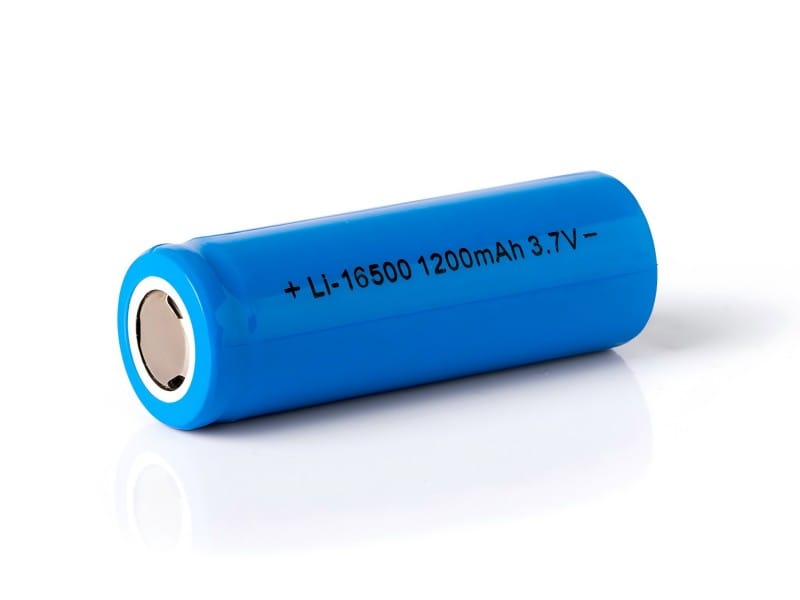
Most outdoor solar lights use one of these three rechargeable battery types:
- Lithium batteries
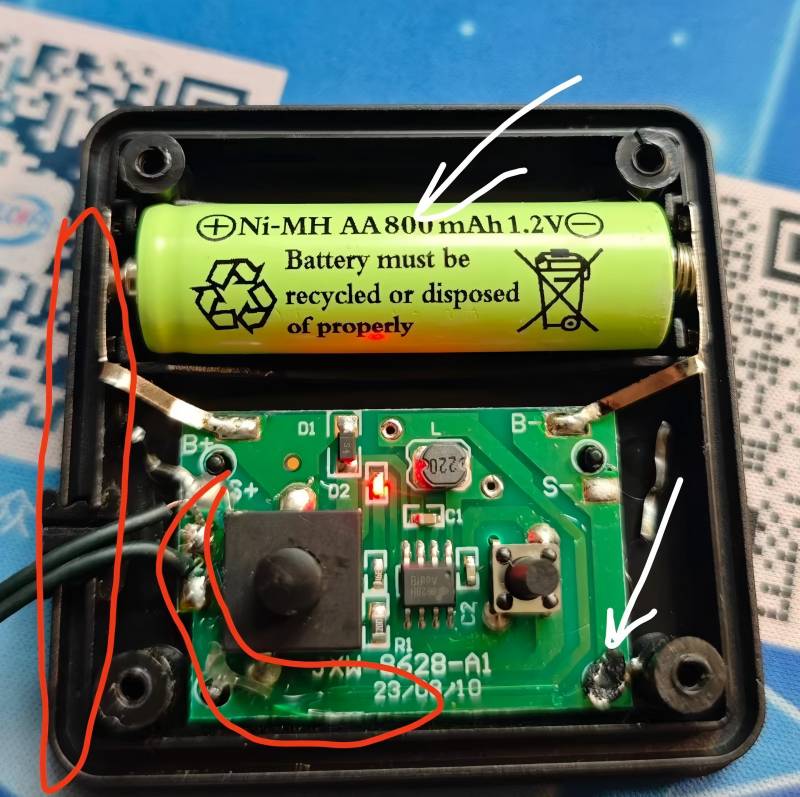
- Nickel-Metal Hydride (NiMH) batteries
- Nickel-Cadmium (NiCd) batteries
They differ in energy density, service life, cold-weather behavior, charge efficiency, and environmental profile.

At-a-glance comparison
| Battery Type | Main Strength | Main Weakness | Best Fit |
|---|---|---|---|
| Lithium | Long life, stable output, low self-discharge | Higher upfront cost | Mid-to-high-end outdoor lights |
| NiMH | Lower cost, mature supply chain | Shorter life, higher self-discharge | Entry-level outdoor lights |
| NiCd | Strong cold tolerance | Cadmium toxicity, compliance risk | Legacy replacement only |
Typical technical ranges
| Feature | Lithium | NiMH | NiCd |
|---|---|---|---|
| Energy density | 150–200 Wh/kg | 60–120 Wh/kg | 45–80 Wh/kg |
| Cycle life | 2,000–5,000 cycles | 500–1,000 cycles | 1,000–2,000 cycles |
| Self-discharge | Low | High | Medium |
| Charge efficiency | High | Medium | Medium |
| Cold-weather stability | Good | Moderate | Strong |
| Environmental profile | Best overall | Moderate | Weak |
If you are comparing outdoor-light system performance rather than battery chemistry alone, you can also read our guide on how battery choice impacts night runtime.
Lithium vs NiMH vs NiCd: What Matters in Real Buying Decisions?
Most buyers are not choosing a battery for laboratory conditions. They are choosing for real outdoor use.
That usually means asking these practical questions:
- Will the light still run properly in winter?
- Will brightness drop too quickly after a few months?
- Will storage and shipping reduce battery performance?
- Will this battery increase returns in my market?
- Will this choice still be acceptable under future compliance rules?
In other words, the real question is not simply “Which battery is cheaper?” but:
Which battery best fits the product position, the outdoor application, and the expected lifecycle?
Why Lithium Is Usually the Best Choice
For most outdoor solar lights, lithium batteries offer the best overall balance of runtime, lifespan, efficiency, and lower maintenance pressure.
1. Longer service life
Lithium batteries usually last much longer than NiMH in year-round outdoor use.
That matters for products such as:
- decorative garden lights
- patio and yard lights
- outdoor lanterns
- wall-mounted solar lights
- memorial and cemetery lights
- pathway and accent lighting
A longer service life reduces replacement frequency and protects margins over time.
For decorative products in particular, battery choice affects not only runtime but also how long the product keeps a stable appearance and lighting effect across multiple outdoor seasons. That is one reason lithium is often the safer choice for decorative garden lights.
2. More stable brightness
Lithium batteries generally maintain a more stable output voltage during discharge.
In real use, that often means:
- less visible dimming early in the night
- more consistent LED brightness
- more predictable performance for end users
This is especially important in products sold on appearance and reliability, not just basic illumination.
3. Better fit for compact product design
Higher energy density means lithium can store more energy in less space.
That gives more flexibility for:
- slim outdoor lanterns
- compact decorative garden lights
- smaller wall lights
- figurine lights
- cross and memorial lights
For decorative or space-limited designs, this is a real product-development advantage.
4. Lower self-discharge
Lithium batteries also lose less charge during storage.
That helps when products face:
- long sea freight
- warehouse storage
- seasonal inventory cycles
- slower retail turnover
For B2B buyers, this can translate into fewer dead-on-arrival complaints and more stable shelf performance.
When NiMH Can Still Be a Practical Choice
NiMH is no longer the strongest all-round option, but it can still make sense in some outdoor-light programs.
NiMH can still work when:
- the target retail price is very cost-sensitive
- the product line is entry-level
- the climate is relatively mild
- the replacement cycle is shorter
- the buyer accepts more performance variation over time
Typical use cases
NiMH may still be acceptable for:
- low-cost decorative garden lights
- basic retail stake lights
- short-lifecycle product lines
- selected seasonal or holiday outdoor-light programs
In other words, NiMH is not “wrong” by default. It is simply a weaker fit when the product is expected to stay outdoors year-round or perform reliably through colder seasons.
If your target market includes winter use or shaded installations, our related articles on do solar lights work in winter at cemeteries? and how to choose solar lights for cemeteries with trees, shade, or limited sunlight offer a more application-specific view.
Why NiCd Is Now Hard to Recommend
NiCd batteries used to be common in older solar products because they tolerate cold relatively well and charge quickly.
But for most new outdoor-light projects, they are hard to justify today.
What NiCd still does reasonably well
- handles low temperatures better than NiMH
- supports relatively fast charging
- has decent cycle life in some legacy applications
Why most buyers should avoid it
The bigger problem is no longer just performance. It is environmental and compliance risk.
Cadmium is widely recognized as a hazardous substance, and the WHO notes that cadmium exposure can affect the kidneys, skeletal system, and respiratory system. In parallel, battery regulation in Europe continues moving toward stronger sustainability, traceability, and waste-management requirements. That broader compliance direction makes NiCd increasingly difficult to defend in modern outdoor-light development.
Research also supports the idea that NiMH already carries a heavier environmental burden than lithium-ion in several life-cycle categories, which makes NiCd even harder to position as a future-proof choice. See Mahmud et al. (2019) for the lithium-ion vs NiMH comparison.
For most buyers, NiCd is best treated as:
- a legacy battery type
- a replacement-only option
- not the preferred choice for new product development
How These Batteries Behave in Outdoor Conditions
Outdoor solar lights rarely operate in ideal conditions all year.
They deal with:
- lower winter temperatures
- unstable charging from weaker sunlight
- seasonal storage
- moisture and outdoor exposure
- varying customer usage habits
That is why battery chemistry matters so much beyond the spec sheet.
Cold weather and runtime
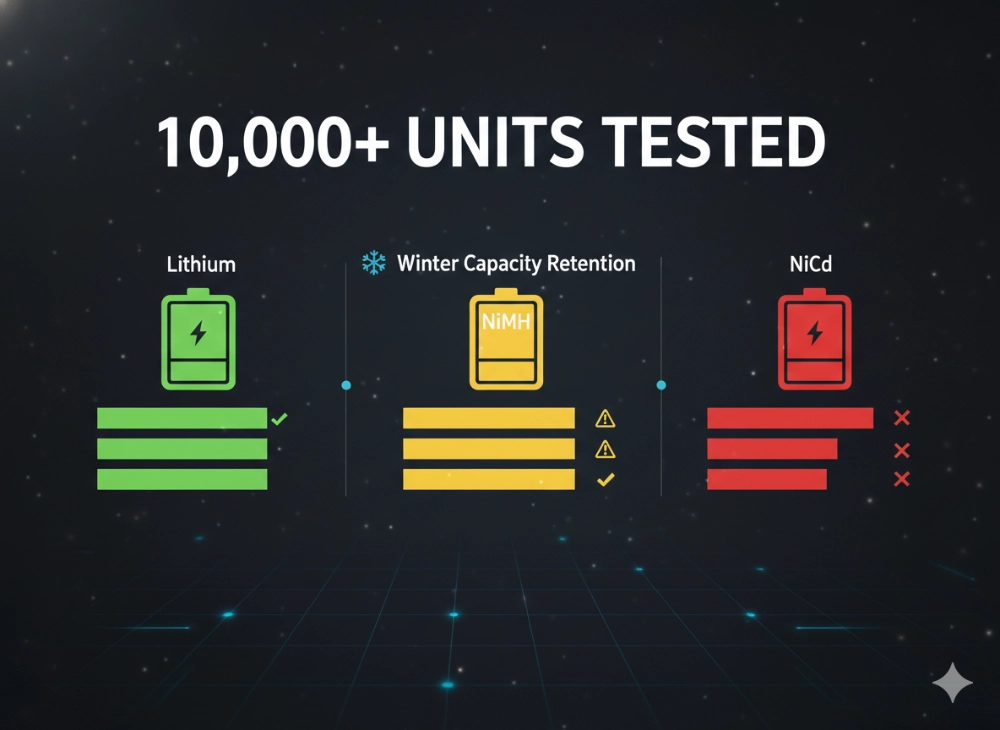
As temperatures drop, battery capacity and discharge efficiency also drop.
In practice:
- NiMH tends to lose capacity more visibly in cold weather
- standard Li-ion can still lose runtime in winter, but often remains more stable
- LiFePO4 is usually more stable over long outdoor use and tends to degrade more slowly
That is one reason lithium is often preferred for year-round outdoor lighting, especially in products where consistent nightly runtime matters. This broader pattern is also consistent with Moreno et al. (2017), which compared Li-ion and NiMH behavior under isolated photovoltaic charging conditions.
If battery-related runtime problems are already affecting product performance, our article on 4 most common battery issues in solar garden lights is a useful troubleshooting companion.
In plain language
If your customer expects the light to:
- keep working through winter
- maintain a more consistent brightness curve
- survive multiple seasons outdoors
then lithium is usually the safer decision.
If your product is mainly competing on a low selling price and a shorter lifecycle is acceptable, NiMH can still be workable.
Which Battery Is Best for Different Outdoor Light Applications?
Instead of treating all outdoor lights as one category, it is more useful to look at battery choice by application priority.
1. Decorative garden lights
Best fit: Lithium; NiMH only for budget lines
For decorative garden and patio products, battery choice affects more than runtime. It also influences how long the product continues to look reliable and visually attractive after one or two outdoor seasons.
Lithium is usually the stronger choice for better brightness stability, lower self-discharge, and more compact product design. NiMH may still fit lower-cost lines, but it is more likely to show earlier performance decline.
If your focus is decorative assortment planning, decorative garden lights is the most natural product-direction page behind this topic.
Battery choice has a big impact on runtime, maintenance, and long-term value. For the broader buying decision, see our guide on whether solar garden lights are worth buying.
2. Memorial and cemetery lights
Best fit: Lithium
For cemetery and memorial products, the battery decision is often less about shaving a small amount off cost and more about avoiding early failure under winter weather, shade, and year-round exposure.
That makes long-term stability, slower degradation, and better cold-weather behavior more important than the lowest possible battery cost. If this is one of your core product directions, grave & cemetery solar lights is the clearest manufacturer page connected to this decision, and you can also compare the broader product logic in our guide to solar vs battery vs electric memorial lights. For lantern projects that need continuous-light operation, USB charging or 18650 battery capacity, explore our solar modules for grave lanterns.
3. Seasonal holiday outdoor lights
Best fit: NiMH or Lithium, depending on product level
Holiday and seasonal products do not always need the same long-term expectations as year-round outdoor lights.
If the product is lower-cost and sold for short-season use, NiMH may still be workable. But for more premium seasonal lines — especially where returns during peak season are costly — lithium still offers a safer performance margin.
4. Pathway and landscape lighting
Best fit: Lithium
Pathway and landscape products still benefit from lithium, especially when buyers want stronger consistency, fewer replacements, and better long-term outdoor stability.
But in your current product and content structure, this is a supporting application here rather than the main focus.
5. Wall lights and outdoor lanterns
Best fit: Lithium
These products are often positioned as more durable or more premium. A more stable battery supports that positioning and helps reduce early complaints linked to visible dimming or shorter-than-expected runtime.
Environmental Impact and Compliance
Environmental concerns are no longer optional background information for battery selection. They increasingly shape how products are sourced, sold, and accepted in regulated markets.
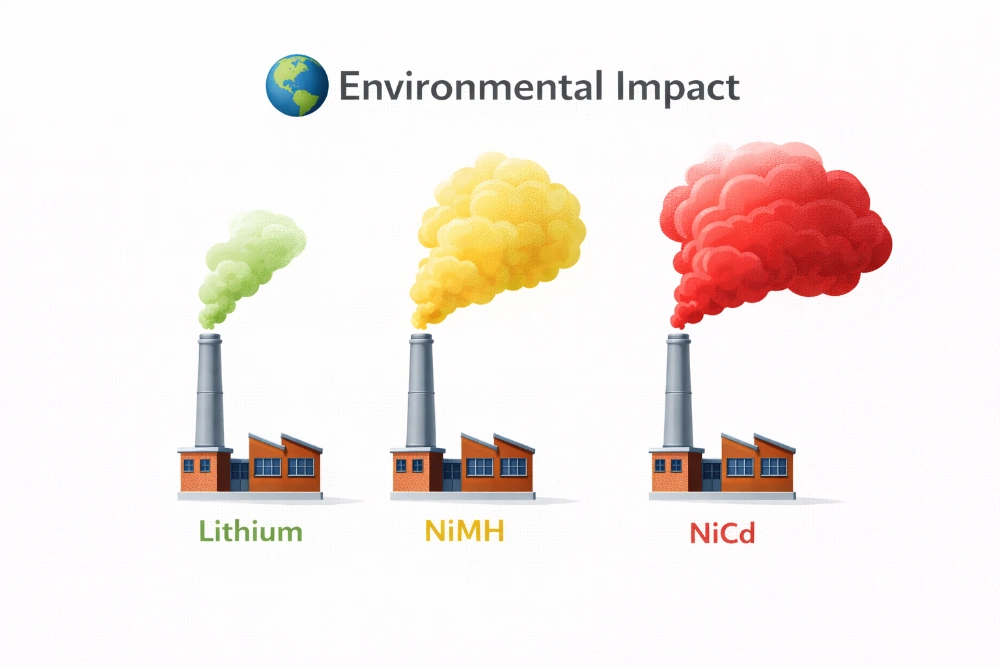
Why this matters for B2B buyers
If you sell into Europe or other compliance-sensitive markets, battery selection affects more than internal product performance.
It can also affect:
- material declarations
- customer audits
- sustainability messaging
- product-market fit in future tenders
- end-of-life handling expectations
Practical takeaway
For most outdoor-light programs:
- Lithium is easier to defend on long-term performance and environmental positioning
- NiMH is acceptable mainly where cost pressure dominates
- NiCd creates too much downside for most new projects
If compliance is part of your product development workflow, you can also cross-link naturally to Do Outdoor Lights Need RoHS Certification?.
What Buyers Should Check Before Choosing a Battery
A product sheet that only says “rechargeable battery included” is not enough.
For B2B sourcing, these are the details worth checking.
Check the real battery chemistry
Ask whether the product uses:
- standard Li-ion
- LiFePO4
- NiMH
- or an older NiCd system
Do not rely on vague wording.
Check expected cycle life
The battery chemistry may sound good, but real service life still depends on the full product system.
Check low-temperature behavior
If the product is intended for winter use, ask for test data or field validation under lower temperatures.
Check storage performance
This matters for importers dealing with:
- longer shipping cycles
- warehouse storage
- seasonal inventory
Check transport and safety documents
For lithium batteries, transport and safety documentation should not be ignored. Buyers should expect relevant paperwork tied to transport and battery safety requirements, such as UN 38.3-related lithium battery test summaries and documentation linked to IEC 62133-2.
Check waterproof system design too
Even the right battery can underperform if the enclosure, sealing, and charging design are weak. Battery choice should be judged together with the full outdoor-light structure. That is why a side link to IP44 vs IP65 vs IP67 is also natural in this article.
How the Right Battery Choice Helps You Build a More Reliable Product Line
From a factory perspective, battery choice affects far more than a single spec line.
It influences:
- product structure
- PCB matching
- battery compartment size
- winter runtime stability
- replacement frequency
- final customer perception after one season of use
At Glowyard, we see battery selection as part of the whole outdoor-light system, not an isolated component. For buyers developing or sourcing outdoor solar lights, choosing the right chemistry early usually prevents many of the problems that only appear later in real market use.
As an outdoor lighting manufacturer, we usually see the strongest results when battery choice is aligned with the real application first — especially for decorative garden assortments and year-round cemetery products — rather than chosen only by headline capacity or the lowest upfront price.
Conclusion
For most outdoor solar lights, lithium is now the strongest overall choice.
NiMH still has value in cost-driven programs, but it is usually no longer the best long-term option for year-round outdoor use. NiCd, while historically important, has become a legacy battery type that brings more environmental and compliance risk than most buyers should accept.
If your goal is to build a more reliable outdoor-light range — especially across decorative garden products, memorial and cemetery lines, and selected higher-value seasonal assortments — lithium is usually the safer and more scalable battery strategy.
Related Reading
- How battery choice impacts night runtime
- 4 Most Common Battery Issues in Solar Garden Lights
- Do Solar Lights Work in Winter at Cemeteries?
- How To Choose Solar Lights for Cemeteries with Trees, Shade, or Limited Sunlight?
- Solar vs Battery vs Electric Memorial Lights
- Do Outdoor Lights Need RoHS Certification?
- IP44 vs IP65 vs IP67


![do solar lights work in winter at cemeteries [2026 guide]](https://glowyard.com/wp-content/uploads/2026/03/Do-Solar-Lights-Work-in-Winter-at-Cemeteries-2026-Guide.webp)