








2026 lastest Full Product Catalogue
Please Click the button, after Filling in your Email and information, the file will be send within 24 hours .
-
 Functional Solar Lights
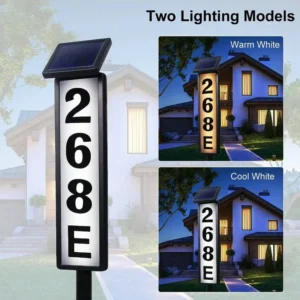
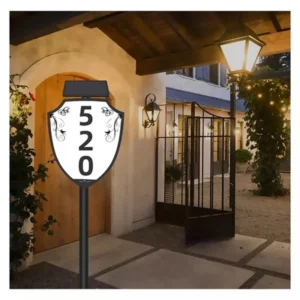
SM221105 Solar Address Stake Light with House Numbers
-
 Functional Solar Lights
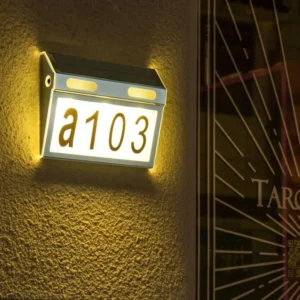
SM221459 House Number Solar Stake Light
-
 Functional Solar Lights
SM23498 PP Plastic Solar Wall Light House Number Sign
Wholesale House Number Solar Lights: Complete B2B Buyer Guide
If you’re sourcing wholesale house number solar lights for hardware stores, home improvement retailers, real estate supply companies, or online marketplaces, this guide will help you evaluate designs, materials, certifications, and factory capabilities before placing bulk orders. House number solar lights serve a dual purposeproviding essential address identification for emergency services and visitors while offering energy-efficient illumination without electrical wiring. As a wholesale buyer, understanding the functional requirements, durability standards, visibility specifications, and installation considerations for house number lights is essential to ensure product reliability, customer satisfaction, and compliance with local addressing regulations in competitive home improvement markets.
Category Summary
Wholesale house number solar lights are functional outdoor lighting products that combine address identification with solar-powered illumination. This category includes wall-mounted plaques with illuminated numbers, stake-mounted address signs for driveways or lawns, and modular number systems that allow customization. Bulk buyers typically focus on visibility (brightness, number size, contrast), durability (weather-resistant materials, fade-resistant numbers), and ease of installation (mounting hardware, adjustability). These lights are ideal for retailers targeting homeowners, property managers, real estate agents, and contractors. When sourcing in bulk, pay attention to number legibility from street distance (typically 50-100 feet), compliance with local addressing ordinances, mounting versatility (wall, post, or stake), and solar performance in various orientations (not all installations face south).
What Will You Learn in This Guide?
- What Are Wholesale House Number Solar Lights and Why Are They Popular in Wholesale Markets?
- What Types and Designs Sell Best for Bulk Orders?
- What Materials and Manufacturing Processes Are Used?
- What Quality Standards and Certifications Matter for Wholesale Buyers?
- What Is the Market Demand and Customer Preferences?
- What Are the Common Applications?
- What OEM/ODM Customization Options Are Available for Wholesale House Number Solar Lights?
- How to Source Wholesale House Number Solar Lights from China Manufacturers and Suppliers?
- What Mistakes Can Cost You Money When Buying House Number Solar Lights in Bulk?
- Who Is Glowyard Lighting and What Do We Offer?
- Frequently Asked Questions
What Are Wholesale House Number Solar Lights and Why Are They Popular in Wholesale Markets?
Wholesale house number solar lights are functional outdoor lighting fixtures designed to display property addresses while providing illumination for visibility during nighttime hours. These products integrate solar panels, rechargeable batteries, LED light sources, and address number displays into units that can be mounted on walls, posts, or stakes. Unlike purely decorative solar lights, house number lights serve a critical practical functionensuring that addresses are visible to emergency services, delivery drivers, and visitors after dark.
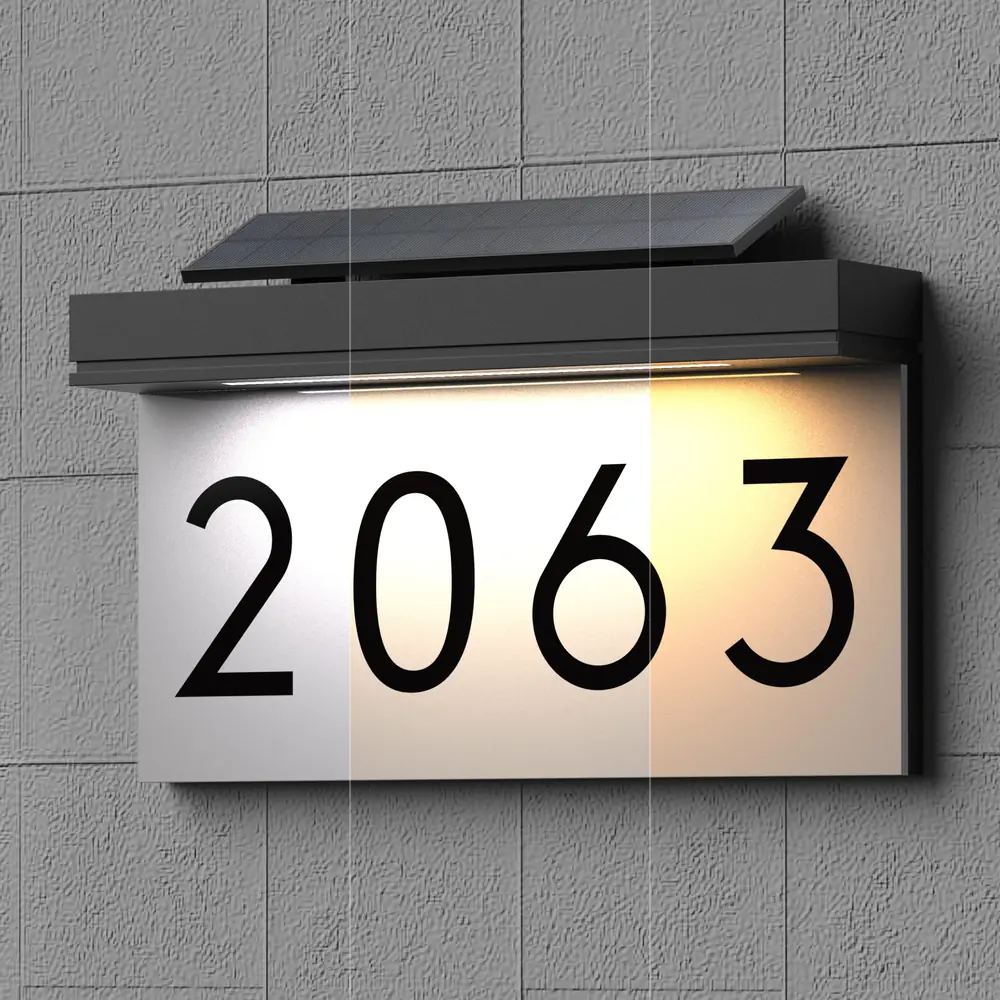
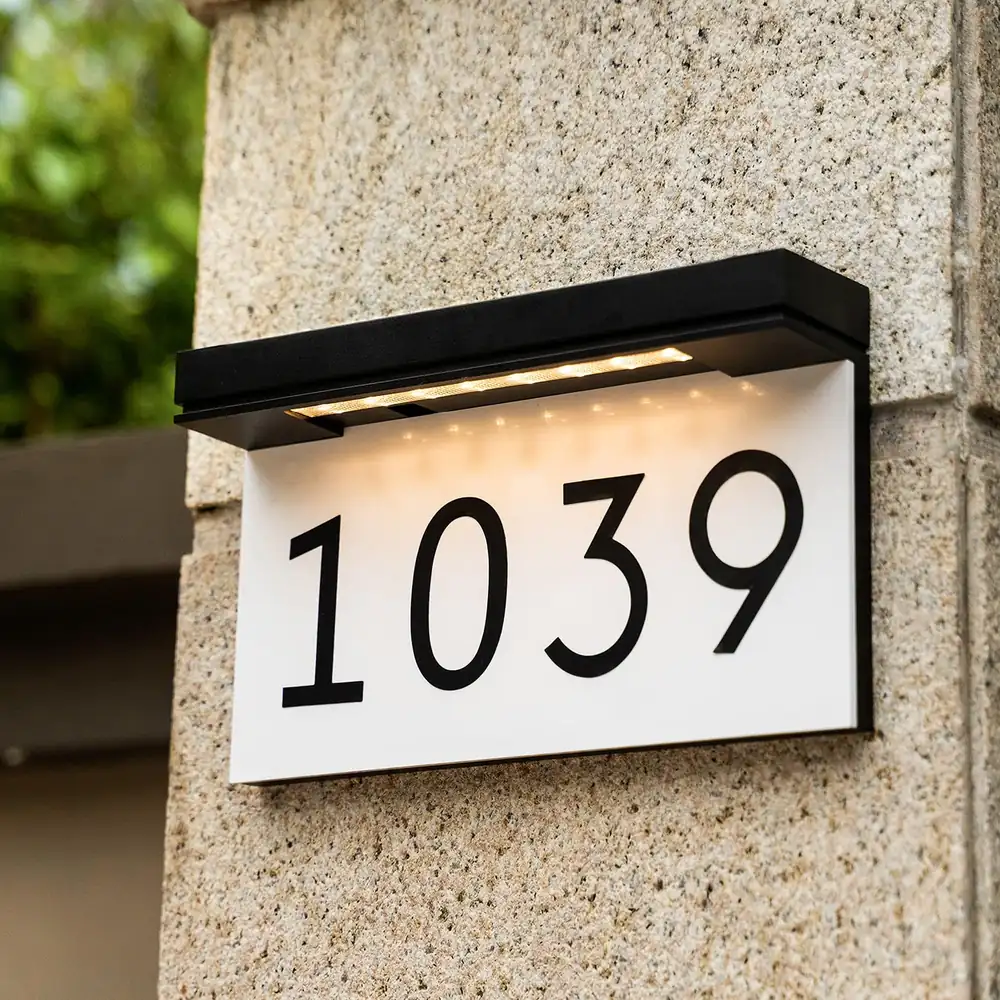
The popularity of house number solar lights in wholesale markets is driven by several factors. First, they address a genuine safety and convenience need. Many residential properties, particularly in suburban or rural areas, lack adequate address lighting, making it difficult for emergency responders to locate homes quickly. House number solar lights provide a simple, affordable solution that requires no electrical wiring or ongoing electricity costs. Second, the solar-powered aspect eliminates installation complexity and ongoing operating expenses, making these lights attractive to homeowners who want to improve address visibility without hiring electricians or increasing utility bills.
For wholesale buyers, house number solar lights offer strong market potential due to their universal applicabilityvirtually every residential property needs address identification. Unlike decorative garden lights that appeal to specific aesthetic preferences, house number lights serve a functional need that transcends style considerations. This broad market appeal makes them suitable for mainstream retail channels such as hardware stores, home improvement centers, and online marketplaces.
From a B2B perspective, house number lights are easier to market based on functional benefits (visibility, safety, convenience) rather than subjective aesthetic appeal. Retailers can position these products as practical home improvements that enhance property safety and curb appeal. The products also appeal to specific customer segments beyond individual homeowners, including property managers (who need to ensure address visibility across multiple properties), real estate agents (who want to improve property presentation), and contractors (who install address lighting as part of home improvement projects).
The regulatory aspect also drives demand. Many municipalities have ordinances requiring visible address numbers for emergency response purposes. While most regulations do not specifically require illuminated numbers, the practical need for nighttime visibility creates a natural market for solar-powered address lighting. Wholesale buyers can leverage this regulatory context in their marketing, positioning house number solar lights as a compliance-friendly solution that exceeds basic requirements.
For distributors and importers, house number solar lights represent a product category with steady, year-round demand (unlike seasonal decorative lights) and repeat purchase potential (as customers may need multiple units for different properties or replace aging units). The combination of functional necessity, solar technology, and ease of installation creates a compelling value proposition that resonates with practical-minded consumers and professional buyers alike.
What Types and Designs Sell Best for Bulk Orders?
When sourcing bulk house number solar lights, understanding which design configurations perform best in different market segments is crucial for inventory planning and sales optimization. The house number solar light category encompasses several distinct design types, each suited to specific installation scenarios and customer preferences.
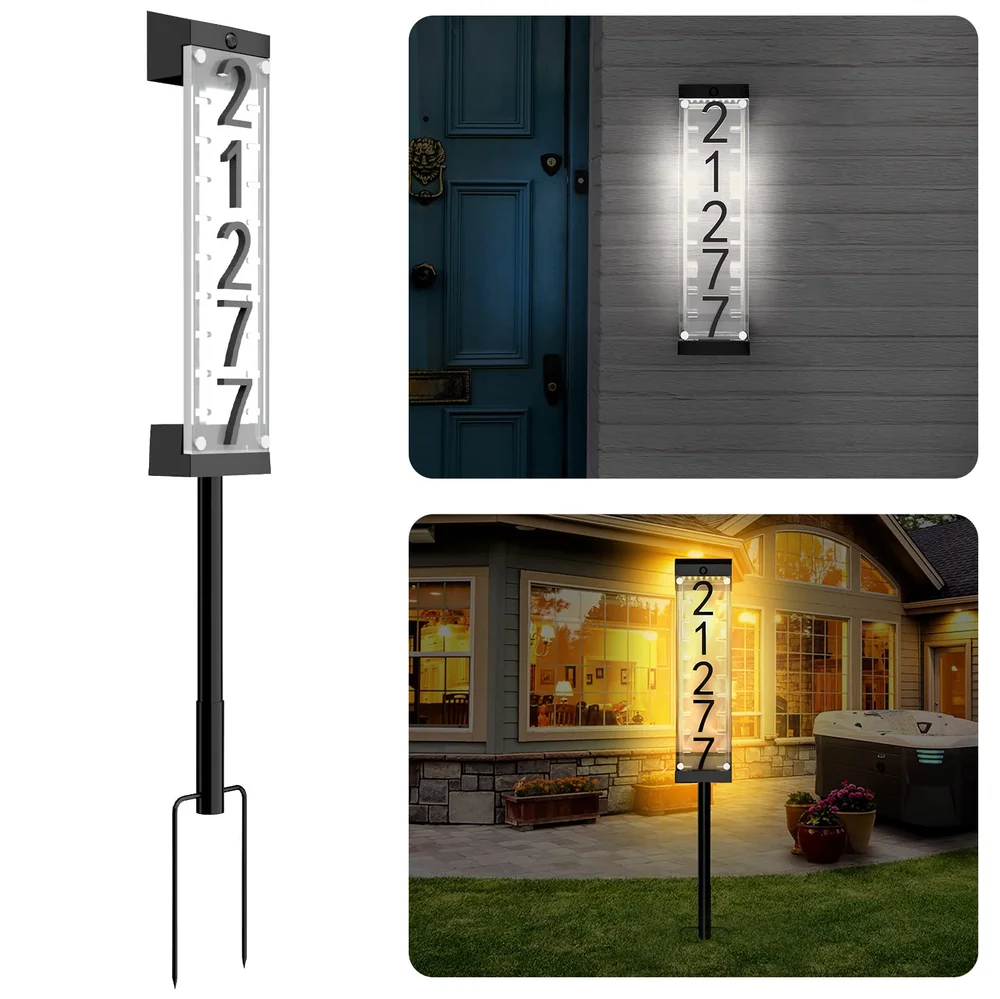
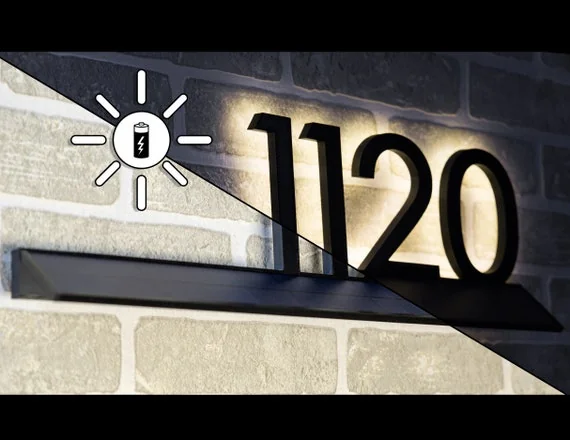
Wall-Mounted Address Plaques are the most common and versatile design in this category. These fixtures feature a flat or slightly curved backplate (typically made from stainless steel, aluminum, or durable plastic) with raised or recessed numbers and an integrated solar panel and LED light. The backplate mounts directly to exterior walls, fences, or posts using screws or adhesive. Best-selling variations include brushed stainless steel plaques with black numbers (for modern homes), black plaques with white or reflective numbers (for maximum contrast), and decorative plaques with ornamental borders (for traditional homes). When sourcing wall-mounted plaques, pay attention to the mounting hardware quality, the visibility of numbers from street distance, and the solar panel positioning (which must accommodate various wall orientations, not just south-facing).
Stake-Mounted Address Signs are designed for installation in lawns, gardens, or along driveways. These fixtures feature a ground stake with an address display panel mounted on top, allowing for flexible placement where wall mounting is not practical or desired. Stake-mounted signs are particularly popular for properties with long driveways, homes set back from the street, or situations where the house number needs to be visible from multiple directions. The stake must be sturdy enough to remain upright in soft soil and withstand wind without tilting. Adjustable stake heights or telescoping designs add versatility. When evaluating these designs, verify the stake length, the stability of the connection between the stake and the sign panel, and the visibility of numbers from typical street viewing distances.
Post-Mounted Address Lights are designed to attach to existing posts, such as mailbox posts, lamp posts, or fence posts. These fixtures typically feature a bracket or clamp system that allows attachment to round or square posts of various sizes. Post-mounted designs are popular for properties with existing post structures where adding address lighting is desired without installing new mounting points. The mounting system must be adjustable to fit different post sizes and secure enough to prevent rotation or slipping. When sourcing post-mounted lights, verify the range of post sizes accommodated and the security of the mounting mechanism.
Modular Number Systems allow customers to customize their address display by selecting individual illuminated numbers or letters. These systems typically consist of separate solar-powered units for each digit, which can be arranged horizontally or vertically on walls, fences, or posts. Modular systems appeal to customers who want flexibility in address display or who need to accommodate long addresses or unit numbers. The challenge with modular systems is ensuring that each unit has adequate solar exposure and that the overall appearance is cohesive when multiple units are installed together. When evaluating modular systems, consider the ease of alignment, the consistency of illumination across multiple units, and the practicality of solar panel placement for each digit.
Dual-Function Address and Pathway Lights combine address display with pathway or landscape lighting. These fixtures typically feature an address display on one side and a downward-facing light on the other, providing both address visibility and ground illumination. Dual-function designs appeal to customers seeking to maximize the utility of their outdoor lighting. When sourcing these, verify that both functions (address illumination and pathway lighting) are adequately powered by the solar panel and battery system, as dual functions increase power consumption.
Customizable Address Plaques allow customers to specify their address numbers at the time of purchase, with the manufacturer or retailer producing a custom plaque with the specified numbers. This approach eliminates the need for customers to select and arrange individual numbers and ensures a cohesive, professional appearance. Customizable plaques typically require longer lead times and may have higher minimum order quantities, but they offer a premium product experience. When considering customizable options, evaluate the supplier’s ability to handle custom orders efficiently and the quality of the number printing or engraving process.
For retailers looking to offer a comprehensive range of functional outdoor lighting, exploring complementary products in the broader decorative outdoor solar garden lights collection can help build complete outdoor lighting assortments.
Category-Specific Buyer Notes for House Number Solar Lights
When sourcing wholesale house number solar lights, several category-specific considerations differentiate this product type from decorative solar lights. First, number visibility and legibility are paramount. Unlike decorative lights where aesthetic appeal is primary, house number lights must ensure that addresses are clearly readable from street distance (typically 50-100 feet) in various lighting conditions. Number size, font selection, color contrast, and illumination brightness all impact legibility. Request samples and test them at realistic viewing distances and angles to verify that numbers are easily readable. Consider that emergency responders or delivery drivers may be viewing the address from a moving vehicle, so numbers must be instantly recognizable.
Second, solar panel orientation flexibility is more critical for house number lights than for most garden lights. While decorative garden lights can often be positioned to face south for optimal solar exposure, house number lights must be installed where the address needs to be displayedwhich may be on north-facing walls, shaded entryways, or other locations with suboptimal solar exposure. When evaluating suppliers, prioritize designs with efficient solar panels, adequate battery capacity to compensate for reduced charging, or options for remote solar panels that can be positioned separately from the address display. Test samples in various orientations and shading conditions to verify real-world performance.
Third, mounting versatility and hardware quality are essential. Customers have diverse installation scenariosbrick walls, vinyl siding, wooden fences, metal posts, or ground stakesand the mounting system must accommodate these variations. Verify that the supplied mounting hardware is appropriate for common installation surfaces and that installation instructions are clear and comprehensive. Weak mounting systems that fail or allow the light to tilt or fall will result in customer dissatisfaction and returns. Request information on the weight of the unit and the load capacity of the mounting hardware.
What Materials and Manufacturing Processes Are Used?
The quality, durability, and functionality of wholesale house number solar lights depend heavily on the materials selected and the manufacturing processes employed. Understanding these elements helps wholesale buyers assess product longevity and performance in real-world conditions.
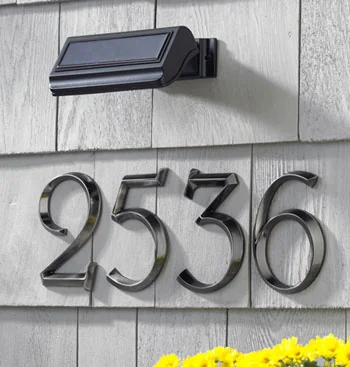
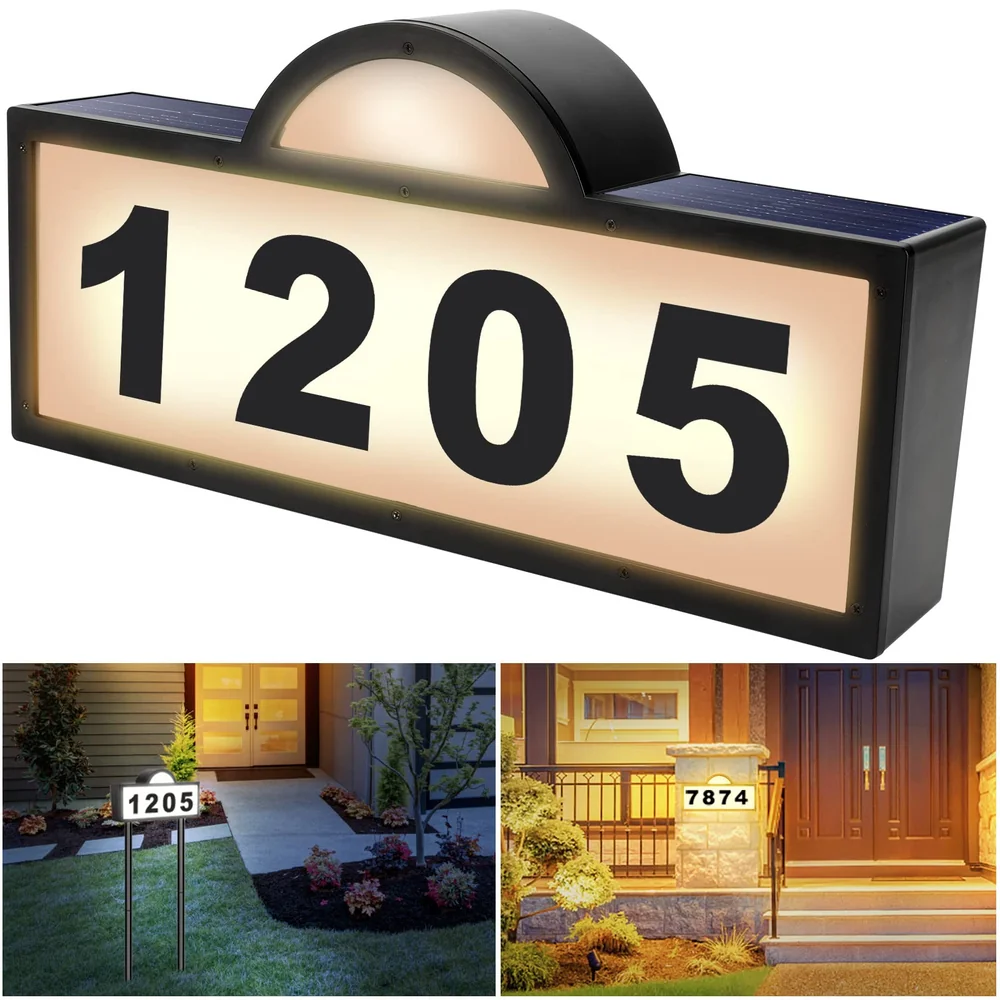
Metal Components form the structural foundation for most house number lights, particularly wall-mounted plaques and post-mounted designs. Stainless steel is the premium choice, offering excellent corrosion resistance, durability, and a modern aesthetic. Grade 304 stainless steel is commonly used for outdoor applications, providing good rust resistance in most climates. Aluminum is a cost-effective alternative that is lightweight and naturally corrosion-resistant, though it may dent more easily than stainless steel. Powder-coated steel or iron is used in budget-friendly designs but requires high-quality coating to prevent rust. When evaluating metal house number lights, verify the metal grade, the thickness (gauge), and the quality of any protective coatings.
For insights into metal light manufacturing, see how factory manufactures metal iron solar light.
Plastic Housings are used in budget to mid-range house number lights, particularly for stake-mounted and some wall-mounted designs. High-quality products use UV-stabilized ABS (acrylonitrile butadiene styrene) or polycarbonate, which resist fading, cracking, and brittleness under prolonged sun exposure. The plastic must be thick enough to provide structural rigidity and protect internal components from weather. Injection molding is the standard manufacturing process, and mold quality directly impacts the precision of number displays and the overall fit and finish. When sourcing plastic house number lights, verify that the plastic is UV-stabilized and request information on the expected outdoor lifespan.
Learn more about plastic manufacturing at how a professional factory manufactures plastic solar light.
Number Display Methods vary and significantly impact visibility and durability. Common methods include raised numbers (molded or attached to the surface), recessed numbers (cut into the surface with backlighting), printed or painted numbers (applied to the surface), and reflective numbers (using reflective materials for enhanced visibility). Raised metal numbers on metal plaques offer excellent durability and a premium appearance. Backlit recessed numbers provide superior nighttime visibility but require more complex manufacturing. Printed or painted numbers are cost-effective but may fade over time if not properly UV-protected. Reflective numbers enhance visibility even when the light is not illuminated. When evaluating samples, assess the clarity and contrast of numbers, the durability of the display method, and the resistance to fading or wear.
Solar Panels in house number lights must be efficient enough to charge the battery even when the installation location has suboptimal sun exposure. Monocrystalline solar panels are preferred for their higher efficiency and better performance in low-light or partially shaded conditions. The panel size is often constrained by the design of the fixture, so efficiency becomes critical. The solar panel must be sealed with waterproof resin or glass to prevent moisture ingress. In some designs, the solar panel is integrated into the top or front of the fixture; in others, it may be connected via a cable to allow separate positioning for optimal sun exposure.
Batteries must provide sufficient capacity to power the LED illumination throughout the night, even after days with limited sunlight. Lithium-ion batteries are preferred for house number lights due to their higher energy density, longer lifespan (3-5 years), and better performance in cold weather compared to NiMH batteries. Battery capacity should be matched to the LED power consumption and the expected illumination duration (typically 8-12 hours per night). For functional products like house number lights, reliable battery performance is critical, as customers expect consistent operation.
For battery performance insights, see common battery issues in solar garden lights.
LED Light Sources in house number lights must provide adequate brightness to illuminate the numbers without being overly bright or causing light pollution. White LEDs (cool white or neutral white) are most common, as they provide the best visibility for reading numbers. The LED placement and optics must be designed to evenly illuminate the number display without creating glare or hot spots. Some designs use downward-facing LEDs that illuminate the numbers from above, while others use backlighting for recessed numbers. When evaluating samples, test the illumination in a dark environment to verify that numbers are clearly visible and that the light distribution is even.
Mounting Hardware quality is critical for installation success and long-term reliability. Wall-mounted plaques require screws, anchors, and possibly adhesive backing. The hardware must be appropriate for various wall materials (brick, wood, vinyl siding, stucco) and must be corrosion-resistant (stainless steel or coated). Stake-mounted designs require sturdy stakes (typically metal or reinforced plastic) that can penetrate soil and remain stable. Post-mounted designs require adjustable brackets or clamps that can accommodate different post sizes and shapes. When sourcing, verify that the supplied hardware is complete, appropriate for common installation scenarios, and of sufficient quality to support the fixture securely.
Weatherproofing and Sealing are essential for house number lights, as they are exposed to rain, snow, humidity, and temperature extremes. The fixture must achieve at least an IP44 rating (protection against splashing water), with IP65 or higher preferred for harsh climates. Critical sealing points include the solar panel connection, the battery compartment, the LED housing, and any seams or joints in the fixture body. Gaskets, O-rings, and waterproof adhesives are used to create weather-tight seals. When evaluating suppliers, request IP test reports and verify that the weatherproofing design is robust.
For a detailed explanation of IP ratings, refer to garden light waterproof ratings IP44 IP65 IP67 guide.
Assembly and Quality Control for house number lights should include verification of number legibility, illumination uniformity, waterproof sealing, solar panel output, battery charging performance, and mounting hardware functionality. Quality control checkpoints should test the fixture in various orientations to simulate different installation scenarios and verify that performance is adequate regardless of solar panel orientation.
What Quality Standards and Certifications Matter for Wholesale Buyers?
For wholesale buyers sourcing house number solar lights for retail or distribution, understanding relevant quality standards and certifications is essential to ensure product safety, regulatory compliance, and market acceptance.
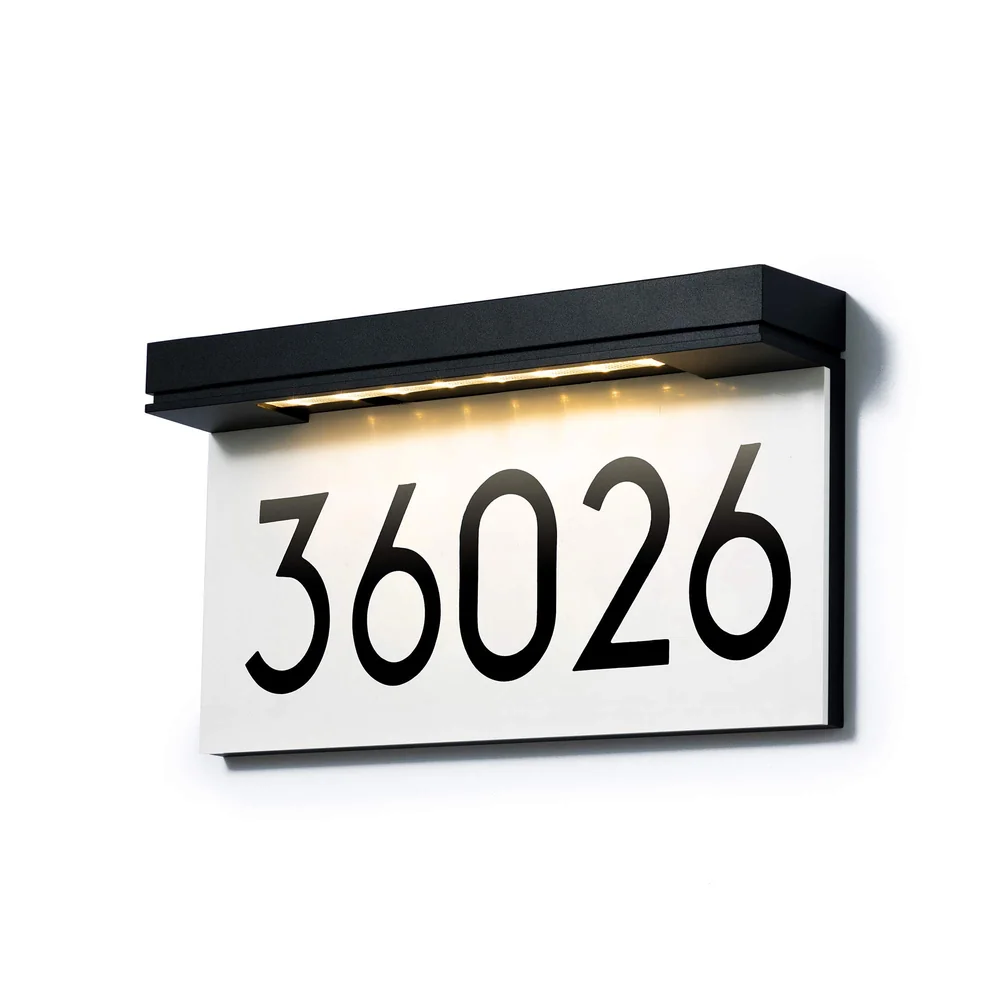
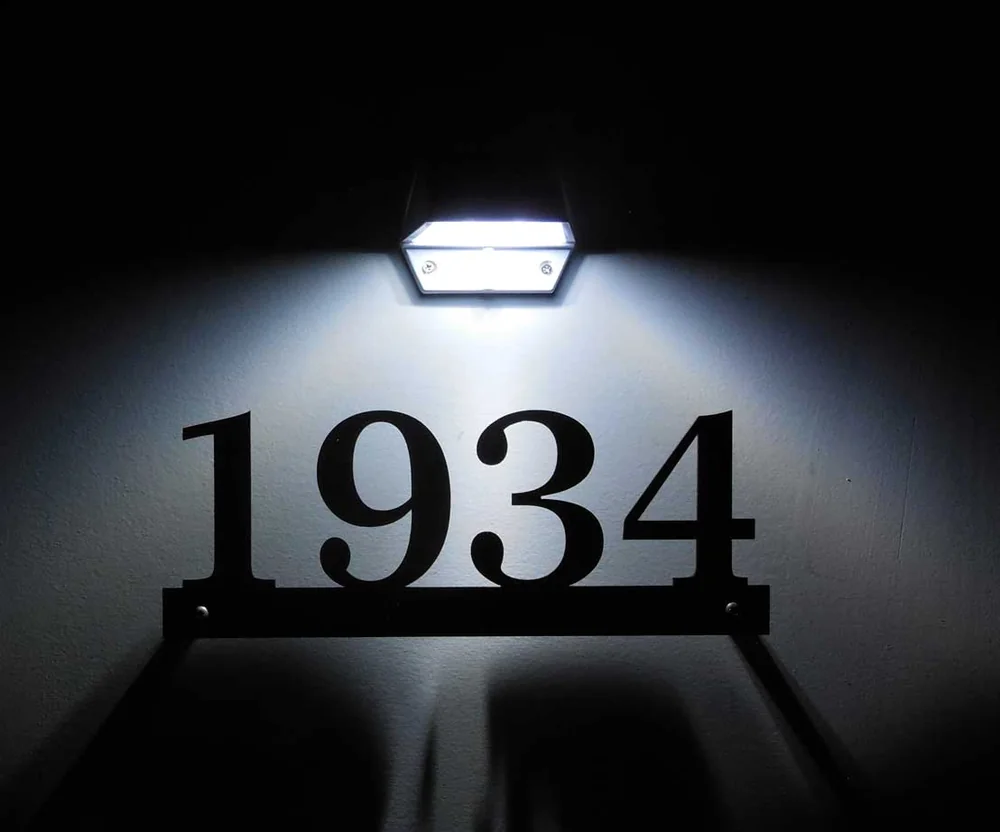
CE Certification is mandatory for selling solar lights in the European Union. The CE mark indicates compliance with EU safety, health, and environmental protection standards. For house number solar lights, CE certification typically covers electrical safety, electromagnetic compatibility, and material safety (RoHS compliance). Verify that the supplier provides a valid CE certificate from a recognized testing body, specific to the product model.
For more information, see why CE certification matters for solar garden lights.
RoHS Compliance (Restriction of Hazardous Substances) is required for products sold in the EU and increasingly in other markets. RoHS restricts hazardous materials such as lead, mercury, and cadmium in electrical products. Suppliers should provide RoHS test reports from accredited laboratories.
Learn more at solar garden light RoHS certification guide.
IP Ratings (Ingress Protection) indicate protection against dust and water. For outdoor house number lights, a minimum rating of IP44 is recommended, with IP65 or IP67 preferred for harsh weather conditions. The IP rating should be verified through testing, not just claimed in marketing materials.
UKCA Certification is required for products sold in Great Britain following Brexit. If you are sourcing for the UK market, ensure that your supplier can provide UKCA certification.
More details at UKCA certification solar garden lights guide.
UL Certification (Underwriters Laboratories) is a voluntary but highly regarded safety certification in North America. UL certification involves rigorous testing for electrical safety, fire hazards, and mechanical durability. While not legally required, UL-listed products are often preferred by retailers and consumers in the US and Canada.
Battery Safety Certifications are important, especially for products using lithium-ion batteries. Certifications like UN38.3 (for shipping lithium batteries) and IEC 62133 (battery safety standard) ensure that batteries are safe and meet international transport regulations.
Visibility and Reflectivity Standards may apply in some jurisdictions. While most regulations focus on the presence of address numbers rather than their illumination, some municipalities have specific requirements for number size, contrast, and visibility. When sourcing for specific markets, research local addressing ordinances to ensure that your products meet or exceed minimum requirements.
Material Safety and Durability Testing should include verification that materials are UV-stabilized, that metal components are corrosion-resistant, and that number displays are fade-resistant. Request accelerated aging test results that simulate years of outdoor exposure to verify long-term durability.
For wholesale buyers, working with suppliers who maintain up-to-date certifications and can provide test reports from accredited third-party laboratories is critical. For more guidance on export certifications, see what certifications are required for exporting high-quality solar garden lights.
Additionally, visit the support certificates page to see examples of the documentation that professional suppliers should provide.
What Is the Market Demand and Customer Preferences?
Understanding market demand and customer preferences is crucial for wholesale buyers when selecting house number solar lights for their inventory. This category has distinct demand drivers and customer segments that differ from decorative solar lighting.
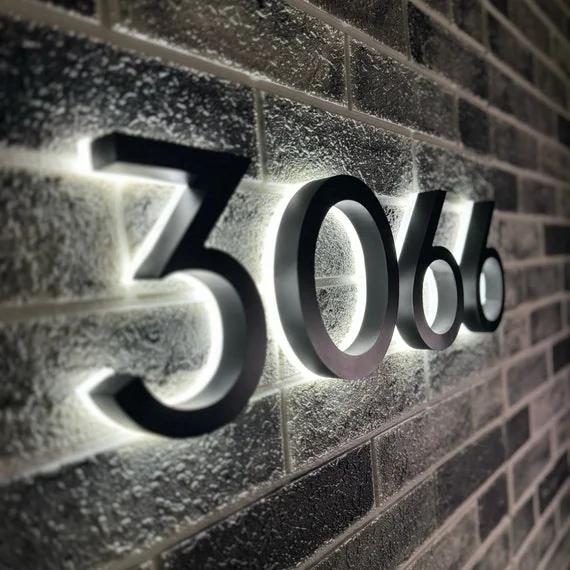
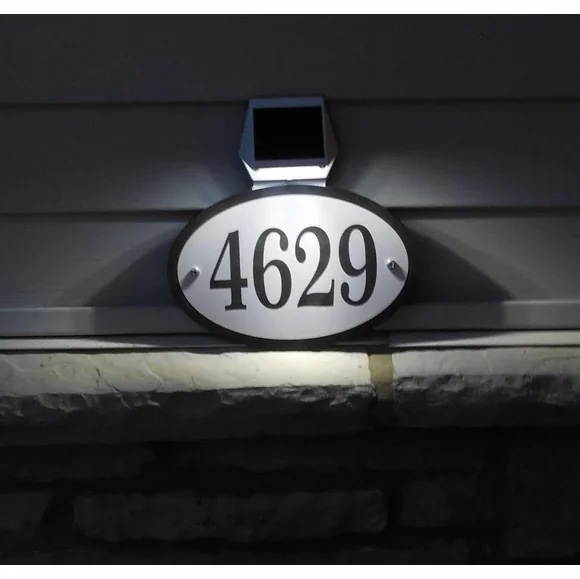
Residential Market Demand is the primary segment for house number solar lights. Homeowners purchase these lights to improve address visibility for safety, convenience, and compliance with local ordinances. The appeal lies in the combination of functional necessity and ease of installation without electrical wiring. Residential customers prioritize clear number visibility, reliable operation, and ease of installation. They value products that work consistently without maintenance and that complement their home’s exterior aesthetic.
Property Management Demand represents a significant commercial segment. Property managers responsible for apartment complexes, condominiums, or rental properties need to ensure that all units have visible address identification. For this segment, bulk purchasing, consistent quality across multiple units, and durability are priorities. Property managers are willing to pay for higher-quality products that reduce maintenance and replacement costs over time.
Real Estate and Home Staging Demand includes real estate agents and home stagers who want to improve property presentation and curb appeal. Illuminated house numbers enhance the professional appearance of properties and make them easier for potential buyers to locate during evening showings. This segment values attractive designs that enhance property aesthetics while providing functional benefits.
New Construction and Contractor Demand includes builders and contractors who install address lighting as part of new home construction or renovation projects. This segment typically purchases in bulk and values products that are easy to install, reliable, and compliant with local building codes. Contractors prefer products with comprehensive installation instructions and quality mounting hardware.
Seasonal Demand Patterns for house number lights are less pronounced than for decorative solar lights, as the functional need exists year-round. However, there may be modest increases in demand during spring and summer (when homeowners undertake outdoor improvement projects) and in autumn (when shorter days make nighttime address visibility more important). New homeowners and those moving to new properties represent a steady source of demand throughout the year.
Customer Preferences for Design vary by home style and personal taste. Modern homes favor sleek, minimalist designs in stainless steel or black with clean, sans-serif numbers. Traditional homes prefer more ornate designs with decorative borders or classic serif fonts. Customers generally prefer designs that complement their home’s architectural style rather than purely utilitarian products.
Customer Preferences for Number Visibility prioritize high contrast (black numbers on white or light backgrounds, or white/reflective numbers on dark backgrounds), adequate number size (typically 3-5 inches tall for residential applications), and clear, legible fonts. Customers value products that are easily readable from street distance, as this is the primary functional requirement.
Customer Preferences for Installation strongly favor products that are easy to install without professional help. Clear instructions, complete mounting hardware, and versatile mounting options (suitable for various wall materials and orientations) are highly valued. Customers appreciate products that can be installed in under 30 minutes with basic tools.
Price Sensitivity varies by customer segment. Individual homeowners are moderately price-sensitive and typically compare a few options before purchasing. Property managers and contractors are more focused on total cost of ownership (including durability and maintenance) than upfront price. Real estate professionals may be willing to pay a premium for products that enhance property presentation.
Online vs. Retail Channel Preferences are important considerations. Online customers rely on product photos, specifications, and reviews to assess visibility and quality. Detailed photos showing the product installed and illuminated at night are particularly valuable. Retail customers can see the product in person but cannot easily assess nighttime visibility. For wholesale buyers supplying online retailers, providing comprehensive product information, installation videos, and customer photos is essential.
What Are the Common Applications?
Wholesale house number solar lights serve functional purposes in a variety of residential, commercial, and institutional settings. Understanding these use cases helps wholesale buyers position their products effectively and identify target customer segments.
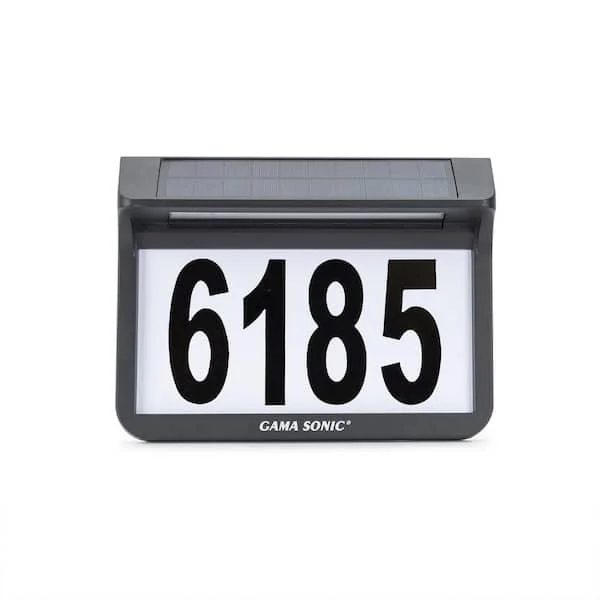
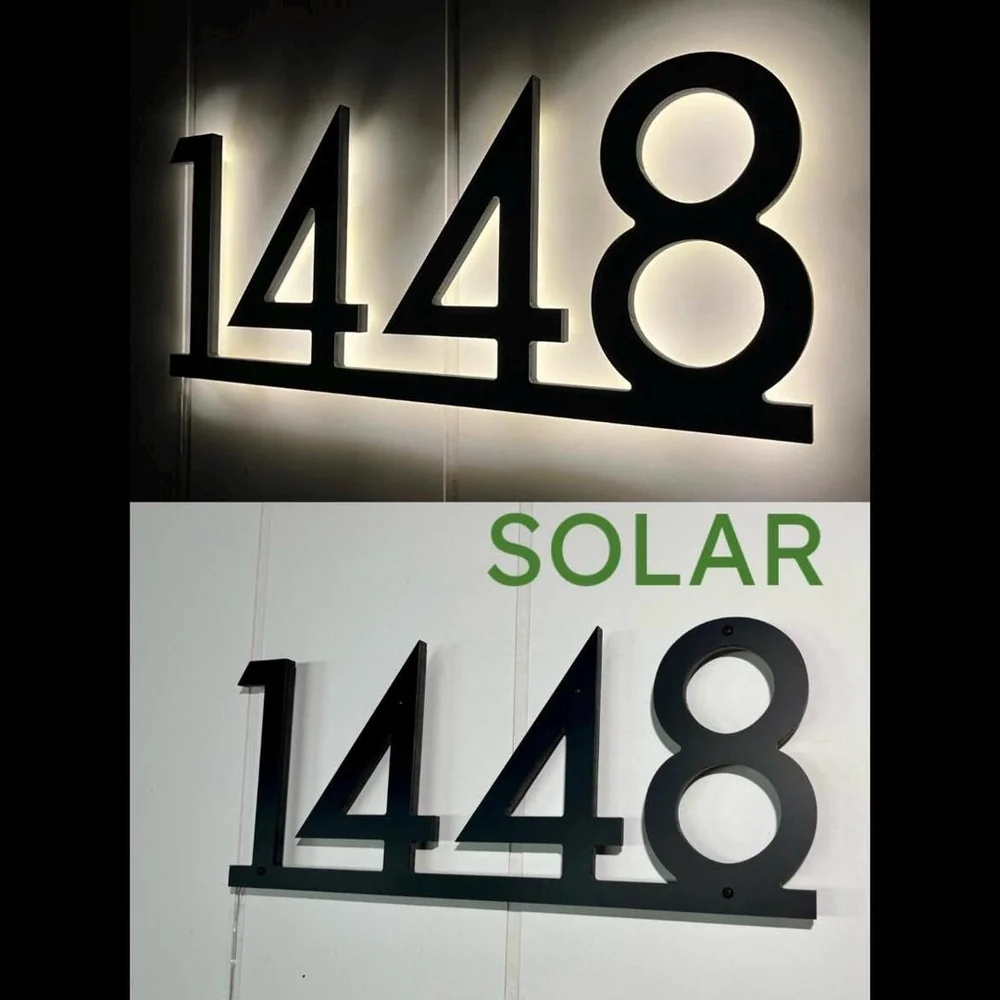
Single-Family Homes are the most common application for house number solar lights. Homeowners install these lights on exterior walls near the front door, on garage doors, at the end of driveways, or on mailbox posts to ensure that their address is visible to visitors, delivery drivers, and emergency services. The wireless, solar-powered nature makes installation simple and eliminates ongoing electricity costs. For this application, customers value clear number visibility, attractive design that complements their home, and reliable operation.
Multi-Unit Residential Properties including apartment buildings, condominiums, and townhouse complexes require address lighting for individual units. Property managers use house number solar lights to ensure that all units are clearly identified, improving safety and convenience for residents and visitors. For this application, bulk purchasing, consistent appearance across multiple units, and durability are priorities.
Rural and Suburban Properties with long driveways or homes set back from the street particularly benefit from house number solar lights. Stake-mounted or post-mounted designs can be placed at the end of driveways or along access roads to guide visitors and emergency responders to the correct property. For rural applications, high visibility from long distances and durability in harsh weather conditions are important.
Commercial Properties including small businesses, offices, and retail locations use house number solar lights to ensure that their addresses are visible to customers and delivery services. For commercial applications, professional appearance, high visibility, and reliable operation are priorities.
Vacation Rentals and Short-Term Rentals benefit from illuminated house numbers to help guests locate the property easily, especially when arriving after dark. Property owners and managers use house number solar lights to reduce confusion and improve the guest experience. For this application, ease of installation and low maintenance are valued.
Emergency Access and Safety Applications are critical drivers for house number lights. Emergency responders (fire, police, ambulance) rely on visible address numbers to locate properties quickly, especially at night. Illuminated house numbers can significantly reduce response times in emergencies. Many municipalities encourage or require visible address numbers for this reason, creating a regulatory driver for demand.
Mailbox and Curbside Identification is a common application for post-mounted or stake-mounted house number lights. Homeowners install these lights on or near mailboxes to help mail carriers and delivery drivers locate the correct address. For this application, visibility from the street and durability in exposed locations are important.
Gated Communities and Private Roads often require address lighting for properties along private roads where street lighting may be limited or absent. House number solar lights provide a cost-effective solution for ensuring address visibility without requiring electrical infrastructure along private roads.
New Construction and Home Improvement Projects include house number lights as part of exterior finishing or curb appeal improvements. Builders and contractors install address lighting as a standard feature or upgrade option for new homes. Homeowners undertaking exterior renovations often add or upgrade address lighting as part of the project.
What OEM/ODM Customization Options Are Available for Wholesale House Number Solar Lights?
For wholesale buyers looking to differentiate their product offerings or build a private label brand, understanding the OEM (Original Equipment Manufacturer) and ODM (Original Design Manufacturer) customization options available for house number solar lights is essential.
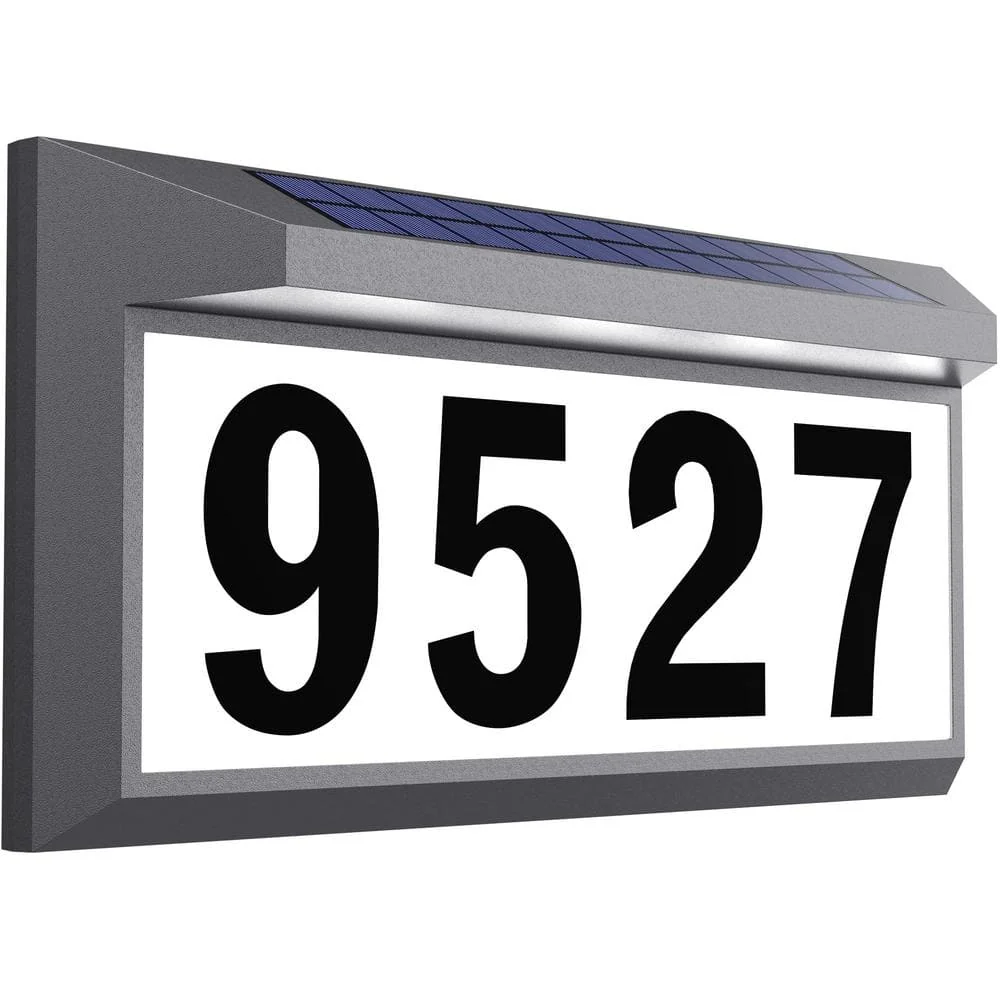
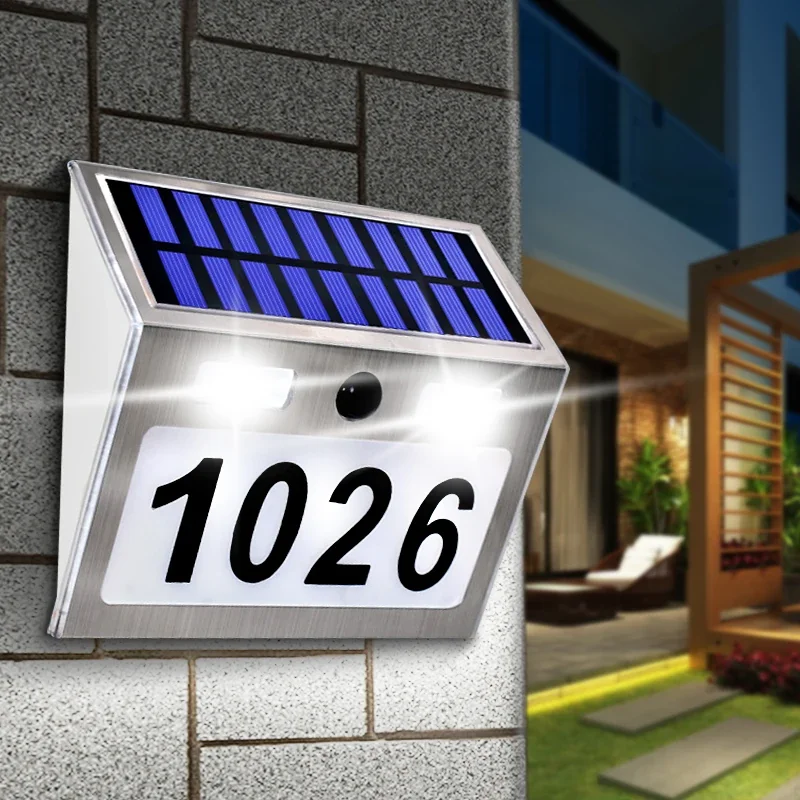
Design Customization (ODM) involves modifying existing designs or creating entirely new designs based on buyer specifications. Common design customizations include altering the size, shape, or style of the plaque or housing, changing the number display method (raised, recessed, backlit), or adding decorative elements. Manufacturers with in-house design teams and tooling capabilities can develop custom designs, though this typically requires higher minimum order quantities and longer lead times.
Number Font and Style Customization allows buyers to specify the typeface, size, and style of the address numbers. Options include modern sans-serif fonts, traditional serif fonts, script or decorative fonts, and custom fonts. Number size can be adjusted to meet specific visibility requirements or local regulations. Font customization typically has moderate minimum order quantities and can help differentiate products for specific market segments.
Material and Finish Customization includes selecting specific metals (stainless steel, aluminum, brass), finishes (brushed, polished, powder-coated), and colors. Custom finishes such as bronze, copper, black, or custom colors can help products match specific architectural styles or customer preferences. Material and finish customization affects both the appearance and the durability of the product.
Solar Panel and Battery Upgrades are important customization options for buyers who want to offer premium products with better performance in suboptimal sun exposure conditions. Upgrading to higher-efficiency monocrystalline solar panels and higher-capacity lithium-ion batteries improves performance and reliability. Remote solar panel options (connected via cable) allow the solar panel to be positioned separately from the address display for optimal sun exposure.
Mounting System Customization allows buyers to specify mounting hardware and methods suited to their target market. Options include wall-mount brackets for various wall materials, post-mount clamps for different post sizes and shapes, stake-mount systems with adjustable heights, and adhesive mounting options for surfaces where drilling is not desired. Comprehensive mounting hardware and clear installation instructions add value and reduce installation friction.
Illumination Customization includes adjusting LED brightness, color temperature, and illumination patterns. Options include adjustable brightness settings, motion-activated illumination (brighter when motion is detected), and dusk-to-dawn automatic operation. Illumination customization can help products meet specific customer preferences or regulatory requirements.
Customizable Address Numbers allow customers to specify their address at the time of purchase, with the manufacturer or retailer producing a custom product with the specified numbers. This approach provides a premium, personalized product experience. Customizable number services require efficient order processing systems and quality control for custom production.
Packaging Customization is important for building brand identity. Custom packaging options include branded outer cartons, custom inner boxes with printed logos and product information, retail-ready packaging with hang tags or display windows, and multilingual labels for different markets. High-quality packaging enhances perceived value and brand recognition.
Logo and Branding can be applied to the product itself (through laser engraving, embossing, or labels) and to all packaging materials. For buyers building a private label brand, consistent branding across all touchpoints is essential.
Certification and Compliance Customization involves ensuring that the product meets the specific regulatory requirements of the target market. Experienced manufacturers can assist with obtaining necessary certifications and can customize product specifications to meet regional standards.
For more information on customization capabilities, visit the OEM solutions page.
How to Source Wholesale House Number Solar Lights from China Manufacturers and Suppliers?
Sourcing wholesale house number solar lights from China offers cost advantages and access to diverse manufacturing capabilities, but successful sourcing requires careful supplier selection and quality verification specific to functional lighting products.
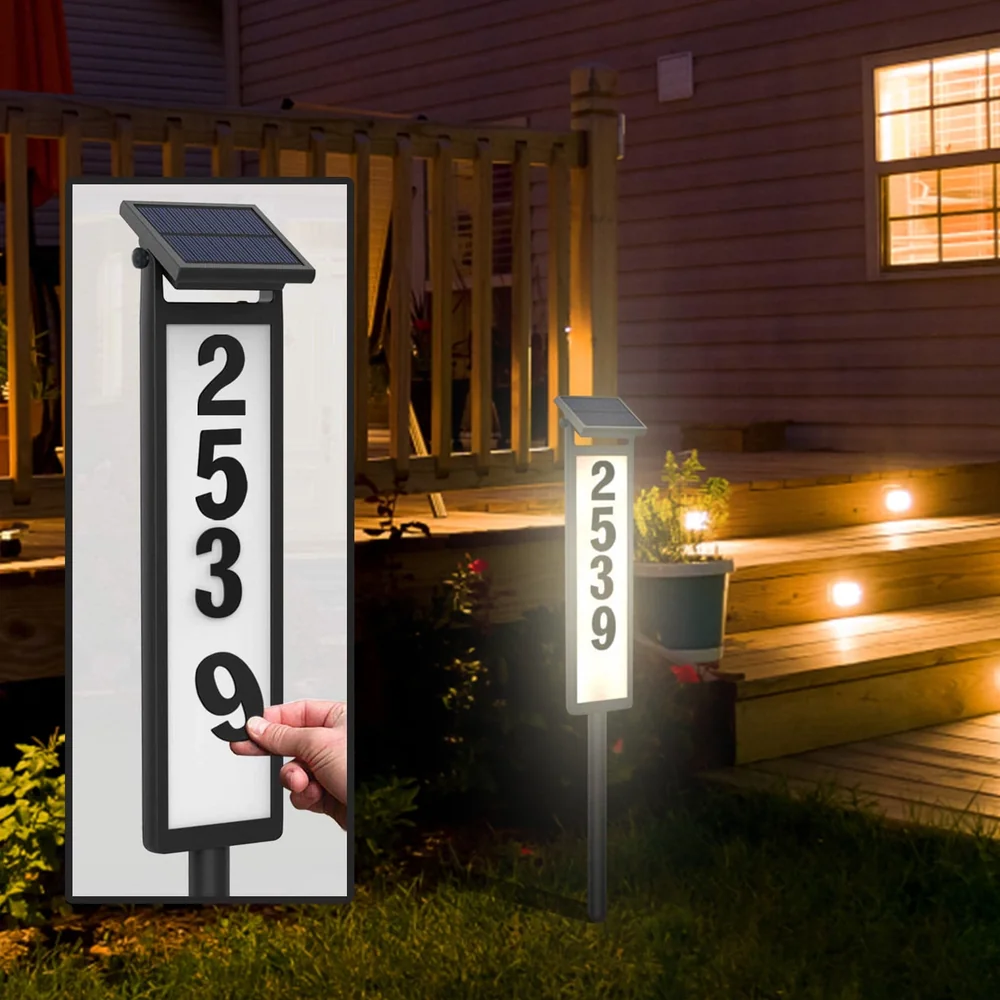
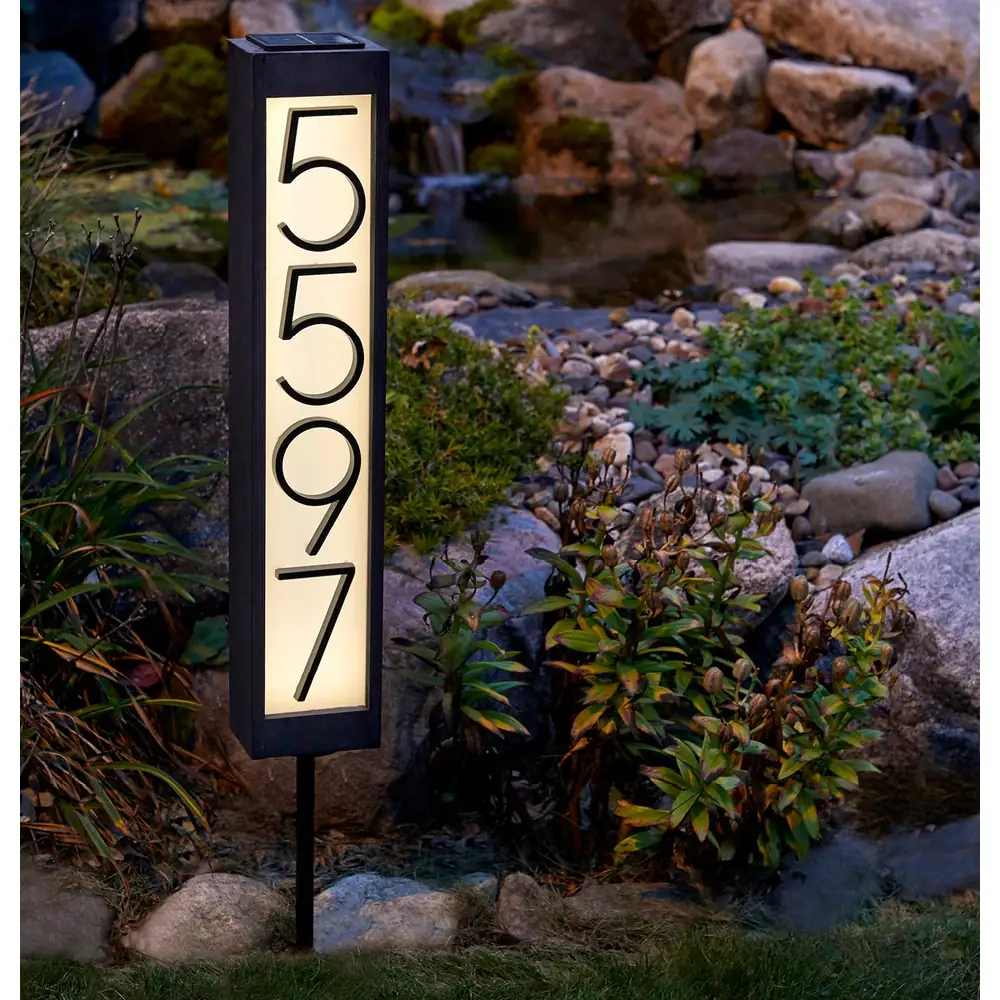
Finding Specialized Suppliers for house number solar lights requires targeted searching, as not all solar light manufacturers produce functional address lighting. Use specific search terms like “house number solar lights,” “address solar lights,” or “solar address plaques” on B2B platforms. Trade shows focused on lighting, hardware, or home improvement products are excellent venues for finding suppliers. Look for manufacturers with experience in producing functional outdoor lighting, as they will better understand the visibility, durability, and regulatory requirements for address lighting.
Evaluating Supplier Capabilities should include assessment of their experience with functional lighting products, their understanding of visibility and legibility requirements, their quality control processes for consistent number display, and their ability to provide products that meet regulatory standards. Request to see their portfolio of existing house number light designs and ask about their testing procedures for visibility, weatherproofing, and durability.
Requesting and Evaluating Samples is critical for house number lights, as functional performance is paramount. Order samples and evaluate them for number visibility from realistic distances (50-100 feet), illumination quality and uniformity, build quality and durability, solar charging performance in various orientations, and ease of installation. Test samples outdoors for at least one week, including in various weather conditions, to assess real-world performance. If possible, test samples in different orientations (north-facing, shaded) to verify performance in suboptimal sun exposure conditions.
Negotiating Pricing and Terms should account for the functional nature of these products. Discuss quality standards clearly, as functional products have less tolerance for defects than purely decorative items. Clarify the payment terms, production lead time, and any costs for custom tooling or number customization. For first-time orders, expect to pay a deposit upon order confirmation and the balance before shipment.
Defining Quality Standards in writing is crucial for house number lights. Provide detailed specifications including number size, font, and contrast requirements, illumination brightness and uniformity standards, IP rating requirements, solar panel and battery specifications, mounting hardware requirements, and visibility standards (readable from specified distance). Include reference photos or samples to clarify expectations. Specify the acceptable quality level (AQL) for defects, with particular attention to number legibility and illumination quality.
Implementing Quality Control Measures should include pre-production inspections to verify materials and number display quality, during-production inspections to catch issues early, and pre-shipment inspections to verify that finished products meet specifications. For house number lights, functional testing (visibility, illumination, weatherproofing) is as important as visual inspection. Third-party inspection companies can conduct these inspections and provide detailed reports.
Managing Logistics and Shipping involves choosing the right shipping method and ensuring proper documentation. For large orders, sea freight is most cost-effective. Work with a freight forwarder who can handle customs clearance and provide door-to-door delivery. Ensure that all necessary export and import documentation is in order, including compliance certificates.
Building Long-Term Supplier Relationships can lead to better pricing, priority production scheduling, and improved communication. Once you have identified a reliable supplier, maintain regular contact and provide feedback on product performance and customer preferences. Long-term relationships make it easier to negotiate custom designs, flexible payment terms, and faster turnaround times.
For additional guidance on sourcing from China, see bulk purchase solar garden lights China.
What Mistakes Can Cost You Money When Buying House Number Solar Lights in Bulk?
Avoiding common mistakes when sourcing bulk house number solar lights can save wholesale buyers significant time, money, and frustration.
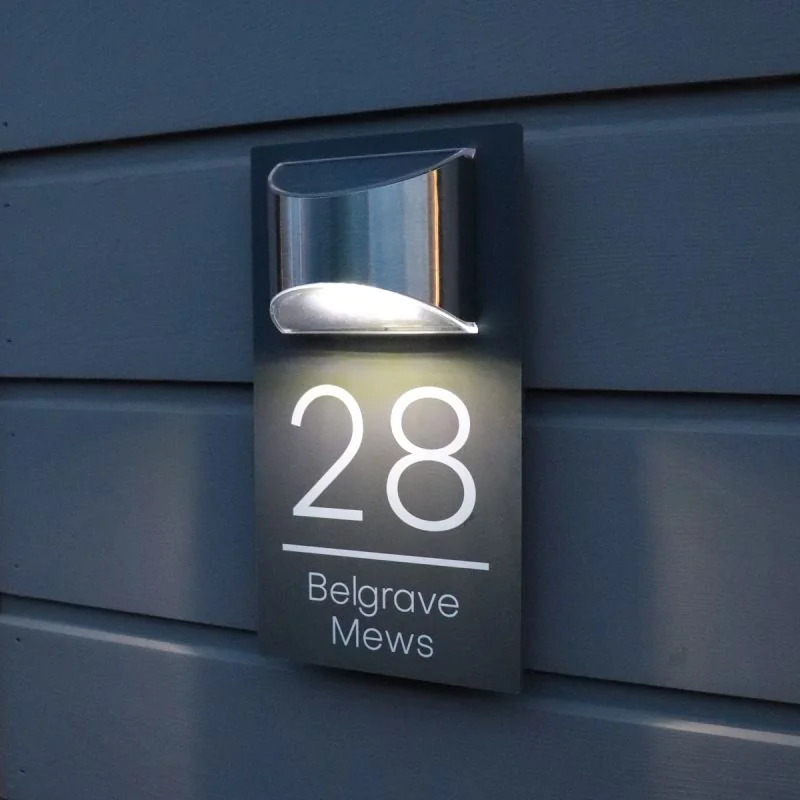
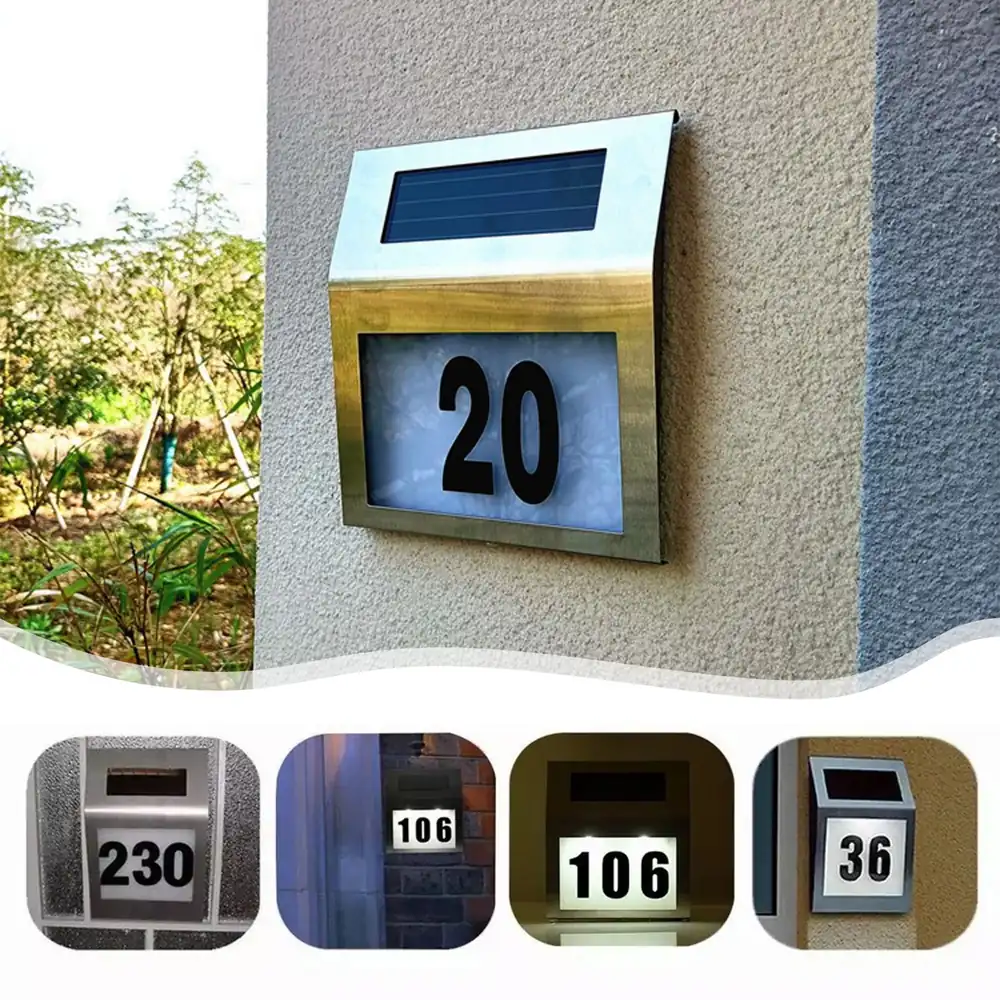
Ignoring Visibility Testing is one of the most costly mistakes. Buyers who do not test samples at realistic viewing distances may discover that numbers are not clearly readable from the street, leading to customer dissatisfaction and returns. Always test samples from at least 50-100 feet in various lighting conditions (dusk, full darkness, with ambient street lighting) to verify that numbers are easily readable. If numbers are not clearly visible, the product fails its primary function.
Underestimating Solar Panel Orientation Challenges leads to performance issues. Unlike decorative garden lights that can be positioned for optimal sun exposure, house number lights must be installed where the address needs to be displayed, which may have suboptimal solar exposure. Verify that the solar panel is efficient enough and the battery capacity is adequate to provide reliable operation even with limited sun exposure. Test samples in north-facing or partially shaded orientations to verify real-world performance.
Overlooking Mounting Hardware Quality results in installation failures and customer frustration. Weak or inadequate mounting hardware can cause the fixture to fall, tilt, or fail to attach securely to various wall materials. Verify that the supplied mounting hardware is complete, appropriate for common installation scenarios (brick, wood, vinyl siding, stucco), and of sufficient quality to support the fixture securely. Request information on the weight of the unit and the load capacity of the mounting hardware.
Failing to Verify Number Durability can lead to fading, peeling, or degradation of the address display over time. Numbers that fade or become illegible defeat the purpose of the product. Verify that numbers are fade-resistant, UV-protected, and securely attached or integrated into the fixture. Request accelerated aging test results that demonstrate long-term durability of the number display.
Ignoring IP Rating Verification can result in water damage and premature failure. House number lights are exposed to rain, snow, and humidity, and inadequate weatherproofing will lead to failures. Verify that the product achieves at least an IP44 rating, with IP65 or higher preferred. Request IP test reports from accredited laboratories to confirm the rating.
Choosing Suppliers Based Solely on Price often backfires for functional products. The lowest-priced supplier may use inferior materials, inadequate solar panels or batteries, or poor-quality number displays, resulting in products that do not perform reliably. For house number lights, functional reliability is critical, and investing in higher-quality products typically yields better customer satisfaction and lower return rates. Evaluate suppliers based on a combination of price, quality, functional performance, and reliability.
Neglecting Installation Instructions leads to customer frustration and increased support costs. House number lights must be easy to install for the average homeowner, and clear, comprehensive installation instructions are essential. Verify that the supplier provides detailed installation instructions, including diagrams, hardware lists, and guidance for different installation scenarios. Poor or missing instructions will result in installation failures and negative reviews.
Overlooking Battery Replacement Accessibility can limit product lifespan. Batteries will eventually need replacement, and if the battery compartment is difficult to access or requires disassembly of the fixture, customers may discard the entire unit rather than replace the battery. Prioritize designs with easily accessible battery compartments and standard battery sizes that are readily available for replacement.
Failing to Consider Local Regulations can result in products that do not meet local addressing ordinances. Some municipalities have specific requirements for address number size, contrast, or visibility. Research the regulations in your target markets to ensure that your products meet or exceed minimum requirements. Products that do not comply with local regulations may be rejected by customers or require costly modifications.
Inadequate Quality Control During Production allows defects to go undetected. For functional products like house number lights, defects in number display, illumination, or weatherproofing can render the product unusable. Implement independent quality control measures, such as third-party inspections at key production stages, to catch defects early and ensure that products meet specifications.
Who Is Glowyard Lighting and What Do We Offer?
Glowyard Lighting is a professional manufacturer specializing in solar-powered outdoor lighting solutions, including functional products such as house number solar lights designed for wholesale and bulk distribution. With extensive experience in producing both decorative and functional solar lighting, Glowyard serves hardware retailers, home improvement stores, property management companies, and distributors across global markets.
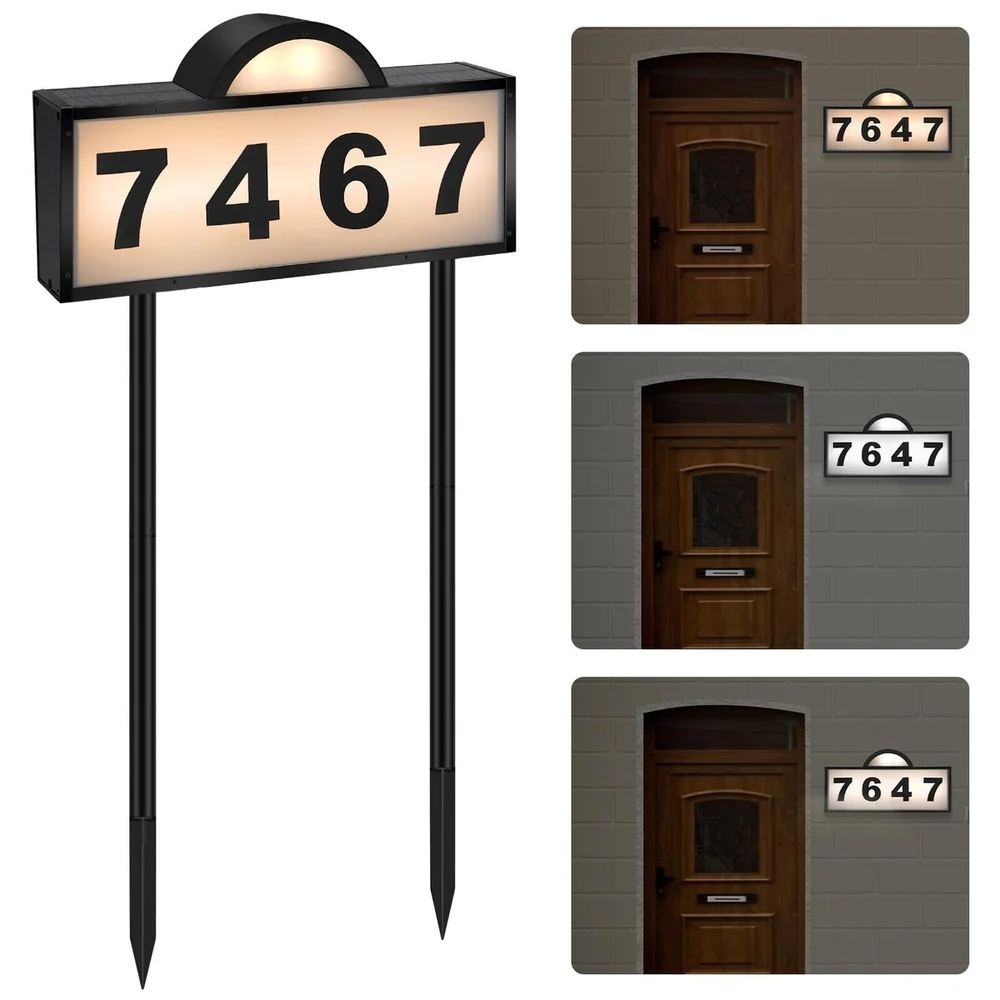
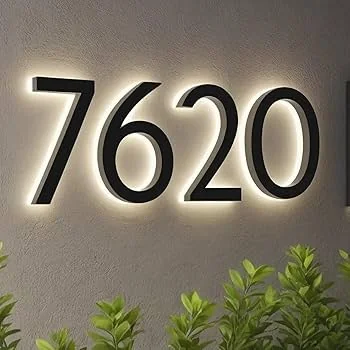
Our manufacturing capabilities cover the full production process for house number solar lights, including metal fabrication (stainless steel, aluminum), plastic injection molding, number display production (raised, recessed, backlit), solar panel integration, and final assembly. We operate dedicated production lines for different product categories, including wall-mounted plaques, stake-mounted signs, and post-mounted designs. Our facility is equipped with modern machinery for precision metalworking, powder coating, UV-resistant plastic molding, and weatherproof assembly, ensuring consistent quality and reliable performance across large production runs.
Quality control is central to our operations, with particular emphasis on functional performance for address lighting products. We implement a multi-stage inspection system that includes incoming material inspection (IQC), in-process quality control (IPQC), and final product inspection (OQC). For house number solar lights, our quality checks focus on number visibility and legibility (tested at realistic viewing distances), illumination uniformity and brightness, waterproof sealing (IP rating verification), solar panel output testing in various orientations, battery charging and discharging cycles, mounting hardware strength and reliability, and overall durability. We conduct visibility testing to ensure that numbers are clearly readable from street distance and weatherproofing testing to verify long-term outdoor performance.
Glowyard offers comprehensive OEM and ODM services for wholesale buyers looking to develop custom house number light designs or private label brands. Our design team can modify existing designs or create entirely new products based on buyer specifications. We provide customization options for plaque size, shape, and style, number fonts, sizes, and display methods, materials and finishes (stainless steel, aluminum, powder-coated), solar panel and battery configurations, mounting systems for various installation scenarios, and packaging. Our in-house tooling capabilities allow us to develop custom molds and fixtures for unique designs, and we work closely with buyers to ensure that custom products meet their market requirements and functional standards.
We maintain up-to-date certifications and compliance documentation to support export to major markets. Our products are tested and certified to meet CE, RoHS, IP rating, and other relevant standards. We can assist buyers with obtaining additional certifications (such as UL) as needed for specific markets. Our export team is experienced in preparing the necessary documentation for customs clearance and can provide certificates of origin, test reports, and compliance declarations. For more information on our certifications, visit our certificates page.
Our after-sales support includes technical assistance, warranty claim processing, and availability of replacement parts such as batteries and solar panels. We understand that reliable after-sales service is essential for maintaining customer satisfaction, particularly for functional products where performance is critical. Our team is available to provide troubleshooting guidance and support for warranty issues.
For wholesale buyers, Glowyard offers flexible order quantities, competitive pricing for bulk orders, and reliable production scheduling. We work with buyers to develop product assortments that meet the functional requirements and aesthetic preferences of their target markets. Our goal is to be a trusted partner for businesses seeking high-quality, reliable house number solar lights that meet the demands of functional outdoor lighting markets.
Wholesale Buying Checklist
When sourcing wholesale house number solar lights, use this checklist to ensure you cover all critical evaluation points:
- Verify supplier experience with functional outdoor lighting products
- Request and test product samples at realistic viewing distances (50-100 feet minimum)
- Assess number visibility, legibility, and contrast in various lighting conditions
- Test samples in different orientations (north-facing, shaded) to verify solar performance
- Confirm product-specific certifications for your target market (CE, RoHS, IP rating, UL if applicable)
- Review detailed specifications (number size and font, illumination brightness, IP rating, battery capacity)
- Evaluate mounting hardware quality and completeness for various installation scenarios
- Verify that installation instructions are clear, comprehensive, and include diagrams
- Test mounting system strength and stability
- Verify IP rating through test reports from accredited laboratories
- Check battery type, capacity, accessibility for replacement, and safety certifications
- Assess solar panel efficiency and battery capacity for suboptimal sun exposure conditions
- Evaluate number display durability (fade resistance, UV protection, secure attachment)
- Clarify pricing structure (unit price, tooling costs for custom designs, packaging, shipping)
- Define payment terms and production lead time in writing
- Establish quality standards for functional performance (visibility, illumination, weatherproofing)
- Research local addressing regulations in target markets to ensure compliance
- Review warranty terms and after-sales support availability
- Verify availability of replacement parts (batteries, mounting hardware)
Quick RFQ Template for Wholesale House Number Solar Lights
Use this template when requesting quotations from suppliers:
—
Request for Quotation: Wholesale House Number Solar Lights
Company Name: [Your Company] Contact Person: [Your Name] Email: [Your Email] Target Market: [e.g., North America, Europe, Australia]
Product Requirements:
- Product Type: House Number Solar Light (specify: wall-mounted, stake-mounted, post-mounted)
- Quantity: [e.g., initial order quantity, with potential for repeat orders]
- Materials: [e.g., stainless steel, aluminum, UV-stabilized plastic]
- Dimensions: [specify plaque size, number size, overall dimensions]
- Number Display: [specify font, size, display method (raised, recessed, backlit), contrast]
- LED Specifications: [brightness (lumens), color temperature, illumination pattern]
- Solar Panel: [type (monocrystalline/polycrystalline), wattage, positioning (integrated or remote)]
- Battery: [type (lithium-ion preferred), capacity in mAh, replaceable or sealed]
- IP Rating: [minimum IP44, prefer IP65 or higher]
- Mounting System: [specify mounting method and hardware for target installation scenarios]
- Certifications Required: [CE, RoHS, IP rating, UL, UKCA, etc.]
- Packaging: [individual boxes, retail-ready packaging, branding requirements]
Customization Needs (if applicable):
- Custom plaque size, shape, or style
- Custom number fonts or sizes
- Custom materials or finishes
- Custom mounting systems for specific installation scenarios
- Solar panel and battery upgrades for suboptimal sun exposure
- Customizable address numbers (customer-specified at time of order)
- Custom packaging design (provide branding guidelines)
Pricing and Terms:
- Unit price (FOB, CIF, or DDP)
- Tooling or mold costs (if custom design)
- Packaging costs
- Payment terms (deposit and balance)
- Production lead time
- Sample availability and cost
Quality Assurance:
- Provide product-specific certification copies (CE, RoHS, IP test reports, UL if applicable)
- Confirm quality control process (IQC, IPQC, OQC) with emphasis on visibility and functional testing
- Acceptable Quality Level (AQL) standards for functional and aesthetic defects
- Visibility testing procedures (distance, lighting conditions)
- Weatherproofing testing procedures (IP rating verification)
- Third-party inspection acceptance
Additional Information:
- Minimum order quantity for initial and repeat orders
- Availability of replacement parts (batteries, mounting hardware)
- Warranty terms and after-sales support
- Installation instructions quality and comprehensiveness
- Compliance with local addressing regulations (if applicable)
- Shipping and logistics support
Timeline:
- Sample delivery: [expected date]
- Bulk order delivery: [expected date]
Please provide a detailed quotation including all requested information and any recommendations based on your experience with house number solar lights and functional outdoor lighting products.
—
Frequently Asked Questions
Q: What is the typical lifespan of wholesale house number solar lights?
The lifespan of house number solar lights depends on the quality of materials and components. High-quality lights with stainless steel or powder-coated aluminum construction, UV-stabilized plastics, and reliable batteries can last 3-5 years or more with proper maintenance. The battery is typically the first component to degrade, with lithium-ion batteries lasting 3-5 years and NiMH batteries lasting 1-2 years. LED bulbs have very long lifespans and rarely fail before other components. Number displays should be fade-resistant and remain legible for the life of the product. To maximize lifespan, choose lights with replaceable batteries, high-quality weatherproofing (IP65 or higher), and durable number display methods.
Q: How bright do house number solar lights need to be for adequate visibility?
Brightness requirements depend on viewing distance and ambient lighting conditions. For typical residential applications (viewing distance of 50-100 feet), house number lights should provide sufficient illumination to make numbers clearly readable without being overly bright or causing light pollution. The key is not just overall brightness but even illumination of the number display and high contrast between numbers and background. When evaluating samples, test them at realistic viewing distances in various lighting conditions (dusk, full darkness, with ambient street lighting) to verify adequate visibility. Number size, font clarity, and contrast are as important as brightness for legibility.
Q: Will house number solar lights work on north-facing walls or in shaded locations?
Performance on north-facing walls or in shaded locations depends on the efficiency of the solar panel and the capacity of the battery. High-quality house number lights with efficient monocrystalline solar panels and adequate battery capacity can provide reliable operation even with suboptimal sun exposure, though illumination duration may be reduced compared to south-facing installations. Some designs offer remote solar panels connected via cable, allowing the solar panel to be positioned separately in a sunnier location while the address display is mounted where needed. When sourcing, prioritize products with efficient solar panels and adequate battery capacity, and test samples in various orientations to verify real-world performance in suboptimal conditions.
Q: What is the minimum order quantity for wholesale house number solar lights from China manufacturers?
Minimum order quantities vary by supplier and product type. For standard, off-the-shelf designs, MOQs can be relatively low, allowing buyers to start with smaller test orders. Custom designs, custom number fonts, or private label products typically require higher MOQs due to tooling costs and production setup. Customizable address numbers (where customers specify their address at time of order) may have different MOQ structures. When negotiating with suppliers, discuss your order volume expectations and ask about flexibility for initial orders versus repeat orders.
Q: Can house number solar lights be installed on vinyl siding or other non-masonry surfaces?
Yes, house number solar lights can be installed on various surfaces including vinyl siding, wood, brick, stucco, and metal. The key is having appropriate mounting hardware for the specific surface type. For vinyl siding, mounting blocks or specialized brackets may be needed to provide a stable mounting surface. For surfaces where drilling is not desired, some designs offer adhesive mounting options, though these may not be as secure as screw mounting. When sourcing, verify that the supplier provides mounting hardware suitable for common installation scenarios in your target market, and ensure that installation instructions address different surface types.
Q: How do I verify the quality of house number solar lights before placing a bulk order?
Quality verification for house number lights should include both functional and durability testing. Order samples and test them outdoors for at least one week, evaluating number visibility from realistic distances (50-100 feet), illumination quality and uniformity, solar charging performance in various orientations (including north-facing or partially shaded), weatherproofing (expose to rain or water spray), and mounting system strength. Request product-specific certifications (CE, RoHS, IP test reports, UL if applicable) and verify their authenticity. Conduct a factory audit or hire a third-party inspection company to assess the supplier’s production capabilities and quality control systems. Implement pre-shipment inspections to verify that bulk orders meet your specifications. For functional products like house number lights, thorough testing is essential to ensure reliable performance.
Q: Are there regulations or standards for house number visibility that these lights must meet?
Regulations for address number visibility vary by municipality and jurisdiction. Most regulations specify minimum number size (commonly 3-4 inches tall for residential properties), contrast requirements (numbers must contrast with background), and general visibility requirements (readable from the street). While most regulations do not specifically require illuminated numbers, the practical need for nighttime visibility makes illuminated address numbers a valuable enhancement. When sourcing for specific markets, research local addressing ordinances to ensure that your products meet or exceed minimum requirements for number size, contrast, and visibility. Products that help customers comply with or exceed local regulations have a competitive advantage.
Q: Can customers replace the batteries in house number solar lights when they wear out?
Battery replaceability varies by product design. High-quality house number lights should feature easily accessible battery compartments that allow customers to replace batteries without disassembling the fixture. Products with replaceable batteries extend the overall product lifespan and are more environmentally friendly. When sourcing, prioritize designs with accessible battery compartments and standard battery sizes (such as 18650 lithium-ion cells or AA/AAA NiMH batteries) that are readily available for replacement. Ensure that the supplier can provide information on battery replacement procedures and that replacement batteries are available through common retail channels.