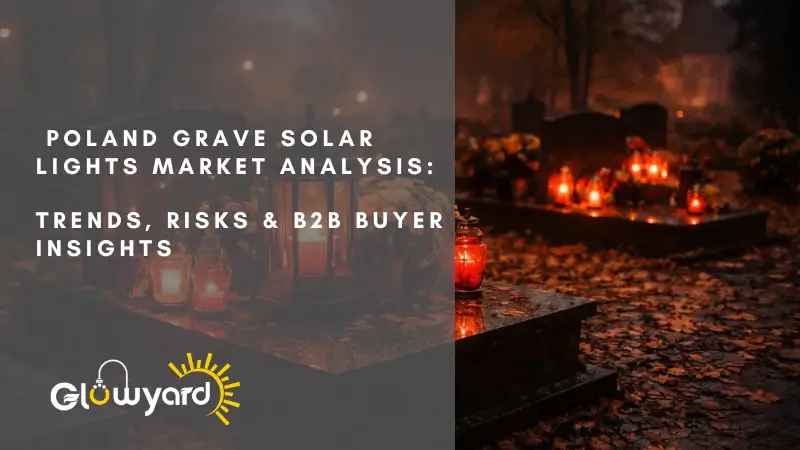
Poland Grave Solar Lights Market Analysis: Trends, Risks & B2B Buyer Insights
Poland represents one of the most structurally stable cemetery lighting markets in Europe.
However, it is also one of the most seasonally concentrated and climate-sensitive markets within the EU.
The global solar lighting system market provides important context: according to Grand View Research, the market was estimated at USD 12.35 billion in 2025 and is projected to reach USD 31.47 billion by 2033, growing at a CAGR of 12.6%. Within this expanding market, Poland’s cemetery lighting segment represents a unique niche characterized by deep cultural traditions and specific technical requirements.
For importers, distributors, and cemetery product suppliers, understanding Poland requires more than product sourcing. It requires clarity on:
- Seasonal demand cycles
- Religious and cultural purchasing behavior
- Cold-climate performance expectations
- Price-tier positioning
- EU compliance structure
This analysis focuses specifically on B2B buyer considerations, not retail decoration trends.
1. Cemetery Culture & Seasonal Sales Structure in Poland
1.1 A Deeply Rooted Catholic Cemetery Tradition
Poland remains one of the most religiously observant countries in Europe, with strong Catholic traditions. According to the 2021 Polish census, 71.3% of the population identifies as Roman Catholic, maintaining one of the highest rates of Catholic affiliation in Europe. Cemetery visits are not occasional acts — they are culturally embedded rituals deeply woven into Polish national identity.
The most significant sales driver is:
All Saints’ Day (November 1st)

In the weeks leading up to this date:
- Millions of families visit cemeteries
- Graves are cleaned and decorated
- Memorial candles and lanterns are replaced or upgraded
This creates a massive Q3–Q4 seasonal surge.
1.2 Highly Concentrated Seasonal Demand
Unlike Germany or some Western European markets where cemetery lighting is more evenly distributed throughout the year, Poland’s sales structure is sharply concentrated:
| Period | Demand Level |
|---|---|
| Q1–Q2 | Low to moderate |
| Q3 | Rapid buildup |
| October | Peak procurement |
| Early November | Maximum retail sales |
| Post-November | Sharp decline |
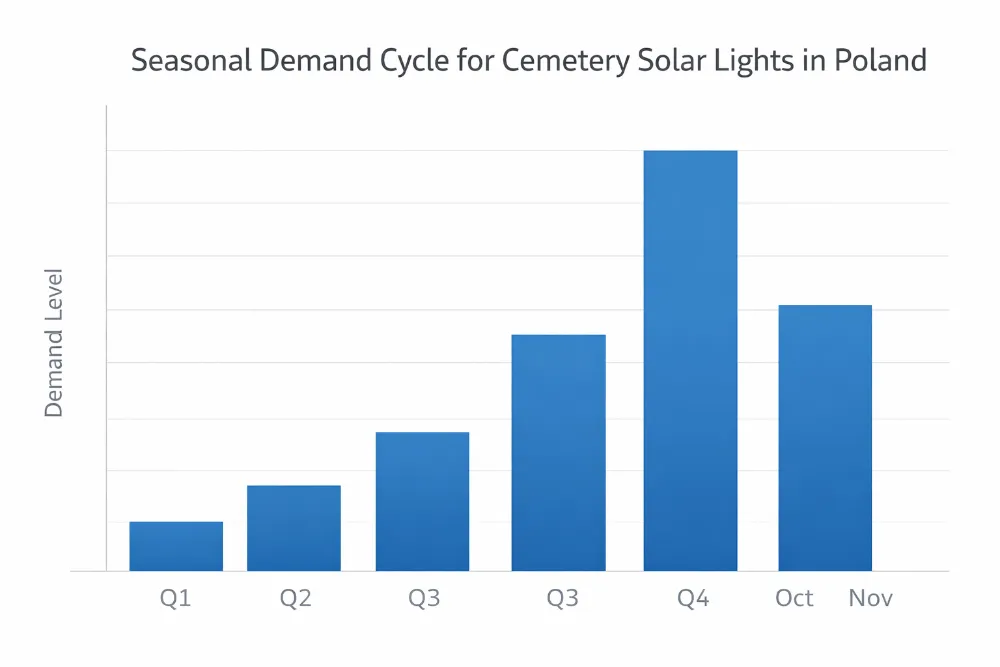
For B2B buyers, this means:
- Inventory timing is critical
- Overstock risk after November is high
- Pre-season ordering (6–8 months ahead) is common practice
Poland is not a year-round balanced market — it is a peak-driven memorial market.
1.3 Traditional Candles vs Solar Replacement
Traditional paraffin grave candles, known as "znicze" in Polish, still dominate the Polish cemetery landscape. These decorative votive candles are specifically designed for cemetery use and can burn for up to a week. However:
- Solar lantern adoption is increasing
- LED alternatives are seen as longer-lasting
- Weather resistance is valued during autumn rains
Solar is not yet replacing candles entirely — but it is gaining relevance, especially among younger consumers and urban families. The transition from traditional candles to solar powered memorial lights represents a gradual shift in cemetery lighting preferences.
For importers, this means:
The market is transitional — not saturated.
2. Product Preferences in the Polish Cemetery Market
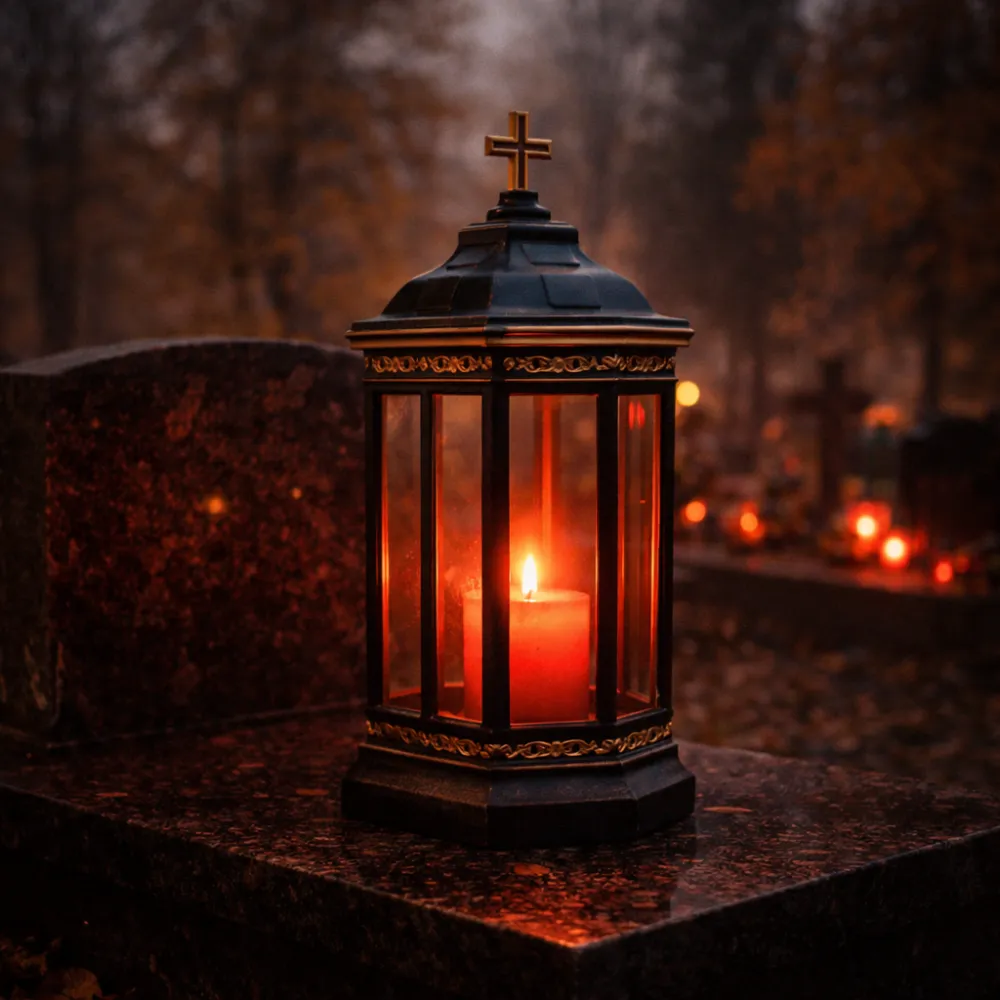
Understanding product preference is essential. Polish cemetery lighting demand is conservative and tradition-oriented.
2.1 Dominant Light Colors
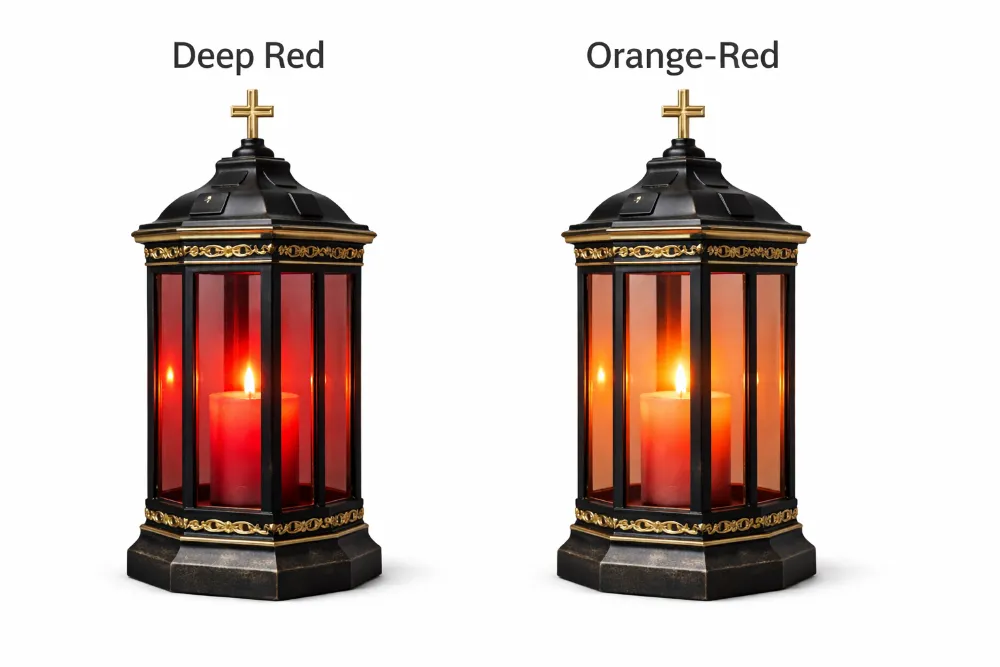
Poland is overwhelmingly a red LED market.
- 🔴 Red = Primary choice
- 🟡 Warm white = Secondary option
- ⚪ Cool white = Minimal demand
Red is associated with remembrance, warmth, and traditional memorial aesthetics.
For suppliers, consistency of red tone is crucial.
Batch deviation in red LED shade can lead to distributor complaints.
2.2 Lantern Structure & Traditional Design
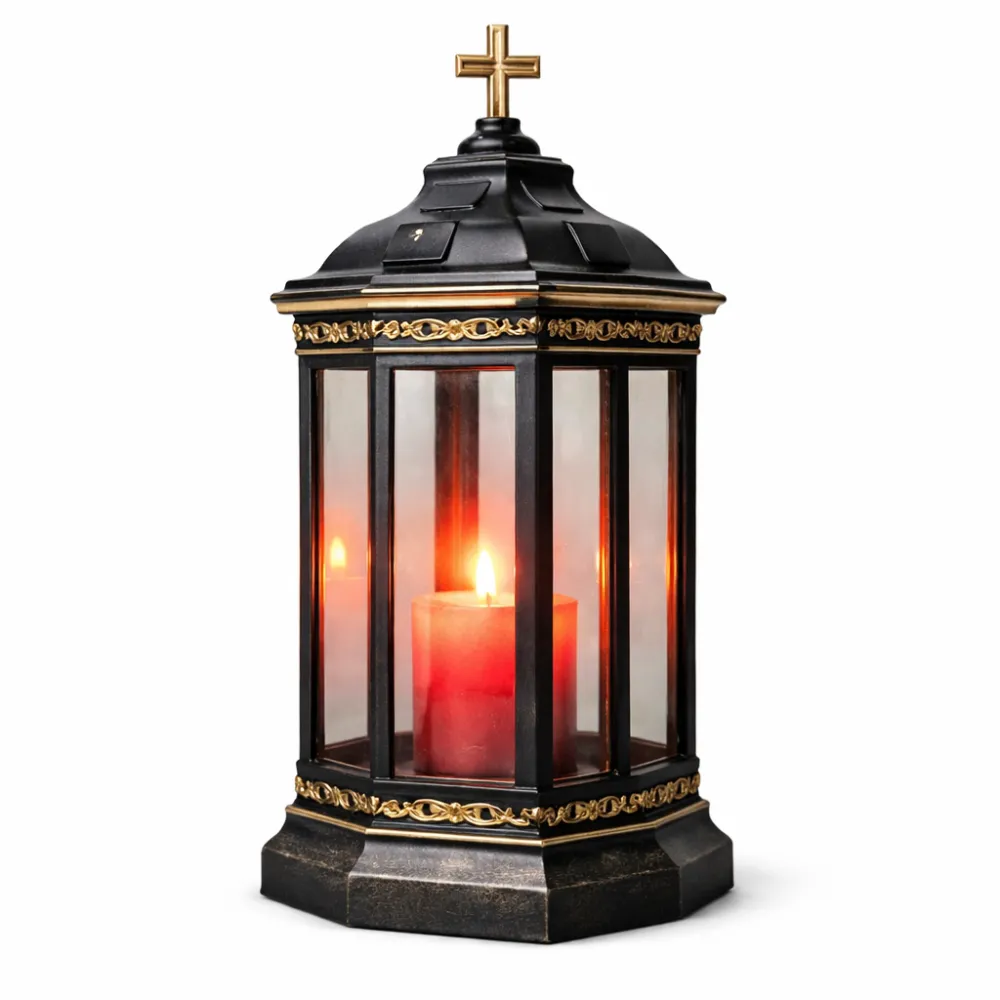
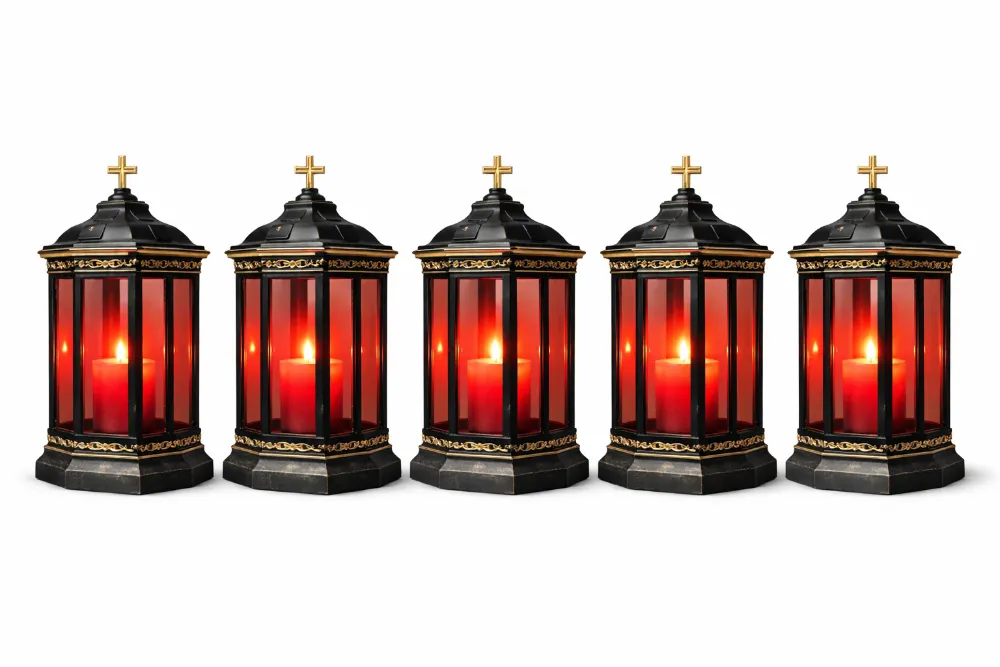
The most common product format is:
- Classic lantern shape
- Black housing
- Gold or metallic trim accents
- Cross symbols or religious motifs
Minimalist modern designs are less dominant compared to Western Europe.
Buyers typically prefer:
- Recognizable traditional shapes
- Cemetery-specific styling
- Stability against wind
2.3 Glass vs Plastic Housing
Poland maintains a strong preference for glass lantern panels, particularly in mid-tier and upper-tier price segments.
Reasons:
- Perceived higher quality
- Traditional aesthetic alignment
- Better light diffusion
However, glass increases:
- Shipping breakage risk
- Packaging cost
- Post-sale complaint exposure
Lower-tier markets may accept plastic alternatives, but visual quality must still reflect traditional styling.
2.4 Structural Expectations
Polish buyers often evaluate:
- Base stability (wind resistance)
- Water ingress protection
- Cold weather resistance
- Visible LED brightness
The product must survive:
- Autumn rain
- Early winter frost
- Temperature drops below 0°C
This directly influences battery selection and structural sealing — which will be analyzed in the next section.
2.5 Summary of Polish Product Positioning
The Polish grave solar light market is characterized by:
- Strong red LED dominance
- Traditional lantern shapes
- High seasonal peak demand
- Preference for glass in mid-to-high tier
- Conservative design language
For B2B buyers, success depends on:
- Matching traditional expectations
- Controlling seasonal inventory
- Ensuring structural durability for autumn/winter use
3. Cold Weather Performance & Technical Requirements
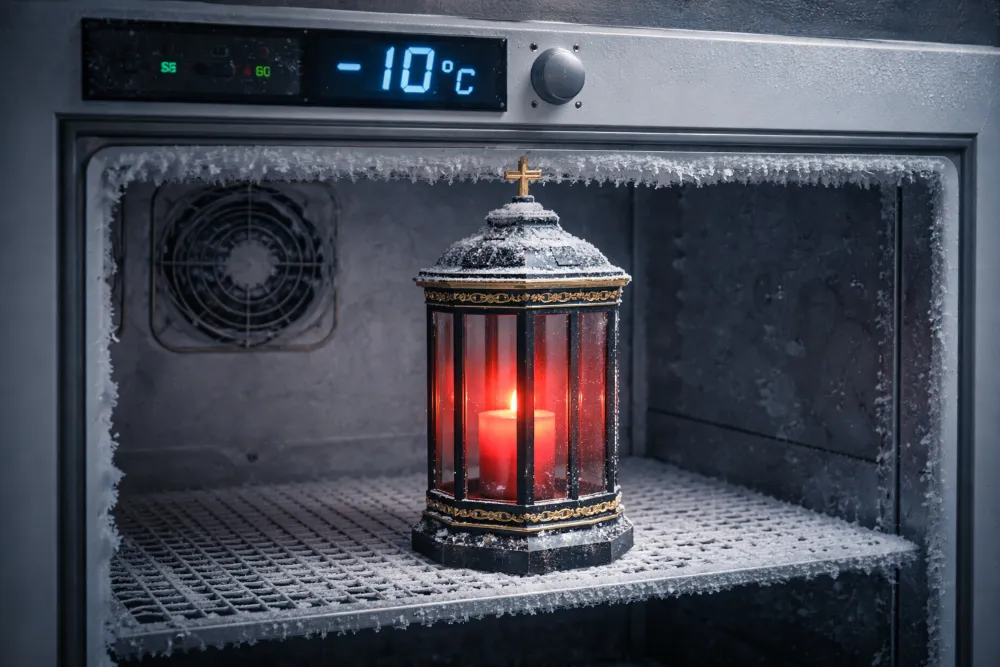
Poland is not simply a decorative cemetery lighting market — it is a cold-climate performance market.
For B2B buyers, product failure does not typically occur in summer.
It happens in late October, November rain, or early winter frost — precisely when demand is at its peak.
This makes technical configuration far more important than aesthetic design.
3.1 Winter Temperature Impact on Batteries
Polish autumn and early winter temperatures frequently drop below 0°C, and in many regions can reach:
- -5°C to -10°C during peak memorial season
- Even lower in certain areas after November
According to climate data, Poland’s November temperatures average between 2°C to 7°C (36°F to 45°F), with nighttime temperatures often dropping to -1°C or below in many regions. December temperatures can fall further to between -3°C and 2°C (27°F to 36°F).
Low temperatures directly affect battery chemistry:
- Reduced discharge efficiency
- Lower runtime duration
- Voltage instability
- Accelerated capacity degradation
In cemetery use cases, consumers expect:
- Visible brightness at night
- Stable performance even in cold evenings
- No sudden failure after only a few days
If the product dims significantly or stops working during the memorial season, distributors may face:
- Returns
- Replacement demands
- Reputation damage
Cold performance is not optional — it is a structural requirement.
3.2 Battery Type Comparison for the Polish Market
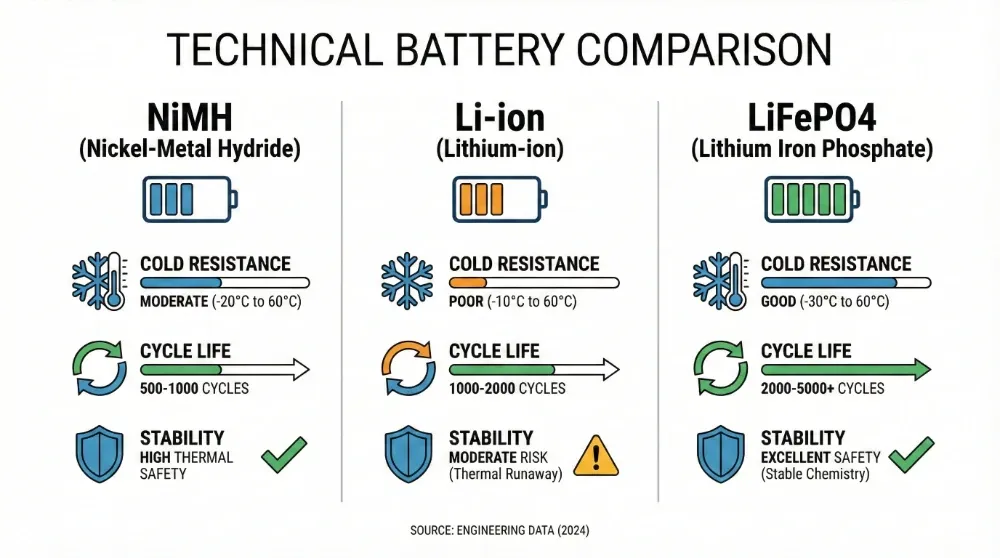
Battery selection is one of the most critical sourcing decisions for Poland. Understanding the performance characteristics of different battery chemistries is essential for cold-climate markets (see our detailed battery comparison guide for technical specifications).
NiMH (Nickel Metal Hydride)
- Lower cost
- Common in entry-level models
- Noticeable performance drop below 0°C
- Shorter overall lifespan
Suitable for lower-tier price-sensitive segments but carries winter risk.
Li-ion (Lithium-ion)
- Higher energy density
- Better runtime in moderate temperatures
- Performance decreases in cold environments
- More sensitive to deep discharge
Often used in mid-tier products, but winter validation is necessary.
LiFePO4 (Lithium Iron Phosphate)
- Stronger low-temperature stability
- Higher cycle life
- More stable discharge curve
- Longer service life
Although slightly higher in cost, it is structurally better suited for:
- Cold-climate EU markets
- Longer runtime expectations
- Reduced warranty risk
Research on LiFePO4 cold weather performance shows that at -4°F (-20°C), these batteries may lose 20-30% of their usable capacity, but they maintain more stable performance compared to NiMH or standard Li-ion alternatives in cold conditions.
For distributors targeting mid-to-high tier positioning, LiFePO4 significantly reduces complaint probability.
3.3 Solar Panel Efficiency in Low Sunlight
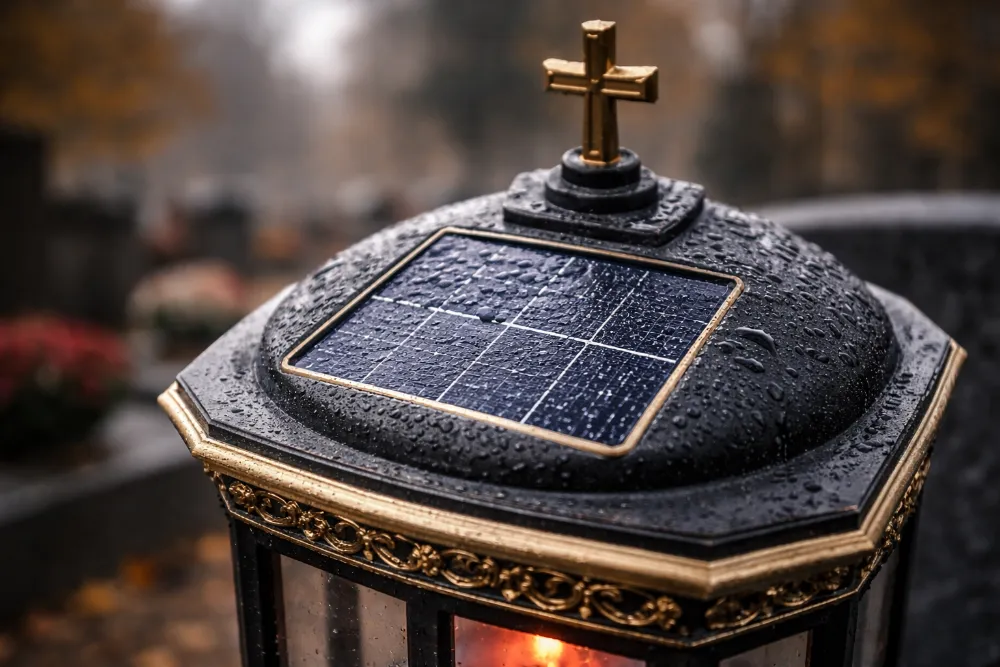
Poland’s autumn season presents additional charging challenges:
- Short daylight hours
- Frequent cloudy conditions
- Lower sun angle
- Reduced solar intensity
This affects:
- Daily charge accumulation
- Nighttime runtime stability
Key technical considerations include:
- Sufficient panel surface area
- Low-light charging efficiency
- Power management algorithm optimization
Undersized panels may function acceptably in summer but underperform in October–November.
For cemetery products, underperformance during peak season creates the highest commercial risk.
3.4 IP Rating & Moisture Protection
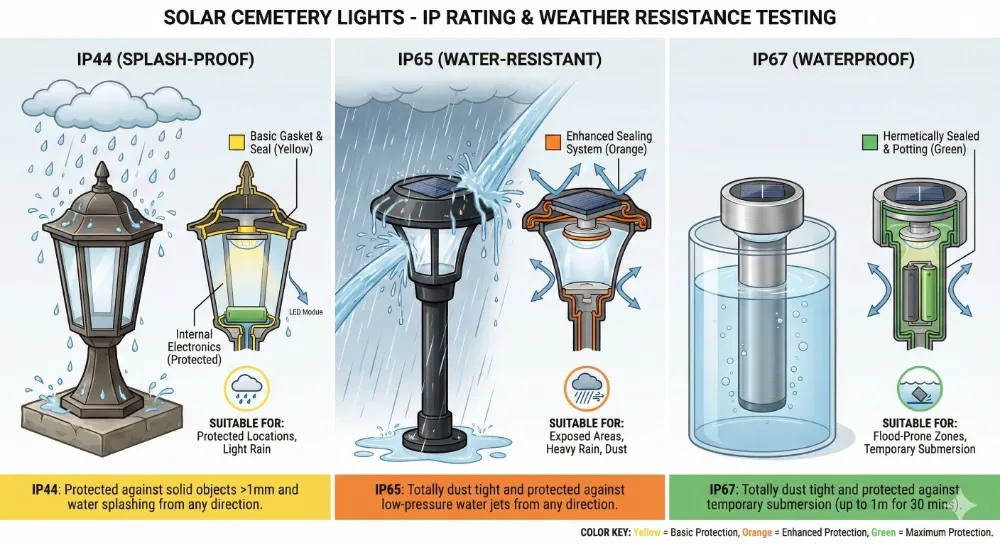
Autumn cemetery visits often occur in:
- Rain
- High humidity
- Ground moisture exposure
Polish buyers typically expect minimum IP44, preferably IP65 or IP67 waterproof ratings for mid-tier segments. Understanding these waterproof rating standards is crucial for product specification.
Water ingress can cause:
- PCB corrosion
- LED flickering
- Battery compartment oxidation
Proper sealing, gasket design, and drainage structure are essential — particularly for glass lantern models.
3.5 Runtime Stability Expectations
Unlike decorative garden lighting, cemetery lanterns are evaluated emotionally.
Consumers expect:
- Whole-night illumination
- Stable brightness (not fading after 2–3 hours)
- Predictable daily performance
Typical runtime expectation in this market:
- 6–8 hours minimum
- Stable glow throughout evening memorial visits
Battery capacity, LED power draw, and charging efficiency must be balanced carefully.
Overdriving LED brightness at the cost of runtime may generate initial visual appeal — but it increases complaint rates.
3.6 Technical Summary for B2B Buyers
For the Polish cemetery solar light market, successful sourcing depends on:
- Low-temperature battery optimization
- Adequate panel sizing for autumn light conditions
- Strong moisture protection
- Balanced runtime engineering
- Conservative power management
Understanding the technical requirements for memorial lights helps ensure product specifications meet market demands.
Poland should be treated as a performance-validation market, not simply a decorative SKU opportunity.
4. Pricing Sensitivity & Distribution Channels

Poland is a volume-driven memorial market — but also a price-sensitive EU market.
For B2B buyers, product positioning must balance:
- Cost competitiveness
- Seasonal turnover speed
- Warranty risk exposure
- Perceived traditional value
Understanding distribution structure is essential before defining specification level.
4.1 Major Distribution Channels
Polish cemetery solar lights are commonly sold through:
1️⃣ Local Cemetery Shops
- Small, independent retailers
- Located near cemetery entrances
- Highly seasonal sales
- Strong demand spike before November 1st
These retailers prioritize:
- Fast-moving SKUs
- Traditional red lantern styles
- Mid-to-low price positioning
- Stable but simple packaging
They often operate with limited storage space, increasing pressure on distributors to supply close to peak season.
2️⃣ Supermarkets & Seasonal Retail Programs
Large retailers and supermarket chains introduce cemetery lighting programs in Q3–Q4.
Characteristics:
- Strict pricing targets
- Pre-season contract-based ordering
- High volume requirements
- Tight delivery timelines
These buyers are extremely cost-sensitive but require:
- Reliable documentation
- Stable production lead times
- Consistent batch quality
Failure to meet timeline commitments can jeopardize future seasonal listings.
3️⃣ Online Platforms (e.g., Allegro)
Online sales platforms play an increasingly important role in Poland.
Key characteristics:
- High price transparency
- Strong competition among sellers
- Product comparison driven by price + reviews
- Fast replacement demand before peak memorial season
For distributors selling online:
- Color consistency is critical
- Runtime stability reduces negative reviews
- Visual similarity increases price competition
This channel intensifies margin pressure.
4.2 Price Tier Segmentation
Polish cemetery solar lights can generally be segmented into three tiers:
| Tier | Typical Characteristics | Risk Profile |
|---|---|---|
| Entry-Level | Plastic housing, NiMH battery, basic packaging | Higher winter complaint risk |
| Mid-Tier | Glass panels, Li-ion battery, better sealing | Balanced cost-performance |
| Upper-Tier | Glass + reinforced structure, LiFePO4, premium packaging | Higher upfront cost, lower return rate |
The majority of volume sits in entry and mid-tier ranges.
However:
- Entry-tier products carry higher seasonal return risk
- Upper-tier products reduce complaints but require stronger brand positioning
Buyers must align product specification with channel strategy.
4.3 MOQ & Inventory Concerns
Due to the strong seasonal concentration, Polish distributors often face:
- Inventory compression after November
- Cash flow pressure post-season
- Storage limitations
Common B2B concerns include:
- Flexible MOQ structures
- Mixed-model container loading
- Staggered shipment timing
- Early production reservation
Overestimating demand may result in unsold stock that cannot easily be cleared until the next year.
4.4 Margin Pressure & Competitive Reality
Poland’s cemetery lighting market is highly competitive:
- Multiple Chinese suppliers
- Local rebranding businesses
- Similar product structures across competitors
This creates:
- Price comparison pressure
- Limited structural differentiation
- Margin compression in online channels
For distributors, differentiation may come from:
- Improved battery performance
- Stronger packaging durability
- Stable red LED consistency
- Slight structural upgrades
Pure price competition is rarely sustainable long-term.
4.5 Strategic Positioning Insight
Poland is not purely a low-price market — it is a risk-sensitive seasonal market.
The key is not to chase the lowest cost, but to balance:
- Specification level
- Seasonal volume
- Warranty exposure
- Channel alignment
For B2B buyers new to the Polish market, understanding bulk purchasing strategies for solar garden lights from China can help navigate these complexities effectively.
5. EU Compliance & Regulatory Requirements for Poland
Poland operates fully under the European Union regulatory framework.
For importers and distributors, compliance is not optional — it is a structural requirement for customs clearance, retailer acceptance, and long-term business stability.
Failure to meet EU documentation standards can result in:
- Shipment delays
- Customs rejection
- Retail listing refusal
- Fines or product recalls
Understanding the compliance landscape is essential for cemetery solar light sourcing.
5.1 CE Marking Requirements
Cemetery solar lights sold in Poland must comply with applicable EU directives and carry valid CE marking.
Key considerations include:
- Electrical safety compliance
- EMC (Electromagnetic Compatibility) requirements
- Low Voltage Directive (where applicable)
- Proper technical file documentation
Importers should ensure suppliers provide:
- Declaration of Conformity (DoC)
- Test reports from recognized laboratories
- Complete technical documentation
Retailers may request documentation before listing seasonal products. LED lighting products in the EU must ensure compliance with various regulations and directives concerning electrical safety, energy efficiency, labeling, documentation, and lab testing.
5.2 RoHS Compliance
Solar grave lights must comply with RoHS (Restriction of Hazardous Substances) regulations.
The RoHS Directive, which took effect on July 1, 2006, restricts substances such as:
- Lead
- Mercury
- Cadmium
- Certain flame retardants
RoHS documentation is particularly important for:
- Large retailers
- Cross-border EU distribution
- Online platform sellers
For detailed guidance on RoHS requirements specific to solar products, see our comprehensive RoHS certification guide for solar garden lights.
Non-compliant electrical components can result in serious regulatory consequences.
5.3 WEEE Registration
Solar cemetery lights fall under the WEEE (Waste Electrical and Electronic Equipment) directive.
The WEEE Directive requires proper registration and recycling symbols for all electrical and electronic equipment to ensure proper end-of-life disposal and environmental protection.
Importers are responsible for:
- Proper WEEE registration within Poland
- Displaying correct recycling symbols
- Participating in recycling schemes
Distributors importing under their own brand must ensure compliance under Polish WEEE registration systems.
Failure to register may block sales legally.
5.4 Battery Transportation & Safety Regulations
Lithium-based batteries (Li-ion / LiFePO4) require compliance with:
- UN38.3 transportation testing
- MSDS documentation
- Proper shipping classification
This affects:
- Sea freight documentation
- Air freight restrictions
- Warehouse handling procedures
Importers should verify:
- Valid UN38.3 test summary
- Correct battery labeling
- Transport packaging compliance
Battery documentation is frequently inspected in EU customs processes.
5.5 Packaging & Environmental Markings
EU packaging regulations increasingly require:
- Recycling symbols
- Material identification marks
- Environmental labeling (where applicable)
Poland follows EU packaging waste directives, and retailers may require:
- Multilingual labeling
- Polish language instructions
- Environmental compliance statements
Seasonal products are often inspected more strictly by supermarket chains.
5.6 Documentation Checklist for Polish Importers
Before placing large seasonal orders, B2B buyers should confirm suppliers provide:
- CE Declaration of Conformity
- RoHS test reports
- WEEE labeling compliance
- UN38.3 battery documentation
- MSDS for lithium batteries
- Proper packaging marks
Documentation gaps can delay shipments — especially when ordering close to peak season.
5.7 Compliance Strategy Insight
In a highly seasonal market like Poland:
Delays caused by documentation issues can destroy an entire selling cycle.
Importers should treat regulatory documentation as part of their risk management strategy — not as an afterthought.
6. Market Competition Landscape
The Polish grave solar light market is stable — but highly competitive.
It is not an innovation-driven market.
It is a volume-driven, traditional-design market with strong seasonal concentration.
Understanding the competitive structure helps distributors avoid unrealistic margin expectations and positioning mistakes.
6.1 Chinese Supplier Dominance
The majority of solar cemetery lanterns sold in Poland are manufactured in China.
Characteristics of this supply structure:
- Similar base designs across multiple suppliers
- Shared mold structures in entry-level segments
- Price-driven competition in bulk seasonal programs
- Limited structural differentiation in lower tiers
This creates a market where:
- Product appearance is often highly similar
- Price becomes the primary comparison factor
- Specification transparency is limited
For B2B buyers, supplier selection must go beyond visual similarity.
6.2 Local Brand Repackaging Model
Many Polish brands do not manufacture locally. Instead, they:
- Import semi-standardized products
- Customize packaging and labeling
- Position as domestic distributors
This model focuses on:
- Brand perception
- Retail channel access
- Faster seasonal distribution
However, underlying product structure often remains similar across brands.
The competitive edge lies more in:
- Distribution strength
- Packaging design
- Retail relationships
Rather than structural product innovation.
6.3 High Product Homogeneity
Common characteristics across competitors:
- Red LED dominance
- Classic black lantern housing
- Glass panel structure
- Similar panel size and battery capacity
This results in:
- Limited visible differentiation
- Strong price comparison behavior
- Reduced ability to command premium pricing without added value
For distributors, differentiation must come from:
- Cold-weather reliability
- Battery performance
- Packaging durability
- Brand trust signals
Structural engineering becomes the invisible competitive advantage.
6.4 Margin Pressure & Price War Risk
Due to seasonal demand concentration, many distributors:
- Overestimate demand
- Import aggressively before peak season
- Compete heavily to clear stock
This can trigger:
- Pre-season discounting
- Post-season liquidation
- Online price wars
Especially on platforms like Allegro.
Entry-tier segments are most vulnerable to price erosion.
Mid-to-high tier segments maintain more stability due to:
- Lower complaint rates
- Stronger brand positioning
- Better perceived quality
6.5 Barrier to Entry Assessment
Poland is not difficult to enter from a sourcing perspective.
However, true challenges include:
- Managing seasonal cash flow
- Controlling winter complaint risk
- Aligning specification with channel
- Avoiding inventory surplus
Low entry barrier does not equal low operational risk.
6.6 Competitive Strategy Insight for B2B Buyers
The Polish cemetery solar light market rewards:
- Risk management
- Specification discipline
- Seasonal forecasting accuracy
It punishes:
- Over-aggressive pricing
- Under-engineered winter products
- Late-season procurement
Distributors who treat Poland as a simple red-lantern volume market often face margin compression.
Those who treat it as a structured seasonal performance market tend to build more stable long-term positioning.
7. Import Risks & Seasonal Inventory Strategy
Poland’s cemetery solar light market is not high-risk in demand —
it is high-risk in timing, climate exposure, and inventory planning.
Because sales are heavily concentrated around All Saints’ Day (November 1st), a single mistake in forecasting, specification, or shipment timing can affect the entire annual cycle.
Below are the primary operational risks B2B buyers must manage.
7.1 Seasonal Overstock Risk
The most common mistake in the Polish market is overestimating peak demand.
If products remain unsold after early November:
- Retailers reduce prices aggressively
- Distributors are forced into discount clearance
- Storage costs increase
- Cash flow becomes locked until the next season
Unlike garden lighting, cemetery lanterns have limited off-season sell-through.
Strategic approach:
- Conservative forecasting for new SKUs
- Test orders before scaling volume
- Diversify into 2–3 core models rather than excessive variety
- Align container quantity strictly with confirmed channel demand
Seasonal discipline protects margin.
7.2 Winter Complaint & Warranty Risk
Peak usage occurs during:
- Cold nights
- Rainy conditions
- Short daylight periods
Underperforming products often generate complaints such as:
- “Stops working after a few days”
- “Light becomes very dim”
- “Battery dies quickly in cold weather”
Winter-related complaints damage distributor credibility during the most visible selling period. Understanding common solar lighting problems and their solutions can help prevent these issues.
Risk reduction strategy:
- Validate low-temperature battery performance
- Avoid undersized solar panels
- Conduct pre-shipment runtime testing
- Select conservative LED power configurations
Reducing complaint rate is more valuable than maximizing brightness. For comprehensive strategies, see our guide on how to reduce after-sales issues for garden solar lights in bulk orders.
7.3 Glass Breakage & Logistics Risk
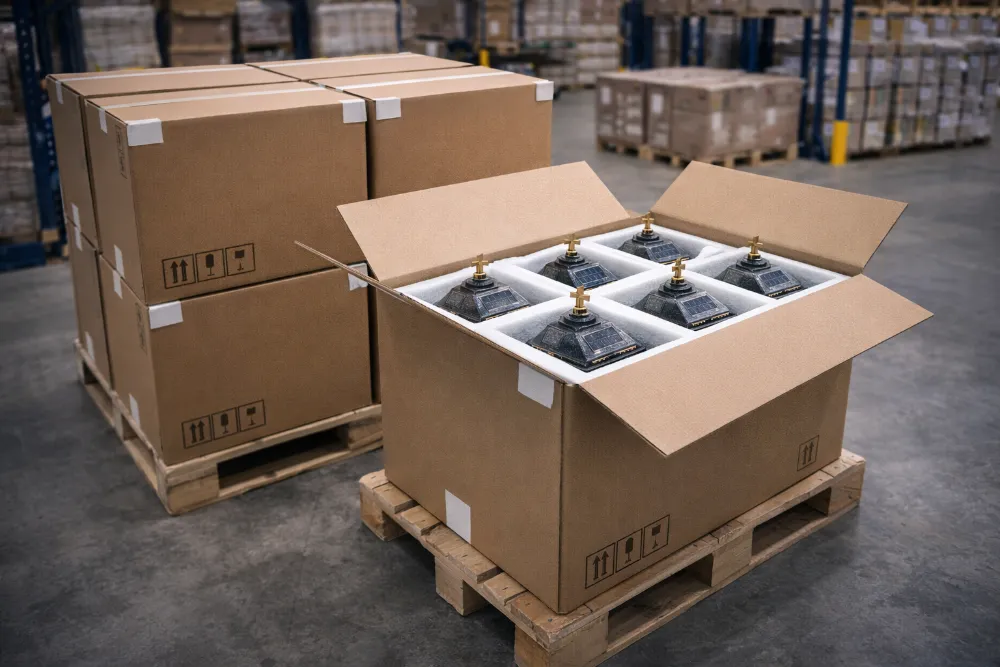
Glass-panel lanterns are popular in Poland — but increase:
- Transit damage probability
- Handling sensitivity
- Replacement cost
Breakage risk is amplified during:
- High-volume pre-season shipping
- Consolidated container loading
- Last-mile delivery to smaller retailers
Mitigation measures:
- Reinforced internal packaging
- Drop-tested carton design
- Optimized pallet stacking
- Hybrid material alternatives for lower tiers
Logistics durability directly impacts post-arrival profitability.
7.4 LED Color Inconsistency Risk
Because red LED dominates the Polish cemetery market, visual consistency is critical.
Potential issues include:
- Slight red shade differences across batches
- Uneven brightness levels
- Inconsistent flicker effect
In a cemetery setting, visible deviation between units placed side by side may result in:
- Retail dissatisfaction
- Return requests
- Negative online reviews
Preventive approach:
- LED bin control
- Batch-level inspection
- Supplier consistency tracking
Color management is part of brand risk control.
7.5 Production & Shipping Timing Risk
Late shipment is one of the most damaging operational failures in Poland’s cemetery market.
If products arrive:
- After mid-October
- During peak congestion periods
- Without buffer for customs clearance
Distributors may miss the primary sales window entirely.
Recommended production timeline:
- Order confirmation: March–May
- Production scheduling: June–August
- Shipment departure: August–September
- Arrival & distribution: September–early October
A disciplined timeline reduces exposure to peak-season delays.
7.6 Strategic Inventory Model for Polish Buyers
A balanced sourcing model often includes:
- 1–2 high-volume core SKUs
- 1 upgraded mid-tier SKU
- Controlled test quantity for new design variants
This reduces:
- Overstock probability
- Capital exposure
- Post-season liquidation pressure
Poland rewards structured planning — not aggressive expansion.
7.7 Operational Insight
The Polish cemetery solar light market is commercially attractive because:
- Demand is culturally stable
- Annual peak is predictable
- Red LED format is standardized
But profitability depends on:
- Technical reliability in cold climate
- Seasonal forecast accuracy
- Inventory discipline
- Production timing precision
8. Why Glowyard Is Structured for the Polish Cemetery Market
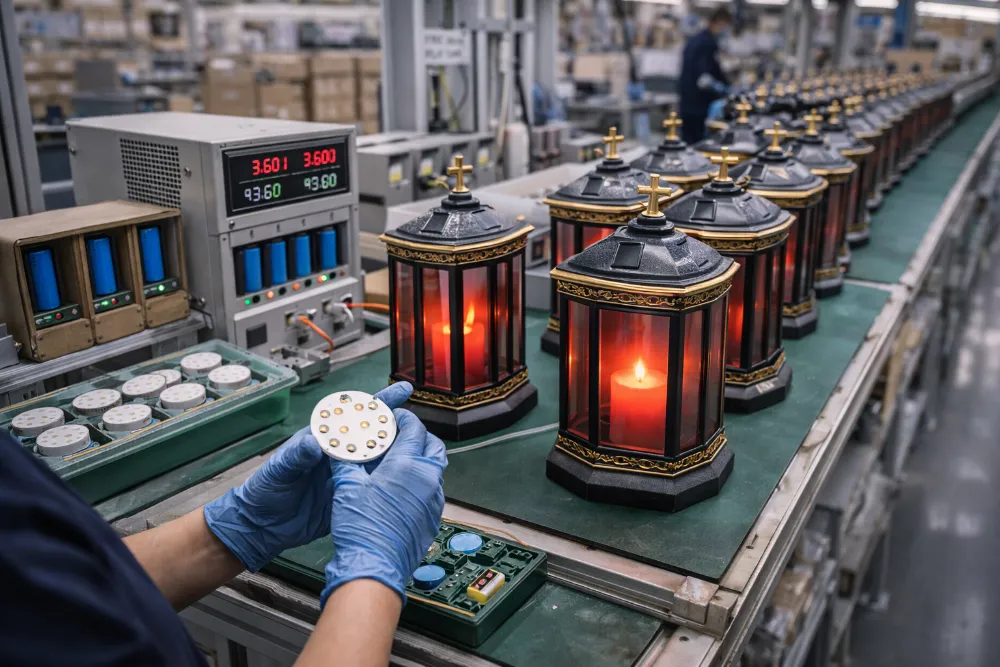
Poland’s cemetery solar light market is not difficult because of demand.
It is challenging because of:
- Strong seasonality
- Cold-climate performance pressure
- Red LED consistency requirements
- EU compliance structure
- Inventory timing sensitivity
Glowyard is structured specifically to support distributors operating under these conditions. As a professional solar garden lights manufacturer in China with specialized experience in cemetery solar lighting solutions, we understand the unique requirements of the Polish market.
8.1 Cold-Climate Battery Engineering
Polish peak sales occur in late autumn and early winter.
To reduce winter complaint risk, we support:
- LiFePO4 battery configuration for improved low-temperature stability
- Optimized charging parameters for short daylight conditions
- Controlled discharge curve balancing brightness and runtime
- Pre-shipment runtime validation
We do not configure cemetery products purely for summer testing conditions —
they are engineered for autumn and early winter environments.
8.2 LED Bin Management & Red Color Consistency
Red LED dominates the Polish cemetery market.
Glowyard implements:
- Structured LED bin selection
- Batch-level color consistency inspection
- Controlled supplier sourcing for LED components
- Aging test validation before packing
For distributors, this reduces:
- Visible red tone deviation
- Retail complaints
- Online review risks
Color stability becomes part of brand stability.
8.3 Structural Durability & Packaging Optimization
Glass-panel lanterns remain popular in Poland.
To reduce logistics damage risk, we provide:
- Reinforced inner carton design
- Drop-tested export cartons
- Optimized pallet stacking layout
- Optional hybrid glass + durable frame alternatives
This helps protect margin during peak seasonal shipment periods.
8.4 EU Documentation & Compliance Support
We provide structured documentation support for EU markets including:
- CE Declaration of Conformity
- RoHS compliance reports
- UN38.3 battery documentation
- MSDS documentation
- WEEE marking guidance
Proper documentation reduces customs delay risk and simplifies retailer onboarding. Our quality certifications meet all major EU market requirements.
8.5 Seasonal Production Planning Support
Because Poland’s cemetery demand is concentrated around November 1st, timing is critical.
Glowyard supports:
- Early production slot reservation
- Capacity planning for peak-season orders
- Staggered shipment scheduling
- Mixed-SKU container optimization
This helps distributors avoid:
- Late shipment risk
- Production congestion
- Inventory compression
8.6 OEM & Differentiation Options
For distributors seeking differentiation beyond standard red lantern models, we support:
- Private label packaging
- Logo customization
- Battery capacity upgrades
- Subtle structural improvements
- Exclusive mold development for higher-volume partners
Poland’s market is traditional — but subtle differentiation still builds long-term positioning.
9. Conclusion
Poland represents a stable yet highly seasonal cemetery solar light market.
It offers:
- Predictable annual peak demand
- Strong cultural purchasing behavior
- Standardized red LED product format
But success depends on:
- Cold-weather engineering
- Inventory discipline
- Compliance precision
- Production timing control
Glowyard positions itself not merely as a supplier,
but as a structured manufacturing partner for distributors operating in seasonal, cold-climate EU cemetery markets.
10. Frequently Asked Questions (FAQ)
Below are common questions raised by importers, distributors, and cemetery product buyers evaluating the Polish market.
10.1 Is the Polish grave light market stable long-term?
Yes — culturally, the market is very stable.
Poland has a strong Catholic tradition, and cemetery visits around All Saints’ Day (November 1st) are deeply rooted in social practice. This creates predictable annual demand.
However, while demand is stable, sales are highly concentrated seasonally. Profitability depends more on planning discipline than on market growth speed.
10.2 Is red LED mandatory for Poland?
Red LED is not legally mandatory — but commercially dominant.
The majority of Polish cemetery lantern sales are:
- Red LED (primary demand)
- Warm white (secondary)
Cool white has very limited demand in traditional cemetery channels.
For first-time market entry, red LED models are typically the safest starting point.
10.3 What battery type is safest for Polish winter conditions?
For cold autumn and early winter usage:
- LiFePO4 offers the most stable low-temperature performance
- Li-ion performs adequately but must be validated
- NiMH carries higher winter dimming risk
If targeting mid-to-high tier positioning and lower warranty exposure, LiFePO4 is often the safer long-term choice.
10.4 How early should orders be placed for peak season?
Recommended timeline:
- Order confirmation: March–May
- Production scheduling: June–August
- Shipment: August–September
- Arrival: Before early October
Late shipments significantly increase risk of missing the primary November sales window.
Because this is a once-a-year peak cycle, timing discipline is critical.
10.5 What are the biggest risks for new importers?
The most common mistakes include:
- Overestimating seasonal demand
- Choosing low-cost batteries without cold testing
- Ignoring LED color consistency
- Delaying production too close to peak season
- Underestimating glass breakage risk
Poland is not a difficult market structurally — but it punishes operational miscalculations.
10.6 Are Polish buyers highly price-sensitive?
Yes — especially in entry-level segments and online channels.
However, purely competing on the lowest price often results in:
- Higher return rates
- Warranty pressure
- Online negative reviews
Mid-tier positioning with balanced specification often produces more stable margins than extreme low-cost strategies.
10.7 Do EU certifications apply fully to cemetery solar lights?
Yes.
Products must comply with:
- CE requirements
- RoHS
- WEEE obligations
- Battery transportation regulations (UN38.3)
Distributors importing under their own brand are responsible for ensuring documentation completeness.
10.8 Is product differentiation possible in such a traditional market?
Yes — but differentiation is subtle.
Opportunities include:
- Improved cold-weather battery performance
- More stable red LED tone
- Stronger packaging durability
- Slight structural refinements
- Private label branding
Because design is traditional, reliability and consistency become the competitive advantage.
10.9 Is Poland suitable for first-time EU cemetery product exporters?
Poland can be suitable if:
- Seasonal planning is carefully managed
- Technical configuration matches cold climate needs
- Compliance documentation is prepared correctly
- Inventory risk is controlled conservatively
It is not an experimental market — it requires structured preparation.
Final Insight
The Polish grave solar light market is:
- Culturally stable
- Seasonally concentrated
- Technically sensitive
- Price competitive
Distributors who approach it with disciplined sourcing, conservative forecasting, and reliable engineering typically build sustainable annual programs.
Those who treat it as a simple red-lantern volume opportunity often face margin erosion.
A structured approach defines success.
References & Sources
This analysis is supported by data and insights from the following authoritative sources:
Statistical & Government Data
-
Statistics Poland (GUS) – 2021 Census: Religion in Poland demographics
Source: Wikipedia – Religion in Poland -
Poland Climate Data: November and winter temperature averages
Source: Weather and Climate – Poland November Averages
Cultural & Traditional Sources
-
Polish All Saints’ Day Traditions: Cemetery customs and znicz candles
Sources: -
Solar Cemetery Lights Evolution: Modern znicz solarne adoption
Source: Cordless.io – Znicze Solarne Guide
Technical & Battery Research
- LiFePO4 Cold Weather Performance: Low-temperature battery behavior
Sources:
EU Regulatory Framework
-
RoHS Directive: Restriction of Hazardous Substances in EEE
Sources: -
LED Lighting EU Regulations: Safety standards and compliance
Source: ComplianceGate – LED Lighting Regulations in the EU
Market Research
- Global Solar Lighting Market: Industry size and growth projections
Source: Grand View Research – Solar Lighting System Market Report
Disclaimer: Market conditions, regulations, and technical specifications are subject to change. This analysis is based on data available as of 2025 and should be verified with current sources before making business decisions. All external links and references are provided for informational purposes and do not constitute endorsements.
Content Compliance Note: Information from external sources has been paraphrased and summarized to comply with licensing restrictions. Original sources are cited throughout for verification and further reading.