
Why Christmas Lights Use 31V but LED Strips Don’t?
Christmas lights sparkle with festive warmth, but have you ever wondered why they use 31V, while LED strips work on 12V or 24V?
Christmas lights use 31V for safety and long-distance stability, while LED strips use 12V/24V for compact, high-power design. Each voltage matches the product’s structure, usage, and certification standards.
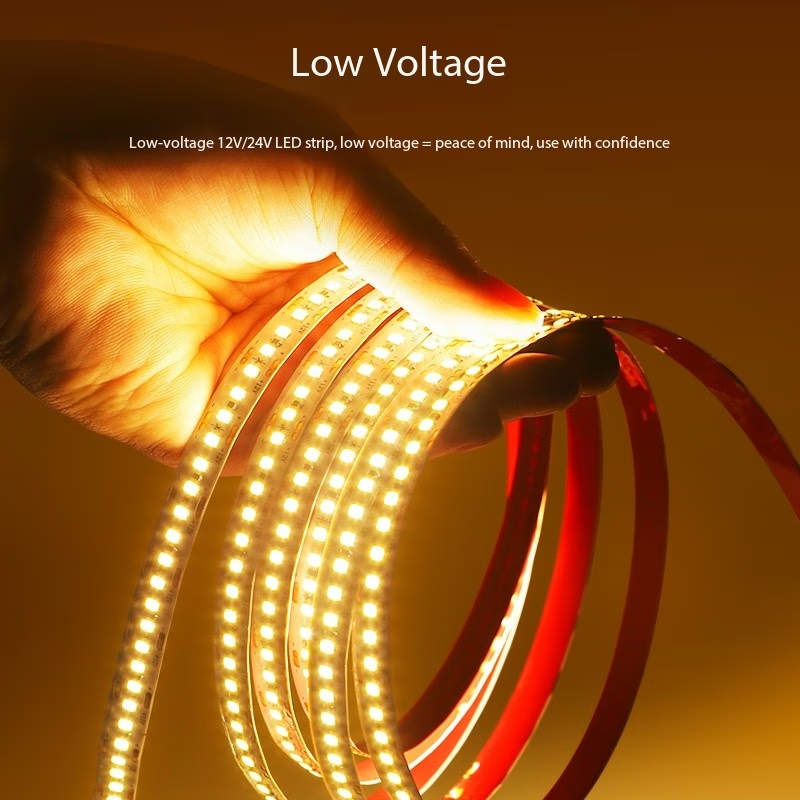
low voltage 12v or 24v led strip
Christmas lights and LED strips may look similar to buyers, but they are entirely different in design, function, and voltage. In this article, I’ll explain why 31V became the standard for Christmas string lights and why LED strips never adopted it.
What Are Christmas Lights? (Fairy Lights & LED String Lights Explained)
Many buyers think Christmas lights and LED strips are similar, but their structures are very different.
Christmas lights are low-power LEDs connected on flexible copper or PVC wire, made for long-distance decorative use. They are not the same as LED strips used for architectural lighting.
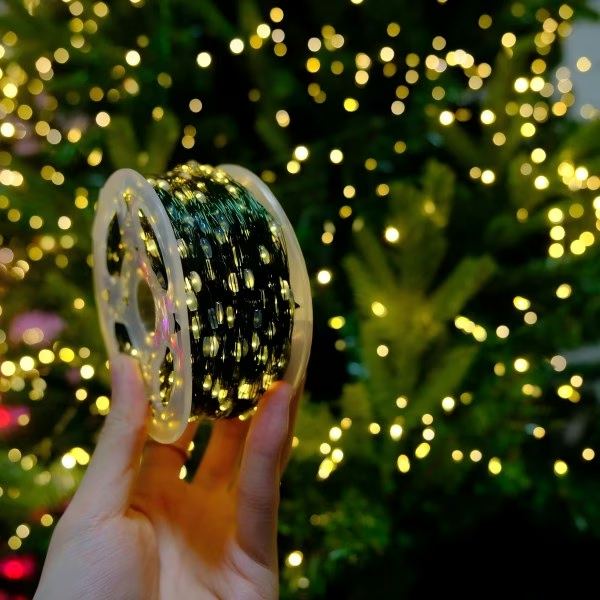
[fairy lights & led string lights
Structure and Electrical Design
| Christmas lights use micro LEDs soldered on thin copper or PVC wires. They are made for low current, low power, and can run over tens of meters. These lights decorate trees, windows, facades, or indoor holiday setups. LED strips, on the other hand, are mounted on printed circuit boards (PCBs) with SMD LEDs and resistors, which demand higher power and precision. |
Feature | Christmas Lights | LED Strips |
|---|---|---|---|
| Wire Type | Copper / PVC wire | PCB board | |
| LED Type | Micro LED | SMD LED | |
| Voltage | 31V typical | 12V / 24V | |
| Usage | Decoration | Task / linear lighting | |
| Length | Up to 50m | 5–10m per roll |
Are Christmas Fairy Lights the Same as LED Strips?
They are completely different. Many buyers confuse the two because both use LEDs and seem flexible.
Fairy lights ≠ LED strips. The difference lies in voltage design, LED type, and product category.
Buyers often mix them up when sourcing, leading to wrong voltage specifications or connector mismatches.
Why Christmas Lights Are Commonly 31V
31V is the industry standard for Christmas lights, mainly due to safety, stability, and supply chain compatibility.
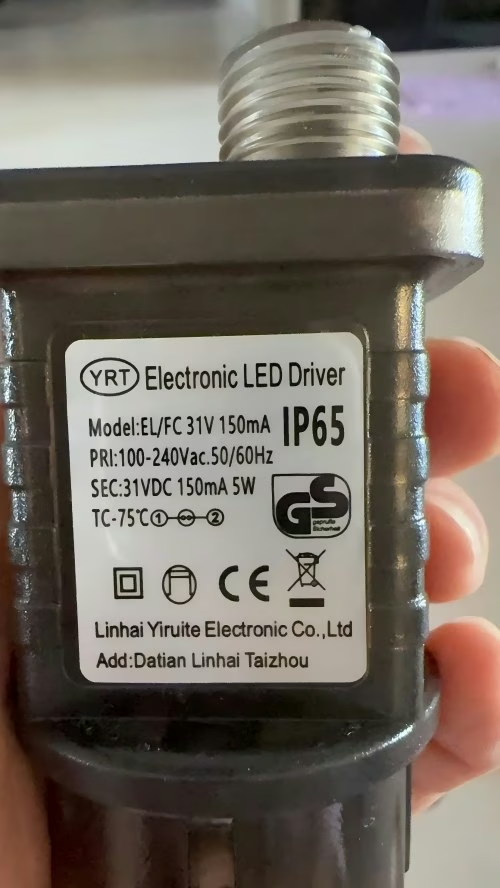
31v power adapters
Safety Requirements for EU Market
The EU market follows strict EN safety standards for low-voltage lighting.
A 31V DC system ensures no electric shock risk, even in wet or snowy outdoor conditions.
This is critical for Christmas lights used in gardens, parks, and public displays during winter.
Stability for Long-Length Decoration
Christmas lights often span 10 to 50 meters.
A 31V voltage provides stable brightness and minimizes voltage drop along the line.
Lower voltage like 12V or 24V would cause uneven brightness over long distances.
This stability also allows multiple sets to be connectable, a common retail requirement.
Standardization in the Festive Lighting Industry
Over time, 31V became the unified standard among European brands.
Retailers and factories use the same connectors, controllers, and adapters, simplifying logistics.
The entire supply chain—from power adapters to packaging—is optimized for 31V.
Why LED Strips Do Not Use 31V
LED strips use 12V or 24V because their electronics and power ecosystems are built around those voltages.
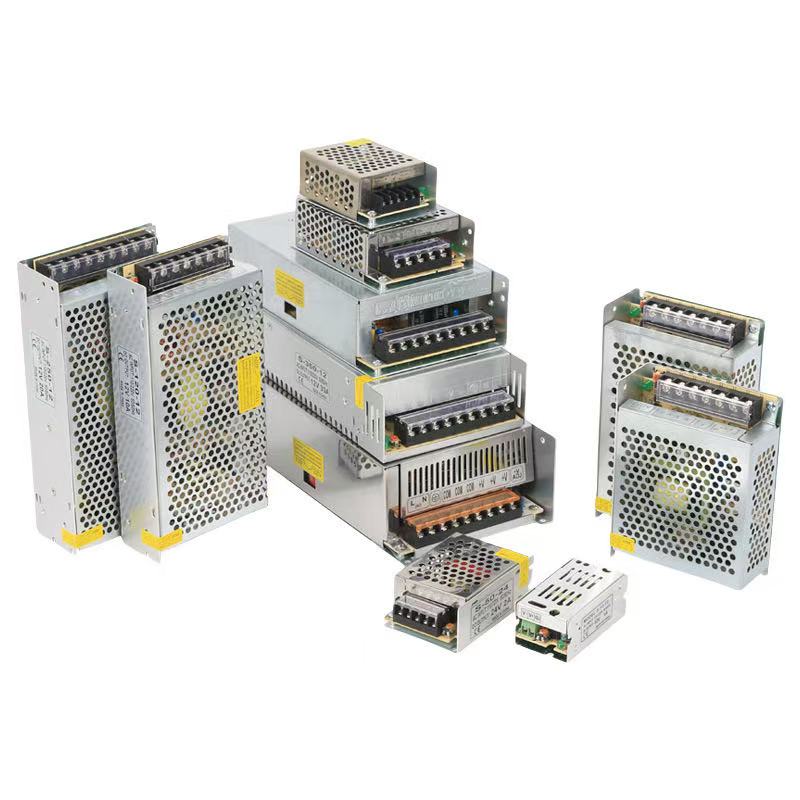
12/24v light strip transformer power supply
LED Strips Have a Different Electronic Architecture
LED strips contain SMD LEDs grouped in series and parallel circuits for 12V or 24V operation.
Resistors are precisely calculated for these voltages.
Switching to 31V would require a complete redesign, offering no technical advantage.
Market Ecosystem for LED Strips
The LED strip market is standardized around 12V and 24V.
All drivers, dimmers, and controllers support these voltages.
If a strip used 31V, it would not work with existing accessories—no demand, no ecosystem.
Power and Brightness Behavior
LED strips have higher LED density and consume more power per meter.
Using 31V makes voltage regulation harder and increases heat issues.
That’s why the constant-voltage 12V/24V system remains more practical for strips.
Common Buyer Confusion: “I Need 24V Christmas Lights”
Many buyers mistakenly ask for 24V fairy lights, believing it’s interchangeable with 31V.
Buyers confuse product categories: LED strips (24V) vs. Christmas string lights (31V).
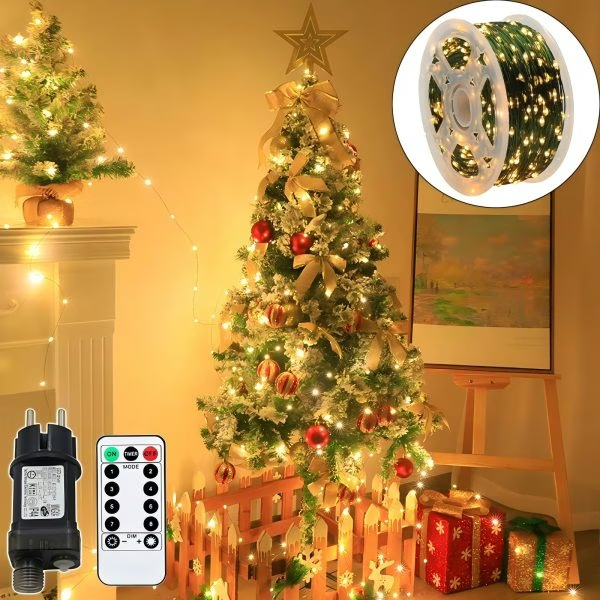
31v for christma stree decorative lights
Why Some Buyers Ask for 24V
They assume “low voltage” always means 24V.
Others follow specifications from unrelated products like LED strips.
Sometimes it’s just what their old supplier used.
Why Most Suppliers Only Offer 31V for Christmas Lights
Factories design and certify products for 31V as standard.
Changing to 24V means redesign, re-certification, and new power supplies.
It increases cost and causes compatibility issues with retail systems.
Real Case Example
A buyer once told me, “I want 24V fairy lights.”
We explained: “We only make 31V, which follows EU safety standards.”
They later realized they had mixed up LED strips with decorative string lights.
We offered custom 24V production, but they chose the safer 31V version.
Voltage Compatibility: Can 31V and 24V Mix?
Never mix voltages between lights and adapters. It’s unsafe and can damage the products.
31V Lights with 24V Power Supply?
They may light dimly or flicker, causing unstable operation and poor performance.
The voltage is too low for proper brightness.
24V Lights with 31V Adapter?
This is dangerous. Over-voltage can burn LEDs instantly.
Never mix these systems.
Each Voltage Must Use Its Own Adapter
Always match 31V lights with 31V adapters, and 24V lights with 24V power supplies.
This ensures safety, performance, and compliance with certifications.
When Should You Choose 24V or 31V?
Each voltage serves a different market need. The choice depends on your product category and customer base.
Choose 31V When
- Selling holiday lights in EU/UK
- Need long connectable strings
- Outdoor Christmas displays
- Retail chain programs
Choose 24V When
- Doing special or custom projects
- Installing LED strips or linear lighting
- Designing for specific voltage systems
Summary: The Right Voltage for the Right Product
31V is the safe, certified standard for Christmas lights. 12V/24V belongs to LED strips.
Fairy lights and LED strips are separate categories—mixing them causes confusion and compatibility issues.
For a deeper technical comparison between 24V and 31V systems, check out our detailed guide:
👉 Understanding 24V vs 31V LED Strip Lights and Their Power Adapters
CTA – Wholesale & Custom Christmas Lights (24V & 31V Available)
At Glowyard Lighting, we supply 31V standard Christmas lights for EU and US markets.
We also offer custom 24V fairy lights for special projects.
All products can be tailored for voltage, plug type, packaging, and OEM branding.
👉 Get Wholesale Prices
👉 Request Custom Voltage Sample
About Glowyard
Founded in 2011 in Guangzhou, Glowyard Lighting is a professional manufacturer of solar and decorative lights.
With over 300 unique designs and advanced facilities in Fujian and Guangdong, we ensure high quality, innovation, and safety.
Our products meet strict EU standards and are exported worldwide.
We specialize in OEM/ODM decorative lighting for garden and holiday applications.
Conclusion
Christmas lights use 31V for safety and consistency. LED strips use 12V/24V for efficiency. Each voltage fits its purpose—never mix them.
Looking for wholesale holiday lighting? Contact Glowyard’s holiday solar lights manufacturer team for OEM/ODM programs.



![do solar lights work in winter at cemeteries [2026 guide]](https://glowyard.com/wp-content/uploads/2026/03/Do-Solar-Lights-Work-in-Winter-at-Cemeteries-2026-Guide.webp)