











2026 lastest Full Product Catalogue
Please Click the button, after Filling in your Email and information, the file will be send within 24 hours .
-
 Animal Solar Lights
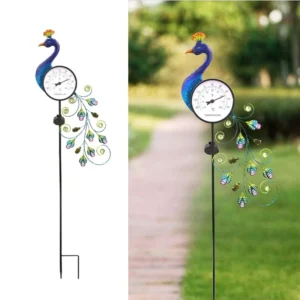
SM24927 PP Plastic Peacock Solar Stake Light with Thermometer
-
 Decorative Garden Solar Lights
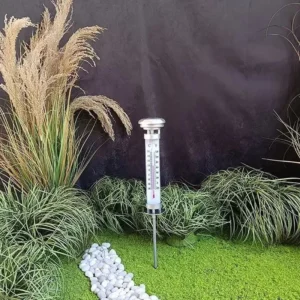
SM24970 Plastic + Iron Solar Lamp Thermometer Tabletop Light
Wholesale Thermometer Solar Lights: Complete B2B Buyer Guide
If you’re sourcing wholesale thermometer solar lights for garden centers, outdoor living retailers, gift shop inventory, or home improvement distribution, this guide will help you evaluate designs, accuracy specifications, certifications, and factory capabilities before placing bulk orders. Thermometer solar lights combine functional temperature display with decorative outdoor lighting, powered by solar panels that charge internal batteries for nighttime illumination. These products appeal to wholesalers, retailers, distributors, importers, and commercial buyers who serve customers seeking practical garden accessories that provide both utility and aesthetic value. When buying in bulk, key considerations include temperature sensor accuracy and range, display readability in various lighting conditions, solar panel efficiency for reliable operation, quality control for electronic components, customization options for temperature units and display styles, packaging that communicates dual functionality, lead time management, and supplier compliance with target market regulations. This guide covers everything from sensor technology and manufacturing processes to OEM/ODM customization, helping you make informed decisions that balance cost, functionality, and market positioning.
Category Summary
Wholesale thermometer solar lights integrate temperature sensors and digital or analog displays into solar-powered outdoor lighting fixtures. Bulk buyers typically source stake-mounted garden thermometers, wall-mounted patio models, decorative post-top designs, and pathway markers with temperature displays. Key purchasing considerations include temperature measurement accuracy (typically 1-2C), display type (LCD, LED, analog dial), temperature range coverage (-20C to 50C or wider), display illumination for nighttime reading, solar panel adequacy for display power requirements, and dual functionality value proposition. This category attracts garden accessory retailers, outdoor living stores, gift shop distributors, and home improvement centers who need products that combine practical utility with decorative appeal. Quality bulk thermometer solar lights must deliver reasonable temperature accuracy, clear display readability, reliable solar operation, weather resistance (IP44-IP65), and attractive design aesthetics to justify premium pricing over standard decorative lights in this utility-focused market segment.
What Will You Learn in This Guide?
- What Are Wholesale Thermometer Solar Lights and Why Are They Popular in Wholesale Markets?
- What Types and Designs Sell Best for Bulk Orders?
- What Materials and Manufacturing Processes Are Used?
- What Quality Standards and Certifications Matter for Wholesale Buyers?
- What Is the Market Demand and Customer Preferences?
- What Are the Common Applications?
- What OEM/ODM Customization Options Are Available?
- How to Source Wholesale Thermometer Solar Lights from China Manufacturers?
- What Mistakes Can Cost You Money When Buying in Bulk?
- Who Is Glowyard Lighting and What Do We Offer?
- Frequently Asked Questions
What Are Wholesale Thermometer Solar Lights and Why Are They Popular in Wholesale Markets?
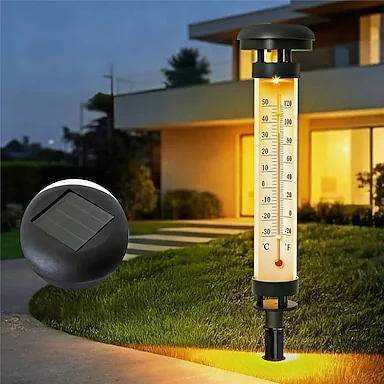
Wholesale thermometer solar lights are dual-function outdoor devices that combine temperature measurement and display with solar-powered decorative lighting. These products use temperature sensors (typically thermistors or digital sensors) to measure ambient temperature, display the reading on LCD screens, LED displays, or analog dials, and provide illumination through integrated LEDs powered by solar-charged batteries. Products range from simple stake-mounted garden thermometers to sophisticated wall-mounted units with multiple display features.

The wholesale market for thermometer solar lights has grown due to several converging factors. First, the dual functionality appeals to customers seeking value and practical utility from garden accessories. Rather than purchasing separate outdoor thermometers and decorative lights, customers can address both needs with single products. This value proposition resonates particularly with customers furnishing patios, decks, and outdoor living spaces where both temperature information and lighting enhance comfort and usability.
Second, increasing interest in outdoor living and gardening drives demand for garden accessories that combine aesthetics with functionality. Customers who invest in outdoor spaces appreciate products that provide useful information (temperature for gardening decisions, entertaining comfort assessment) while contributing to overall garden aesthetics. The solar-powered feature eliminates battery replacement hassles and ongoing costs, making these products more appealing than battery-powered outdoor thermometers.
For wholesalers and distributors, thermometer solar lights offer several business advantages. The products command premium pricing compared to standard solar lights due to added functionality, supporting higher profit margins. The category appeals to multiple retail channels including garden centers (gardeners monitoring growing conditions), outdoor living stores (patio temperature monitoring), gift shops (practical gift items), and home improvement retailers (weather monitoring accessories). Year-round utility provides more consistent demand than purely seasonal decorative products.
However, this category presents unique challenges that wholesale buyers must understand. Temperature accuracy varies significantly based on sensor quality, calibration, and installation location. Unrealistic accuracy claims or poor sensor placement guidance leads to customer disappointment. Display readability challenges include LCD screens that become difficult to read in direct sunlight or extreme temperatures, LED displays that consume excessive power, and analog dials that lack precision. Quality control becomes criticaltemperature sensors must be properly calibrated, displays must function reliably across temperature ranges, and solar systems must provide adequate power for both lighting and display functions.
What Types and Designs Sell Best for Bulk Orders?
The wholesale thermometer solar lights market segments into several distinct product categories based on display type, mounting method, and design aesthetics. Understanding these variations helps buyers select inventory that balances functionality with decorative appeal.
Digital LCD Display Stake Lights represent the most popular category for garden applications. These products feature LCD screens displaying temperature readings (typically in both Celsius and Fahrenheit), mounted on decorative stakes for insertion into garden beds or planters. The stakes often incorporate decorative elements (flowers, butterflies, garden themes) to enhance aesthetic appeal beyond pure utility. Quality LCD models use high-contrast displays readable in various lighting conditions, adequate solar panels (1-1.5 watts) to power both display and lighting, and proper sensor positioning away from direct LED heat. This category appeals to gardeners monitoring growing conditions and general outdoor enthusiasts. Retailers targeting garden centers should prioritize LCD stake designs with attractive decorative elements.
LED Digital Display Models use LED segments or dot matrix displays to show temperature readings. LED displays offer better nighttime visibility than LCD screens and can be read from greater distances. However, LED displays consume more power than LCD, requiring larger solar panels (1.5-2 watts) and batteries (1500-2000mAh). These products suit pathway markers and patio installations where nighttime temperature reading is valued. Quality LED display models use bright, clear digits and include automatic brightness adjustment to conserve power. This category commands premium pricing due to higher component costs and power requirements.
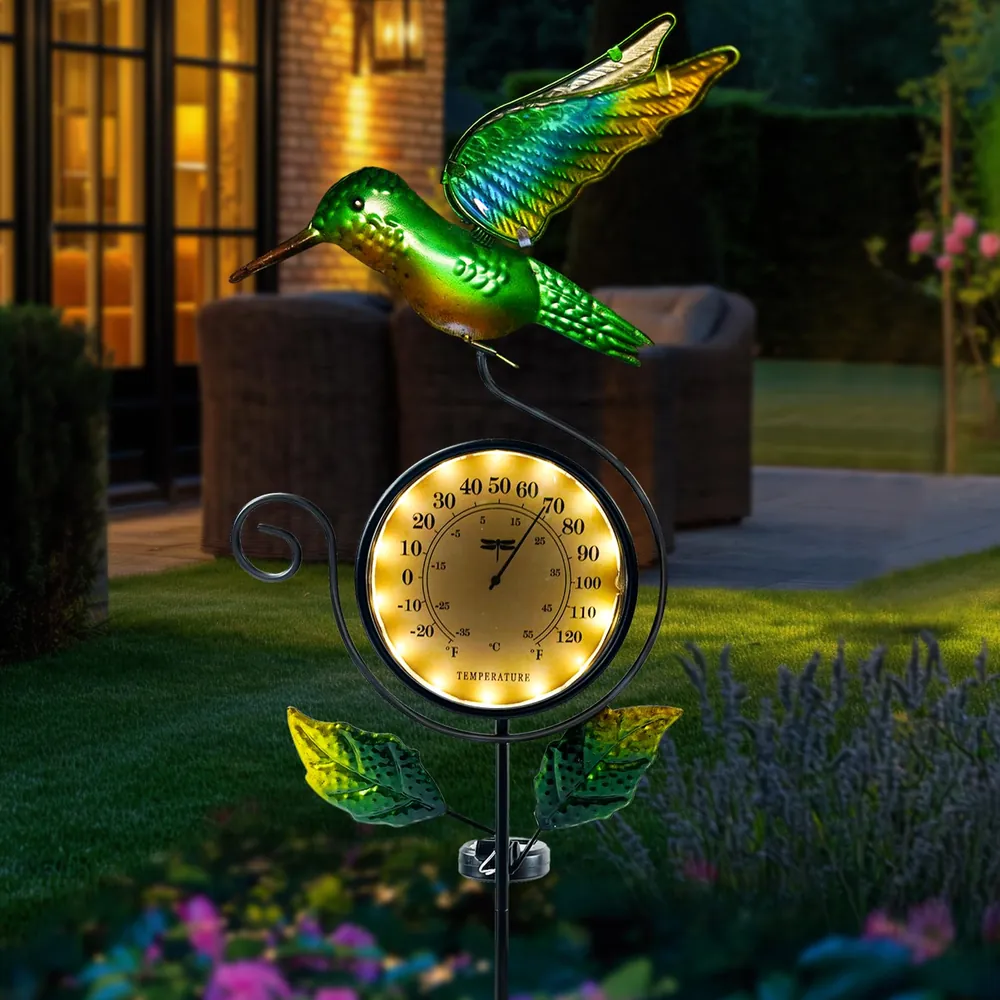
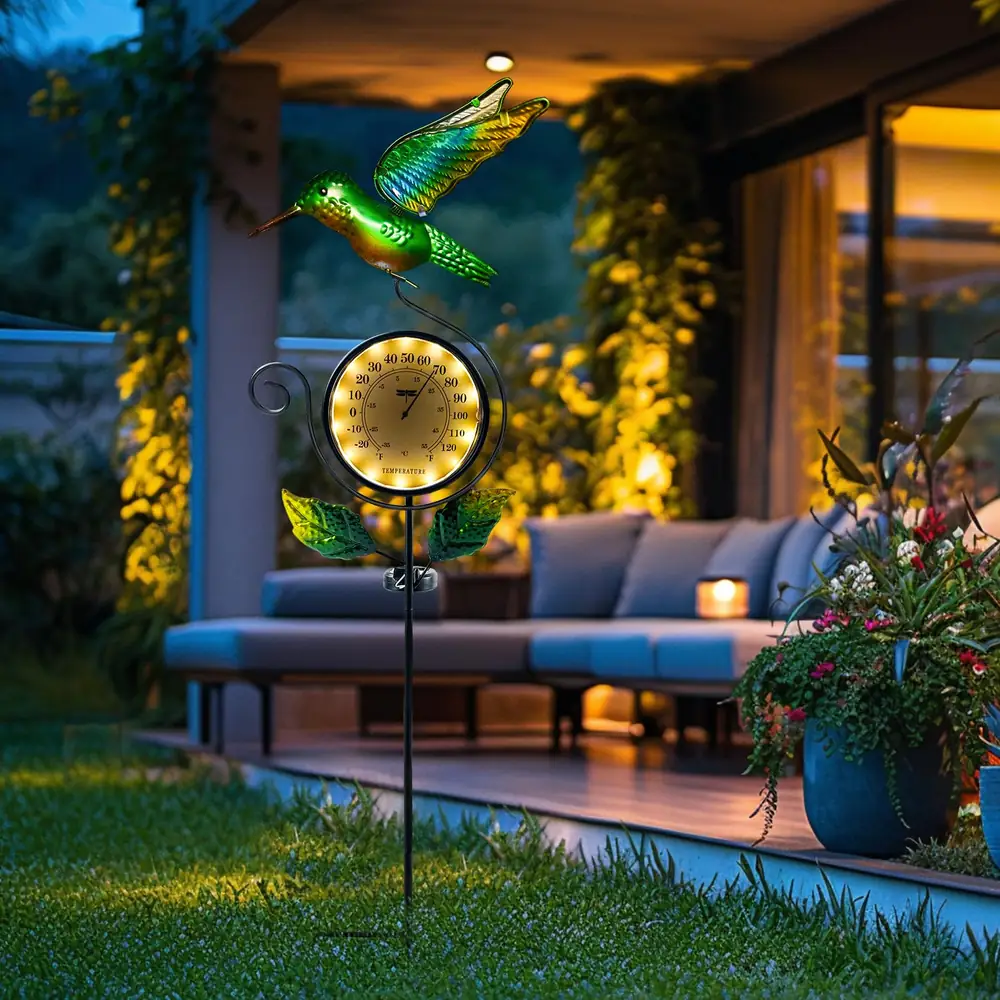
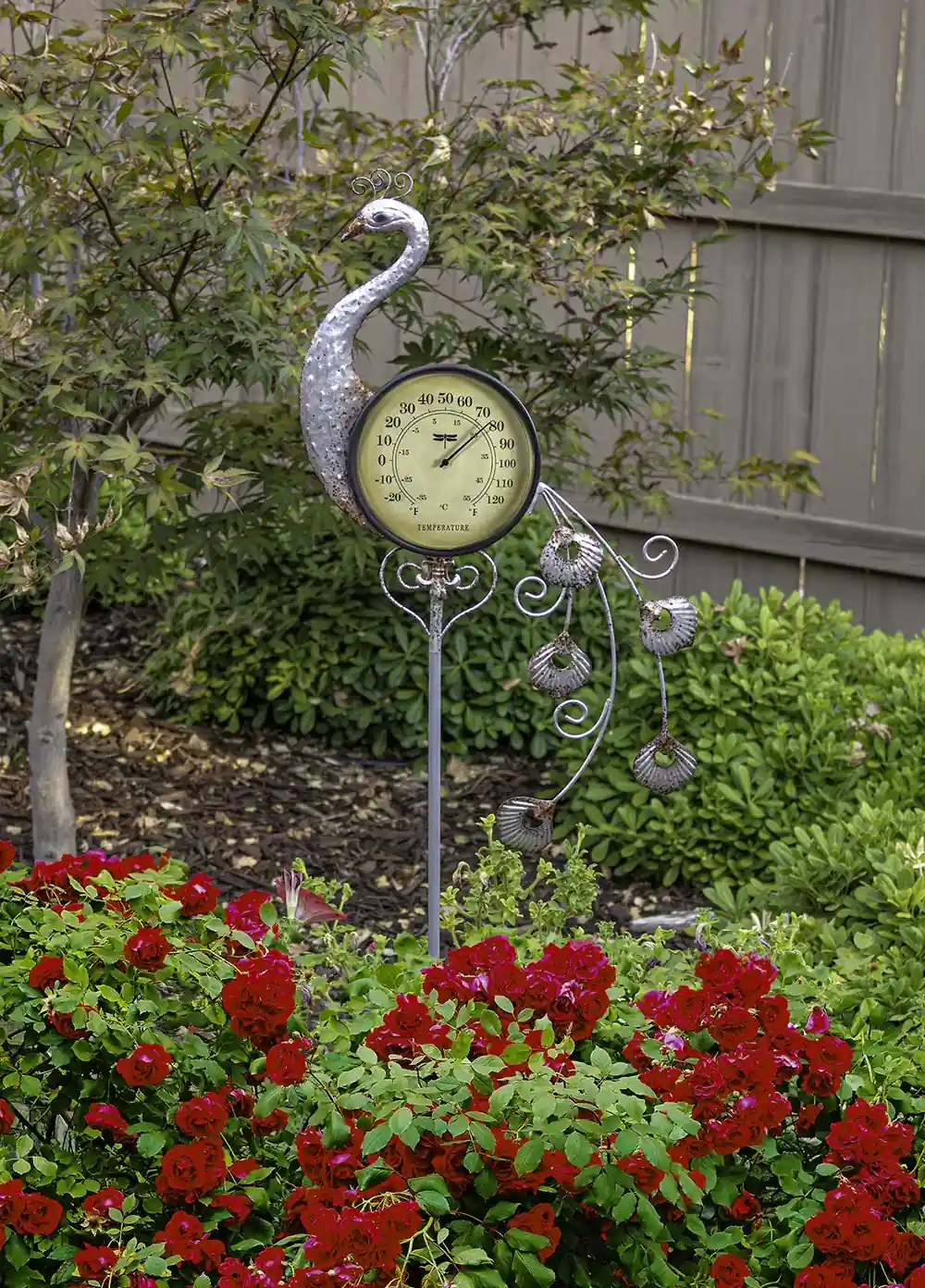
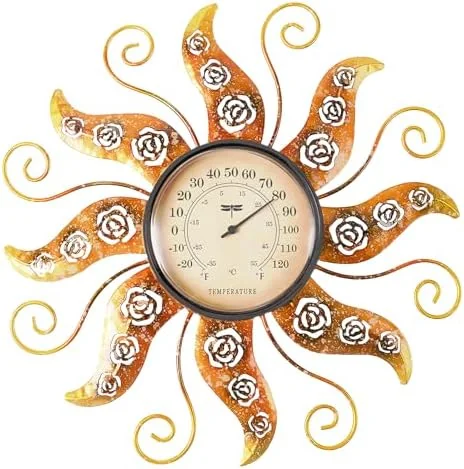
Analog Dial Thermometer Lights feature traditional dial-style temperature displays with illuminated faces for nighttime reading. These products appeal to customers preferring classic aesthetics and those concerned about electronic reliability. Analog thermometers use bimetallic coil or bourdon tube mechanisms requiring no electrical power for temperature measurement, with solar power dedicated solely to lighting the dial face. This simplicity provides reliability advantages but limits features (no min/max memory, no digital precision). Quality analog models use accurate mechanical sensors, clear dial markings, and even illumination. This category suits traditional garden aesthetics and gift market positioning.
Wall-Mounted Patio Thermometers feature larger displays designed for viewing from indoor spaces through windows or from patio seating areas. These products typically use LCD or LED displays with larger digits (1-2 inches tall) for distance readability. Wall-mounted designs often include additional features like time display, humidity sensors, or weather forecasting icons. The larger displays and additional features require more substantial solar panels (2-3 watts) and batteries. This category appeals to customers seeking comprehensive outdoor monitoring from comfortable indoor viewing positions.
Decorative Post-Top Thermometers combine temperature display with decorative post-top lighting, suitable for fence posts, deck railings, or dedicated mounting posts. These products emphasize aesthetic design with temperature display as secondary feature. Decorative housings may feature lantern styles, contemporary designs, or themed elements. This category suits customers prioritizing aesthetics who appreciate temperature display as added utility rather than primary function.
Multi-Function Weather Station Lights integrate temperature display with additional sensors including humidity, barometric pressure, or rainfall measurement. These sophisticated products appeal to weather enthusiasts and serious gardeners. The multiple sensors and displays require substantial power systems (3-5 watt solar panels, 2500-3000mAh batteries). This premium category commands highest pricing and suits specialty retailers and weather monitoring enthusiasts.
Category-Specific Buyer Notes for Thermometer Solar Lights
When sourcing wholesale thermometer solar lights, several category-specific factors differentiate successful bulk purchases from problematic ones. First, temperature sensor accuracy and calibration critically affect customer satisfaction. Advertised accuracy specifications (typically 1-2C) must reflect actual performance across the full temperature range. Budget thermometers may show acceptable accuracy at moderate temperatures but significant errors at extremes. Request calibration test reports showing accuracy across full operating range (-20C to 50C or wider). Consider that sensor placement affects accuracysensors too close to LEDs read artificially high due to LED heat, sensors in direct sunlight read higher than actual air temperature.
Second, display readability varies dramatically across lighting conditions and temperatures. LCD displays become sluggish or unreadable in extreme cold (below -10C) and may wash out in direct sunlight. LED displays remain readable in cold but consume significant power. Analog dials avoid electronic temperature limitations but lack precision. Test samples across expected temperature ranges and lighting conditions before committing to bulk orders. Verify that LCD displays use wide-temperature-range liquid crystal formulations if targeting cold-climate markets.
Third, power consumption balance between display and lighting functions affects overall performance. Displays that consume excessive power leave insufficient energy for adequate lighting, or vice versa. Quality designs optimize power allocationLCD displays consume minimal power allowing brighter lighting, LED displays require larger solar systems but provide better nighttime visibility. Verify that solar panel and battery specifications adequately support both functions throughout the night.
Fourth, sensor response time affects user experience. Thermistors and digital sensors respond to temperature changes at different ratesfaster response provides more current readings but may show rapid fluctuations, slower response provides more stable readings but lags actual conditions. Quality thermometer lights use sensors with appropriate response times (typically 30-60 seconds) and may include averaging algorithms to smooth rapid fluctuations.
What Materials and Manufacturing Processes Are Used?
Understanding the materials and manufacturing processes behind thermometer solar lights helps wholesale buyers evaluate quality, predict longevity, and assess fair pricing. These products combine standard solar light components with temperature sensing and display technologies requiring additional manufacturing expertise.

Temperature Sensor Technology: Most thermometer solar lights use one of three sensor types. Thermistors (temperature-sensitive resistors) offer good accuracy, fast response, and low cost, making them the most common choice for consumer products. NTC (Negative Temperature Coefficient) thermistors decrease resistance as temperature increases, providing predictable response curves. Quality thermistors provide 1-2C accuracy across -20C to 50C ranges. Digital temperature sensors (like DS18B20 or similar) offer better accuracy (0.5C), easier calibration, and digital output but cost more. Bimetallic sensors (used in analog thermometers) provide mechanical temperature measurement without electronics but offer lower precision (2-3C).
Sensor placement critically affects accuracy. Sensors must be positioned away from LED heat sources, shielded from direct sunlight, and exposed to ambient air flow. Quality designs use separate sensor modules connected by wires, allowing optimal sensor positioning while maintaining attractive product aesthetics. Budget designs may place sensors too close to electronics or LEDs, causing artificially high readings.
Display Technologies: LCD displays use liquid crystal technology requiring minimal power (typically 10-50 microamps), making them ideal for solar-powered applications. Quality LCD displays use wide-temperature-range formulations maintaining readability from -20C to 60C. Segment displays (showing only digits) cost less than dot matrix displays (showing digits plus icons). LED displays use light-emitting diodes requiring significantly more power (typically 20-100 milliamps depending on brightness and digit count) but offering better visibility in all lighting conditions. Seven-segment LED displays provide clear digit display, while dot matrix LEDs allow more complex information display.
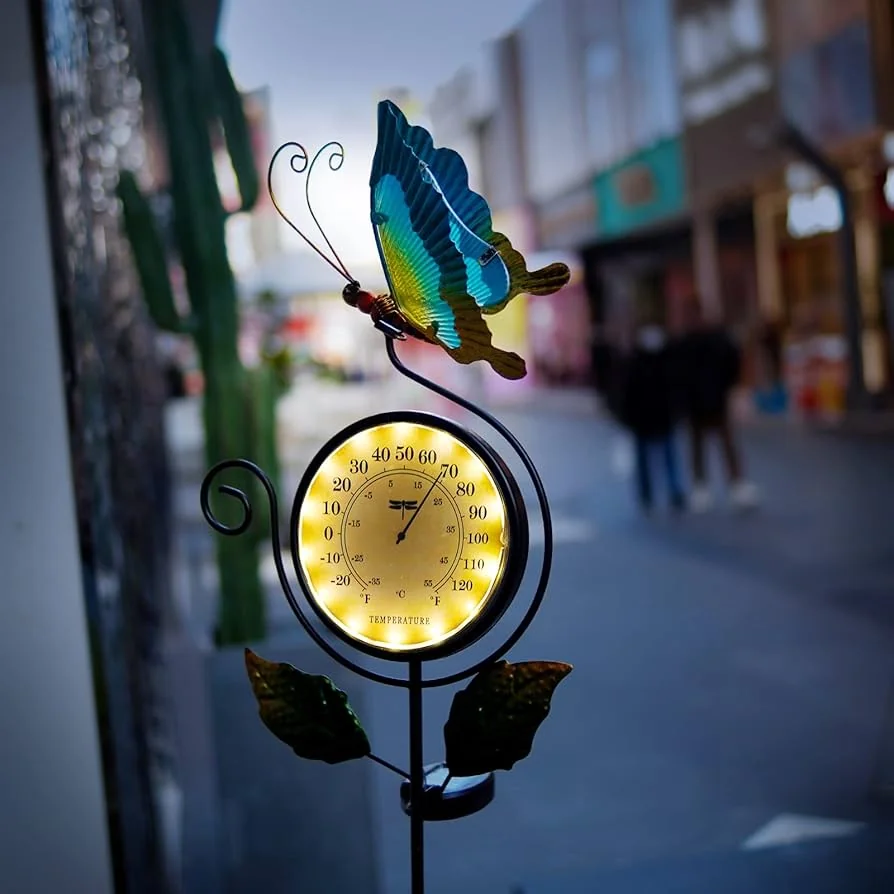
Analog dial displays use printed scales with mechanical pointers driven by bimetallic coils or bourdon tubes. Quality analog displays use clear, easy-to-read scales with proper calibration markings. Illumination for nighttime reading typically uses LED backlighting or edge lighting, requiring careful design to provide even illumination without hot spots.
Housing and Mounting Components: Thermometer solar lights typically use ABS plastic, polycarbonate, or aluminum for main housings. Plastic housings offer design flexibility and lower costs but require UV stabilizers. Aluminum housings provide better durability and heat dissipation but increase costs. Display windows use clear polycarbonate or acrylic with UV-resistant coatings to prevent yellowing. Quality designs include proper ventilation for temperature sensors while maintaining weather sealing for electronics.
Stakes for garden installation typically use powder-coated steel or aluminum with adequate thickness (minimum 3-4mm) for stability. Wall-mounting hardware should use corrosion-resistant materials and provide secure attachment. Verify that all mounting hardware includes proper weather sealing at attachment points.
Solar Panel and Battery Systems: Thermometer lights require adequate power for both display and lighting functions. LCD display models typically use 1-1.5 watt solar panels with 1200-1500mAh batteries. LED display models require 1.5-2 watt panels with 1500-2000mAh batteries due to higher display power consumption. Multi-function weather station models may require 3-5 watt panels with 2500-3000mAh batteries. Panel efficiency affects charging adequacymonocrystalline panels provide better performance in less-than-ideal conditions.
Control Circuitry and Microcontrollers: Digital thermometer lights require microcontrollers to read sensors, drive displays, control lighting, and manage power. Quality designs use reliable microcontrollers with proper programming for accurate temperature conversion, display updates, and power management. Some models include additional features like min/max temperature memory, temperature trend indicators, or programmable alerts. Verify that control circuitry includes proper power regulation and protection against voltage fluctuations.
What Quality Standards and Certifications Matter for Wholesale Buyers?
For wholesale buyers, proper certifications and quality standards serve multiple purposes: ensuring product safety, meeting import requirements, reducing liability exposure, and building customer confidence. Thermometer solar lights require particular attention to measurement accuracy and electronic reliability.
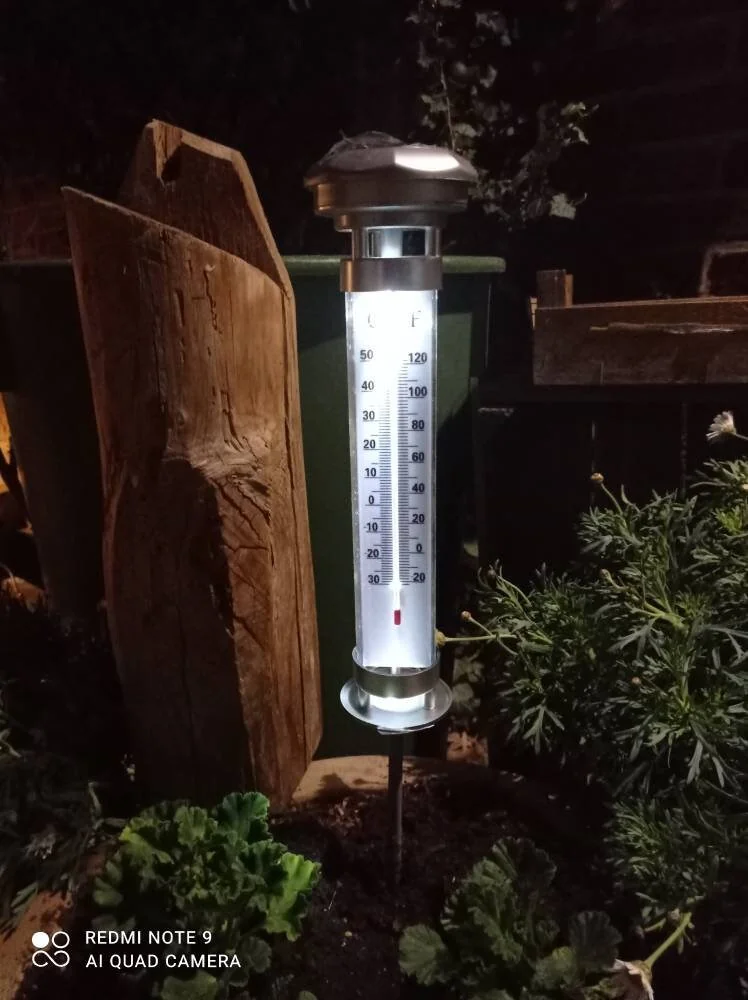
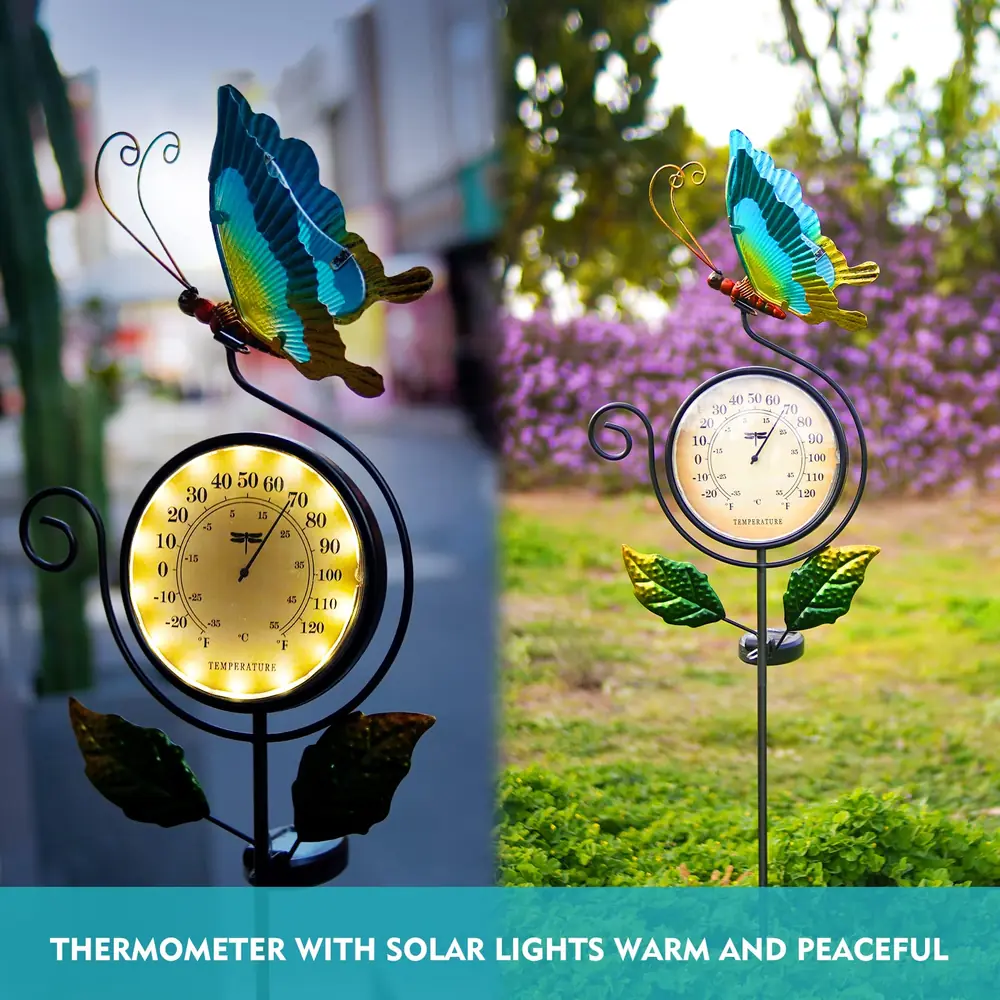
Temperature Measurement Accuracy Standards: While consumer outdoor thermometers don’t typically require formal calibration certifications, quality manufacturers should provide accuracy specifications and test data. Request calibration test reports showing accuracy across full operating temperature range. Verify that accuracy specifications account for sensor placement and environmental factors. Quality thermometers should maintain 1-2C accuracy across -20C to 50C range, with 0.5-1C accuracy in moderate temperature ranges (0C to 40C).
IP Waterproof Ratings: Thermometer solar lights must withstand outdoor weather exposure while protecting electronics and displays. Minimum acceptable IP ratings are IP44 (protected against water splashing) for covered patio use, or IP65 (protected against water jets) for general outdoor exposure. Display windows require special attentionwater intrusion behind display windows causes fogging and electronic damage. Verify that IP ratings apply to entire assembled unit including display window sealing. For detailed IP rating explanations, see garden light waterproof ratings guide.
CE Certification: Required for products sold in European markets, CE marking indicates compliance with EU safety, health, and environmental protection standards. For thermometer solar lights, relevant directives include the Low Voltage Directive (LVD), Electromagnetic Compatibility (EMC) Directive, and RoHS (Restriction of Hazardous Substances). Learn more about why CE certification matters.
RoHS Compliance: The Restriction of Hazardous Substances directive limits the use of specific hazardous materials in electrical and electronic equipment. For comprehensive RoHS information, reference solar garden light RoHS certification guide.
Display and Electronic Component Quality: Request information about display component sources and quality standards. Quality LCD displays should meet automotive or industrial temperature range specifications. LED displays should use branded LED chips with consistent brightness and color. Microcontrollers should be from reputable manufacturers with proven reliability. Verify that all electronic components meet operating temperature range requirements for outdoor use.
For comprehensive guidance on export certifications, see what certifications are required for exporting solar garden lights. Buyers should also review Glowyard’s certificates to understand the documentation standards that professional manufacturers maintain.
What Is the Market Demand and Customer Preferences?
Understanding market demand patterns and customer preferences helps wholesale buyers optimize inventory selection, pricing strategies, and marketing approaches. The thermometer solar lights market exhibits steady year-round demand with seasonal peaks during spring gardening season and gift-giving periods.
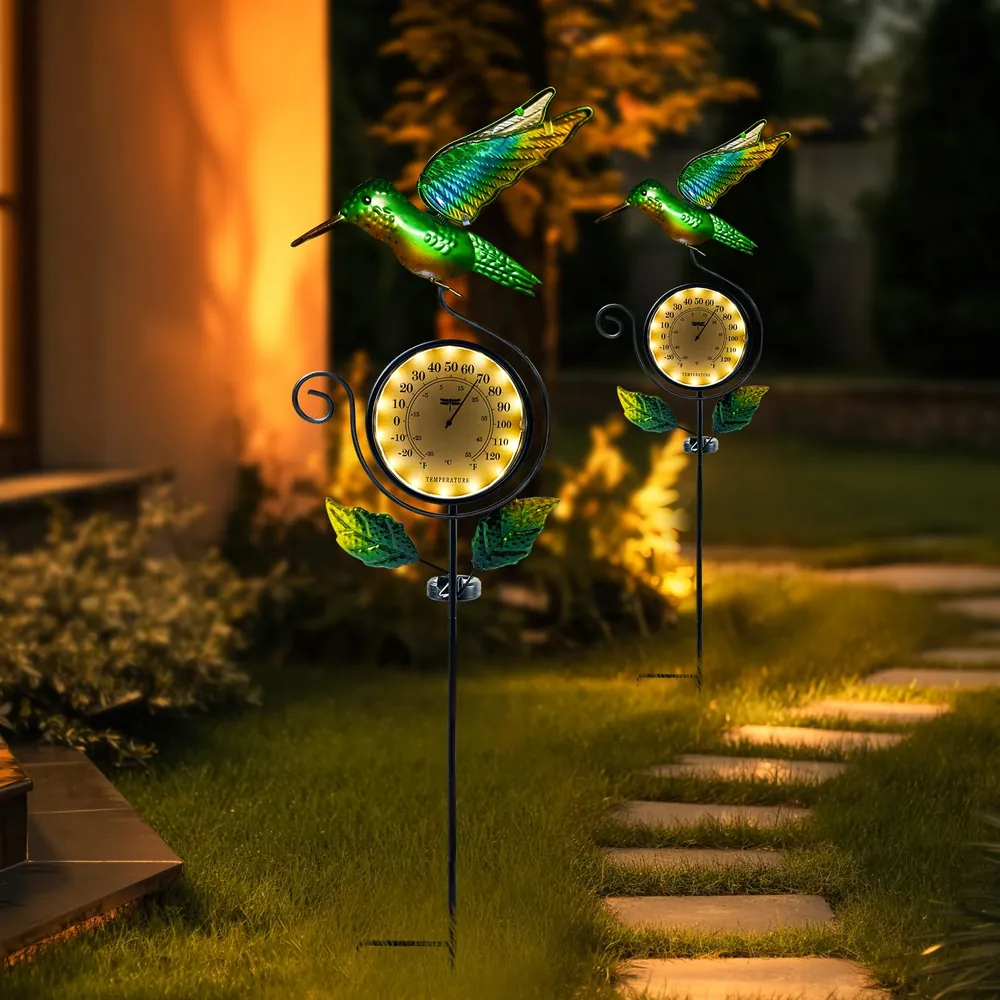

Geographic Market Variations: Markets in temperate climates with distinct seasons and active gardening cultures show the strongest demand. North American and European markets favor digital displays with both Celsius and Fahrenheit readings. Asian-Pacific markets show growing interest, with preferences varying by region. Cold-climate markets require wide-temperature-range displays and sensors, while warm-climate markets may accept standard specifications.
Customer Segment Preferences: Gardeners represent the primary market segment, using thermometer lights to monitor growing conditions, frost warnings, and optimal planting times. These customers prioritize accuracy, wide temperature range, and durable construction. Outdoor living enthusiasts use thermometer lights for patio comfort assessment and entertaining planning. Gift shoppers purchase thermometer lights as practical yet decorative presents for gardeners and outdoor enthusiasts. Commercial buyers (garden centers, nurseries) may use thermometer lights for customer information displays.
Seasonal Demand Patterns: Thermometer solar lights show moderate seasonality with peak demand during spring (March-May) as gardeners prepare for growing season and customers furnish outdoor spaces. Secondary peaks occur during holiday gift-giving periods and autumn garden preparation. Year-round utility provides more consistent baseline demand than purely seasonal decorative products.
Design Preferences: Current market trends favor products that balance functionality with attractive aesthetics. Customers increasingly expect thermometer lights to serve as decorative garden accents rather than purely utilitarian devices. Decorative stakes with flower or butterfly themes, attractive housing designs, and quality finishes perform better than basic functional designs. Digital displays preferred over analog for precision and modern aesthetics, though analog dials appeal to traditional garden aesthetics.
Feature Preferences: Dual temperature unit display (Celsius and Fahrenheit) appeals to international markets and customers familiar with both systems. Min/max temperature memory allows customers to track temperature extremes. Large, clear digits improve readability from distance. Automatic brightness adjustment conserves power while maintaining visibility. Some customers value additional features like time display or humidity sensors, though these add complexity and cost.
What Are the Common Applications?
Thermometer solar lights serve diverse applications across residential, commercial, and institutional sectors. Understanding these use cases helps wholesale buyers target appropriate customer segments and select product specifications that match application requirements.


Garden and Landscape Temperature Monitoring: The primary application involves gardeners using thermometer lights to monitor growing conditions, frost warnings, and optimal planting times. Stake-mounted designs suit garden bed installation, providing temperature information at plant level. Gardeners typically install 1-3 units in different garden areas to monitor microclimates. This application values accuracy, wide temperature range (-20C to 50C), and durable construction for year-round outdoor exposure.
Patio and Deck Comfort Assessment: Homeowners use thermometer lights on patios and decks to assess outdoor comfort for entertaining and relaxation. Wall-mounted designs with large displays allow temperature checking from indoor spaces through windows. This application values attractive aesthetics, clear display readability, and convenient viewing angles. Customers typically install single units in primary outdoor living areas.
Greenhouse and Cold Frame Monitoring: Serious gardeners use thermometer lights to monitor greenhouse and cold frame temperatures for optimal growing conditions. This application requires accurate sensors, wide temperature range, and reliable operation in high-humidity environments. Some customers use multiple units to monitor temperature gradients within greenhouses.
Pool and Spa Area Temperature Display: Customers install thermometer lights near pools and spas to monitor ambient temperature for comfort assessment. This application requires water-resistant construction (IP65 minimum) and clear display readability from pool areas. Wall-mounted designs suit pool house or fence installation.
Commercial Garden Center Information Displays: Garden centers and nurseries use thermometer lights to provide current temperature information to customers for planting decision support. This application requires professional appearance, accurate readings, and durable construction for continuous outdoor display. Commercial buyers typically purchase multiple units for different display areas.
Educational and Institutional Applications: Schools, nature centers, and parks use thermometer lights for educational weather monitoring and visitor information. This application values accuracy, clear displays, and vandal-resistant construction. Institutional buyers may require specific accuracy certifications or calibration documentation.
What OEM/ODM Customization Options Are Available for Wholesale Thermometer Solar Lights?
Customization capabilities differentiate commodity thermometer solar light suppliers from value-added manufacturing partners. Understanding available OEM (Original Equipment Manufacturer) and ODM (Original Design Manufacturer) options helps wholesale buyers create differentiated products, build brand identity, and meet specific market requirements.
Housing Design and Decorative Elements: Custom housing designs allow buyers to create unique product aesthetics. Options include custom shapes and decorative themes (flowers, butterflies, garden ornaments), integrated branding (logo embossing or printing), custom color schemes and finishes, and size variations. Development process involves design specification, 3D modeling, mold creation for plastic components, and sample production. Minimum order quantities for fully custom housing designs typically start at 1000-2000 units due to tooling investment.
Display Customization: Buyers can specify display types (LCD, LED, analog), display size and digit height, temperature unit options (Celsius only, Fahrenheit only, or switchable), and additional display features (min/max memory, time, humidity). Custom display layouts and branding can be incorporated. For LCD displays, custom segment arrangements require minimum quantities typically starting at 2000-3000 units due to LCD tooling costs. LED displays offer more flexibility for custom layouts at lower minimum quantities.
Temperature Range and Accuracy Specifications: Buyers can specify custom temperature ranges beyond standard -20C to 50C, enhanced accuracy specifications (0.5C vs. standard 1-2C), and specific sensor types (thermistor, digital sensor, bimetallic). Higher accuracy and wider ranges require better sensors and calibration, increasing costs. Verify that suppliers can provide calibration documentation for custom specifications.
Power System Configuration: Solar panel size and battery capacity can be customized to match display power requirements and runtime needs. LED display models require larger power systems than LCD models. Multi-function models with additional sensors require substantial power systems. Buyers targeting markets with challenging solar conditions should specify larger panels and batteries.
Additional Features and Sensors: Custom feature options include humidity sensors, barometric pressure sensors, rainfall measurement, wind speed/direction sensors (for weather station models), wireless connectivity (Bluetooth, WiFi), smartphone app integration, and data logging capabilities. Advanced features require careful development and testing. Minimum order quantities for custom electronic features typically start at 1000-2000 units.
Packaging and Documentation: Custom packaging design helps communicate dual functionality clearly. Options include custom packaging highlighting both temperature and lighting functions, installation and placement guidance for accurate readings, multi-language user manuals, and warranty information. Quality manufacturers provide packaging design services ensuring clear communication of product capabilities.
For comprehensive information about customization processes and capabilities, review Glowyard’s OEM solutions, which detail the full range of customization options available from professional manufacturers.
How to Source Wholesale Thermometer Solar Lights from China Manufacturers and Suppliers?
Sourcing quality wholesale thermometer solar lights from China requires systematic supplier evaluation, clear communication about accuracy requirements, and rigorous quality control processes to verify both measurement accuracy and electronic reliability.

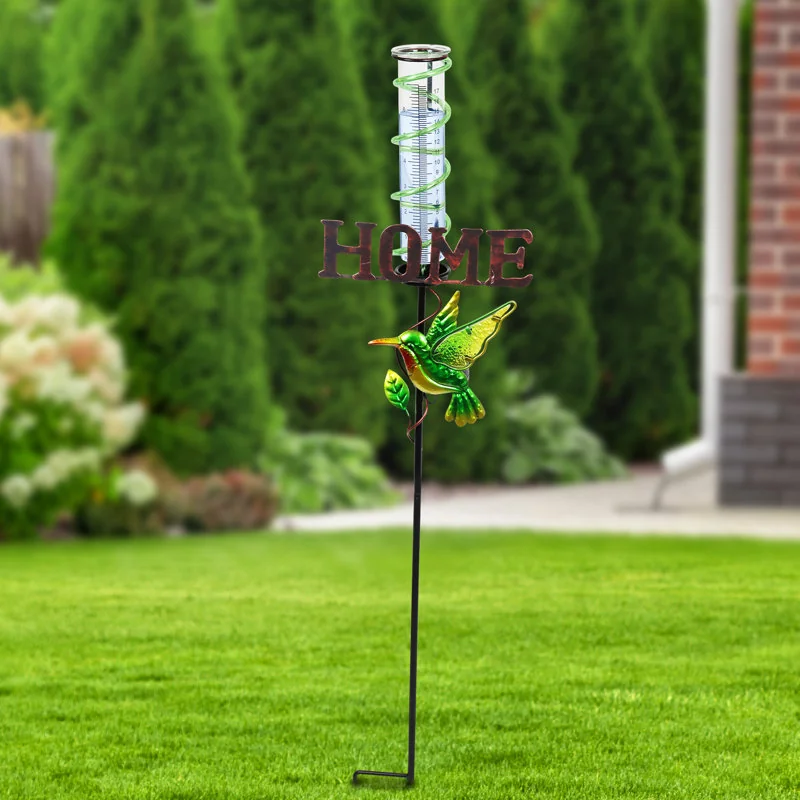
Supplier Identification and Technical Capability Assessment: Identify potential thermometer solar lights manufacturers through trade platforms, industry exhibitions, and referrals. Initial screening should verify business registration, manufacturing capabilities specific to electronic measurement devices, calibration equipment and expertise, and export experience. Request company profiles including factory size, production capacity, quality certifications, and major export markets. Verify that suppliers operate actual manufacturing facilities with electronic assembly capabilities and temperature calibration equipment rather than acting solely as trading companies.
Sample Evaluation and Accuracy Testing: Request samples of specific designs you’re considering, paying particular attention to temperature sensor accuracy across full range, display readability in various lighting conditions, build quality and weather sealing, and solar charging adequacy for display power requirements. Test samples outdoors for several weeks to verify accuracy against reference thermometers, solar charging performance, and display reliability. Conduct accuracy testing across full temperature range using controlled temperature chambers if possible. Compare samples from multiple suppliers to understand accuracy variations and pricing relationships.
Factory Audits and Calibration Capability Assessment: For significant volume commitments, conduct factory audits to evaluate electronic assembly capabilities, temperature calibration equipment and procedures, testing protocols, and quality control processes. Quality thermometer solar lights factories should demonstrate incoming quality control (IQC) on sensors and displays, in-process quality control (IPQC) during assembly with calibration verification, and outgoing quality control (OQC) including accuracy testing and waterproof verification. Ask about their calibration procedures, reference standards, and accuracy verification methods. Glowyard Lighting maintains comprehensive quality control processes including IQC, IPQC, and OQC protocols, with detailed inspection reports and calibration verification provided to wholesale buyers.
Pricing Negotiation and Accuracy Verification: Understand that pricing varies significantly based on sensor quality, display type, accuracy specifications, order quantity, and customization requirements. Request detailed quotations specifying all costs including unit price, tooling fees (if applicable), calibration costs, packaging costs, and shipping terms. Discuss accuracy specifications explicitly and request supporting calibration data. Avoid suppliers making extreme accuracy claims without verification. For guidance on bulk purchasing, see bulk purchase solar garden lights from China.
Quality Control and Calibration Verification: Implement rigorous quality control measures throughout the production process. Pre-production inspections verify that sensors, displays, and electronic components match specifications. During-production inspections catch assembly and calibration issues early. Pre-shipment inspections verify that finished products meet accuracy and quality standards including temperature accuracy testing, waterproof testing, and display functionality verification. Consider using third-party inspection services with temperature calibration capabilities for objective verification.
Logistics and Documentation: Verify that products include all required certifications and documentation for your target market. Ensure proper labeling including accuracy specifications, temperature range, and installation guidance for accurate readings. Verify that suppliers provide proper export documentation and that products meet import requirements.
What Mistakes Can Cost You Money When Buying Thermometer Solar Lights in Bulk?
Avoiding common purchasing mistakes saves money, reduces headaches, and protects your business reputation. The following issues frequently affect buyers new to wholesale thermometer solar lights sourcing.
Accepting Unverified Accuracy Claims: The most damaging mistake involves ordering products with advertised accuracy specifications without verification. Suppliers may claim 0.5C accuracy when actual performance is 2-3C or worse. These inaccurate products generate customer complaints and returns. Always request calibration test data showing accuracy across full temperature range, conduct your own accuracy testing on samples against reference thermometers, and specify accuracy requirements in purchase agreements with verification procedures.
Inadequate Power System for Display Requirements: LED displays consume significantly more power than LCD displays. Ordering LED display models with inadequate solar panels or batteries results in displays that shut off prematurely or lighting that’s too dim. Verify that solar panel wattage and battery capacity adequately support both display and lighting functions throughout the night. Test samples for all-night operation with display active.
Ignoring Sensor Placement and Heat Effects: Temperature sensors placed too close to LEDs or electronics read artificially high due to component heat. Ordering without verifying proper sensor placement leads to inaccurate readings and customer complaints. Inspect sample construction to verify sensor positioning away from heat sources, test samples for accuracy with lighting active versus inactive, and specify proper sensor placement in purchase specifications.
Overlooking Display Readability Issues: LCD displays that work fine at moderate temperatures may become sluggish or unreadable in extreme cold or wash out in direct sunlight. Ordering without testing across expected conditions leads to customer dissatisfaction. Test samples across full temperature range and various lighting conditions (direct sunlight, shade, nighttime) before committing to bulk orders. Specify wide-temperature-range LCD formulations for cold-climate markets.
Insufficient Weather Sealing for Display Windows: Water intrusion behind display windows causes fogging and electronic damage. Ordering without verifying display window sealing leads to high failure rates. Inspect sample construction for proper display window sealing, conduct waterproof testing including spray tests, and verify IP rating certifications apply to display areas.
Wholesale Buying Checklist
- [ ] Verify supplier has temperature calibration equipment and expertise
- [ ] Request calibration test reports showing accuracy across full temperature range
- [ ] Test samples against reference thermometers for accuracy verification
- [ ] Verify display readability across temperature ranges and lighting conditions
- [ ] Inspect sensor placement to ensure distance from LED and electronic heat sources
- [ ] Test samples for all-night operation with display active
- [ ] Verify solar panel and battery capacity adequate for display power requirements
- [ ] Confirm IP rating (minimum IP44, preferably IP65) with waterproof testing
- [ ] Test display window sealing for water intrusion prevention
- [ ] Verify temperature range coverage matches target market requirements
- [ ] Confirm display shows both Celsius and Fahrenheit if targeting international markets
- [ ] Establish clear accuracy specifications in purchase agreement
- [ ] Implement quality control inspections including calibration verification
- [ ] Verify import documentation and certifications for target market
- [ ] Develop clear installation guidance for customers regarding sensor placement
Quick RFQ Template for Wholesale Thermometer Solar Lights
When requesting quotations from thermometer solar lights suppliers, include the following information:
Company Information:
- Company name and type
- Target market and countries
- Estimated annual volume
Product Requirements:
- Preferred display type (LCD, LED, analog)
- Temperature range requirements
- Accuracy specifications
- Temperature unit requirements (C, F, or both)
- Design style preferences
- Mounting type (stake, wall-mount, post-top)
Technical Specifications:
- Solar panel minimum wattage
- Battery capacity requirements
- Display size and readability requirements
- Additional features (min/max memory, time, humidity)
- IP rating requirements
Calibration and Quality:
- Accuracy verification requirements
- Calibration documentation needs
- Quality control and inspection requirements
- Sample requirements before bulk order
Customization Needs:
- Custom housing design or branding
- Custom display layouts
- Custom packaging
- Private label requirements
Order Details:
- Initial order quantity
- Expected reorder frequency
- Required delivery timeline
- Preferred shipping method and terms
Who Is Glowyard Lighting and What Do We Offer?
Glowyard Lighting is a professional manufacturer specializing in solar garden lights, including thermometer solar lights with verified accuracy and reliable electronic performance. Our factory maintains dedicated capabilities for electronic assembly, temperature sensor integration, and calibration verification to ensure products meet accuracy specifications and quality standards.
Our manufacturing capabilities include complete in-house processes from electronic component assembly and sensor integration through housing fabrication, calibration, and testing. We maintain strict quality control protocols including incoming quality control (IQC) for sensors and displays, in-process quality control (IPQC) during assembly with calibration verification, and outgoing quality control (OQC) with comprehensive testing before shipment. Our testing facilities conduct temperature accuracy verification, waterproof testing, display functionality testing, and solar performance verification.
For wholesale thermometer solar lights buyers, we offer extensive OEM/ODM customization services including custom housing designs, display type and layout customization, accuracy specification optimization, power system configuration, and complete packaging design. Our technical team works with clients to develop products that balance measurement accuracy, aesthetic appeal, and market positioning while providing realistic performance specifications based on actual calibration testing.
Our export experience spans markets in North America, Europe, Australia, and Asia, with comprehensive understanding of regional temperature display preferences (Celsius vs. Fahrenheit), accuracy expectations, and certification requirements. We maintain certifications including CE, RoHS, and various market-specific standards, with complete documentation available for review. We provide honest accuracy specifications based on calibration testing rather than exaggerated claims, helping wholesale buyers set appropriate customer expectations. For more information about our capabilities and services, visit our OEM solutions page or contact our wholesale team directly.
Frequently Asked Questions
What is the typical minimum order quantity for wholesale thermometer solar lights?
Minimum order quantities vary by product complexity and customization level. Standard designs typically require 300-500 units per model for initial orders, while custom designs or display configurations may require 500-1000 units due to electronic component sourcing and calibration setup. Thermometer lights often have slightly higher MOQs than standard decorative lights due to sensor calibration requirements and electronic complexity.
How accurate are solar-powered thermometer lights?
Accuracy varies significantly based on sensor quality and calibration. Quality thermometer lights should provide 1-2C accuracy across -20C to 50C range, with 0.5-1C accuracy in moderate temperature ranges (0C to 40C). Budget models may show 2-3C or worse accuracy. Always verify accuracy through testing against reference thermometers before bulk orders. Note that sensor placement affects accuracysensors too close to LEDs or in direct sunlight read artificially high.
Do thermometer solar lights work in extreme cold?
Performance in extreme cold depends on component specifications. LCD displays may become sluggish or unreadable below -10C unless using wide-temperature-range formulations. LED displays maintain functionality in cold but consume more power. Lithium batteries provide better cold-weather performance than older NiMH technology but still experience reduced capacity. Temperature sensors typically function across -20C to 50C or wider ranges. For cold-climate markets, specify wide-temperature-range displays and cold-weather-rated batteries.
Can thermometer lights display both Celsius and Fahrenheit?
Most digital thermometer lights can display both Celsius and Fahrenheit, either simultaneously or with user-selectable switching. This dual-unit capability appeals to international markets and customers familiar with both systems. Analog thermometer lights typically show both scales on the dial face. Verify dual-unit capability if targeting markets where both systems are used.
How long do thermometer solar lights operate on a full charge?
Operating time depends on display type and power consumption. LCD display models with adequate batteries (1200-1500mAh) should operate 8-10 hours on full charge. LED display models consume more power and may operate 6-8 hours with larger batteries (1500-2000mAh). Display brightness and update frequency affect power consumption. Products with inadequate battery capacity may shut off after 4-6 hours, generating customer complaints.
Where should thermometer lights be installed for accurate readings?
For accurate temperature readings, install thermometer lights in shaded locations away from direct sunlight, at least 5 feet above ground level, away from heat sources (buildings, pavement, equipment), in areas with good air circulation, and away from direct LED heat within the unit itself. Provide clear installation guidance to customers emphasizing these factors. Note that ground-level stake installations may read higher than actual air temperature due to ground heat radiation.
What certifications are required for thermometer solar lights?
For the US market, thermometer solar lights should meet FCC Part 15 standards for electromagnetic compatibility. For European markets, CE marking is required, covering the Low Voltage Directive (LVD), Electromagnetic Compatibility (EMC) Directive, and RoHS compliance. While consumer outdoor thermometers don’t typically require formal calibration certifications, quality manufacturers should provide accuracy specifications and test data. For comprehensive certification guidance, see what certifications are required for exporting solar garden lights.
How often do thermometer lights need calibration or maintenance?
Quality thermometer lights should maintain accuracy for 2-3 years without recalibration under normal use. Temperature sensors (thermistors, digital sensors) typically don’t drift significantly over time. However, display functionality and solar charging performance may degrade. Clean solar panels monthly to maintain charging efficiency. Replace batteries every 2-3 years (500-800 charge cycles). If accuracy concerns arise, customers can verify against reference thermometers and contact manufacturer for recalibration guidance if needed.