






2026 lastest Full Product Catalogue
Please Click the button, after Filling in your Email and information, the file will be send within 24 hours .
-
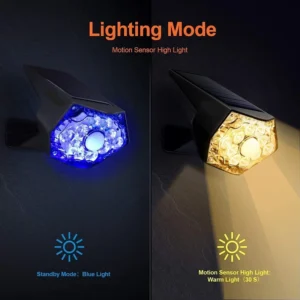 Plastic Solar Lights
SM22520 ABS Plastic Solar Wall Spotlights (Set of 2)
-
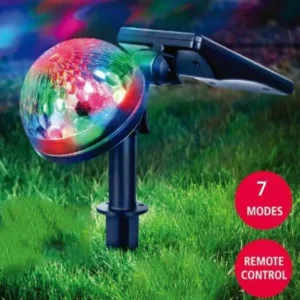 Decorative Garden Solar Lights
SM23868 ABS Plastic RGB Solar Spotlight with Remote and Stake
-
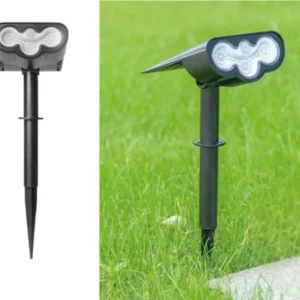 Plastic Solar Lights
SML012 39LED Solar Spotlight
-
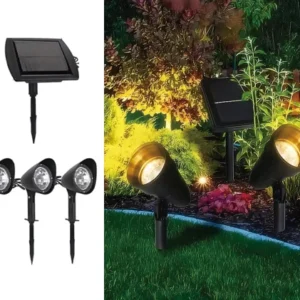 Plastic Solar Lights
SML013 Triple solar Spotlight
-
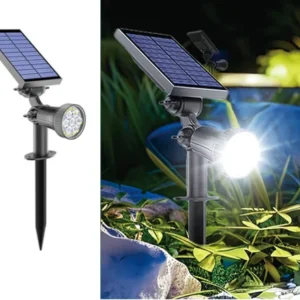 Plastic Solar Lights
SML014 30LED Solar Spotlight
Wholesale Solar Spotlights: Complete B2B Buyer Guide
If you’re sourcing wholesale solar spotlights for retail stores, landscape projects, or commercial installations, this guide will help you evaluate designs, beam angles, brightness levels, certifications, and factory capabilities before placing bulk orders. Solar spotlights are among the most versatile outdoor lighting solutions, used by wholesalers, distributors, importers, and project contractors to illuminate architectural features, gardens, signage, and pathways. When buying in bulk, key considerations include quality control processes, IP waterproof ratings, customization options for beam angles and color temperatures, packaging durability for international shipping, lead time management, and supplier compliance with target market regulations. This guide covers everything from material selection and manufacturing processes to OEM/ODM customization, helping you make informed decisions that balance cost, quality, and market demand.
Category Summary
Wholesale solar spotlights represent a high-demand category in outdoor lighting, combining energy efficiency with focused illumination for accent and security applications. Bulk buyers typically source adjustable-head spotlights, ground stake models, wall-mounted versions, and multi-head configurations. Key purchasing considerations include lumen output (typically 100-400 lumens for commercial-grade units), solar panel efficiency, battery capacity (usually 1200-3000mAh), and adjustable mounting options. This category attracts landscape contractors, garden center retailers, hardware distributors, and project specifiers who need reliable performance across residential, commercial, and municipal applications. Quality bulk solar spotlights must deliver consistent brightness, weather resistance (IP65-IP67), and long-term durability to minimize after-sales issues and maintain customer satisfaction in competitive retail markets.
What Will You Learn in This Guide?
- What Are Wholesale Solar Spotlights and Why Are They Popular in Wholesale Markets?
- What Types and Designs Sell Best for Bulk Orders?
- What Materials and Manufacturing Processes Are Used?
- What Quality Standards and Certifications Matter for Wholesale Buyers?
- What Is the Market Demand and Customer Preferences?
- What Are the Common Applications?
- What OEM/ODM Customization Options Are Available?
- How to Source Wholesale Solar Spotlights from China Manufacturers?
- What Mistakes Can Cost You Money When Buying in Bulk?
- Who Is Glowyard Lighting and What Do We Offer?
- Frequently Asked Questions
What Are Wholesale Solar Spotlights and Why Are They Popular in Wholesale Markets?
Wholesale solar spotlights are self-contained outdoor lighting fixtures that use photovoltaic panels to charge internal batteries during daylight hours, then automatically illuminate targeted areas after dark with focused LED beams. Unlike ambient garden lights, spotlights concentrate light output into narrow or adjustable beam angles (typically 15-60 degrees), making them ideal for highlighting architectural features, trees, signage, pathways, and security zones without requiring electrical wiring or ongoing energy costs.
The wholesale market for solar spotlights has expanded significantly due to several converging factors. First, commercial and residential customers increasingly prioritize energy-efficient solutions that reduce operational costs and carbon footprints. Second, advances in LED technology and lithium battery chemistry have dramatically improved brightness levels and runtime reliability, making solar spotlights viable alternatives to low-voltage wired systems. Third, the elimination of installation labor costs (no trenching, wiring, or electrician fees) makes solar spotlights attractive for landscape contractors, property managers, and DIY retail customers.
For wholesalers and distributors, solar spotlights offer strong profit margins and repeat purchase potential. Retailers appreciate the product’s broad appeal across multiple customer segments: homeowners seeking landscape accent lighting, businesses needing cost-effective security illumination, and municipalities looking for sustainable pathway and park lighting. The category also benefits from seasonal demand spikes (spring landscaping season, holiday decorating) and cross-selling opportunities with related outdoor products.
Manufacturing quality directly impacts after-sales costs, with well-engineered spotlights featuring proper gasket sealing, corrosion-resistant hardware, and thermal management for LED longevity. Bulk buyers should prioritize suppliers who demonstrate consistent quality control, provide technical specifications with verifiable performance data, and offer customization options for beam angles, color temperatures, and mounting configurations to match diverse project requirements.
What Types and Designs Sell Best for Bulk Orders?
The wholesale solar spotlight market segments into several distinct product categories, each serving specific applications and customer preferences. Understanding these variations helps buyers select inventory that matches their target markets and maximizes sell-through rates.
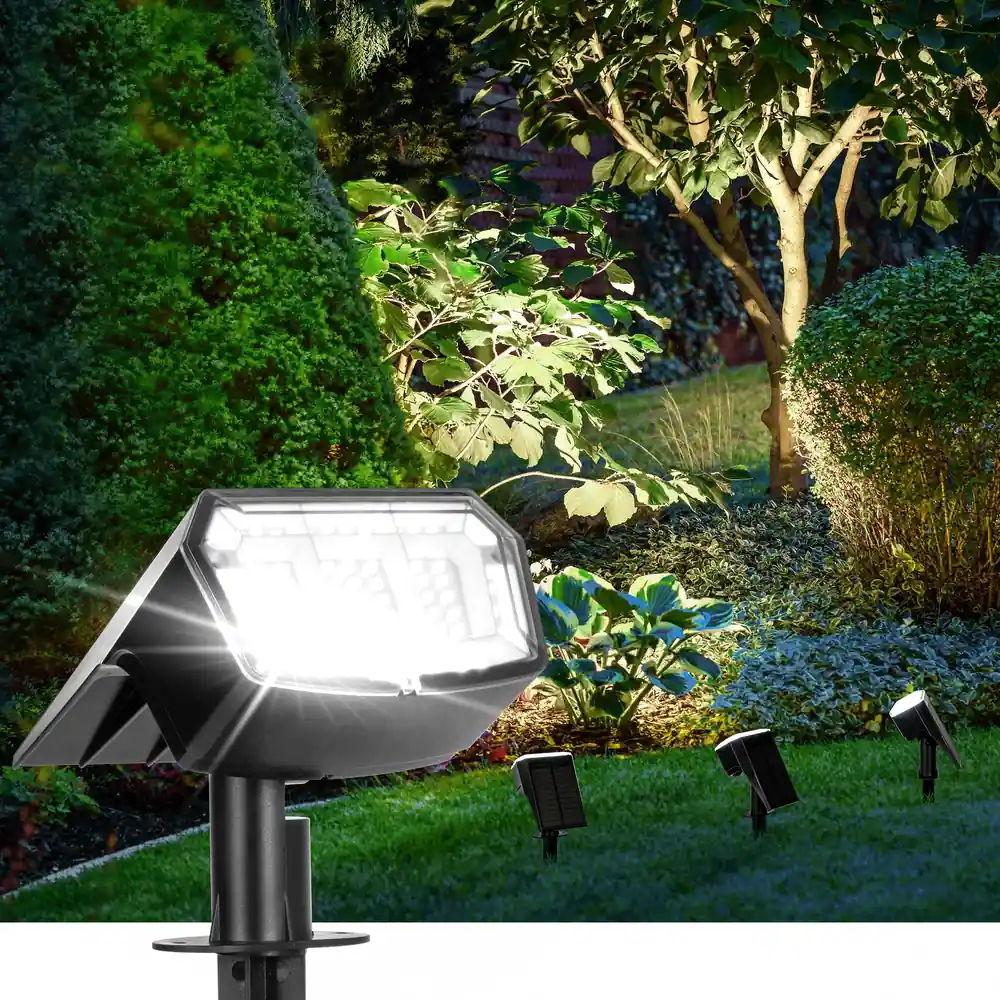
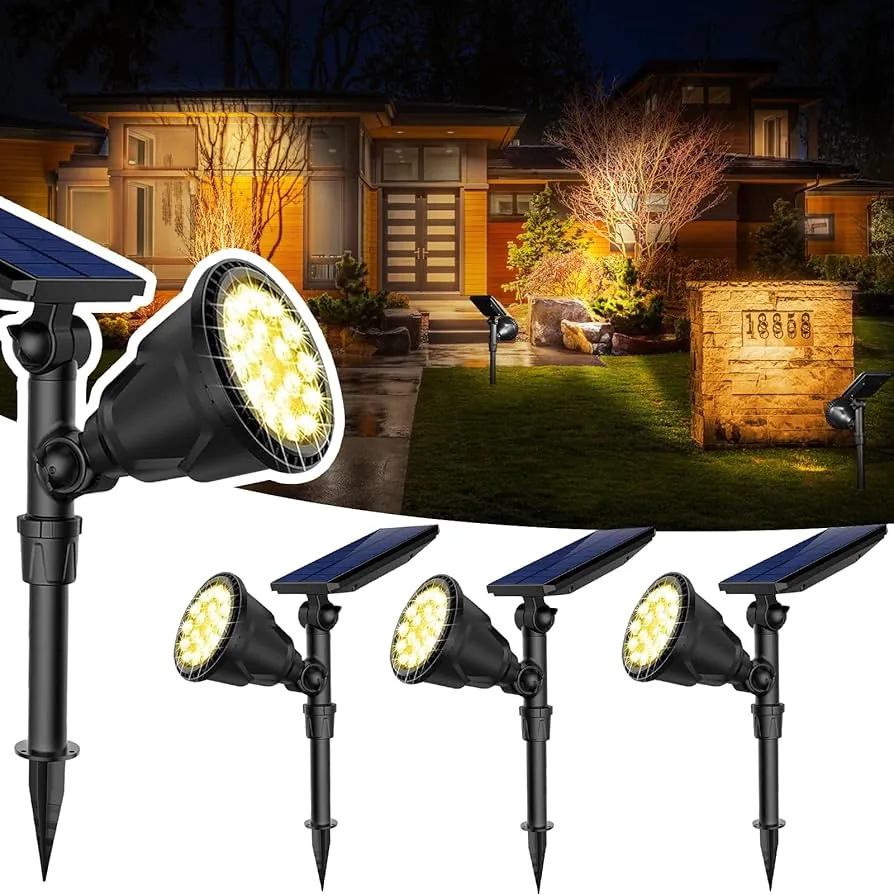
Adjustable Ground Stake Spotlights remain the best-selling category for wholesale buyers. These units feature a spike base for insertion into soil or mulch, with a pivoting head that allows users to direct light precisely where needed. Typical specifications include 2-4 watt solar panels, 200-300 lumen output, and adjustable beam angles from 30 to 60 degrees. Retailers favor these models because they appeal to both residential landscapers and commercial property managers. Key design variations include single-head versus dual-head configurations, with dual-head models commanding premium pricing but offering better value perception for end customers.
Wall-Mounted Solar Spotlights represent the second major category, designed for installation on building facades, fences, or posts. These units typically incorporate larger solar panels (3-6 watts) to compensate for vertical mounting angles that may receive less direct sunlight. Quality wall-mount spotlights include adjustable brackets that allow both horizontal and vertical aiming adjustments. This category particularly appeals to security-conscious customers and commercial buyers needing building accent lighting or signage illumination.
Multi-Head Spotlight Systems combine a central solar panel with two to four separate spotlight heads connected by weatherproof cables. These systems suit larger landscape projects and commercial installations where a single solar panel location can power multiple illumination points. Wholesale buyers targeting landscape contractors and commercial distributors should stock these higher-value units, which typically feature 8-12 watt solar panels and total output exceeding 600 lumens across all heads.
Color-Changing RGB Spotlights have gained market share in recent years, particularly for retail customers seeking decorative flexibility. These units incorporate RGB LED chips and remote controls or smartphone apps for color selection. While commanding higher wholesale prices, RGB spotlights appeal to holiday decorators, event venues, and homeowners wanting seasonal color options. Quality concerns include color consistency across production batches and remote control reliability.
Category-Specific Buyer Notes for Solar Spotlights
When sourcing wholesale solar spotlights, several category-specific factors differentiate successful bulk purchases from problematic ones. First, beam angle consistency matters significantlyvariations of more than 5 degrees between units in the same batch create visible lighting inconsistencies in multi-unit installations, leading to customer complaints. Request beam angle testing reports and consider ordering sample batches before committing to large volumes.
Second, solar panel positioning flexibility varies widely across manufacturers. Top-selling designs feature separate solar panels connected by cables (typically 3-5 meters), allowing installation in shaded areas while positioning panels in full sun. Integrated designs (panel attached directly to spotlight housing) cost less but limit installation flexibility, reducing appeal to professional installers and commercial buyers.
Third, mounting hardware quality directly impacts after-sales service costs. Spotlights using stainless steel stakes and aluminum brackets withstand ground insertion and weather exposure better than plastic or mild steel alternatives. Verify that ground stakes include reinforcement ribs and that wall-mount brackets use corrosion-resistant fasteners. Many bulk buyers report that mounting hardware failures generate more returns than LED or battery issues.
Fourth, color temperature selection affects market acceptancewarm white (2700-3000K) dominates residential sales, while cool white (5000-6000K) suits commercial and security applications. Consider stocking both options or sourcing models with switchable color temperatures to maximize market coverage without excessive SKU proliferation.
What Materials and Manufacturing Processes Are Used?
Understanding the materials and manufacturing processes behind solar spotlights helps wholesale buyers evaluate quality, predict longevity, and assess fair pricing. The primary components include the housing, solar panel, LED module, battery, and control circuitry, each requiring specific manufacturing expertise.

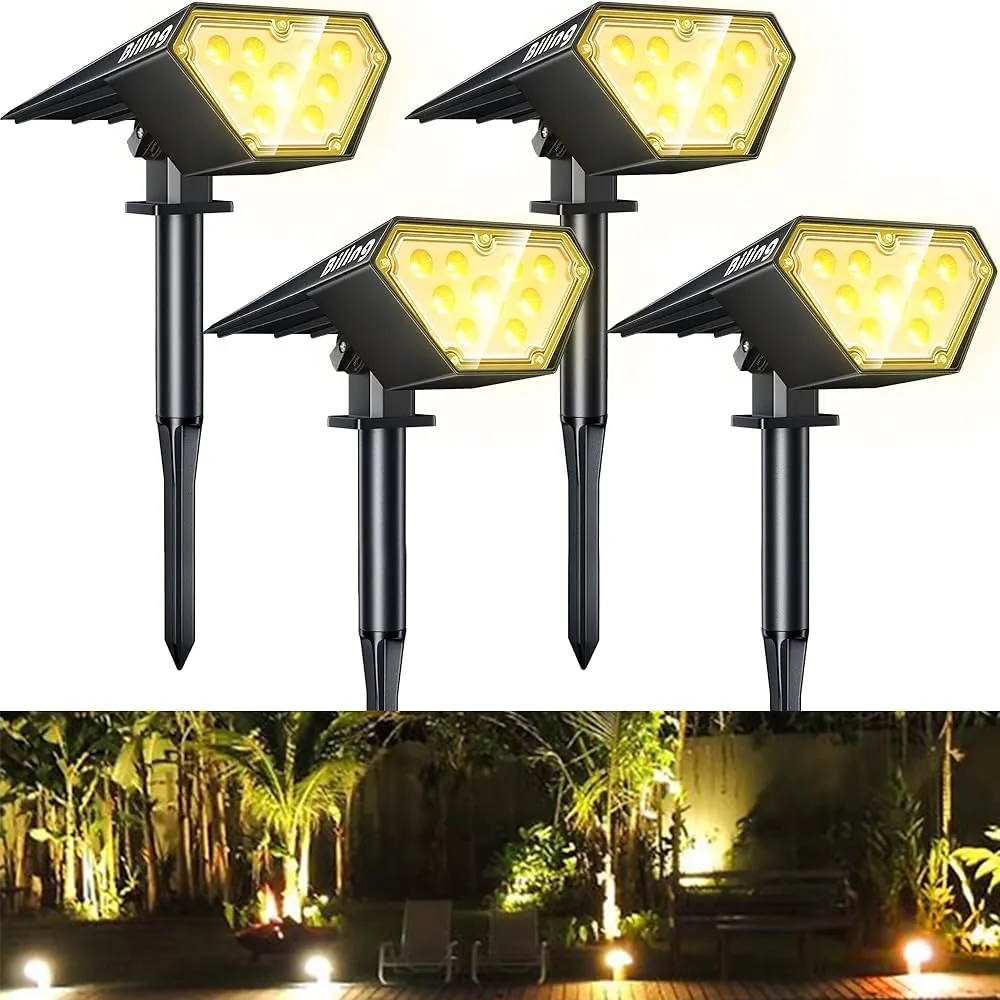
Housing Materials and Construction: Quality solar spotlights use either die-cast aluminum or high-grade ABS plastic for the main housing. Aluminum housings offer superior heat dissipation for high-power LEDs and better long-term durability, but increase manufacturing costs and shipping weight. Manufacturers typically use die-casting processes to create aluminum housings with integrated heat sinks and mounting points. ABS plastic housings cost less and allow more design flexibility through injection molding, but require UV stabilizers and impact modifiers to withstand outdoor exposure. Premium plastic spotlights incorporate glass-filled nylon or polycarbonate for critical structural components like mounting brackets and adjustment mechanisms.
The lens material significantly affects light transmission and durability. Tempered glass lenses provide the best optical clarity and scratch resistance but add weight and breakage risk during shipping. Polycarbonate lenses offer excellent impact resistance and good light transmission (typically 85-90%), making them the preferred choice for most wholesale applications. Acrylic lenses cost less but yellow over time with UV exposure and scratch more easily. Verify that plastic lenses include UV-resistant coatings and check for optical clarity consistency across production batches.
Solar Panel Technology: Most wholesale solar spotlights use either monocrystalline or polycrystalline silicon solar panels. Monocrystalline panels offer higher efficiency (typically 18-22%) and better low-light performance, making them preferable for spotlights that may be installed in partially shaded locations. Polycrystalline panels cost less but provide lower efficiency (15-18%), requiring larger panel sizes to achieve equivalent charging performance. For detailed technical comparisons, see monocrystalline vs polycrystalline solar panels.
Panel encapsulation quality matters as much as cell efficiency. Quality panels use tempered glass covers with aluminum frames and silicone edge sealing to prevent moisture intrusion. Budget panels may use PET plastic covers that degrade faster under UV exposure. Verify that panels include bypass diodes to prevent hot-spot damage when partially shaded.
LED and Driver Components: High-quality solar spotlights use branded LED chips from manufacturers like Epistar, Bridgelux, or Samsung, offering consistent color rendering and lumen maintenance over 25,000+ hour lifespans. Budget units may use generic LED chips with poor binning (color consistency) and faster lumen depreciation. The LED driver circuit regulates current to prevent overdriving, which causes premature failure and color shifting. Quality drivers include thermal protection and constant-current regulation even as battery voltage drops during discharge.
Battery Technology: Modern solar spotlights predominantly use lithium-ion or lithium iron phosphate (LiFePO4) batteries, which offer better energy density, longer cycle life, and wider operating temperature ranges than older NiMH technology. Typical capacities range from 1200mAh for compact single-head units to 3000mAh or more for multi-head systems. Battery quality varies significantlypremium cells from LG, Samsung, or Panasonic provide 500-800 charge cycles with minimal capacity loss, while generic cells may degrade noticeably after 200-300 cycles. For comprehensive battery information, reference how long solar batteries last.
Manufacturing Process Quality Indicators: When evaluating potential suppliers, look for factories that demonstrate proper process controls. Quality manufacturers perform incoming quality control (IQC) on components, in-process quality control (IPQC) during assembly, and outgoing quality control (OQC) including waterproof testing, aging tests, and photometric measurements. Ask about their testing protocolsreputable factories should conduct IP rating verification through water spray tests, drop tests for impact resistance, and thermal cycling to verify performance across temperature ranges.
What Quality Standards and Certifications Matter for Wholesale Buyers?
For wholesale buyers, proper certifications and quality standards serve multiple purposes: ensuring product safety, meeting import requirements, reducing liability exposure, and building customer confidence. The specific certifications needed depend on target markets, but several standards apply broadly across international wholesale channels.
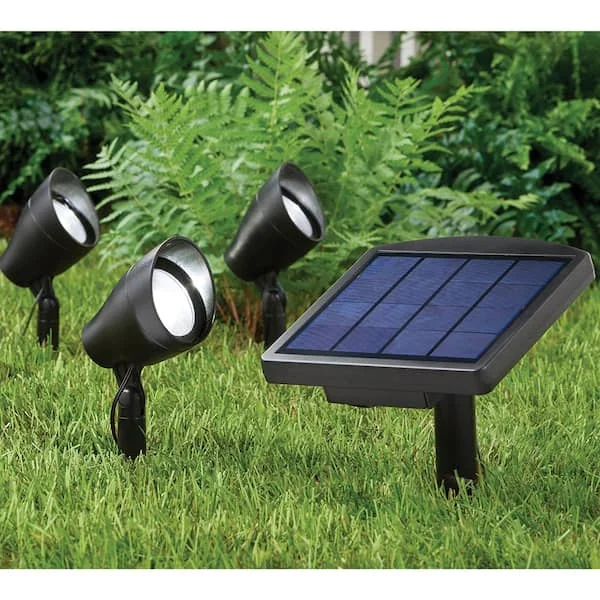

IP Waterproof Ratings: Solar spotlights must withstand outdoor weather exposure, making IP (Ingress Protection) ratings critical. The IP rating consists of two digitsthe first indicates dust protection, the second indicates water protection. For solar spotlights, minimum acceptable ratings are IP65 (dust-tight, protected against water jets) for general outdoor use, or IP67 (dust-tight, protected against temporary immersion) for ground-level installations subject to flooding or heavy rain. Verify that IP ratings apply to the entire assembled unit, not just individual components. Quality factories conduct spray chamber testing and provide test reports. For detailed IP rating explanations, see garden light waterproof ratings guide.
CE Certification: Required for products sold in European markets, CE marking indicates compliance with EU safety, health, and environmental protection standards. For solar spotlights, relevant directives include the Low Voltage Directive (LVD), Electromagnetic Compatibility (EMC) Directive, and RoHS (Restriction of Hazardous Substances). CE certification requires testing by accredited laboratories and proper technical documentation. Buyers should request copies of CE certificates and test reports, verifying that the certificate covers the specific model being purchased. Learn more about why CE certification matters.
RoHS Compliance: The Restriction of Hazardous Substances directive limits the use of specific hazardous materials in electrical and electronic equipment. RoHS compliance is mandatory for EU markets and increasingly required by other regions. Key restricted substances include lead, mercury, cadmium, and certain flame retardants. Quality manufacturers conduct material testing and maintain RoHS compliance documentation for all components. For comprehensive RoHS information, reference solar garden light RoHS certification guide.
FCC Certification: For the US market, solar spotlights with electronic controls or wireless features (remote controls, Bluetooth, WiFi) require FCC certification to ensure they don’t cause harmful electromagnetic interference. Even basic solar lights with charge controllers should meet FCC Part 15 Class B standards for residential use.
UL/ETL Listing: While not always mandatory, UL (Underwriters Laboratories) or ETL (Intertek) listing provides additional safety assurance for the North American market. These certifications involve rigorous testing of electrical safety, fire hazards, and mechanical durability. Products with UL/ETL listing command premium pricing but reduce liability concerns and appeal to commercial buyers and institutional purchasers.
Quality Control Documentation: Beyond formal certifications, request quality control documentation including inspection reports, aging test results, and photometric test data. Reputable manufacturers should provide lumen output measurements, beam angle verification, color temperature consistency data, and battery performance curves. This documentation helps verify that production units match sample quality and provides recourse if quality issues arise.
For comprehensive guidance on export certifications, see what certifications are required for exporting solar garden lights. Buyers should also review Glowyard’s certificates to understand the documentation standards that professional manufacturers maintain.
What Is the Market Demand and Customer Preferences?
Understanding market demand patterns and customer preferences helps wholesale buyers optimize inventory selection, pricing strategies, and marketing approaches. The solar spotlight market exhibits both consistent baseline demand and seasonal fluctuations driven by landscaping cycles, holiday decorating, and construction activity.
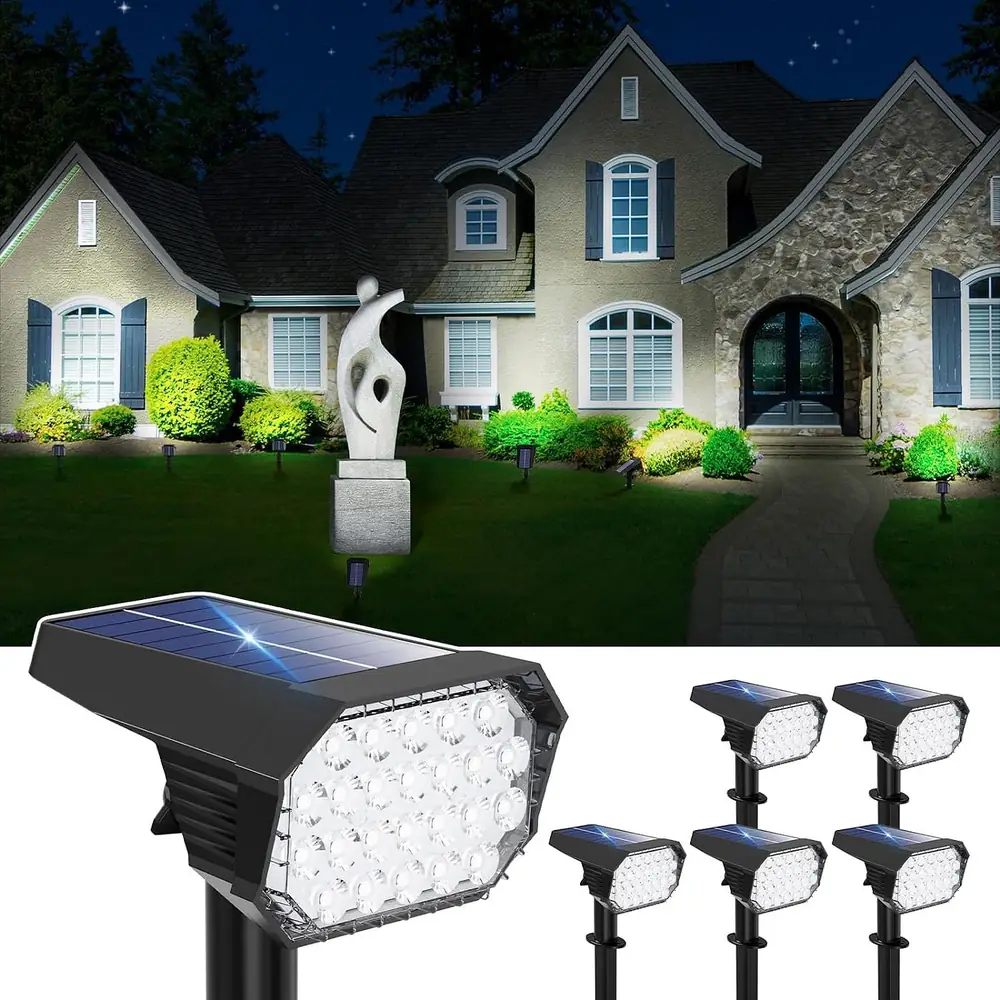
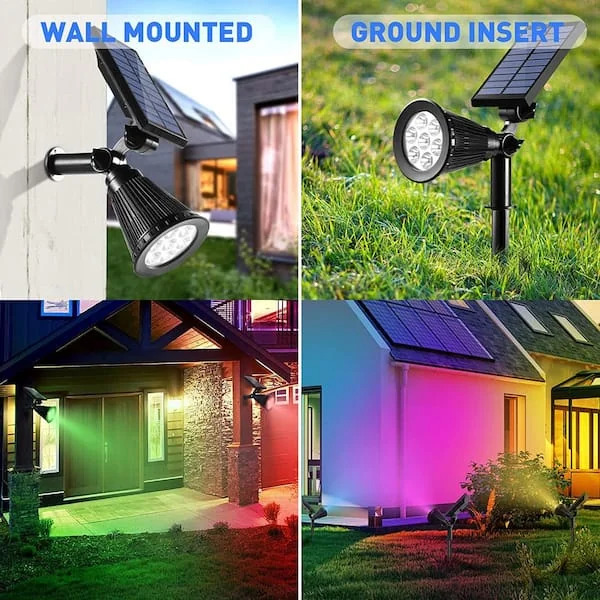
Geographic Market Variations: North American and European markets show the strongest demand for solar spotlights, driven by high labor costs for electrical installation, environmental consciousness, and established outdoor living cultures. These markets favor higher-quality units with longer warranties and premium features like adjustable color temperatures and smart controls. Asian-Pacific markets show growing demand, particularly in Australia, Japan, and urban areas of China and Southeast Asia, with preferences varying by climatetropical regions prioritize waterproofing and corrosion resistance, while temperate zones focus on cold-weather battery performance.
Customer Segment Preferences: Residential customers typically prioritize ease of installation, aesthetic design, and value pricing. They favor adjustable ground stake models with warm white light for landscape accent applications. Commercial buyers focus on brightness levels, reliability, and total cost of ownership, often preferring wall-mounted or multi-head systems with higher lumen output and longer warranties. Landscape contractors value installation flexibility, consistent performance across large quantities, and responsive warranty support.
Seasonal Demand Patterns: Solar spotlight sales peak during spring (March-May in Northern Hemisphere) as homeowners undertake landscaping projects and retailers stock outdoor living categories. A secondary peak occurs in autumn (September-November) for holiday decorating and last-minute landscape improvements before winter. Wholesale buyers should plan inventory accordingly, placing bulk orders 8-12 weeks before peak seasons to ensure adequate stock without excessive carrying costs.
Feature Preferences: Current market trends show increasing demand for adjustable color temperature (switchable between warm and cool white), higher lumen output (300+ lumens for primary illumination rather than just accent lighting), and longer runtime (8+ hours on full charge). Smart features like app control and scheduling appeal to tech-savvy residential customers but add complexity that may increase failure rateswholesale buyers should carefully evaluate the reliability of smart features before committing to large orders.
Price Sensitivity and Value Perception: While price remains important, wholesale buyers report that quality and reliability increasingly drive purchasing decisions, particularly for commercial and contractor segments. Customers have learned that ultra-low-price solar lights often fail within one season, creating negative brand associations and return costs. The market shows willingness to pay moderate premiums for verifiable quality indicators like branded LED chips, higher IP ratings, and longer warranties.
What Are the Common Applications?
Solar spotlights serve diverse applications across residential, commercial, and municipal sectors. Understanding these use cases helps wholesale buyers target appropriate customer segments and select product specifications that match application requirements.
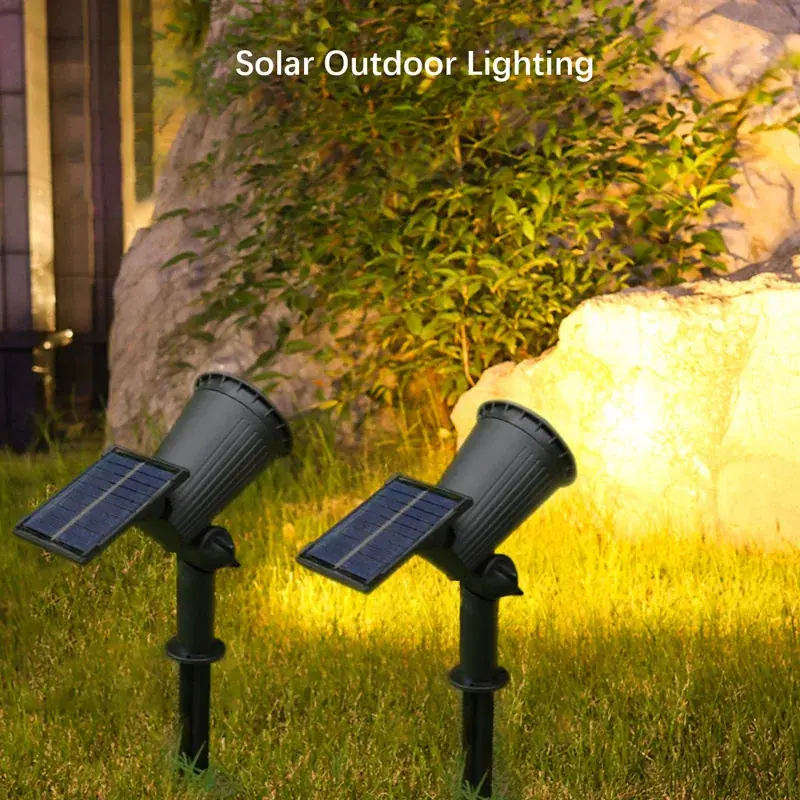
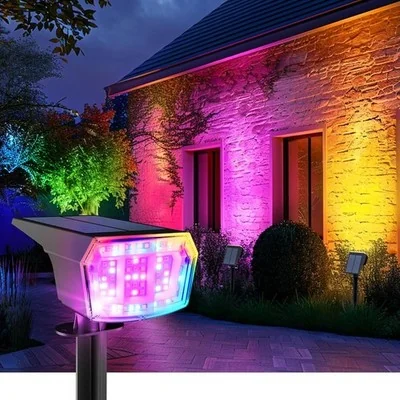
Residential Landscape Accent Lighting: The largest application segment involves homeowners using solar spotlights to highlight trees, shrubs, architectural features, and garden focal points. These installations typically use 2-4 spotlights per property, with warm white color temperatures and 200-300 lumen output. Customers value easy installation, attractive housing designs that blend with landscape aesthetics, and adjustable heads for precise aiming. Retailers serving this segment should stock ground stake models with 3-5 meter cable lengths between solar panels and light heads for installation flexibility.
Pathway and Driveway Illumination: Solar spotlights provide an alternative to traditional path lights, offering brighter, more focused illumination for walkways, driveways, and steps. This application requires higher lumen output (300-400 lumens) and cool white or neutral white color temperatures for better visibility. Customers often purchase in sets of 6-12 units for complete pathway coverage. Wholesale buyers targeting this segment should emphasize consistent brightness across units and reliable auto-on/off functionality.
Security and Safety Lighting: Commercial properties, parking areas, and residential perimeters use solar spotlights for security illumination and safety compliance. These applications demand the highest performance specifications: maximum lumen output, extended runtime, motion sensor options, and robust construction. Wall-mounted models with adjustable brackets suit building facades and fence lines, while ground stake models work for perimeter landscaping. This segment accepts premium pricing for verified performance and longer warranties.
Signage and Commercial Building Accent: Retail locations, restaurants, and office buildings use solar spotlights to illuminate signage, building facades, and entrance areas. These installations require precise beam control, consistent color temperature, and professional appearance. Multi-head systems with centralized solar panels suit larger commercial installations. Buyers targeting commercial customers should emphasize lumen maintenance over time, as dimming spotlights create poor brand impressions.
Event and Temporary Installations: Event venues, outdoor weddings, and seasonal displays use solar spotlights for temporary lighting that avoids electrical infrastructure costs. RGB color-changing models particularly suit this segment. The ability to quickly install and relocate lights matters more than permanent mounting durability. Wholesale buyers can target event rental companies and wedding planners with portable spotlight kits.
Municipal and Park Lighting: Local governments and park districts increasingly adopt solar spotlights for pathway lighting, monument illumination, and park feature highlighting. These buyers prioritize total cost of ownership, maintenance requirements, and environmental sustainability. They typically purchase through bid processes requiring detailed specifications, certifications, and warranty terms. Wholesale distributors targeting municipal customers need comprehensive technical documentation and responsive project support.
What OEM/ODM Customization Options Are Available for Wholesale Solar Spotlights?
Customization capabilities differentiate commodity solar spotlight suppliers from value-added manufacturing partners. Understanding available OEM (Original Equipment Manufacturer) and ODM (Original Design Manufacturer) options helps wholesale buyers create differentiated products, build brand identity, and meet specific market requirements.
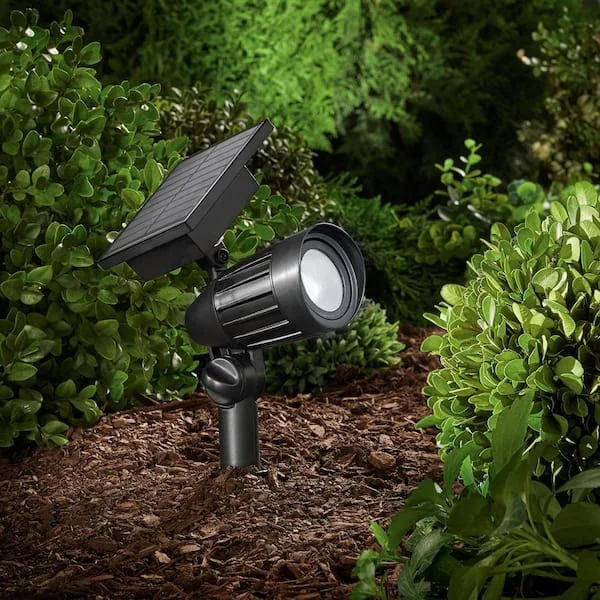
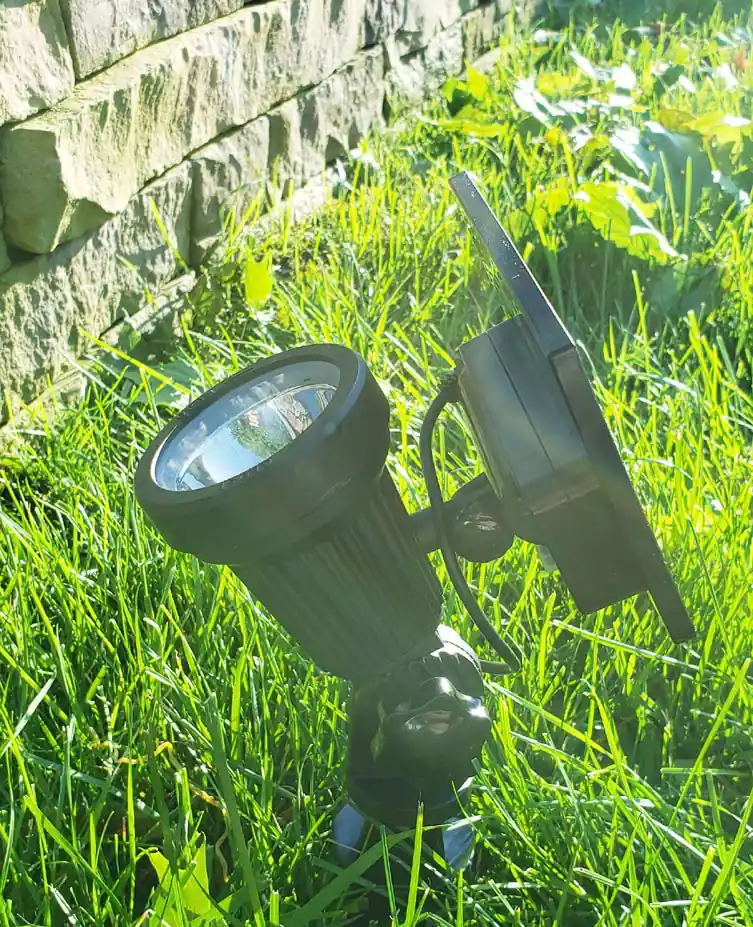
Housing Design and Branding: Most manufacturers offer custom housing colors through powder coating (for aluminum) or custom injection molding (for plastic). Minimum order quantities for custom colors typically start at 500-1000 units. Logo placement options include laser engraving on aluminum housings, pad printing on plastic components, or custom label inserts. Premium suppliers can develop completely custom housing designs through ODM processes, though this requires larger commitments (typically 2000+ units) and tooling investments.
Optical Customization: Beam angle customization allows buyers to optimize spotlights for specific applications. Standard beam angles range from 15 degrees (narrow spot) to 60 degrees (wide flood), with custom angles available through lens modifications. Color temperature selection (warm white, neutral white, cool white, or RGB) can be specified at the LED sourcing stage. Some manufacturers offer switchable color temperature options using multi-chip LEDs and mode buttons. For buyers targeting premium markets, custom CRI (Color Rendering Index) specifications ensure accurate color representation of illuminated objects.
Solar Panel and Battery Configuration: Panel wattage and battery capacity can be customized to match runtime requirements and installation conditions. Buyers targeting northern latitudes or shaded installations should specify higher-efficiency monocrystalline panels and larger battery capacities. Cable length between solar panels and light heads can be customized from standard 3 meters up to 10 meters for challenging installation scenarios. Some manufacturers offer separate solar panel mounting kits for maximum installation flexibility.
Control Features and Smart Integration: Custom control options include adjustable brightness levels, motion sensor integration, dusk-to-dawn sensors with adjustable sensitivity, and timer functions. For buyers targeting tech-savvy markets, smart features like Bluetooth or WiFi connectivity, smartphone app control, and integration with home automation systems can be developed through ODM partnerships. These features require careful reliability testing, as electronic complexity increases potential failure points.
Packaging and Documentation: Custom packaging design helps build brand identity and improve retail presentation. Options include custom color boxes with product photography, hanging display packaging for retail hooks, and multi-unit gift sets. Documentation customization includes branded user manuals, installation guides in multiple languages, and warranty cards with company contact information. Quality manufacturers provide packaging design services and can source sustainable packaging materials for environmentally conscious brands.
For comprehensive information about customization processes and capabilities, review Glowyard’s OEM solutions, which detail the full range of customization options available from professional solar lighting manufacturers.
Minimum Order Quantities and Lead Times: Customization typically requires higher minimum order quantities than standard products. Basic customizations (logo printing, color selection from existing options) may start at 500-1000 units with 30-45 day lead times. Moderate customizations (custom colors, modified specifications) typically require 1000-2000 units with 45-60 day lead times. Extensive ODM development (new housing designs, advanced electronics) requires 3000-5000 unit commitments and 60-90 day development timelines plus production time.
How to Source Wholesale Solar Spotlights from China Manufacturers and Suppliers?
China dominates global solar spotlight manufacturing, offering the most comprehensive supplier base, competitive pricing, and established export infrastructure. However, successful sourcing requires careful supplier evaluation, clear communication, and proper quality control processes.
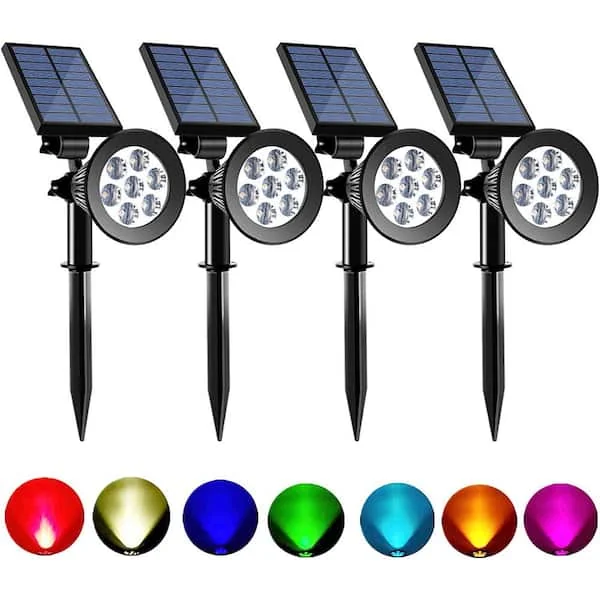
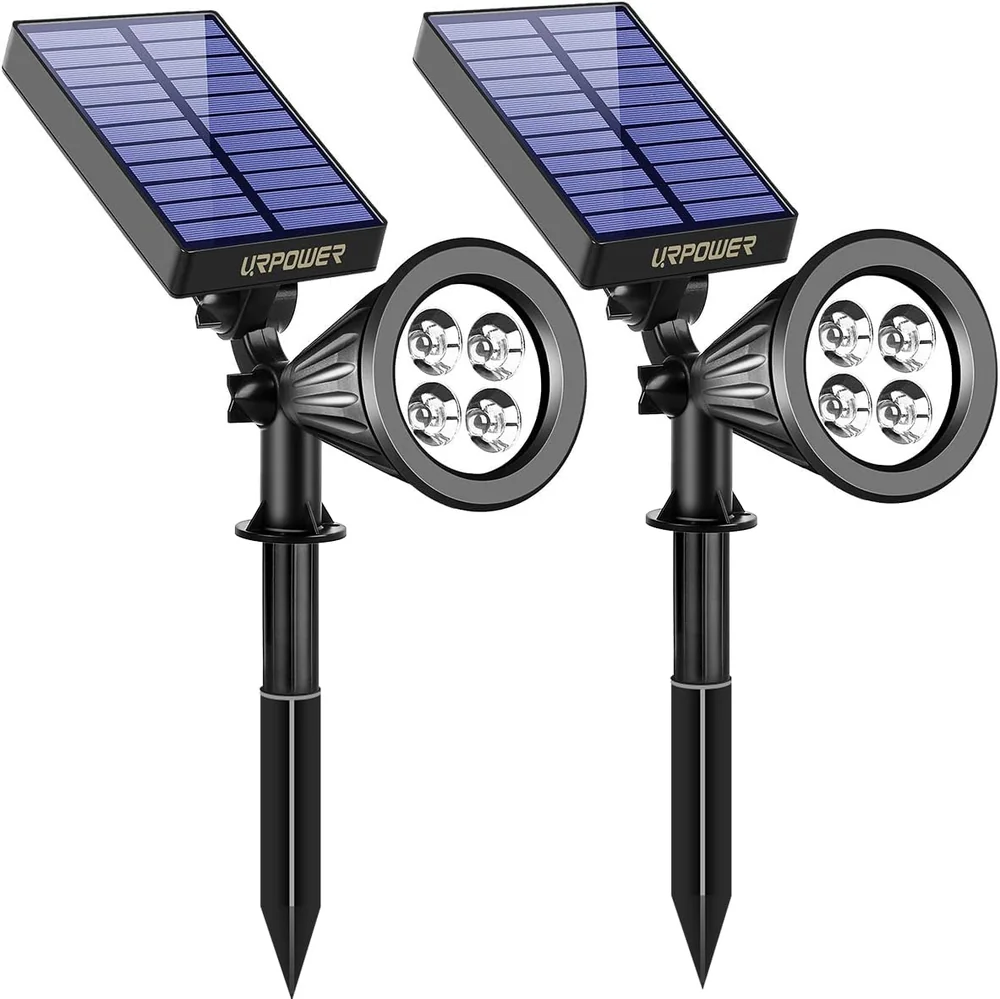
Finding Qualified Suppliers: Start by identifying potential wholesale solar spotlight manufacturers through B2B platforms like Alibaba, Global Sources, and Made-in-China. Look for suppliers with Gold Supplier status, Trade Assurance, and verified factory credentials. Attend industry trade shows such as the Canton Fair, Hong Kong Lighting Fair, or Shanghai International Lighting Fair to meet suppliers face-to-face and evaluate product quality directly. Request referrals from industry contacts and freight forwarders who work with lighting manufacturers.
Supplier Evaluation Criteria: Assess potential suppliers across multiple dimensions. Factory capability mattersverify production capacity, equipment quality, and whether they manufacture components in-house or source from subcontractors. Quality control systems should include documented IQC, IPQC, and OQC processes with testing equipment for waterproof ratings, photometric measurements, and electrical safety. Export experience indicates familiarity with international quality standards, documentation requirements, and shipping logistics. Request customer references and check online reviews on platforms like Alibaba’s supplier assessment system.
Sample Ordering and Testing: Always order samples before placing bulk orders, ideally from multiple suppliers for comparison. Test samples thoroughly: measure actual lumen output using an integrating sphere or lux meter, verify beam angles, test waterproof ratings by submersion, and conduct long-term runtime tests. Install samples outdoors for at least 2-4 weeks to evaluate real-world performance including charging efficiency, auto-on/off reliability, and weather resistance. Compare sample quality against specifications and verify consistency by ordering multiple samples of the same model.
Negotiation and Contracting: Price negotiation should consider total landed cost including product cost, shipping, duties, and potential quality issues. Larger order quantities justify lower per-unit pricing, but balance volume discounts against inventory carrying costs and market demand uncertainty. Negotiate payment terms that protect both partiestypical structures include 30% deposit with 70% balance before shipping, or letters of credit for larger orders. Ensure contracts specify product specifications, quality standards, inspection procedures, delivery timelines, and warranty terms.
Quality Control and Inspection: Implement third-party inspection services for bulk orders. Pre-shipment inspections verify that production units match approved samples, check for defects, and confirm proper packaging. Inspection companies like SGS, Bureau Veritas, or TUV can conduct on-site factory inspections and provide detailed reports. For ongoing relationships, consider periodic factory audits to verify continued quality control compliance and production capabilities.
Logistics and Import Considerations: Work with experienced freight forwarders familiar with lighting product shipping requirements. Solar spotlights with lithium batteries require proper dangerous goods documentation and may face shipping restrictions on certain carriers. Verify import duties and regulations for your target marketsome countries impose anti-dumping duties on Chinese solar products or require specific certifications. Factor in shipping timelines (typically 25-35 days for sea freight, 5-7 days for air freight) when planning inventory.
For detailed guidance on bulk purchasing from China, see bulk purchase solar garden lights from China. Glowyard Lighting operates as a professional wholesale solar spotlight supplier with established export processes, comprehensive quality control systems, and experience serving distributors across North America, Europe, and Asia-Pacific markets.
What Mistakes Can Cost You Money When Buying Solar Spotlights in Bulk?
Avoiding common purchasing mistakes saves money, reduces after-sales costs, and protects brand reputation. Understanding these pitfalls helps wholesale buyers make better sourcing decisions.
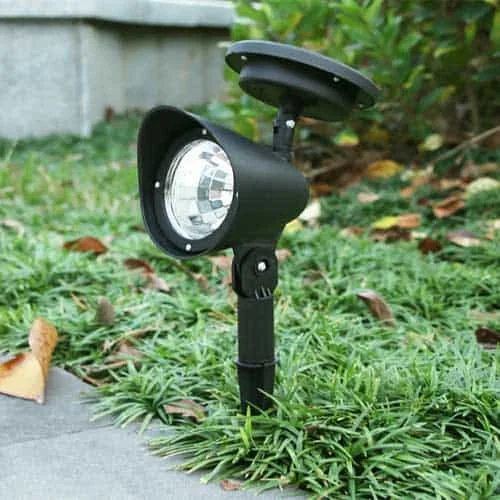
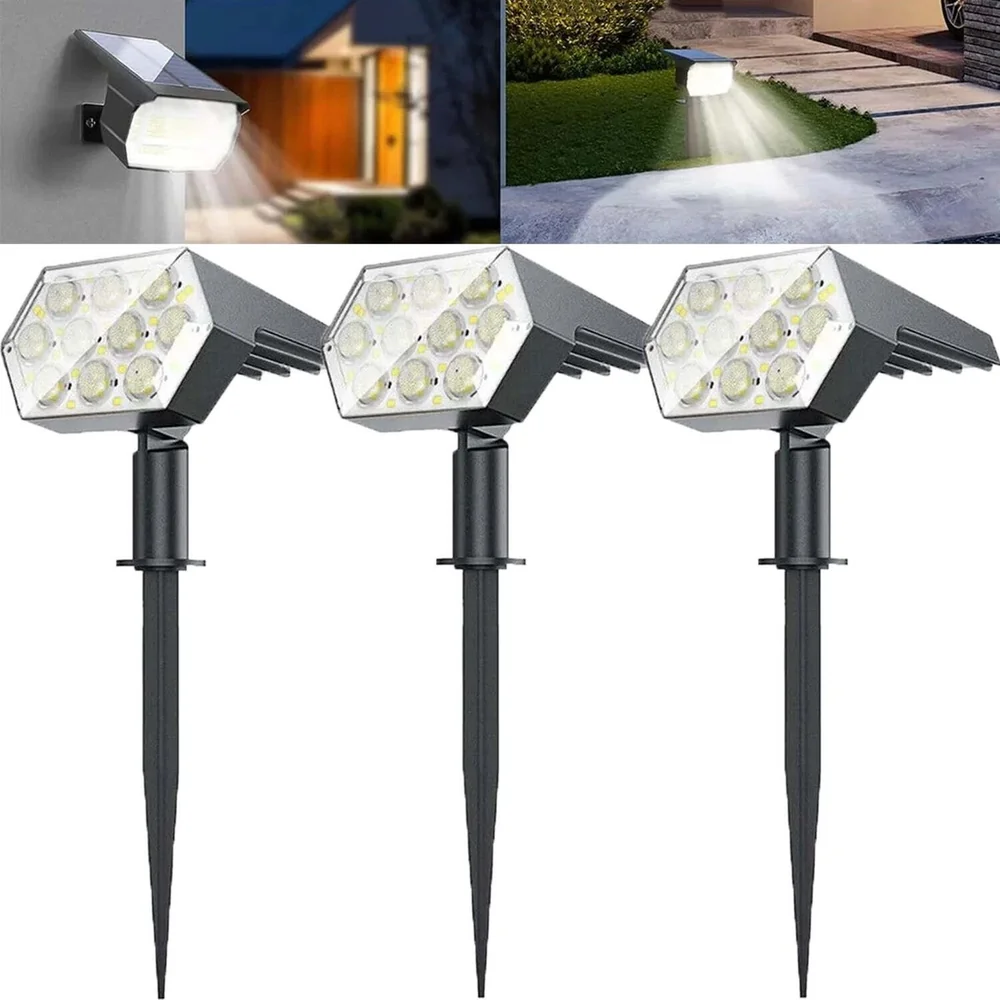
Prioritizing Price Over Quality: The most expensive mistake involves selecting suppliers based solely on lowest price. Ultra-cheap solar spotlights typically use inferior componentsgeneric LED chips with poor color consistency, low-capacity batteries that fail quickly, thin plastic housings that crack in cold weather, and inadequate waterproofing that allows moisture intrusion. These quality issues generate high return rates, damage customer relationships, and create negative reviews that harm long-term sales. Calculate total cost of ownership including expected return rates and warranty costs, not just initial purchase price.
Inadequate Sample Testing: Ordering bulk quantities based on limited sample evaluation or supplier-provided specifications without independent verification leads to costly surprises. Samples may represent best-case production quality rather than typical output. Always test multiple samples over extended periods, verify specifications with independent measurements, and consider third-party laboratory testing for critical parameters like lumen output, IP ratings, and battery capacity.
Ignoring Seasonal Inventory Planning: Solar spotlight demand follows predictable seasonal patterns, yet many buyers either overstock during slow periods (tying up capital and warehouse space) or understock before peak seasons (missing sales opportunities). Develop inventory plans based on historical sales data, lead time requirements, and seasonal demand curves. Place orders 8-12 weeks before peak seasons to ensure adequate stock without excessive carrying costs.
Overlooking Certification Requirements: Discovering that products lack required certifications after receiving shipments creates expensive problemsproducts may be held at customs, require costly re-certification, or need to be returned to suppliers. Verify certification requirements for target markets before ordering, request copies of certificates and test reports, and confirm that certificates cover the specific models being purchased. Budget for certification costs if developing custom products.
Poor Communication of Specifications: Vague or incomplete specifications lead to misunderstandings about product requirements. Suppliers may interpret ambiguous requirements differently than intended, resulting in products that don’t meet expectations. Provide detailed specifications including dimensions, materials, performance parameters, quality standards, and packaging requirements. Use technical drawings, reference samples, and clear written documentation to eliminate ambiguity.
Neglecting Packaging and Shipping Considerations: Solar spotlights with glass lenses or delicate solar panels require proper protective packaging to prevent damage during international shipping. Inadequate packaging leads to high damage rates and insurance claims. Specify packaging requirements including inner box protection, outer carton strength, and pallet configuration. Consider package dimensions and weight for shipping cost optimization and retail display requirements.
Failing to Plan for After-Sales Support: Not establishing clear warranty terms, spare parts availability, and technical support processes before ordering creates problems when issues arise. Negotiate warranty terms that balance customer expectations with reasonable supplier responsibilities. Ensure suppliers can provide replacement parts for common failure points like batteries and solar panels. Establish communication channels for technical support and warranty claims processing.
Insufficient Market Research: Ordering products that don’t match target market preferences wastes inventory investment. Research customer preferences for brightness levels, color temperatures, design styles, and price points before selecting products. Consider regional differencesEuropean customers may prefer minimalist designs while North American customers favor traditional styles. Test market acceptance with smaller initial orders before committing to large volumes.
Wholesale Buying Checklist for Solar Spotlights
- Verify supplier factory credentials and export experience
- Request and test multiple samples from different production batches
- Confirm all required certifications (CE, RoHS, FCC, IP rating) with documentation
- Specify exact product specifications including lumen output, beam angle, color temperature
- Negotiate clear payment terms and delivery schedules
- Arrange third-party pre-shipment inspection
- Verify packaging adequacy for international shipping and retail display
- Establish warranty terms and spare parts availability
- Calculate total landed cost including duties, shipping, and potential return rates
- Plan inventory levels based on seasonal demand patterns
- Confirm battery shipping compliance and dangerous goods documentation
- Review sample contracts and modify for specific requirements
Quick RFQ Template for Wholesale Solar Spotlights
When requesting quotations from suppliers, include the following information for accurate pricing and faster responses:
Product Specifications:
- Spotlight type (ground stake / wall-mount / multi-head)
- Lumen output requirement
- Beam angle preference
- Color temperature (warm white / cool white / RGB)
- Solar panel wattage and type (mono/poly)
- Battery capacity and type
- Housing material (aluminum / ABS plastic)
- IP waterproof rating required
- Cable length (if separate solar panel)
Order Details:
- Target order quantity
- Delivery timeline
- Destination port/country
- Required certifications
- Customization needs (logo, colors, packaging)
Business Information:
- Company type (retailer / distributor / contractor)
- Target market and customer segment
- Quality level preference (economy / mid-range / premium)
- Payment terms preference
- Inspection requirements
Who Is Glowyard Lighting and What Do We Offer?
Glowyard Lighting specializes in manufacturing and exporting solar-powered outdoor lighting solutions, including a comprehensive range of solar spotlights for wholesale and bulk purchase customers. Our factory combines modern production equipment with experienced quality control teams to deliver reliable products that meet international standards.
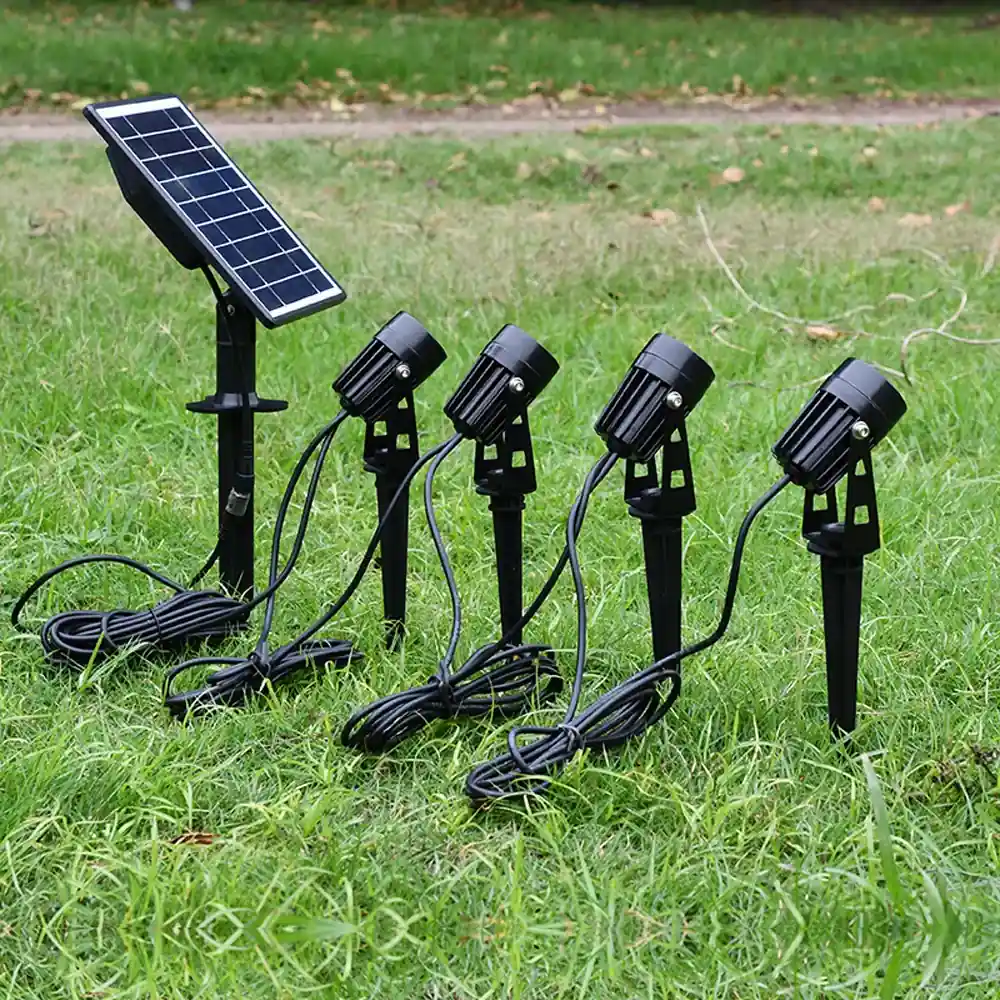
Our solar spotlight production capabilities include multiple housing materials (die-cast aluminum and engineered plastics), various optical configurations (adjustable beam angles from 15 to 60 degrees), and flexible power options (2-12 watt solar panels with corresponding battery capacities). We maintain in-house tooling capabilities for custom housing designs and work with certified component suppliers for LED chips, solar panels, and lithium batteries.
Quality control processes include incoming inspection of all components, in-process monitoring during assembly, and comprehensive outgoing inspection covering waterproof testing (IP65/IP67 verification), photometric measurements, electrical safety checks, and aging tests. We provide complete documentation including test reports, certification copies, and technical specifications for all products.
OEM and ODM services support wholesale buyers developing branded product lines. Customization options include housing colors and finishes, logo placement through laser engraving or printing, custom packaging design, and specification modifications for beam angles, color temperatures, and runtime requirements. Our design team assists with product development from concept through production, with typical ODM timelines of 60-90 days depending on complexity.
Export experience spans North America, Europe, Australia, and Asia-Pacific markets, with established logistics partnerships and familiarity with regional certification requirements. We provide support for CE, RoHS, FCC, and other certifications, maintaining updated test reports and technical documentation. After-sales support includes warranty processing, technical assistance, and spare parts availability for common replacement components.
For wholesale buyers seeking reliable solar spotlight manufacturers with proven quality control systems and comprehensive customization capabilities, Glowyard offers the manufacturing expertise and export experience needed for successful bulk purchasing partnerships.
Frequently Asked Questions
What is the typical minimum order quantity for wholesale solar spotlights?
Minimum order quantities vary by supplier and product complexity. Standard models without customization typically start at 100-500 units, while custom colors or specifications may require 500-1000 units. Extensive ODM development usually requires 2000-5000 unit commitments. Negotiate MOQs based on your market size and inventory capacitysome suppliers offer flexibility for first-time buyers or mixed container orders.
How long do solar spotlight batteries typically last before replacement?
Quality lithium-ion batteries in solar spotlights provide 500-800 charge cycles before capacity drops below 80% of original performance, translating to approximately 2-3 years of daily use. Battery longevity depends on several factors including charge/discharge depth, operating temperature extremes, and manufacturing quality. Premium batteries from branded manufacturers last longer than generic alternatives. Most quality spotlights allow battery replacement, extending overall product life.
What lumen output is needed for different applications?
Landscape accent lighting typically requires 150-250 lumens per spotlight for highlighting trees and architectural features. Pathway illumination needs 250-350 lumens for adequate visibility and safety. Security and commercial applications benefit from 350-500+ lumens for maximum brightness and deterrent effect. Consider that solar spotlight lumen output decreases as batteries dischargespecifications should reflect maintained output levels, not peak initial brightness.
Can solar spotlights work in winter or cloudy climates?
Quality solar spotlights function in winter and cloudy conditions, though performance decreases with reduced sunlight availability. Monocrystalline solar panels perform better in low-light conditions than polycrystalline alternatives. Larger battery capacities provide longer runtime reserves during periods of limited charging. For challenging climates, specify higher-wattage solar panels and larger batteries, or consider models with separate solar panels that can be positioned for maximum sun exposure while lights install in shaded areas.
What warranty terms should wholesale buyers expect?
Standard warranty terms for wholesale solar spotlights range from 12 to 24 months, covering manufacturing defects but typically excluding damage from misuse, extreme weather, or normal wear. Premium products may offer extended warranties up to 36 months. Clarify warranty coverage details including which components are covered, whether warranty includes replacement units or repair, who pays return shipping, and how claims are processed. Negotiate warranty terms during initial supplier discussions.
How do I verify that products match approved samples?
Implement third-party pre-shipment inspection services to verify production quality matches approved samples. Inspectors check random samples from the production batch, measuring key specifications like lumen output, beam angle, color temperature, and waterproof ratings. They verify housing materials, component quality, and packaging adequacy. Inspection reports document findings and provide photographic evidence. This investment (typically a few hundred dollars per inspection) prevents costly problems from receiving off-specification products.
What are the most common failure points in solar spotlights?
The most frequent failure points include battery degradation (reduced capacity over time), waterproof seal failures (allowing moisture intrusion that damages electronics), solar panel degradation (reduced charging efficiency), and mechanical failures in adjustment mechanisms or mounting hardware. Quality manufacturing with proper gasket sealing, corrosion-resistant materials, and adequate component ratings minimizes these issues. When evaluating suppliers, ask about their failure rate data and most common warranty claims.
Should I stock multiple color temperature options?
Market research shows that warm white (2700-3000K) dominates residential sales, accounting for approximately 70% of consumer preference for landscape lighting. Cool white (5000-6000K) appeals to commercial buyers and security applications. Consider stocking both options if serving diverse customer segments, or focus on warm white for residential-focused retail. Some manufacturers offer switchable color temperature models that provide flexibility without SKU proliferation, though these cost more and add electronic complexity.