







2026 lastest Full Product Catalogue
Please Click the button, after Filling in your Email and information, the file will be send within 24 hours .
-
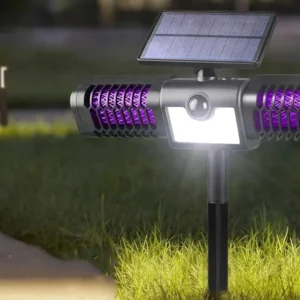 Functional Solar Lights
SM221291 ABS Plastic Solar Motion Mosquito Killer Stake Lamp
-
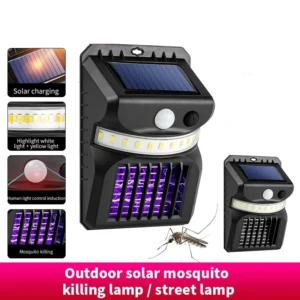 Functional Solar Lights
SM22338 ABS Plastic Solar Sensor Wall Lamp
-
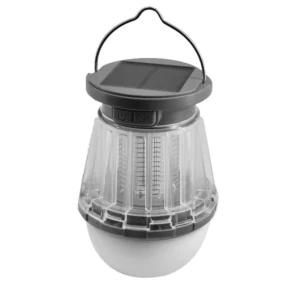 Decorative Garden Solar Lights
SM22972 ABS Plastic Portable Solar Mosquito Repellent Table Lamp
-
 Decorative Garden Solar Lights
SM241025 ABS Plastic Solar Mini Mosquito Killer Stake Light
-
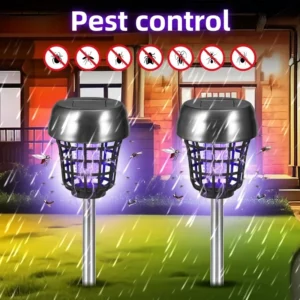 Functional Solar Lights
SM241026 Stainless Steel Mosquito Killer Solar Stake Light
-
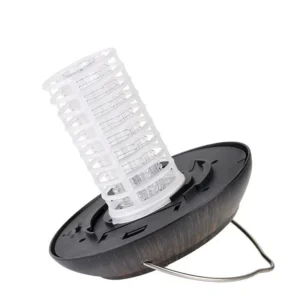 Decorative Garden Solar Lights
SM241027 Bronze ABS Plastic Handheld Solar Mosquito Killer Lamp Tabletop
-
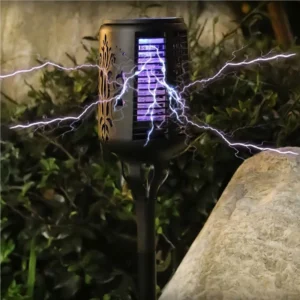 Decorative Garden Solar Lights
SM241028 ABS Plastic Flame Solar Mosquito Killer Tabletop Lamp
-
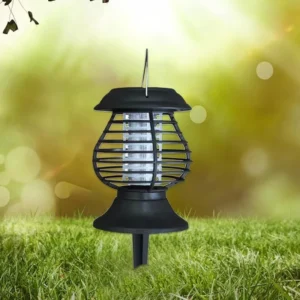 Decorative Garden Solar Lights
SM241029 Stainless Steel Solar Mosquito Killer Stake Light with Black Spray Paint
-
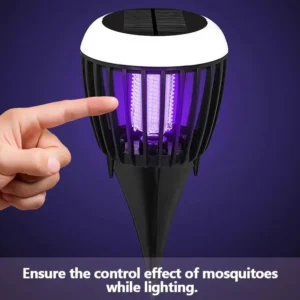 Decorative Garden Solar Lights
SM241030 PP Plastic Mushroom Solar Mosquito-Killing Tabletop Lamp
-
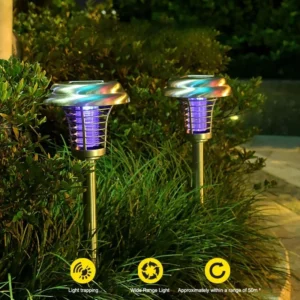 Functional Solar Lights
SM241031 Stainless Steel Solar Mosquito Killer Stake Light
-
 Functional Solar Lights
SML031 3 in 1 Solar Mosquito Killer Lamp
-
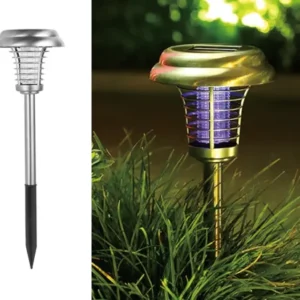 Functional Solar Lights
SML032 Solar Mosquito Killer Lamp
Wholesale Mosquito Killer Solar Lights: Complete B2B Buyer Guide
If you’re sourcing wholesale mosquito killer solar lights for garden centers, outdoor living retailers, pest control distributors, or camping supply stores, this guide will help you evaluate designs, effectiveness claims, certifications, and factory capabilities before placing bulk orders. Mosquito killer solar lights combine decorative outdoor lighting with pest control functionality, powered by solar panels that charge internal batteries for nighttime operation. These products appeal to wholesalers, retailers, distributors, importers, and commercial buyers who serve customers seeking chemical-free pest control solutions for patios, gardens, camping areas, and outdoor living spaces. When buying in bulk, key considerations include UV light wavelength and intensity for insect attraction, electric grid or fan mechanism effectiveness, safety certifications for electrical components, realistic performance expectations and marketing claims, quality control for electronic components, customization options for different power levels and coverage areas, packaging that communicates functionality clearly, lead time management for seasonal demand, and supplier compliance with target market regulations. This guide covers everything from pest control technology and manufacturing processes to OEM/ODM customization, helping you make informed decisions that balance cost, effectiveness, and customer satisfaction.
Category Summary
Wholesale mosquito killer solar lights integrate UV LED technology and electric grids or fan mechanisms into solar-powered outdoor lighting fixtures. Bulk buyers typically source hanging lantern styles, ground stake models, wall-mounted units, and tabletop designs. Key purchasing considerations include UV wavelength effectiveness (typically 365-395nm for insect attraction), power output and coverage area claims, electric grid voltage and safety, fan mechanism efficiency, battery capacity for all-night operation, and realistic effectiveness expectations. This category attracts outdoor living retailers, camping supply distributors, pest control product sellers, and garden centers who need products that deliver both lighting and pest control value. Quality bulk mosquito killer solar lights must provide safe operation, reasonable pest reduction (not elimination), durable weather-resistant construction (IP44-IP65), and honest marketing claims to maintain customer satisfaction and avoid returns in this functionality-focused market segment.
What Will You Learn in This Guide?
- What Are Wholesale Mosquito Killer Solar Lights and Why Are They Popular in Wholesale Markets?
- What Types and Designs Sell Best for Bulk Orders?
- What Materials and Manufacturing Processes Are Used?
- What Quality Standards and Certifications Matter for Wholesale Buyers?
- What Is the Market Demand and Customer Preferences?
- What Are the Common Applications?
- What OEM/ODM Customization Options Are Available?
- How to Source Wholesale Mosquito Killer Solar Lights from China Manufacturers?
- What Mistakes Can Cost You Money When Buying in Bulk?
- Who Is Glowyard Lighting and What Do We Offer?
- Frequently Asked Questions
What Are Wholesale Mosquito Killer Solar Lights and Why Are They Popular in Wholesale Markets?
Wholesale mosquito killer solar lights are dual-function outdoor devices that combine solar-powered lighting with insect control mechanisms. These products use UV LEDs to attract flying insects, then eliminate them through electric grids (high-voltage shock) or fan mechanisms (trapping). The solar panels charge internal batteries during daylight, powering both the lighting and pest control functions after dark. Products range from decorative lantern styles suitable for patios to utilitarian designs for camping and outdoor work areas.
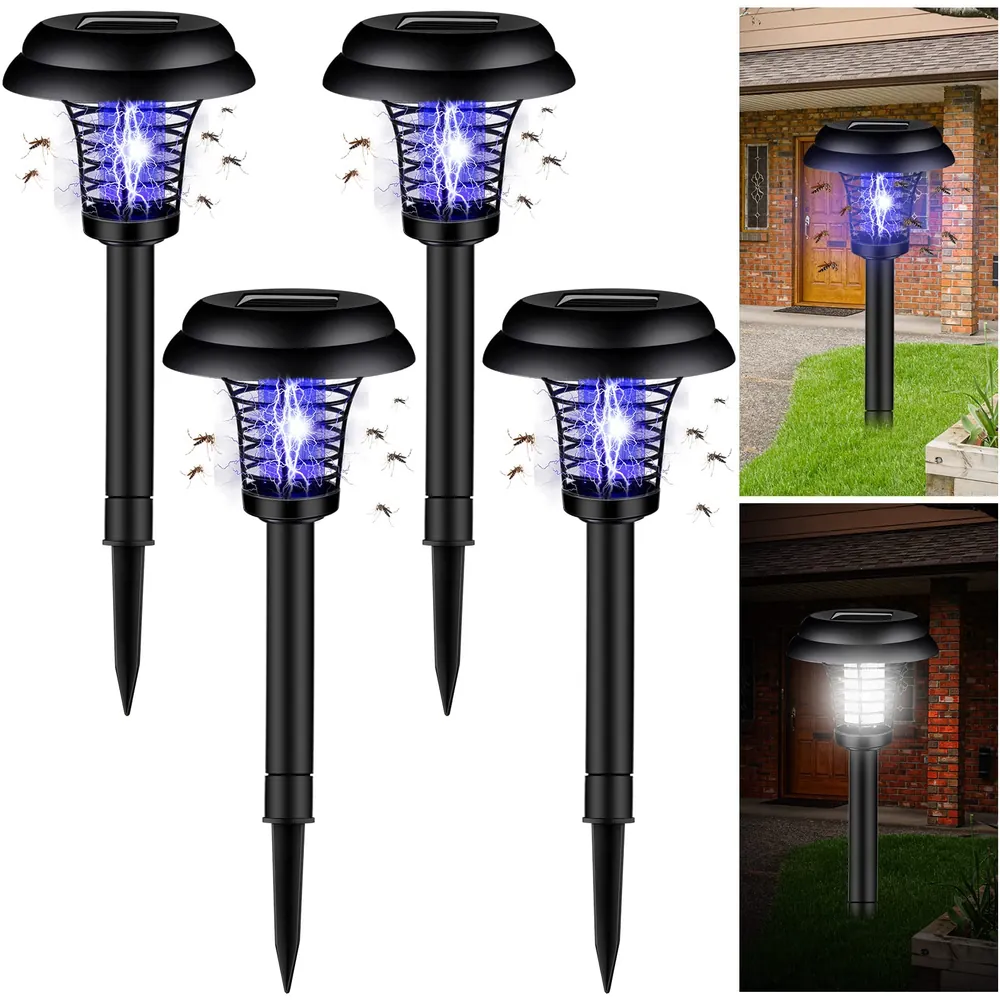

The wholesale market for mosquito killer solar lights has grown significantly due to several converging factors. First, increasing consumer awareness of chemical pesticide risks drives demand for alternative pest control methods. Customers seek solutions that reduce mosquito and flying insect populations without exposing families, pets, or beneficial insects to harmful chemicals. This health-conscious trend supports premium pricing for effective chemical-free alternatives and creates strong market positioning for retailers emphasizing natural pest control.
Second, the dual functionality appeals to customers seeking value and space efficiency. Rather than purchasing separate outdoor lights and pest control devices, customers can address both needs with single products. This value proposition resonates particularly strongly with customers furnishing patios, decks, and outdoor living spaces where both lighting and pest control enhance comfort. The solar-powered feature eliminates installation complexity and ongoing energy costs, making these products accessible to customers who might hesitate to install wired pest control devices.
For wholesalers and distributors, mosquito killer solar lights offer several business advantages. The products command premium pricing compared to standard solar lights due to added functionality, supporting higher profit margins. Strong seasonal demand during warm weather months (when mosquitoes are most active) creates concentrated sales opportunities. The category appeals to multiple retail channels including garden centers, outdoor living stores, camping supply retailers, and pest control product distributors, providing diverse market access.
However, this category also presents unique challenges that wholesale buyers must understand. Effectiveness varies significantly based on design quality, power output, and environmental conditions. Unrealistic marketing claims about coverage areas or elimination rates lead to customer disappointment and returns. Quality control becomes criticalelectronic components must function reliably, UV LEDs must maintain proper wavelength output, and safety mechanisms must prevent accidental human contact with electric grids. Wholesale buyers must carefully evaluate suppliers’ technical capabilities, testing protocols, and willingness to make honest effectiveness claims rather than exaggerated promises.
What Types and Designs Sell Best for Bulk Orders?
The wholesale mosquito killer solar lights market segments into several distinct product categories based on elimination mechanism, design style, and power output. Understanding these variations helps buyers select inventory that matches customer needs and manages effectiveness expectations appropriately.
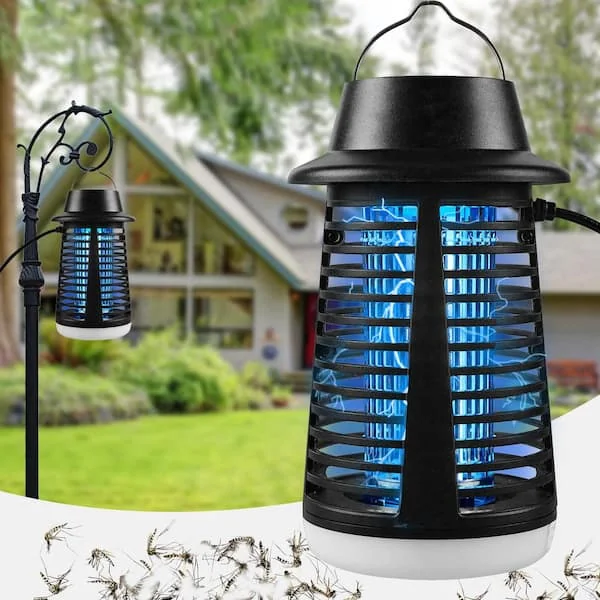
Electric Grid Lantern Designs represent the traditional and most recognizable category. These products feature UV LEDs surrounded by high-voltage electric grids (typically 600-1000 volts) that electrocute insects on contact. The grids are usually enclosed within protective outer cages or lantern frames to prevent accidental human contact. Lantern designs suit hanging applications from shepherd hooks, pergolas, or tree branches, providing coverage for patio and deck areas. Quality electric grid models use proper grid spacing (typically 6-8mm) to trap target insects while allowing smaller beneficial insects to pass through, adequate voltage for quick elimination, and safety certifications for electrical components. This category appeals to customers seeking traditional pest control aesthetics and audible confirmation of effectiveness (the characteristic “zap” sound).
Fan-Based Trap Designs use UV LEDs to attract insects, then capture them with fan mechanisms that draw insects into collection chambers where they dehydrate. These products operate more quietly than electric grid models and avoid the odor sometimes associated with electrocuted insects. Fan-based designs typically feature cylindrical or tower configurations with top-mounted solar panels. The effectiveness depends on fan power (requiring larger batteries and solar panels), proper airflow design, and easy-to-clean collection chambers. This category appeals to customers seeking quieter operation and those concerned about the safety aspects of high-voltage grids.
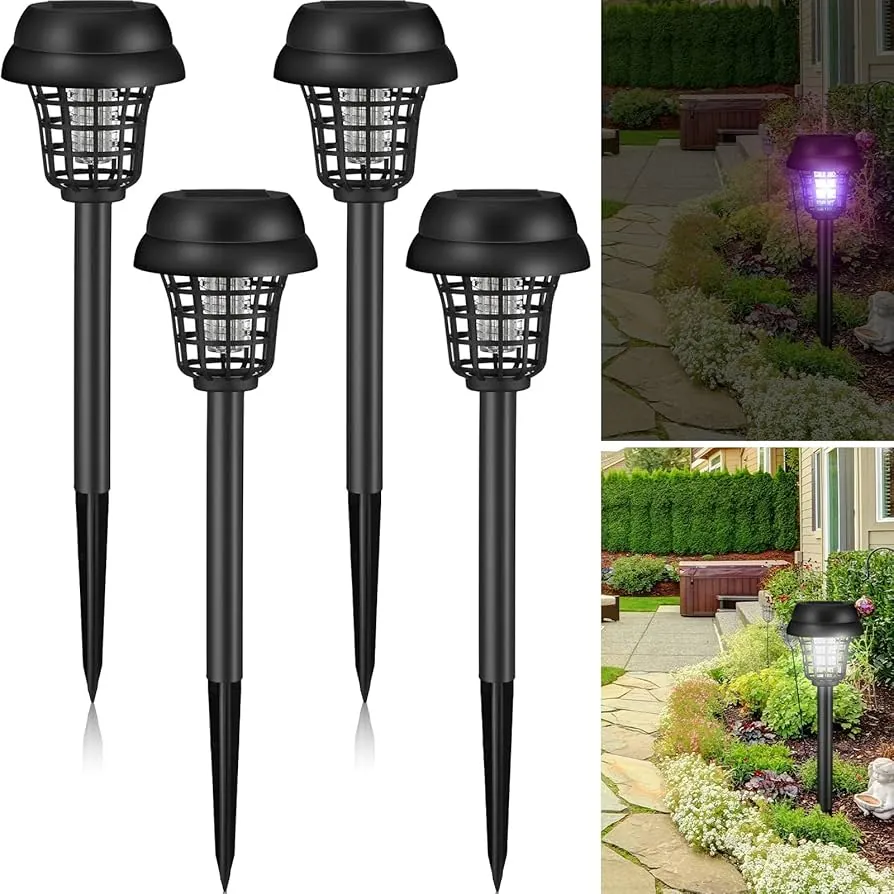
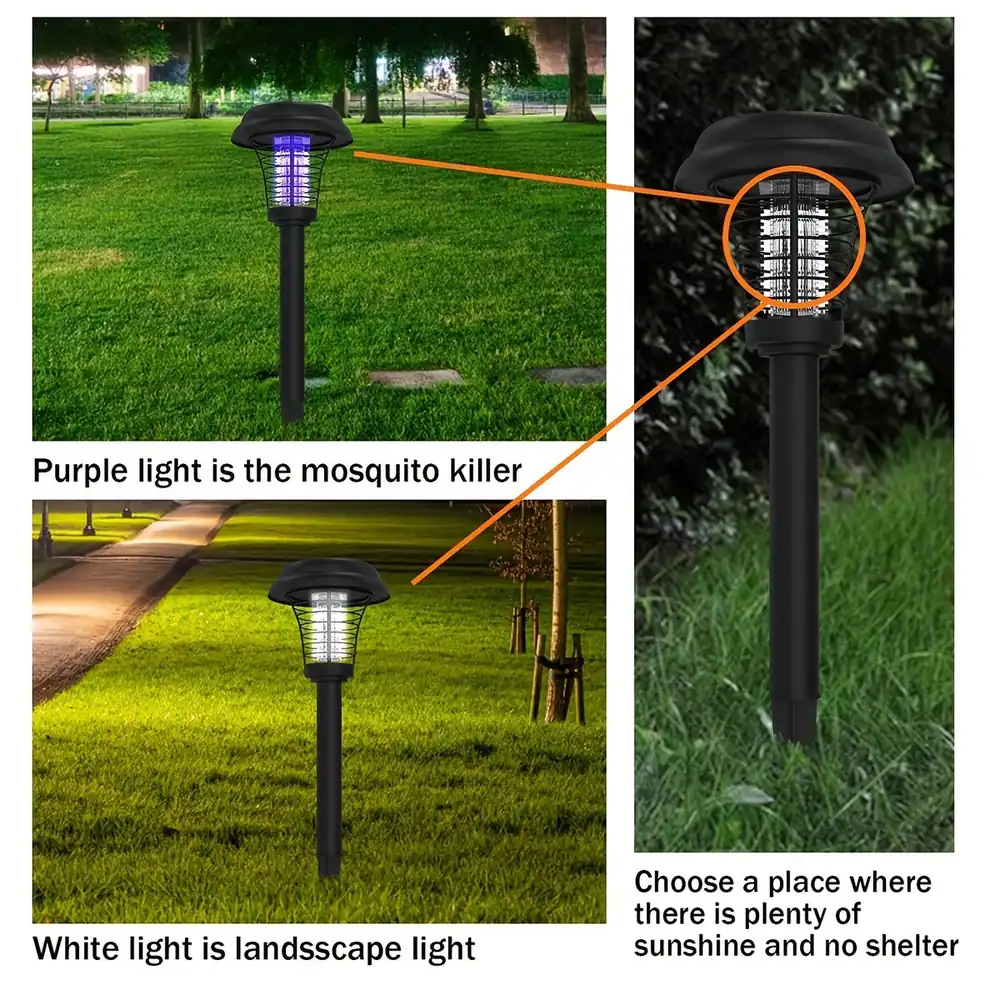
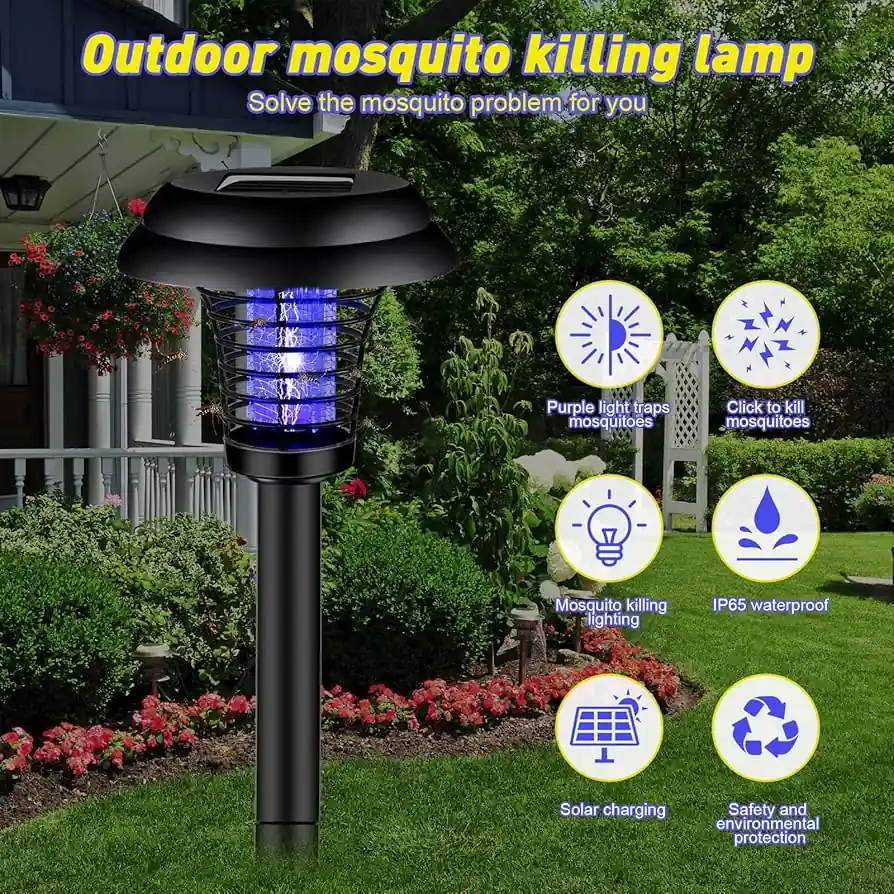
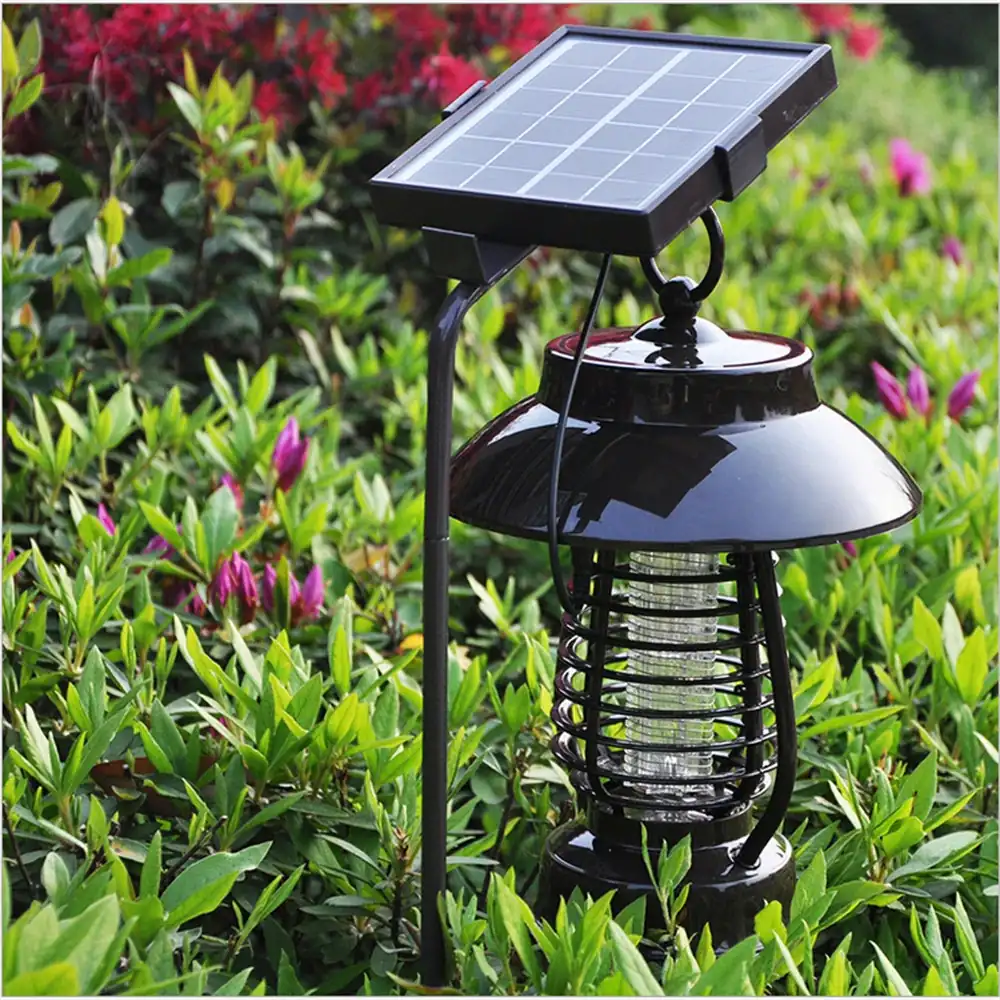
Decorative Stake and Path Light Designs integrate pest control functionality into garden stake lights or pathway markers. These products typically use lower power outputs than dedicated pest control devices, positioning them as supplementary pest reduction rather than primary control. The decorative designs suit garden bed installation and pathway lighting while providing modest insect attraction and elimination. This category appeals to customers seeking dual functionality without dedicating space to utilitarian pest control devices. Wholesale buyers should ensure marketing clearly communicates the supplementary nature of pest control in these designs to manage customer expectations.
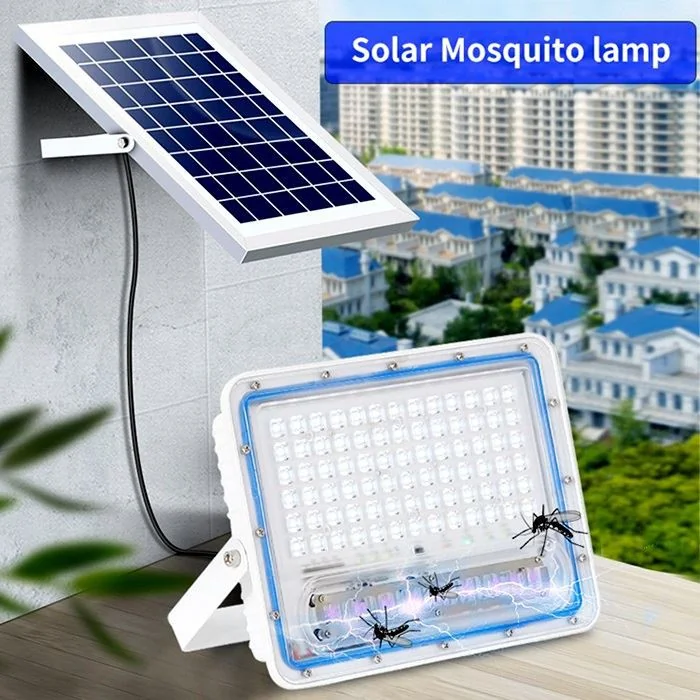
Wall-Mounted and Fence-Mounted Units feature flat-back designs for mounting on walls, fences, or posts. These products suit perimeter pest control applications and areas where hanging or stake installation isn’t practical. Wall-mounted designs typically use separate solar panels positioned for optimal sun exposure while the pest control unit mounts in strategic locations. This category appeals to customers with limited patio space or those seeking to create pest control barriers around outdoor living areas.
High-Power Commercial Models feature larger solar panels (3-5 watts), higher-capacity batteries (2000-3000mAh), more powerful UV LEDs, and stronger electric grids or fans. These products target commercial applications including restaurants, hotels, camping facilities, and agricultural operations. Commercial models command premium pricing but must deliver verified performance to justify costs. This segment requires careful supplier selection to ensure products meet commercial durability and effectiveness standards.
Combination Lighting and Pest Control Designs emphasize attractive ambient lighting alongside pest control functionality. These products feature decorative housings, warm white LEDs for ambient lighting separate from UV pest control LEDs, and designs that complement outdoor decor. This category appeals to residential customers who want pest control without sacrificing patio aesthetics. The dual LED systems (warm white for lighting, UV for pest control) require larger batteries and solar panels, increasing costs but providing better value perception.
Category-Specific Buyer Notes for Mosquito Killer Solar Lights
When sourcing wholesale mosquito killer solar lights, several category-specific factors differentiate successful bulk purchases from problematic ones. First, UV LED wavelength and intensity critically affect insect attraction effectiveness. Mosquitoes and many flying insects are most attracted to UV light in the 350-370nm range, though broader spectrum 365-395nm LEDs provide reasonable effectiveness at lower cost. Verify that suppliers specify actual UV wavelength and can provide spectral analysis reports. Some budget manufacturers use standard blue LEDs (450-470nm) marketed as “UV” that provide minimal insect attractionthese products generate customer complaints and returns.
Second, power output and coverage area claims require careful verification. Many suppliers make exaggerated claims about coverage areas (some claiming 1000+ square feet for small solar-powered units). Realistic coverage for solar-powered mosquito killers ranges from 100-300 square feet for standard residential models, with commercial high-power units potentially covering 400-600 square feet under ideal conditions. Request test data supporting coverage claims and consider conducting your own effectiveness testing before committing to bulk orders. Market products with honest, conservative coverage estimates to avoid customer disappointment.
Third, battery capacity must support all-night operation of both lighting and pest control functions. UV LEDs and electric grids or fans consume significant powerinadequate battery capacity results in devices that shut off mid-evening, generating customer complaints. Minimum battery capacity should be 1200mAh for small decorative models, 1800-2400mAh for standard residential models, and 2500-3000mAh for commercial models. Verify that solar panel wattage (minimum 1.5-2 watts for residential, 3-5 watts for commercial) can fully recharge batteries during typical daylight hours.
Fourth, safety certifications and protective design features are non-negotiable for products using high-voltage electric grids. Grids must be enclosed within protective cages that prevent accidental human contact while allowing insect access. Verify that products meet electrical safety standards for your target market and include proper warnings and user instructions. Fan-based models avoid high-voltage concerns but require proper fan guard design to prevent finger access to moving blades.
What Materials and Manufacturing Processes Are Used?
Understanding the materials and manufacturing processes behind mosquito killer solar lights helps wholesale buyers evaluate quality, predict longevity, and assess fair pricing. These products combine standard solar light components with specialized pest control mechanisms requiring additional manufacturing expertise.
Housing Materials and Construction: Mosquito killer solar lights typically use ABS plastic, polycarbonate, or aluminum for main housings. Plastic housings offer design flexibility, lighter weight, and lower costs, but require UV-stabilized formulations to prevent degradation from sun exposure. Quality plastic housings use impact-modified ABS or polycarbonate with proper wall thickness (minimum 2-3mm) for durability. Aluminum housings provide superior durability and heat dissipation for high-power models but increase costs and weight. Verify that all housing materials include proper ventilation for heat dissipation from UV LEDs and electronic components.
Protective grid cages (for electric grid models) typically use powder-coated steel or stainless steel wire. Grid spacing critically affects both safety and effectivenessspacing too wide allows accidental finger contact, spacing too narrow prevents target insect access. Standard spacing ranges from 6-8mm. Verify that protective cages use corrosion-resistant materials and proper coating to withstand outdoor exposure and cleaning.
Electric Grid Technology: Electric grids use high-voltage transformers (typically converting 3.7V battery voltage to 600-1000V) and metal grid wires. Grid wire material affects durability and conductivityquality grids use stainless steel or aluminum alloy wires with adequate thickness (0.3-0.5mm) to withstand repeated insect contact and cleaning. The transformer quality directly impacts effectiveness and safetyquality transformers provide consistent voltage output, include proper insulation, and meet electrical safety standards. Budget transformers may provide inconsistent voltage, overheat, or fail prematurely.
Grid configuration affects effectivenesssome designs use single grids, while others use alternating positive and negative grid wires to ensure insects contact both polarities. Alternating grid designs generally provide more reliable elimination but require more complex manufacturing. Verify that suppliers conduct electrical safety testing and can provide voltage output specifications.
Fan Mechanism Components: Fan-based models use small DC fans (typically 12-24V) powered through voltage regulators from the battery system. Fan quality affects both effectiveness and longevityquality fans use ball bearings rather than sleeve bearings for longer life and quieter operation. Fan blade design and housing airflow optimization significantly impact insect capture effectiveness. Quality designs include properly sized collection chambers with easy-access cleaning doors and fine mesh to prevent insect escape.
UV LED Technology: UV LED quality critically affects insect attraction effectiveness. Quality mosquito killer lights use dedicated UV LEDs with wavelengths in the 350-395nm range and adequate intensity (typically 1-3 watts total UV output for residential models). Some manufacturers use standard blue LEDs (450-470nm) that provide minimal UV output and poor insect attraction. Request spectral analysis reports verifying actual UV wavelength output. UV LED lifespan typically ranges from 20,000-30,000 hours for quality chips, though intensity gradually decreases over time.
Solar Panel and Battery Systems: Mosquito killer solar lights require larger solar panels and batteries than standard decorative lights due to higher power consumption. Residential models typically use 1.5-2 watt monocrystalline panels with 1800-2400mAh lithium batteries. Commercial models may use 3-5 watt panels with 2500-3000mAh batteries. Panel efficiency directly affects charging adequacymonocrystalline panels provide better performance in less-than-ideal conditions. Battery quality affects both runtime and cycle lifequality lithium cells provide 500-800 charge cycles with minimal capacity loss.
Control Circuitry and Sensors: Quality mosquito killer lights include light sensors for automatic dusk-to-dawn operation, battery management systems to prevent overcharging and over-discharging, and voltage regulators for consistent UV LED and grid/fan operation. Some models include timers allowing users to set operating hours to conserve battery power. Advanced models may include rain sensors that temporarily disable operation during rain to conserve power. Verify that control circuitry includes proper thermal protection and short-circuit protection for safety.
What Quality Standards and Certifications Matter for Wholesale Buyers?
For wholesale buyers, proper certifications and quality standards serve multiple purposes: ensuring product safety (particularly important for high-voltage devices), meeting import requirements, reducing liability exposure, and building customer confidence. Mosquito killer solar lights require particular attention to electrical safety standards.
Electrical Safety Certifications: Products using high-voltage electric grids must meet electrical safety standards for your target market. For the US market, products should meet UL or ETL standards for electrical safety. For European markets, CE marking is required, covering the Low Voltage Directive (LVD) and Electromagnetic Compatibility (EMC) Directive. These certifications verify that high-voltage components include proper insulation, protective enclosures prevent accidental contact, and products include appropriate warnings and user instructions. Request copies of electrical safety test reports, not just certificatesreports should document voltage output, insulation resistance, and protective enclosure effectiveness.
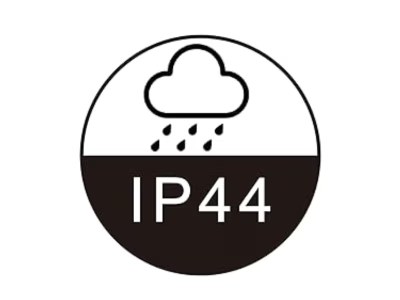
IP Waterproof Ratings: Mosquito killer solar lights must withstand outdoor weather exposure while protecting electronics and high-voltage components from moisture intrusion. Minimum acceptable IP ratings are IP44 (protected against water splashing) for covered patio use, or IP65 (protected against water jets) for general outdoor exposure. Water intrusion into high-voltage components creates serious safety hazards beyond just product failure. Verify that IP ratings apply to the entire assembled unit including all sealing points. Quality factories conduct spray chamber testing and provide test reports. For detailed IP rating explanations, see garden light waterproof ratings guide.
RoHS Compliance: The Restriction of Hazardous Substances directive limits the use of specific hazardous materials in electrical and electronic equipment. RoHS compliance is mandatory for EU markets and increasingly required by other regions. Key restricted substances include lead, mercury, cadmium, and certain flame retardants. Quality manufacturers conduct material testing and maintain RoHS compliance documentation for all components. For comprehensive RoHS information, reference solar garden light RoHS certification guide.
Effectiveness Testing and Documentation: Unlike purely decorative solar lights, mosquito killer lights make functional performance claims that should be supported by testing. Request information about effectiveness testing methods and results. Reputable manufacturers conduct controlled testing measuring insect attraction and elimination rates under standardized conditions. Be wary of suppliers making extreme effectiveness claims (99% elimination, 1000+ square foot coverage) without supporting test data. Conservative, honest effectiveness claims based on actual testing reduce customer disappointment and returns.
Quality Control Documentation: Request quality control documentation including electrical safety test results, waterproof test results, UV LED spectral analysis, and voltage output verification. Reputable manufacturers should provide aging test results showing product performance after extended operation, drop test results for impact resistance, and thermal cycling data to verify performance across temperature ranges.
For comprehensive guidance on export certifications, see what certifications are required for exporting solar garden lights. Buyers should also review Glowyard’s certificates to understand the documentation standards that professional manufacturers maintain.
What Is the Market Demand and Customer Preferences?
Understanding market demand patterns and customer preferences helps wholesale buyers optimize inventory selection, pricing strategies, and marketing approaches. The mosquito killer solar lights market exhibits strong seasonal demand patterns and requires careful management of customer effectiveness expectations.
Seasonal Demand Patterns: Mosquito killer solar lights show highly concentrated seasonal demand during warm weather months when mosquitoes are most active. In temperate climates, primary sales occur from late spring through early fall (May-September in Northern Hemisphere). Peak demand typically occurs in late spring (May-June) as customers prepare for outdoor season and mosquito populations emerge. Secondary demand continues through summer as customers seek solutions for persistent mosquito problems. This concentrated seasonality requires careful inventory planningorders should be placed 12-16 weeks before peak season to ensure adequate stock. Unsold inventory after summer season has limited value until the following year.
Geographic Market Variations: Markets in warm, humid climates with significant mosquito populations show the strongest demand. Southern US states, coastal regions, and areas near water bodies demonstrate highest per-capita sales. These markets favor higher-power models with verified effectiveness. Northern markets show more moderate demand concentrated in shorter summer seasons. Tropical and subtropical markets demonstrate year-round demand but may have different peak seasons based on local mosquito population cycles. Understanding regional mosquito seasons helps optimize inventory timing for different markets.
Customer Segment Preferences: Residential customers seeking patio and deck pest control represent the primary market segment. These customers prioritize effectiveness, safety (particularly for families with children and pets), and reasonable pricing. They typically purchase 1-3 units for targeted coverage of outdoor living areas. Camping and outdoor recreation customers seek portable, durable models for temporary installations. Commercial buyers (restaurants, hotels, camping facilities) require higher-power models with verified effectiveness and accept premium pricing for commercial-grade performance and durability.
Effectiveness Expectations: Customer satisfaction depends heavily on managing effectiveness expectations. Customers often expect complete mosquito elimination, but realistic performance involves population reduction rather than elimination. Quality products typically reduce mosquito presence by 30-60% in covered areas under favorable conditions. Effectiveness varies based on competing light sources, wind conditions, mosquito species, and alternative attractants (humans, food). Wholesale buyers should work with suppliers willing to make honest, conservative effectiveness claims and provide clear user guidance about realistic expectations and optimal placement.
Design Preferences: Current market trends favor designs that balance pest control functionality with aesthetic appeal. Customers increasingly prefer products that don’t look like utilitarian pest control devicesdecorative lantern styles, attractive finishes, and designs that complement outdoor decor perform better than purely functional designs. Quiet operation appeals to customers using products in entertainment areasfan-based models or well-designed electric grid models that minimize noise gain preference. Dual-function designs providing both ambient lighting and pest control offer better value perception than pest-control-only products.
Feature Preferences: Auto on/off functionality via light sensors is standard and expected. All-night operation capability (8+ hours) critically affects customer satisfactionproducts that shut off mid-evening generate complaints. Easy cleaning access for collection chambers (fan models) or grid cleaning (electric grid models) influences long-term satisfaction. Some customers value adjustable settings allowing them to control operating hours to conserve battery power. Safety features including protective enclosures and clear warning labels matter particularly to customers with children and pets.
What Are the Common Applications?
Mosquito killer solar lights serve diverse applications across residential, commercial, and recreational sectors. Understanding these use cases helps wholesale buyers target appropriate customer segments and select product specifications that match application requirements.
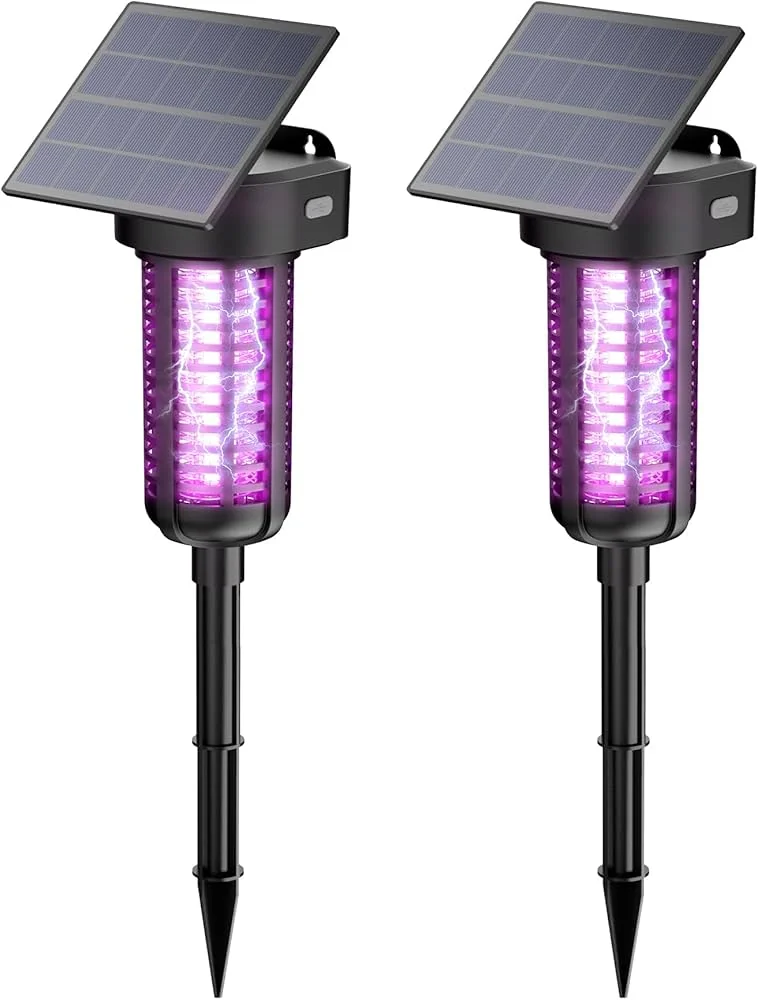

Patio and Deck Pest Control: The primary application involves homeowners using mosquito killer lights to reduce pest populations in outdoor living and entertainment areas. Hanging lantern styles suspended from pergolas, shepherd hooks, or overhead structures provide coverage for dining and seating areas. This application values both effectiveness and aestheticsproducts must reduce mosquito presence while complementing outdoor decor. Customers typically use 2-4 units to provide overlapping coverage for medium-sized patios. Retailers serving outdoor living stores and patio furniture retailers should emphasize designs suitable for residential entertainment spaces.
Garden and Yard Perimeter Protection: Customers install mosquito killer lights around yard perimeters, near garden beds, and along pathways to create pest control barriers. Stake-mounted and wall-mounted designs suit these applications. This use case prioritizes coverage area and durability over aesthetics. Customers may purchase 4-8 units to create perimeter protection for larger properties. Wholesale buyers targeting garden centers and landscape supply stores should stock durable designs suitable for garden installation.
Camping and Outdoor Recreation: Portable mosquito killer lights serve camping, RV sites, outdoor events, and temporary installations. This application requires durable construction, easy setup and takedown, and reliable performance without access to electrical power. Customers value compact designs, hanging versatility, and adequate battery capacity for multi-night camping trips. Retailers serving camping supply stores and outdoor recreation retailers should stock portable, durable models.
Commercial Outdoor Dining Areas: Restaurants, cafes, and hotels use mosquito killer lights to enhance customer comfort in outdoor dining and entertainment areas. Commercial applications demand higher power output, verified effectiveness, consistent performance across multiple units, and professional appearance. These buyers typically purchase 6-12+ units for comprehensive coverage and accept premium pricing for commercial-grade quality. Wholesale distributors targeting commercial accounts should emphasize effectiveness verification, durability, and professional aesthetics.
Agricultural and Livestock Operations: Farms, stables, and agricultural facilities use mosquito killer lights to reduce pest populations affecting livestock and workers. This application requires high-power models, durable construction for harsh environments, and easy maintenance. Agricultural buyers purchase in larger quantities and prioritize functionality over aesthetics. This specialized segment requires suppliers with experience in agricultural pest control applications.
Residential Mosquito Control Programs: Some customers use mosquito killer lights as part of comprehensive mosquito control strategies including habitat elimination, repellents, and multiple control devices. These informed customers understand realistic effectiveness expectations and use solar lights as supplementary control rather than sole solutions. They may purchase multiple units for strategic placement and appreciate honest effectiveness information and optimal placement guidance.
What OEM/ODM Customization Options Are Available for Wholesale Mosquito Killer Solar Lights?
Customization capabilities differentiate commodity mosquito killer solar light suppliers from value-added manufacturing partners. Understanding available OEM (Original Equipment Manufacturer) and ODM (Original Design Manufacturer) options helps wholesale buyers create differentiated products, build brand identity, and meet specific market requirements.
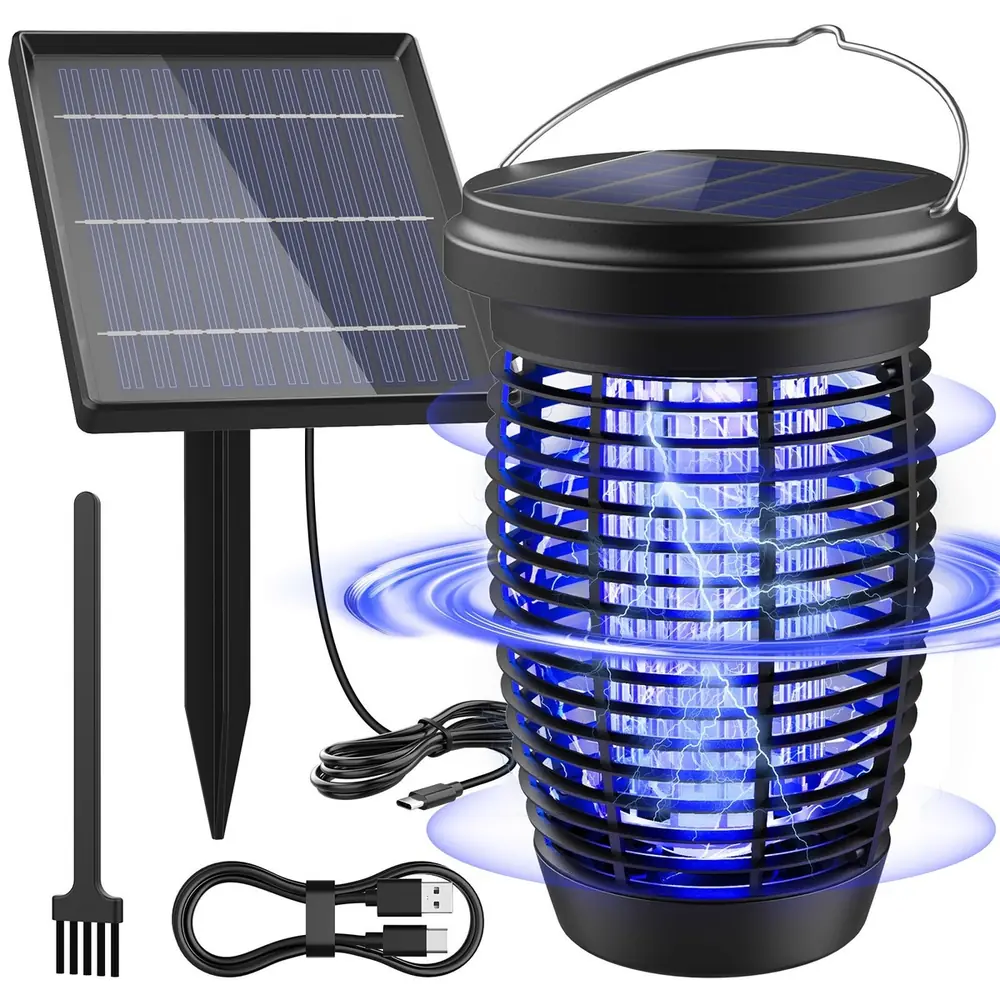
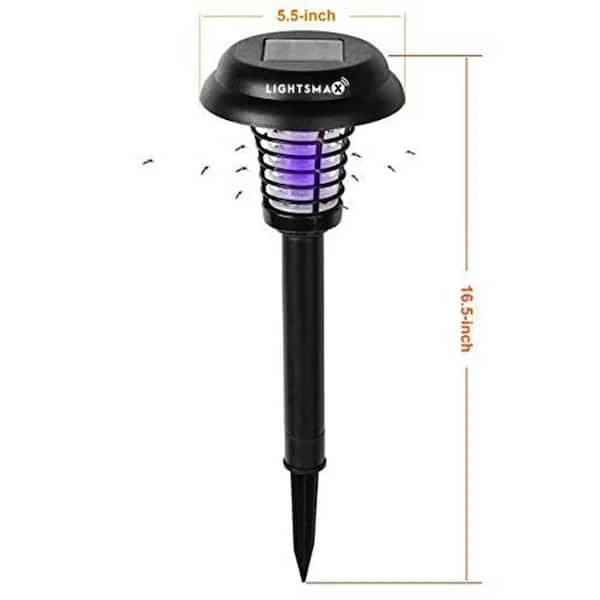
Housing Design and Branding: Custom housing designs allow buyers to create unique product aesthetics. Options include custom shapes and sizes, decorative elements and finishes, integrated branding (logo embossing or printing), and custom color schemes. Development process involves design specification, 3D modeling, mold creation for plastic components, and sample production. Minimum order quantities for fully custom housing designs typically start at 1000-2000 units due to tooling investment. Development timelines range from 8-12 weeks. Buyers should budget for tooling costs and sample iterations.
Power Output and Coverage Customization: Buyers can specify custom power configurations including UV LED wattage and quantity, solar panel size and efficiency, battery capacity, and electric grid voltage or fan power. Higher-power configurations suit commercial applications or customers seeking maximum effectiveness, while standard configurations suit residential price points. Minimum order quantities for custom power configurations typically start at 500-1000 units. Verify that suppliers conduct effectiveness testing on custom configurations and can provide realistic coverage area estimates.
Elimination Mechanism Selection: Buyers can choose between electric grid systems, fan-based trapping systems, or hybrid approaches combining both mechanisms. Each mechanism offers distinct advantageselectric grids provide audible confirmation and quick elimination, fans operate more quietly and avoid odor, hybrid systems offer redundancy. Discuss mechanism selection with suppliers based on target market preferences and price positioning. Some suppliers can develop custom mechanisms for specialized applications.
Control Features and Smart Integration: Custom control options include adjustable operating schedules (timers), brightness adjustment for ambient lighting, remote control functionality, and smartphone app integration. Advanced features like rain sensors (temporarily disable operation during rain to conserve power) or wind sensors appeal to tech-savvy customers. These features require careful reliability testing and add complexity. Minimum order quantities for custom electronic features typically start at 1000-2000 units.
Packaging and Documentation: Custom packaging design is particularly important for mosquito killer lights to communicate functionality clearly and manage effectiveness expectations. Options include custom packaging with clear functionality explanations, realistic coverage area information, optimal placement guidance, safety warnings and certifications display, and multi-unit sets for larger coverage areas. Documentation customization includes branded user manuals with placement optimization guidance, maintenance and cleaning instructions, realistic effectiveness expectations, warranty information, and safety instructions. Quality manufacturers provide packaging design services ensuring clear communication of product capabilities and limitations.
For comprehensive information about customization processes and capabilities, review Glowyard’s OEM solutions, which detail the full range of customization options available from professional manufacturers.
How to Source Wholesale Mosquito Killer Solar Lights from China Manufacturers and Suppliers?
Sourcing quality wholesale mosquito killer solar lights from China requires systematic supplier evaluation, clear communication about performance expectations, and rigorous quality control processes to verify both safety and effectiveness.
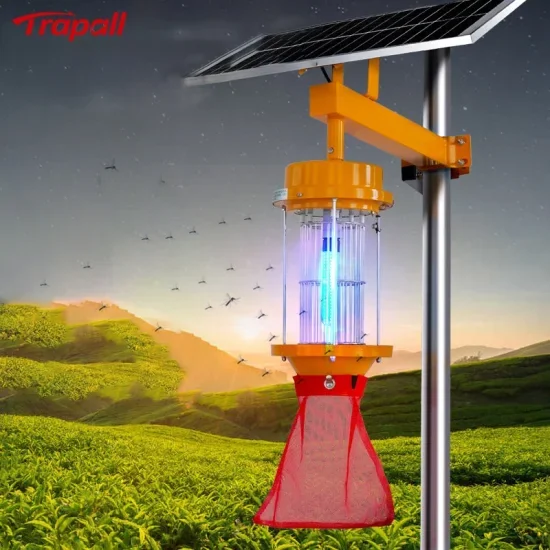
Supplier Identification and Technical Capability Assessment: Identify potential mosquito killer solar lights manufacturers through trade platforms, industry exhibitions, and referrals. Initial screening should verify business registration, manufacturing capabilities specific to pest control devices, electrical safety expertise, and export experience. Request company profiles including factory size, production capacity, electrical safety certifications, and major export markets. Verify that suppliers operate actual manufacturing facilities with electrical assembly capabilities and testing equipment rather than acting solely as trading companies. Mosquito killer lights require specialized capabilities including high-voltage transformer assembly, UV LED integration, and electrical safety testing.
Sample Evaluation and Effectiveness Testing: Request samples of specific designs you’re considering, paying particular attention to UV LED wavelength verification, electric grid voltage output or fan power, build quality and safety features, and battery capacity adequacy. Test samples outdoors in actual use conditions for several weeks to verify solar charging adequacy, all-night operation capability, and realistic effectiveness. Consider conducting controlled effectiveness testing comparing insect attraction and elimination across samples from multiple suppliers. Request UV spectral analysis reports and electrical safety test reports. Compare samples from multiple suppliers to understand quality variations, effectiveness differences, and pricing relationships.
Factory Audits and Quality Control Assessment: For significant volume commitments, conduct factory audits to evaluate electrical assembly capabilities, testing equipment and protocols, quality control processes, and safety compliance procedures. Quality mosquito killer solar lights factories should demonstrate incoming quality control (IQC) on electrical components, in-process quality control (IPQC) during assembly with particular attention to electrical safety, and outgoing quality control (OQC) including electrical safety testing, waterproof testing, and voltage output verification. Ask about their testing protocols for UV LED wavelength, electric grid voltage consistency, and effectiveness verification. Glowyard Lighting maintains comprehensive quality control processes including IQC, IPQC, and OQC protocols, with detailed inspection reports and electrical safety testing provided to wholesale buyers.
Pricing Negotiation and Performance Verification: Understand that pricing varies significantly based on power output, elimination mechanism type, electrical safety certifications, order quantity, and customization requirements. Request detailed quotations specifying all costs including unit price, tooling fees (if applicable), certification costs, packaging costs, and shipping terms. Negotiate payment terms that balance supplier cash flow needs with buyer protectiontypical terms include 30% deposit with 70% balance before shipment. Discuss effectiveness claims explicitly and request supporting test data. Avoid suppliers making extreme effectiveness claims without verification. For guidance on bulk purchasing, see bulk purchase solar garden lights from China.
Quality Control and Safety Verification: Implement rigorous quality control measures throughout the production process. Pre-production inspections verify that electrical components, UV LEDs, and safety features match specifications. During-production inspections catch assembly and safety issues early. Pre-shipment inspections verify that finished products meet quality and safety standards including electrical safety testing, waterproof testing, and voltage output verification. For products with high-voltage components, consider using third-party inspection services with electrical testing capabilities for objective safety verification.
Logistics and Regulatory Compliance: Verify that products include all required certifications and safety documentation for your target market. Some jurisdictions have specific regulations for pest control devices or high-voltage consumer products. Ensure proper labeling including voltage warnings, safety instructions, and realistic effectiveness information. Verify that suppliers provide proper export documentation and that products meet import requirements for electrical safety and pest control devices.
What Mistakes Can Cost You Money When Buying Mosquito Killer Solar Lights in Bulk?
Avoiding common purchasing mistakes saves money, reduces headaches, and protects your business reputation. The following issues frequently affect buyers new to wholesale mosquito killer solar lights sourcing.
Accepting Exaggerated Effectiveness Claims: The most damaging mistake involves ordering products marketed with unrealistic effectiveness claims (99% elimination, 1000+ square foot coverage) without verification. These exaggerated claims create customer expectations that products cannot meet, resulting in high return rates, negative reviews, and damaged reputation. Always request effectiveness test data, conduct your own testing on samples, and market products with honest, conservative effectiveness estimates. Realistic claims (30-60% population reduction, 100-300 square foot coverage for residential models) set appropriate expectations and reduce disappointment.
Inadequate Electrical Safety Verification: Ordering high-voltage products without verifying electrical safety certifications and testing creates serious liability risks. Products with inadequate insulation, accessible high-voltage components, or poor waterproofing can cause electrical shocks or fires. Always verify that products meet electrical safety standards for your target market, request copies of safety test reports (not just certificates), and conduct your own safety inspections on samples. Don’t accept suppliers’ assurances without verificationelectrical safety requires documented testing.
Insufficient Battery and Solar Panel Capacity: Mosquito killer lights consume significantly more power than standard decorative lights due to UV LEDs and electric grids or fans. Ordering products with inadequate battery capacity or undersized solar panels results in devices that shut off mid-evening or fail to recharge adequately. Specify minimum battery capacity (1800-2400mAh for residential models) and solar panel wattage (1.5-2 watts minimum). Test samples for all-night operation capability before committing to bulk orders.
Ignoring UV LED Wavelength Verification: Some budget manufacturers use standard blue LEDs (450-470nm) marketed as “UV” that provide minimal insect attraction. Ordering without verifying actual UV wavelength through spectral analysis leads to ineffective products and customer complaints. Always request UV spectral analysis reports showing wavelength output in the 350-395nm range. Don’t accept visual inspection or supplier claims without verificationproper UV wavelength requires measurement.
Overlooking Seasonal Inventory Planning: Mosquito killer lights have highly concentrated seasonal demand. Ordering too late for spring season means missing peak sales periods. Ordering too much inventory ties up capital and warehouse space for products with limited off-season value. Place orders 12-16 weeks before peak season begins, accounting for production time, shipping, and customs clearance. Consider conservative initial orders with planned reorder capability if products sell well, rather than committing to large single orders.
Wholesale Buying Checklist
- [ ] Verify supplier has electrical assembly capabilities and safety testing equipment
- [ ] Request UV spectral analysis reports verifying wavelength in 350-395nm range
- [ ] Verify electrical safety certifications (UL/ETL for US, CE for Europe) with test reports
- [ ] Test samples outdoors for 2-3 weeks to verify all-night operation and effectiveness
- [ ] Conduct controlled effectiveness testing comparing samples from multiple suppliers
- [ ] Verify battery capacity (minimum 1800-2400mAh for residential models)
- [ ] Confirm solar panel wattage (minimum 1.5-2 watts for residential models)
- [ ] Inspect safety features including protective enclosures and warning labels
- [ ] Verify IP rating (minimum IP44, preferably IP65) with waterproof test reports
- [ ] Request voltage output verification for electric grid models
- [ ] Establish realistic effectiveness claims based on actual test data
- [ ] Specify acceptable quality standards and testing requirements in purchase agreement
- [ ] Plan ordering timeline for seasonal demand (12-16 weeks before peak season)
- [ ] Implement quality control inspections including electrical safety testing
- [ ] Verify import compliance for electrical safety and pest control device regulations
- [ ] Develop clear user guidance about realistic expectations and optimal placement
Quick RFQ Template for Wholesale Mosquito Killer Solar Lights
When requesting quotations from mosquito killer solar lights suppliers, include the following information:
Company Information:
- Company name and type (retailer, distributor, e-commerce, etc.)
- Target market and countries
- Estimated seasonal volume
Product Requirements:
- Preferred elimination mechanism (electric grid, fan, hybrid)
- Power output requirements (residential vs. commercial)
- UV LED wavelength requirements (specify 350-395nm range)
- Solar panel minimum wattage
- Battery capacity requirements
- IP rating requirements
- Design style preferences (decorative vs. utilitarian)
Safety and Compliance:
- Required electrical safety certifications (UL/ETL, CE, etc.)
- Voltage output specifications for electric grid models
- Safety feature requirements (protective enclosures, warnings)
- Effectiveness testing and documentation requirements
Customization Needs:
- Custom housing design or branding
- Custom power configurations
- Custom packaging with clear functionality communication
- Private label requirements
Order Details:
- Initial order quantity
- Target delivery date (critical for seasonal products)
- Expected reorder frequency during season
- Preferred shipping method and terms
Testing and Verification:
- Sample requirements before bulk order
- Effectiveness testing requirements
- Electrical safety testing requirements
- Quality control and inspection requirements
Who Is Glowyard Lighting and What Do We Offer?
Glowyard Lighting is a professional manufacturer specializing in solar garden lights, including mosquito killer solar lights with verified electrical safety and realistic effectiveness standards. Our factory maintains dedicated capabilities for electrical assembly, high-voltage component integration, and comprehensive safety testing to ensure products meet international electrical safety standards.
Our manufacturing capabilities include complete in-house processes from electrical component assembly and UV LED integration through housing fabrication, final assembly, and rigorous testing. We maintain strict quality control protocols including incoming quality control (IQC) for electrical components and UV LEDs, in-process quality control (IPQC) during assembly with particular attention to electrical safety and waterproofing, and outgoing quality control (OQC) with comprehensive testing before shipment. Our testing facilities conduct electrical safety verification, UV spectral analysis, voltage output testing, waterproof testing, and effectiveness verification under controlled conditions.
For wholesale mosquito killer solar lights buyers, we offer extensive OEM/ODM customization services including custom power configurations, elimination mechanism selection, housing design and branding, control features, and complete packaging design that communicates functionality honestly and manages customer expectations appropriately. Our technical team works with clients to develop products that balance effectiveness, safety, and market positioning while providing realistic performance specifications based on actual testing.
Our export experience spans markets in North America, Europe, Australia, and Asia, with comprehensive understanding of regional electrical safety requirements, pest control device regulations, and customer expectations. We maintain certifications including CE, RoHS, UL/ETL electrical safety certifications, and various market-specific standards, with complete documentation available for review. We provide honest effectiveness information based on controlled testing rather than exaggerated marketing claims, helping wholesale buyers set appropriate customer expectations. For more information about our capabilities and services, visit our OEM solutions page or contact our wholesale team directly.
Frequently Asked Questions
What is the typical minimum order quantity for wholesale mosquito killer solar lights?

Minimum order quantities vary by product complexity and customization level. Standard designs typically require 300-500 units per model for initial orders, while custom designs or power configurations may require 500-1000 units due to electrical component sourcing and testing requirements. Mosquito killer lights often have slightly higher MOQs than standard decorative lights due to electrical safety certification costs and effectiveness testing requirements. Discuss your specific needs with supplierssome may accommodate lower MOQs for initial testing orders.
How effective are solar-powered mosquito killer lights compared to plug-in models?
Solar-powered mosquito killer lights typically provide lower power output than plug-in models due to battery capacity limitations, resulting in smaller effective coverage areas (100-300 square feet for solar vs. 300-600+ square feet for plug-in). However, solar models offer installation flexibility, no ongoing energy costs, and suitability for areas without electrical access. For residential patio and deck applications, quality solar models provide adequate effectiveness. For large commercial areas or maximum effectiveness requirements, plug-in models may be more appropriate. Realistic expectations involve population reduction (30-60%) rather than elimination for both types.
Are electric grid or fan-based mosquito killers more effective?
Both mechanisms can be effective when properly designed. Electric grid models provide quick elimination, audible confirmation (the “zap” sound), and generally require less maintenance. Fan-based models operate more quietly, avoid the odor sometimes associated with electrocuted insects, and eliminate the safety concerns of high-voltage grids. Effectiveness depends more on UV LED quality, power output, and overall design than elimination mechanism type. Consider your target market preferencessome customers prefer the traditional electric grid approach, while others favor the quieter fan-based operation.
What UV wavelength is most effective for attracting mosquitoes?
Mosquitoes and many flying insects are most attracted to UV light in the 350-370nm range, though broader spectrum 365-395nm LEDs provide reasonable effectiveness at lower cost. Avoid products using standard blue LEDs (450-470nm) marketed as “UV”these provide minimal insect attraction. Always request UV spectral analysis reports verifying actual wavelength output. Some insects are attracted to different wavelengths, so broader spectrum UV LEDs may attract a wider variety of flying insects.
How long do mosquito killer solar lights operate on a full charge?
Quality mosquito killer lights with adequate battery capacity (1800-2400mAh for residential models) should operate 8-10 hours on a full charge under normal conditions. Operating time depends on UV LED power consumption, electric grid or fan power draw, ambient lighting LED usage, and battery condition. Products with inadequate battery capacity may shut off after 4-6 hours, generating customer complaints. Verify all-night operation capability through extended testing before committing to bulk orders. Battery capacity degrades over timeexpect reduced runtime after 2-3 years of use.
What certifications are required for mosquito killer solar lights with high-voltage grids?
For the US market, products with high-voltage components should meet UL or ETL electrical safety standards. For European markets, CE marking is required, covering the Low Voltage Directive (LVD) and Electromagnetic Compatibility (EMC) Directive. These certifications verify proper insulation, protective enclosures, and safety warnings. Request copies of electrical safety test reports, not just certificates. Some jurisdictions have additional requirements for pest control devices or high-voltage consumer products. Verify specific requirements for your target market before ordering.
How should I market mosquito killer solar lights to manage customer expectations?
Market products with honest, conservative effectiveness claims based on actual testing. Specify realistic coverage areas (100-300 square feet for residential solar models), explain that products reduce rather than eliminate mosquito populations (typically 30-60% reduction), provide optimal placement guidance (away from competing light sources, upwind of protected areas), and include maintenance requirements (regular cleaning for continued effectiveness). Avoid exaggerated claims like “99% elimination” or “1000+ square foot coverage” that create unrealistic expectations. Honest marketing reduces returns and builds customer trust for repeat purchases.
How often do mosquito killer lights need cleaning and maintenance?
Electric grid models should be cleaned every 1-2 weeks during active use to remove accumulated insect debris that can reduce effectiveness and create odor. Fan-based models require collection chamber emptying every 1-2 weeks. Solar panels should be cleaned monthly to maintain charging efficiency. UV LED intensity gradually decreases over timeexpect reduced effectiveness after 2-3 years of use, though LEDs may continue functioning. Batteries typically need replacement after 2-3 years (500-800 charge cycles). Provide clear maintenance instructions to customers to ensure continued effectiveness and satisfaction.