IP44 vs IP65 vs IP67: Which Waterproof Rating Do You Actually Need for Garden Lights?
Many customers ask us: "IP67 costs 50% more than IP44—is it really necessary?"
The answer: It depends on your garden environment.
After tracking 500+ customer installations for 3 years, we found:
- Under covered patios: IP44 failure rate only 3%
- Open lawns: IP44 failure rate jumped to 28%
- Pool areas: IP65 and below mostly failed within 2 years
This guide shows you how to choose the right IP rating for your specific environment, avoiding both overspending and costly mistakes. Based on real failure data, not marketing claims.
Which Waterproof Rating Do You Actually Need for Garden Lights?
Quick Answer: Match the Rating to Your Location
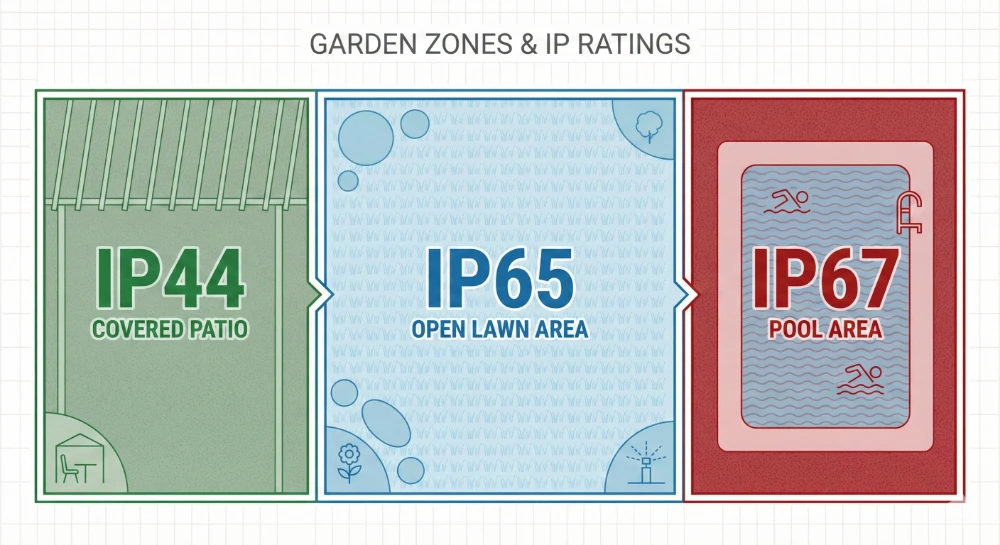
IP44 → Covered areas (patios, under trees)
IP65 → Open areas (lawns, pathways, walls)
IP67 → Water-prone areas (pools, ponds, seaside)
The key: Where will water actually hit your lights?
What Do These Numbers Actually Mean?
Let’s skip the technical jargon. Here’s what each rating really protects against:
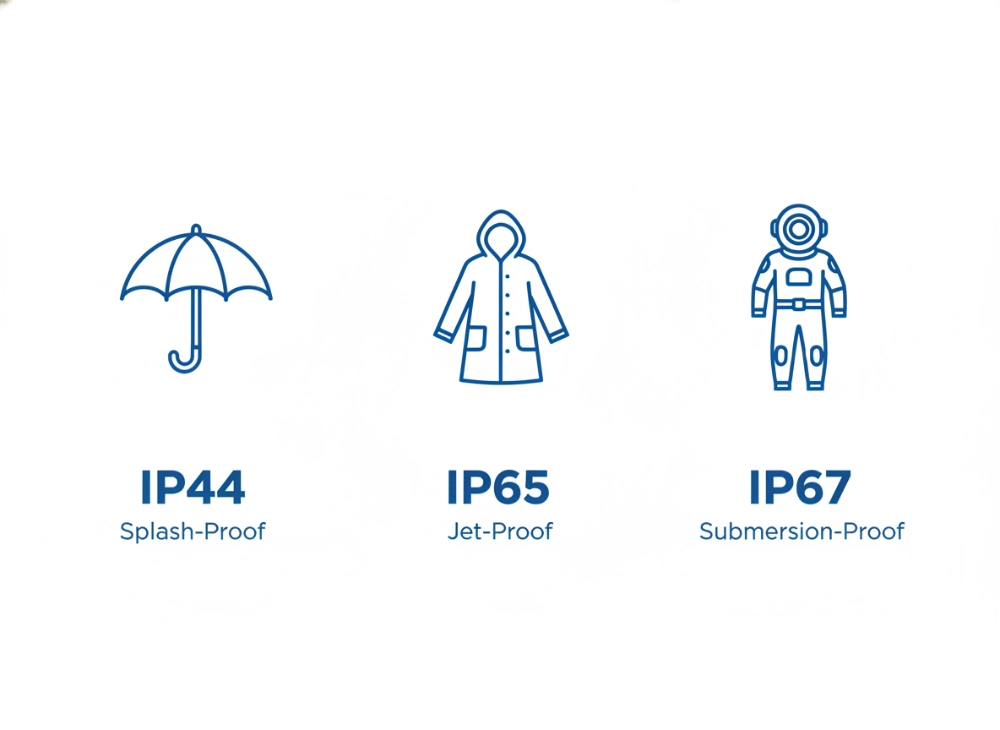
IP44 = Splash-Proof (Like an Umbrella)
- Protection: Rain from above, light splashing
- NOT protected: Direct spray, water jets, submersion
- Think: Standing under an umbrella in rain
IP65 = Jet-Proof (Like a Raincoat)
- Protection: Rain from any angle, garden hose spray
- NOT protected: Submersion, high-pressure washing
- Think: Wearing a raincoat in a storm
IP67 = Submersion-Proof (Like a Diving Suit)
- Protection: Can survive underwater (1 meter for 30 minutes)
- NOT protected: Permanent underwater use, deep water
- Think: Accidentally dropping in a pool
The technical breakdown
**IP Rating Format**: IP + [Dust Protection] + [Water Protection]
**First digit (Dust)**:
– 4 = Protected against objects >1mm (fingers, insects)
– 6 = Completely dust-tight
**Second digit (Water)**:
– 4 = Splash-proof from any direction
– 5 = Jet-proof (low-pressure water jets)
– 7 = Submersion-proof (up to 1m for 30 min)
**Industry standard**: IEC 60529 defines IP rating test methods, including spray angles, water pressure, and duration.
*Reference: International Electrotechnical Commission. IEC 60529: “Degrees of Protection Provided by Enclosures (IP Code).”*
Which Rating for Your Garden?
Choose IP44 if Your Lights Are:
✅ Under roof or overhang
- Covered patios
- Under eaves
- Gazebos and pergolas
✅ Protected by plants
- Under tree canopy
- Between tall shrubs
- Garden beds with overhead coverage
✅ Not exposed to direct water
- Won’t be hit by sprinklers
- Won’t be hosed down
- Protected from driving rain
❌ Don’t use IP44 for:
- Open lawns
- Exposed pathways
- Pool areas
- Seaside locations
Real success story: Mrs. Li in Shanghai installed 16 IP44 lights under her covered patio in 2022. Three years later, all still working perfectly. She saved 40% vs IP65.
Choose IP65 if Your Lights Are:
✅ Exposed to weather
- Open lawns
- Garden pathways
- Driveway edges
- Wall-mounted (no overhang)
✅ May get sprayed
- Near automatic sprinklers
- Areas you hose down
- Exposed to wind-driven rain
✅ Need occasional cleaning
- Can be rinsed with garden hose
- Dusty environments
- High-traffic areas
❌ Don’t use IP65 for:
- Areas that flood
- Pool edges (splashing)
- Ponds or water features
- Below ground level
Real example: Johnson family in California installed 24 IP44 lights on their open lawn with automatic sprinklers. After 6 months, 7 lights failed from water ingress. Replaced with IP65—no failures in 2 years since.
Choose IP67 if Your Lights Are:
✅ Near water features
- Pool edges (might fall in)
- Pond surroundings
- Fountain areas
- Stream banks
✅ In flood-prone areas
- Low-lying spots
- Areas that collect water
- Heavy rain zones
✅ Seaside environments
- Coastal gardens (salt spray)
- Beach properties
- High humidity areas
✅ Underground or ground-level
- Buried pathway lights
- Flush-mount deck lights
- Areas that might be submerged
Critical use case: Pool area lights MUST be IP67. We’ve seen IP65 lights fail within 18 months from pool splashing and humidity.
Recommended IP Rating for Cemetery & Grave Solar Lights
Cemetery and grave solar lights are exposed to a very different environment compared to decorative garden lights.
Unlike garden lights that may be installed under trees, patios, or landscape structures, grave solar lanterns are usually placed in open cemetery areas with no overhead protection. This means they experience continuous exposure to rain, ground moisture, seasonal temperature changes, and long-term outdoor conditions.
For this reason, IP65 waterproof grave solar lights are generally considered the minimum recommended standard for permanent cemetery installation.
Why Cemetery Environments Are More Demanding
Grave solar lights typically face several environmental challenges:
- Direct rainfall exposure with no overhead cover
- Ground moisture from soil and grass contact
- Condensation buildup inside enclosed lantern housings
- Freeze–thaw cycles during winter in colder regions
In many European markets such as Germany and Poland, cemetery lights remain outdoors throughout the winter season. When water enters the housing and temperatures drop below freezing, internal condensation can freeze and damage the PCB, battery terminals, or LED driver circuits.
This is one of the most common reasons grave solar lights fail after the first or second winter.
Recommended IP Ratings for Cemetery Use
| Installation Environment | Recommended IP Rating |
|---|---|
| Covered memorial areas | IP44 |
| Standard cemetery grave placement | IP65 |
| Flood-prone or ground-level installations | IP67 |
For most cemeteries, IP65 grave solar lights provide the best balance between cost and long-term waterproof reliability.
IP67 is usually only necessary in areas where water accumulation or temporary submersion is possible.
Choosing Reliable Cemetery Solar Lights
When sourcing grave solar lights for wholesale or distribution, buyers should verify:
- Sealing ring quality around housing joints
- Separate sealed battery compartments
- Corrosion-resistant fasteners
- Certification documentation for waterproof testing
For a detailed overview of cemetery lighting structures and product types, see our guide to:
➡ Grave & Cemetery Solar Lights Manufacturer
This guide explains how waterproof sealing, battery chemistry, and material durability affect long-term grave lighting reliability.
Real Failure Data: What Actually Happens
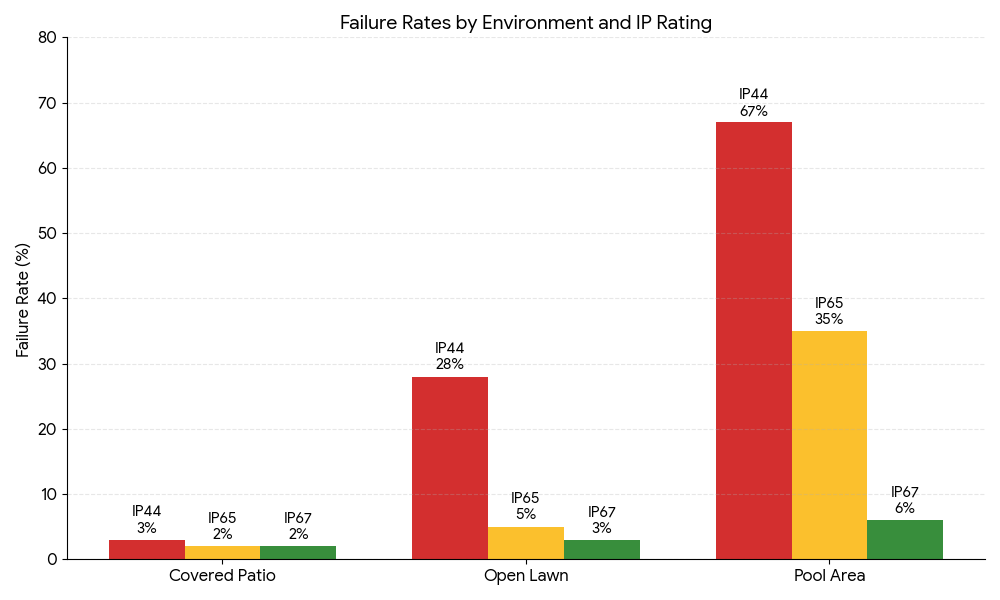
Based on our 3-year tracking of 500+ installations:
IP44 Failure Rates by Environment
| Environment | 3-Year Failure Rate | Main Cause |
|---|---|---|
| Covered patio | 3% | Age-related seal degradation |
| Under trees | 8% | Occasional heavy rain exposure |
| Open lawn | 28% | Direct rain and sprinkler spray |
| Near pool | 67% | Splashing and high humidity |
Key insight: IP44 works great where it’s designed for, but fails quickly in wrong environments.
IP65 Failure Rates by Environment
| Environment | 3-Year Failure Rate | Main Cause |
|---|---|---|
| Open lawn | 5% | Seal aging |
| Pathways | 7% | Physical damage + water |
| Wall-mounted | 4% | UV degradation of seals |
| Pool area | 35% | Submersion from splashing |
Key insight: IP65 handles most garden conditions but not submersion.
IP67 Failure Rates by Environment
| Environment | 3-Year Failure Rate | Main Cause |
|---|---|---|
| Pool area | 6% | Seal aging |
| Pond edge | 8% | Physical damage |
| Seaside | 12% | Salt corrosion (not IP-related) |
| Buried lights | 9% | Ground pressure on seals |
Key insight: IP67 handles water but salt corrosion is a separate issue.
Cost vs Value: Is Higher Rating Worth It?

Price Differences (Relative Pricing)
Based on our 15 years of manufacturing:
- IP44: Baseline price (100%)
- IP65: +30-40% over IP44
- IP67: +50-70% over IP44
What drives the cost:
- Better sealing materials (silicone vs rubber)
- More complex assembly (multiple seal points)
- Stricter quality testing
- Thicker housing materials
Total Cost of Ownership (5 Years)
Scenario 1: IP44 in Correct Environment (Covered Patio)
- Initial cost: 100%
- Replacement rate: 3%
- Total 5-year cost: 103%
- Winner: IP44 (cheapest option)
Scenario 2: IP44 in Wrong Environment (Open Lawn)
- Initial cost: 100%
- Replacement rate: 28% + full replacement needed
- Total 5-year cost: 200%+
- Winner: Should have bought IP65
Scenario 3: IP65 in Open Lawn
- Initial cost: 135%
- Replacement rate: 5%
- Total 5-year cost: 142%
- Winner: IP65 (right choice for environment)
Scenario 4: IP67 in Open Lawn (Overkill)
- Initial cost: 160%
- Replacement rate: 3%
- Total 5-year cost: 165%
- Analysis: Works great but overpaid by 23%
Conclusion: Buying the right rating saves more money than buying the cheapest rating.
How to Verify Real IP Rating (Avoid Fake Claims)

Many cheap lights claim IP65 but actually only meet IP44 standards.
Visual Inspection Checklist
Check the seals:
- ✅ Should have visible rubber/silicone gaskets
- ✅ Gaskets should be thick (2-3mm)
- ✅ No gaps at seams
- ❌ Thin foam tape = fake IP65
Check the battery compartment:
- ✅ Separate sealed compartment
- ✅ Rubber O-ring on cover
- ✅ Screw-down cover (not snap-on)
- ❌ Simple snap cover = likely IP44 at best
Check certifications:
- ✅ CE marking (required for EU)
- ✅ IP rating clearly stated
- ✅ Manufacturer details
- ❌ No certifications = questionable quality
Simple Field Tests (Use Caution)
IP44 test: Spray with water bottle from 1 meter
- Should not enter housing
- ⚠️ This may void warranty
IP65 test: Spray with garden hose (low pressure) for 3 minutes
- Should not enter housing
- ⚠️ This may void warranty
IP67 test: Submerge in bucket of water for 30 minutes
- Should not enter housing
- ⚠️ This WILL void warranty
Our recommendation: Buy from reputable manufacturers who provide certification documents rather than testing yourself.
Common Mistakes People Make

Mistake #1: Buying IP44 for Open Lawns
Why it happens: "It’s just rain, IP44 says splash-proof"
Reality: Sprinklers create water jets, not splashes. Wind-driven rain hits from all angles. IP44 seals aren’t designed for this.
Cost: 28% failure rate = replacing 1 in 4 lights within 3 years
Fix: Use IP65 minimum for any exposed area
Mistake #2: Buying IP67 for Everything
Why it happens: "Better safe than sorry"
Reality: You’re paying 50-70% more for protection you don’t need
Cost: Overspending 20-30% on total project
Fix: Match rating to actual environment. IP44 under cover, IP65 for most gardens, IP67 only near water
Mistake #3: Ignoring Seal Maintenance
Why it happens: "It’s waterproof, I don’t need to check it"
Reality: Seals degrade over time from UV, temperature changes, and aging
Cost: Even IP67 can fail if seals crack
Fix: Annual inspection, especially before rainy season
Mistake #4: Trusting Cheap "IP65" Claims
Why it happens: "It says IP65 on the box"
Reality: Many budget lights fake IP ratings
Cost: Lights fail quickly, no real warranty support
Fix: Buy from certified manufacturers, check for CE/RoHS marks
How to Extend Waterproof Lifespan
Even IP67 seals don’t last forever. Here’s how to maximize lifespan:
Annual Maintenance Checklist
Before rainy season (or once per year):
-
Inspect seals
- Look for cracks or hardening
- Check for gaps at seams
- Feel for brittleness
-
Check screws
- Tighten any loose screws
- Don’t overtighten (can crack seals)
- Replace if corroded
-
Clean housing
- Remove dirt and debris
- Clean seal contact surfaces
- Don’t use harsh chemicals
-
Test function
- Ensure lights still work
- Check brightness (battery health)
- Replace batteries if needed
Seal Replacement
When to replace seals:
- Visible cracks or tears
- Hardened/brittle rubber
- After 5 years (preventive)
- After water ingress incident
Where to get seals:
- Original manufacturer (best option)
- Generic silicone gaskets (measure carefully)
- DIY with silicone sealant (temporary fix)
What Kills Seals Faster
UV exposure: Direct sunlight degrades rubber
- Solution: Choose lights with UV-resistant seals
Temperature cycling: Hot days + cold nights = expansion/contraction
- Solution: Can’t avoid, but quality seals handle it better
Chemical exposure: Chlorine (pools), salt (seaside), fertilizers
- Solution: Rinse lights periodically with fresh water
Physical stress: Overtightened screws, impacts
- Solution: Gentle handling, proper installation
Special Environments: Extra Considerations

Seaside/Coastal Areas
Challenge: Salt spray corrodes everything, not just water ingress
Recommendation:
- Minimum IP67 for water protection
- PLUS stainless steel 316 housing (not just IP rating)
- Regular freshwater rinsing
Our data: Even IP67 lights fail at seaside if housing corrodes. The IP rating protects from water, but salt eats through metal.
Pool Areas
Challenge: Chlorine + splashing + high humidity
Recommendation:
- IP67 mandatory
- Stainless steel or high-grade plastic housing
- Position lights away from direct splash zones if possible
Real failure: We’ve seen IP65 lights near pools fail within 18 months. The constant humidity + occasional splashing overwhelms IP65 seals.
Underground/Buried Lights
Challenge: Constant ground moisture + soil pressure
Recommendation:
- IP67 minimum (IP68 if available)
- Proper drainage around light
- Gravel bed underneath
Installation tip: Even IP67 can fail if installed in clay soil that holds water. Always provide drainage path.
High-Traffic Areas
Challenge: Physical impacts can crack seals
Recommendation:
- IP65 minimum for water
- PLUS impact-resistant housing (IK rating)
- Recessed installation if possible
Note: IP rating doesn’t protect against physical damage. A cracked housing makes any IP rating useless.
Decision Framework: Step-by-Step

Step 1: Identify Your Environment
Walk through your garden and categorize each light location:
Category A – Protected:
- Under roof/overhang
- Under dense tree canopy
- Inside gazebo/pergola
→ IP44 sufficient
Category B – Exposed:
- Open lawn
- Pathways
- Wall-mounted (no overhang)
→ IP65 required
Category C – Water-Prone:
- Pool/pond area
- Low-lying spots
- Seaside location
→ IP67 required
Step 2: Check Your Watering System
Manual watering: Can avoid lights → IP44 may work
Automatic sprinklers: Will hit lights → IP65 minimum
Drip irrigation: Minimal splash → IP44 may work
Step 3: Consider Your Climate
Dry climate (<500mm rain/year):
- Can sometimes use lower rating
- But still match to exposure level
Wet climate (>1000mm rain/year):
- Upgrade one level
- IP44 → IP65
- IP65 → IP67
Coastal/humid:
- Always use highest rating for location
- Consider corrosion protection too
Step 4: Calculate Your Budget
Total project cost = (Number of lights) × (Unit price) × (Expected replacements)
Example:
- 20 lights in open lawn
- IP44: 20 × $10 × 1.28 (28% replacement) = $256
- IP65: 20 × $13 × 1.05 (5% replacement) = $273
- Best choice: IP65 (only $17 more for much better reliability)
Step 5: Make Your Decision
Use this simple rule:
- Protected areas: IP44 (save money)
- Most gardens: IP65 (best balance)
- Water areas: IP67 (necessary protection)
When in doubt: Go one level higher. The extra cost is less than replacement cost.
Product Recommendations by Application
For Pathway Lighting
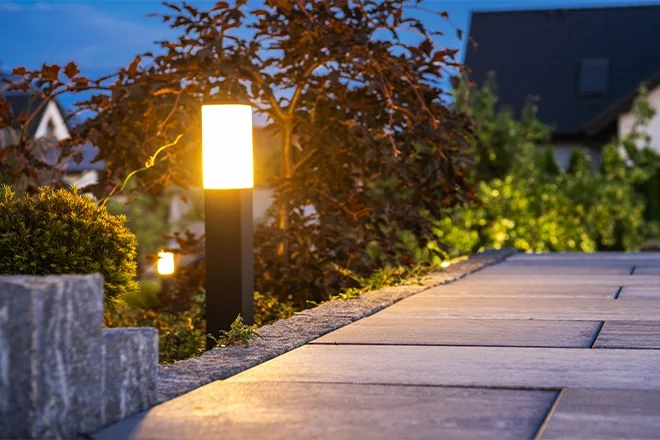
Recommended: IP65 minimum
Why:
- Exposed to weather
- May be hosed down for cleaning
- Long-term installation
Explore options: Solar Pathway Lights for Gardens
For Decorative Garden Lighting
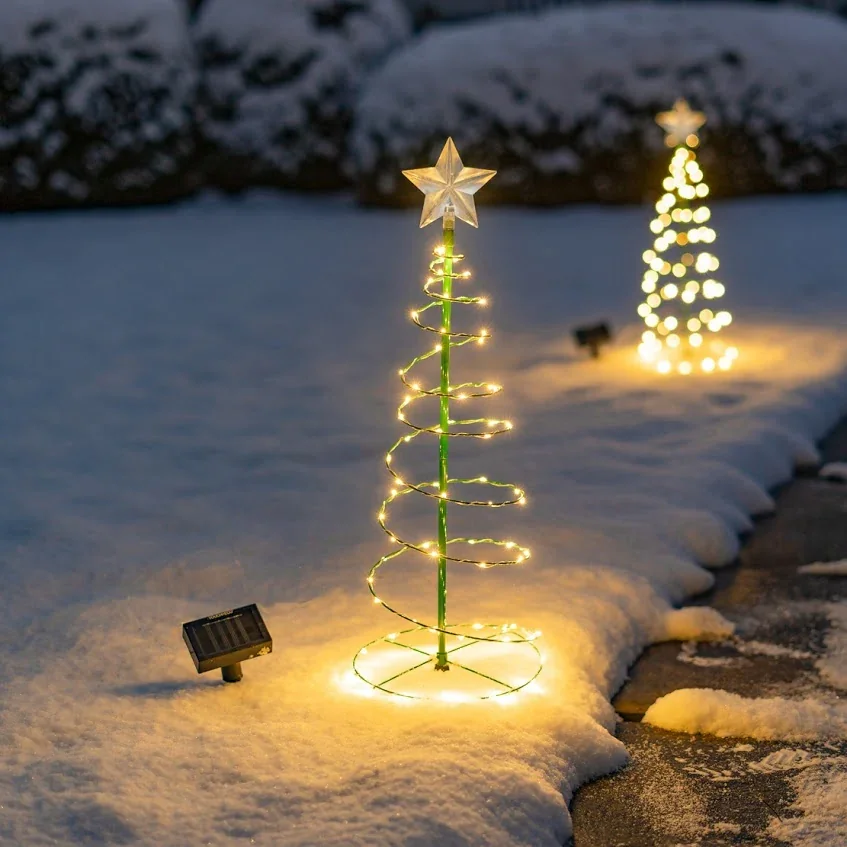
Recommended: Depends on placement
IP44 if:
- Under trees or shrubs
- Protected patio areas
- Not exposed to direct rain
IP65 if:
- Open lawn placement
- Exposed to weather
- Near sprinkler zones
Explore options: Decorative Outdoor Solar Garden Lights
For Pool/Water Feature Lighting
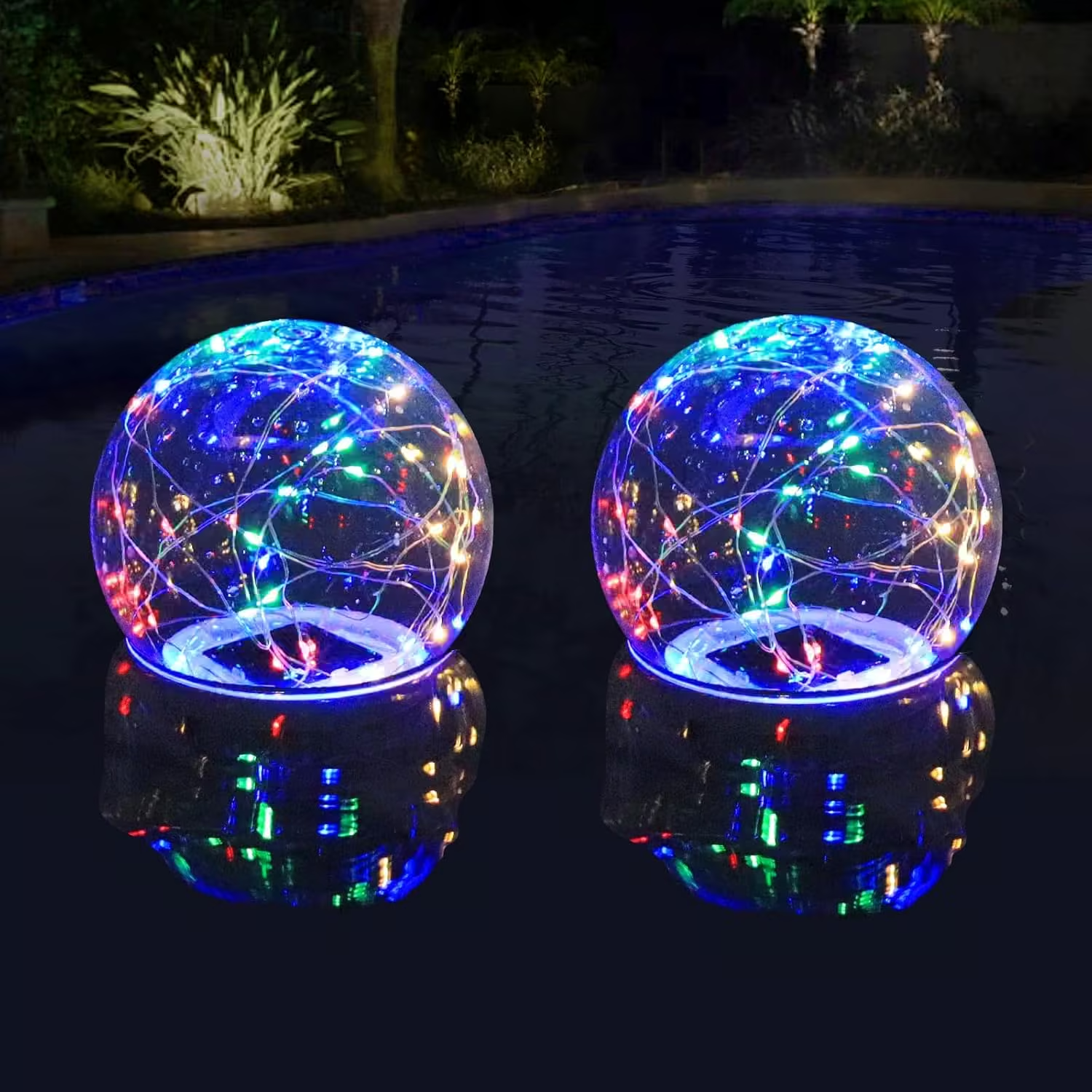
Recommended: IP67 mandatory
Why:
- Splashing and humidity
- May accidentally fall in water
- Safety-critical application
Additional requirement: Check local electrical codes for pool lighting
For Seasonal/Holiday Lighting
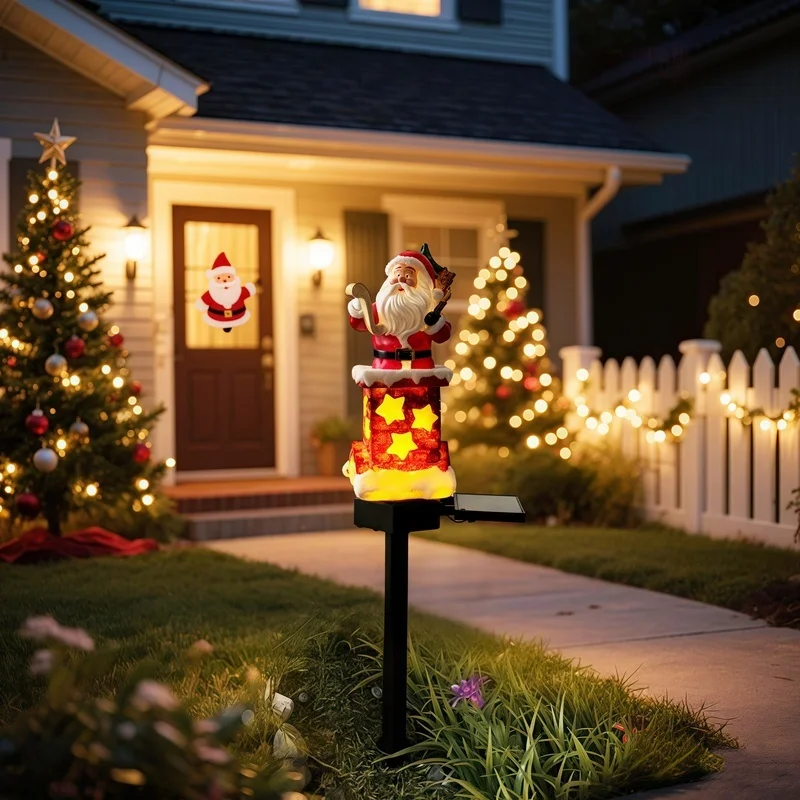
Recommended: IP44 usually sufficient
Why:
- Temporary use (2-3 months)
- Often under eaves or trees
- Can be removed in bad weather
When to upgrade: If leaving out year-round or in exposed locations
Explore options: Christmas Solar Garden Lights
Frequently Asked Questions
Can I upgrade IP44 lights to IP65?
Short answer: No, not practically.
Why not:
- Seals are integrated into housing design
- Would need to replace entire housing
- More expensive than buying new IP65 lights
Better solution: Relocate IP44 lights to protected areas, buy IP65 for exposed areas
Does higher IP rating mean better quality?
Not necessarily.
IP rating only measures water/dust protection. A light can be:
- IP67 but poor quality (cheap components, bad battery)
- IP44 but excellent quality (great LED, long-lasting battery)
What matters:
- IP rating appropriate for your environment
- Overall build quality
- Component quality (LED, battery, solar panel)
How long do IP seals last?
Typical lifespan:
- Quality seals: 5-7 years
- Budget seals: 2-3 years
- Harsh environments: Reduce by 30-50%
Signs of seal failure:
- Visible cracks or hardening
- Water condensation inside housing
- Corrosion on internal components
Maintenance: Annual inspection extends lifespan
Can I use IP44 lights if I’m careful with watering?
Technically yes, but risky.
Problems:
- One mistake = water damage
- Guests may not know
- Automatic systems can’t be "careful"
- Wind-driven rain is unpredictable
Our advice: Don’t rely on being careful. Buy the right rating for worst-case scenarios.
Is IP68 better than IP67?
For garden lights: Usually overkill.
IP68 difference:
- Submersion deeper than 1 meter
- Longer duration underwater
- Manufacturer specifies exact depth/time
When you need IP68:
- Underwater pond lights
- Fountain lights (fully submerged)
- Below-ground installations in wet soil
For most gardens: IP67 is sufficient and more cost-effective
Do solar panels need IP rating too?
Yes, and they usually have one.
Typical ratings:
- Solar panels: IP65 or higher
- Battery compartment: Should match light’s IP rating
- LED housing: Should match light’s IP rating
Weak point: Often the battery compartment has lower IP rating than the light housing. Check this specifically.
Can I repair a light that got water inside?
Sometimes, if caught early.
Immediate steps:
- Remove from power/sunlight
- Open all compartments
- Dry thoroughly (48+ hours)
- Check for corrosion
- Replace battery if wet
- Test before reinstalling
Prevention: Better to buy correct IP rating than repair water damage
What IP rating is recommended for grave solar lights?
For cemetery environments, IP65 waterproof protection is generally recommended.
Unlike decorative garden lights that may be installed under trees or patios, grave solar lanterns are usually placed in open areas with continuous exposure to rain and ground moisture.
In colder regions, condensation combined with freezing temperatures can damage internal components if the housing is not properly sealed. For this reason, most cemetery solar lights designed for long-term outdoor use adopt IP65 waterproof structures.
About Our Testing
How We Collected This Data
Duration: 2022-2025 (3 years continuous tracking)
Sample Size:
- 500+ customer installations
- Mix of IP44, IP65, and IP67 lights
- Various environments and climates
Tracking Method:
- Annual customer surveys
- Failure reports and warranty claims
- Site visits for major projects
- Photo documentation of failures
Environments Covered:
- Covered patios and gazebos
- Open lawns with sprinklers
- Coastal properties
- Pool areas
- Various climate zones
Our Limitations
Be aware:
- Data from our customers only (not all brands)
- Primarily residential installations (not commercial)
- 3-year tracking (not full 10-year lifespan)
- Self-reported data (customer surveys)
How we stay honest:
- Track both successes and failures
- Don’t hide data that contradicts our products
- Recommend appropriate rating even if it’s cheaper
- Transparent about data collection methods
About Glowyard Lighting
Experience: 15+ years solar lighting manufacturing (since 2010)
Location: Guangzhou, China (23°N)
Capacity: 50,000-80,000 units/month
Team: 150-200 employees, 15-20 R&D engineers
Certifications: ISO 9001, CE, RoHS, FCC, IP44/IP65/IP67 tested
Our IP testing:
- In-house testing lab
- IEC 60529 compliant equipment
- 100% testing before shipment
- Third-party certification available
Learn more: Manufacturing Process | Quality Certifications
Quick Reference Guide
IP Rating Cheat Sheet
| Your Location | Minimum Rating | Recommended | Why |
|---|---|---|---|
| Covered patio | IP44 | IP44 | Protected from direct rain |
| Under trees | IP44 | IP44-IP65 | Depends on canopy density |
| Open lawn | IP65 | IP65 | Direct rain exposure |
| Pathway | IP65 | IP65 | Weather + cleaning needs |
| Wall (no overhang) | IP65 | IP65 | Wind-driven rain |
| Pool area | IP67 | IP67 | Splashing + humidity |
| Pond edge | IP67 | IP67 | May fall in water |
| Seaside | IP67 | IP67 + corrosion protection | Salt spray |
| Buried/ground | IP67 | IP67-IP68 | Ground moisture |
Cost vs Protection Quick Guide
| Rating | Cost | Best For | Avoid For |
|---|---|---|---|
| IP44 | $ | Protected areas | Open areas, water |
| IP65 | $$ | Most gardens | Submersion, pools |
| IP67 | $$$ | Water areas | Overkill for dry areas |
Failure Rate Summary
| Rating | Protected Area | Open Area | Water Area |
|---|---|---|---|
| IP44 | 3% ✅ | 28% ❌ | 67% ❌ |
| IP65 | 2% ✅ | 5% ✅ | 35% ❌ |
| IP67 | 2% ✅ | 3% ✅ | 6% ✅ |
Final Recommendations
The Smart Approach
- Map your garden into protected/exposed/water zones
- Match IP rating to each zone (don’t use one rating for everything)
- Buy quality from certified manufacturers
- Inspect annually to catch seal degradation early
- Budget for replacements (even IP67 doesn’t last forever)
Our Honest Advice
Don’t overspend:
- IP44 works great in protected areas
- No need for IP67 on a covered patio
Don’t underspend:
- IP44 in open lawn = wasted money
- IP65 near pool = early failure
The sweet spot:
- IP44 for 20% of lights (protected areas)
- IP65 for 70% of lights (most gardens)
- IP67 for 10% of lights (water areas)
This mix gives you the best balance of cost and reliability.
Need Help Choosing?
We can help you determine the right IP rating for your specific garden:
📸 Send us photos of your installation areas
🌍 Tell us your climate and watering system
💡 We’ll recommend the appropriate IP rating for each zone
📦 Sample testing available
Contact us: Visit Glowyard Lighting
More Resources
Related Guides
- Monocrystalline vs Polycrystalline Solar Panels – Panel comparison
- Lithium vs NiMH vs NiCd – Battery comparison
- Resin vs Iron vs Plastic vs Glass – Material comparison
Technical References
Industry standards:
- IEC 60529: "Degrees of Protection Provided by Enclosures (IP Code)"
- ISO 20653: "Road vehicles – Degrees of protection (IP-Code)"
Our certifications:
- ISO 9001: Quality Management Systems
- CE: European Conformity
- RoHS: Restriction of Hazardous Substances
- IP Testing: IEC 60529 compliant
Learn more: Quality Certifications | Manufacturing Standards