










2026 lastest Full Product Catalogue
Please Click the button, after Filling in your Email and information, the file will be send within 24 hours .
-
 Christmas Decorations
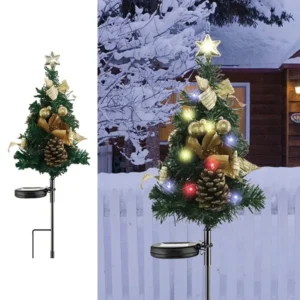
SM221378 Solar Christmas Tree Stake Light
-
 Christmas Solar Lights
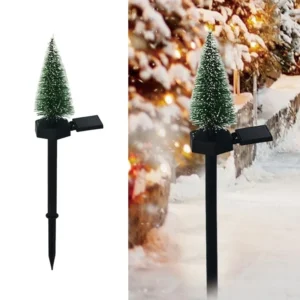
SM22821 Solar LED Christmas Tree Stake Light
-
 Christmas Solar Lights
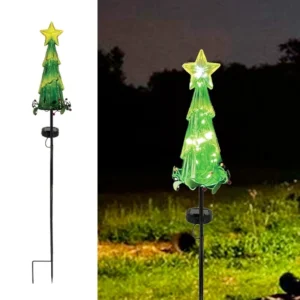
SM231176 Bronze Ornate PP Plastic Christmas Tree Solar Stake Light with Stand
-
 Christmas Solar Lights
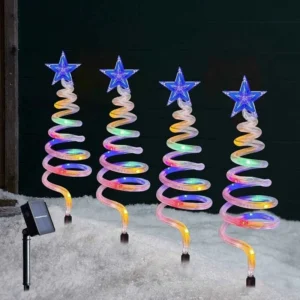
SM23144 Set of 4 Spiral Christmas Tree Solar Stake Lights
-
 Christmas Solar Lights
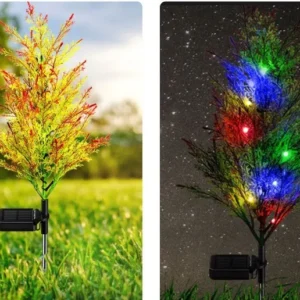
SM251217 PE, Stainless steel Solar Christmas Tree Stake Light
-
 Christmas Solar Lights
SM251429 Snowman & Christmas Tree Solar Resin Statue
-
 Christmas Solar Lights
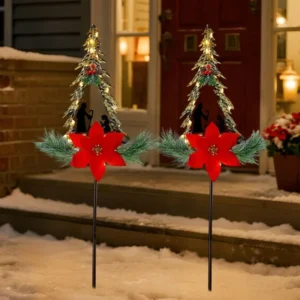
SM25267 Modern Silver PP Plastic Christmas Tree Solar Stake Light with Chain
-
 Christmas Solar Lights
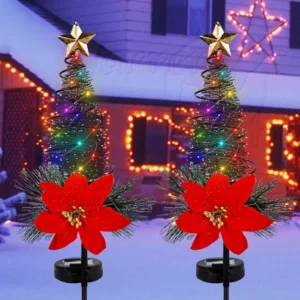
SM25305 PP Plastic Solar Christmas Tree Pathway Stake Light
-
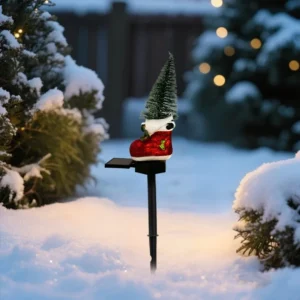 Christmas Tree Solar Lights
SM25391 Resin Christmas Tree Solar Stake Light
Wholesale Christmas Tree Solar Lights: Complete B2B Buyer Guide
If you’re sourcing wholesale Christmas tree solar lights for retail, distribution, or holiday decoration projects, this comprehensive guide will help you evaluate designs, materials, certifications, and factory capabilities before placing bulk orders. Christmas tree solar lights represent one of the most iconic and popular segments of holiday lighting, combining traditional Christmas symbolism with modern solar technology and LED efficiency. As a wholesaler, retailer, or distributor, understanding the diverse design options, performance requirements, and market dynamics is essential for success in this competitive seasonal market. This guide covers everything from tree design variations and lighting effects to manufacturing processes and quality control specific to three-dimensional decorative lighting. Whether you’re sourcing for holiday retailers, event planners, or commercial property managers, the insights provided will help you navigate quality, certifications, customization, packaging, lead time, QC protocols, and shipping considerations for this distinctive and high-demand product category.
Category Summary
Wholesale Christmas tree solar lights represent the cornerstone of holiday solar lighting, combining traditional Christmas tree symbolism with energy-efficient solar technology. These three-dimensional decorative fixtures are essential for bulk Christmas tree lights buyers serving holiday retailers, commercial decorators, and residential markets. The category emphasizes authentic tree appearance, impressive lighting effects, and reliable winter performance during peak holiday seasons. Key purchasing considerations include tree size options (tabletop to full-size outdoor models), LED color schemes (warm white, multicolor, or programmable), construction materials for outdoor durability, and battery systems optimized for winter operation. Wholesalers typically source these lights for holiday retailers, shopping centers, municipalities planning public displays, theme parks, and residential customers seeking statement holiday decorations.
What Will You Learn in This Guide?
- What Are Christmas Tree Solar Lights and Why Are They Popular in Wholesale Markets?
- What Types and Designs Sell Best for Bulk Orders?
- What Materials and Manufacturing Processes Are Used?
- What Quality Standards and Certifications Matter for Wholesale Buyers?
- What Is the Market Demand and Customer Preferences?
- What Are the Common Applications?
- What OEM/ODM Customization Options Are Available for Wholesale Christmas Tree Solar Lights?
- How to Source Wholesale Christmas Tree Solar Lights from China Manufacturers and Suppliers?
- What Mistakes Can Cost You Money When Buying Christmas Tree Solar Lights in Bulk?
- Who Is Glowyard Lighting and What Do We Offer?
- Frequently Asked Questions
What Are Christmas Tree Solar Lights and Why Are They Popular in Wholesale Markets?
Wholesale Christmas tree solar lights are three-dimensional decorative lighting fixtures designed to replicate the appearance of illuminated Christmas trees while incorporating solar-powered LED technology for energy-independent operation. These products range from small tabletop models (12-24 inches) to full-size outdoor displays (6-12 feet tall), featuring realistic tree shapes with integrated LED lighting systems, solar panels, and rechargeable batteries.

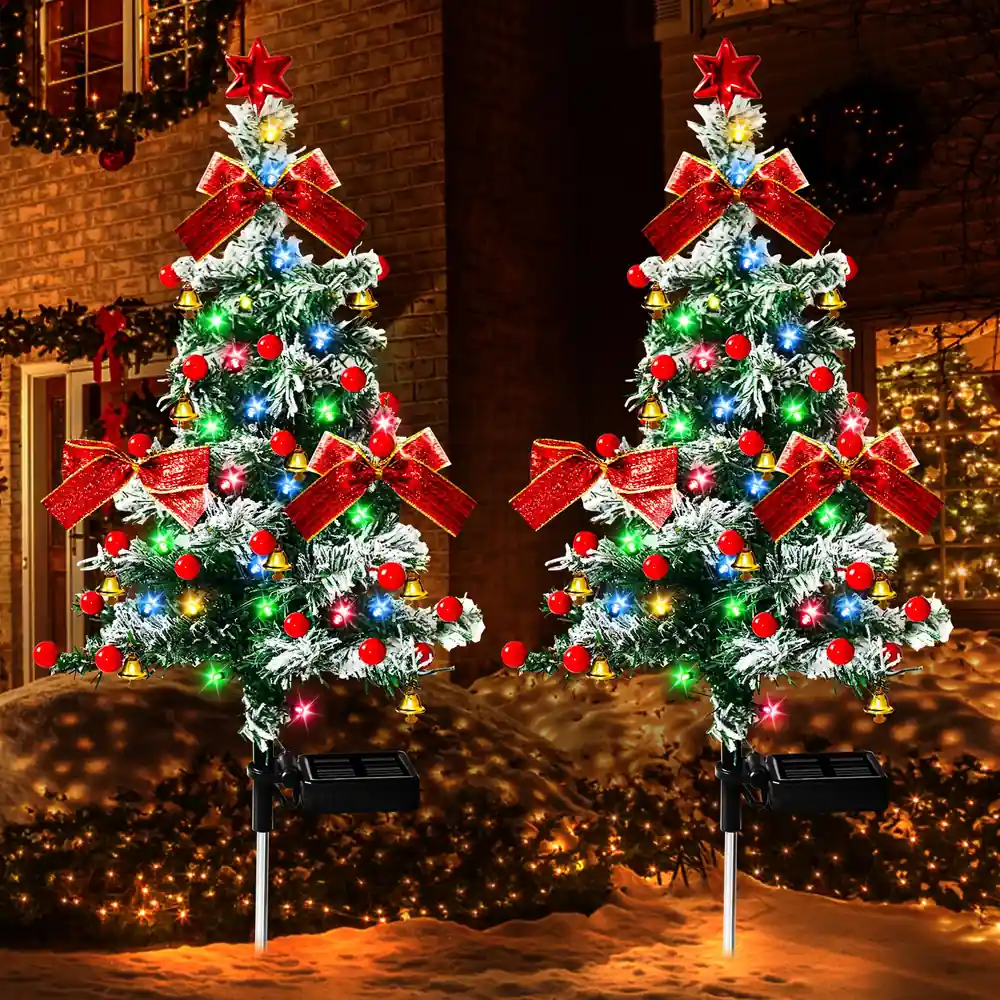
The popularity of Christmas tree solar lights in wholesale markets stems from their unique combination of iconic holiday symbolism, impressive visual impact, and practical convenience that appeals to diverse customer segments. Unlike traditional string lights or simple decorative elements, these products serve as complete holiday decoration solutions that create instant festive atmosphere without requiring complex installation or electrical infrastructure.
From a market perspective, Christmas tree solar lights benefit from universal recognition and emotional appeal. The Christmas tree represents one of the most widely recognized holiday symbols across cultures and demographics, creating broad market appeal that transcends age, income, and geographic boundaries. This universal appeal enables wholesalers to serve diverse customer segments with the same core product category.
The solar-powered operation provides significant advantages that drive wholesale market demand. Customers appreciate the elimination of electrical installation requirements, extension cord management, and increased electricity costs during the holiday season. This convenience factor is particularly valuable for outdoor installations where electrical access may be limited or expensive to provide.
Commercial and institutional buyers represent a major market segment for wholesale Christmas tree solar lights. Shopping centers, restaurants, hotels, and office complexes use these products to create professional holiday displays that enhance customer experience and brand image. The solar operation eliminates ongoing electrical costs while providing reliable performance throughout the holiday season.
Municipal and public sector buyers increasingly specify solar Christmas tree lights for public holiday displays, park decorations, and community celebrations. The environmental benefits align with sustainability initiatives while reducing operational costs for cash-strapped municipal budgets. Large-scale installations can involve hundreds of units, creating significant wholesale opportunities.
The product category offers excellent scalability and profit margins for wholesale operations. Individual residential customers may purchase 1-3 units for home decoration, while commercial buyers may order dozens or hundreds of units for large-scale installations. This scalability allows wholesalers to serve multiple market segments efficiently.
Wholesale Christmas tree solar lights also benefit from strong gift-giving potential and impulse purchase appeal. The combination of practical functionality, attractive appearance, and holiday theme makes these products popular for gift purchases, creating additional demand beyond traditional decoration applications.
Market research indicates consistent growth in the holiday lighting market, driven by increasing consumer spending on holiday decorations, urbanization trends, and growing environmental consciousness. Solar Christmas tree lights participate in this growth while offering differentiation through sustainability benefits and installation convenience.
The seasonal concentration of demand creates both opportunities and challenges for wholesalers. While requiring careful inventory management and supply chain coordination, the concentrated demand allows for focused marketing efforts, premium pricing during peak periods, and efficient inventory turnover.
What Types and Designs Sell Best for Bulk Orders?
The bulk Christmas tree lights market encompasses several distinct design categories and size ranges, each serving specific customer preferences and application requirements. Understanding these design variations and their market performance helps wholesalers optimize inventory allocation and target appropriate customer segments effectively.

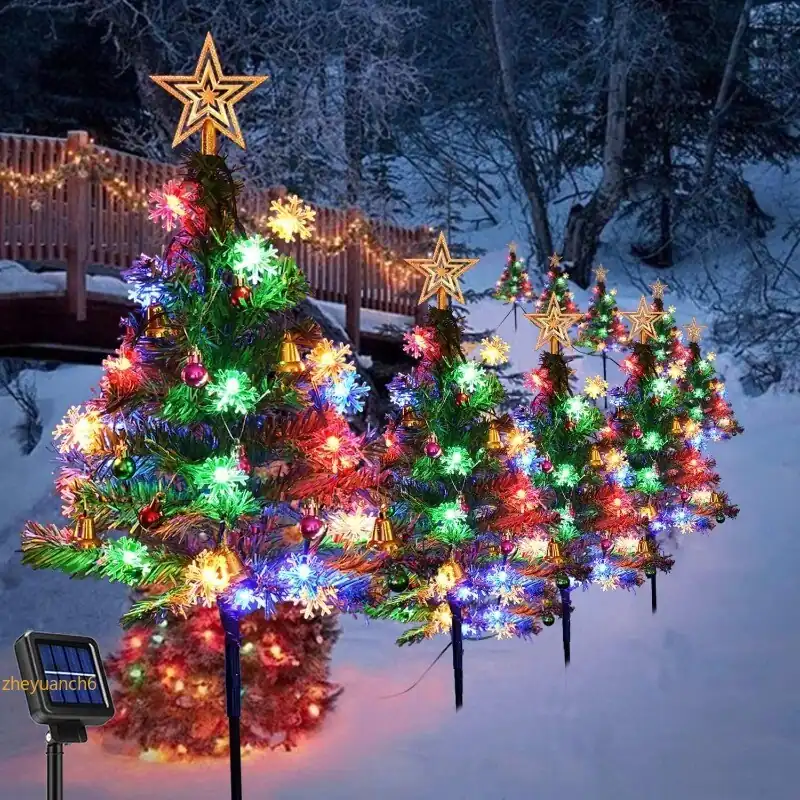
Traditional Green Tree Designs dominate wholesale sales volume, representing approximately 70-80% of total market demand. These classic designs feature realistic green tree shapes with traditional proportions and natural-looking branch structures. LED lighting typically uses warm white or multicolor schemes that create authentic Christmas tree appearance. Heights range from 18-inch tabletop models to 8-foot outdoor displays, with 3-4 foot models being most popular for residential applications.
Flocked and Snow-Covered Variations appeal to customers seeking winter wonderland aesthetics and premium visual appeal. These designs incorporate white or silver accents that simulate snow coverage, creating elegant displays that complement various architectural styles. While representing smaller volume than traditional green trees, flocked versions often command 20-30% price premiums and appeal to upscale residential and commercial markets.
Multicolor and RGB Programmable Trees represent the fastest-growing segment in wholesale markets. These advanced designs incorporate color-changing LED technology that can display various color combinations, animated sequences, or synchronized light shows. Premium models include smartphone app control, music synchronization, or integration with smart home systems. While more expensive than static designs, programmable trees command significant price premiums and appeal to tech-savvy customers.
Tabletop and Miniature Models (12-24 inches) serve indoor decoration markets and customers with limited outdoor space. These compact designs work well for apartment dwellers, office decorations, or customers seeking subtle holiday accents. The miniature segment offers opportunities for higher-volume sales as customers often purchase multiple units for various locations.
Commercial and Oversized Models (6-12 feet tall) serve commercial, institutional, and high-end residential markets where visual impact is paramount. These large-scale trees require robust construction, enhanced battery systems, and professional installation considerations. While representing smaller unit volumes, commercial models offer higher per-unit profits and serve specialized market segments.
Category-Specific Buyer Notes for Christmas Tree Solar Lights: Christmas tree solar lights present unique challenges that distinguish them from other holiday lighting products. First, three-dimensional construction complexity requires sophisticated manufacturing processes, quality control, and packaging solutions compared to flat or linear lighting products. Assembly, wire management, and structural integrity become critical factors. Second, size and shipping considerations significantly impact logistics costs and complexity, particularly for larger models that may require freight shipping or specialized packaging. Third, battery and solar panel sizing must accommodate higher LED counts and longer operating times compared to simpler decorative lights, requiring careful electrical system design. Fourth, seasonal storage challenges are amplified by the three-dimensional shape and potential fragility of extended branch structures, requiring specialized packaging and handling procedures. Finally, visual authenticity expectations are extremely high, as customers have strong preconceptions about Christmas tree appearance that must be met for market acceptance.
Themed and Specialty Variations expand beyond traditional Christmas trees to include alternative holiday trees such as palm trees with holiday lights (for tropical markets), modern geometric tree shapes, or trees with integrated decorative elements like stars, ornaments, or gift boxes. These variations allow wholesalers to serve niche markets and differentiate from standard offerings.
Smart and Connected Features are emerging in premium Christmas tree solar lights, including smartphone app control for lighting effects, music synchronization capabilities, and integration with home automation systems. While representing a small market segment currently, these advanced features appeal to early adopters and command significant price premiums.
Modular and Expandable Systems allow customers to create custom tree configurations by combining multiple units or adding accessory elements. These systems appeal to commercial buyers and customers seeking scalable solutions that can be customized for specific spaces or applications.
Weather-Enhanced Designs incorporate improved materials and construction methods specifically for harsh winter conditions. These products feature reinforced structures, enhanced weatherproofing, and materials selected for cold-weather performance. Enhanced durability appeals to customers in northern climates where standard products may not survive severe winter conditions.
The most successful wholesale Christmas tree designs balance authentic visual appeal with practical performance requirements. Features that consistently drive sales include realistic tree proportions, high-quality LED systems with even light distribution, reliable cold-weather operation, easy assembly and storage systems, and durable construction that survives multiple seasons of use.
What Materials and Manufacturing Processes Are Used?
The manufacturing of wholesale Christmas tree solar lights requires sophisticated materials and processes to achieve realistic tree appearance, reliable three-dimensional structure, and dependable outdoor performance. Understanding these manufacturing considerations is essential for evaluating product quality, durability, and supplier capabilities in this complex product category.
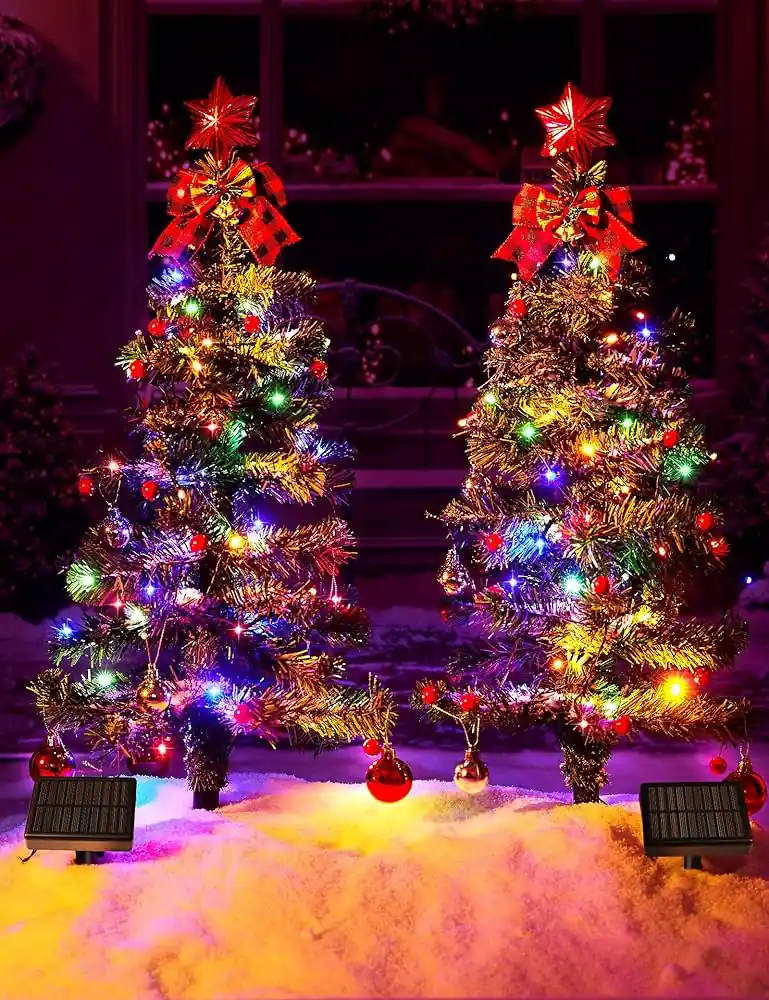
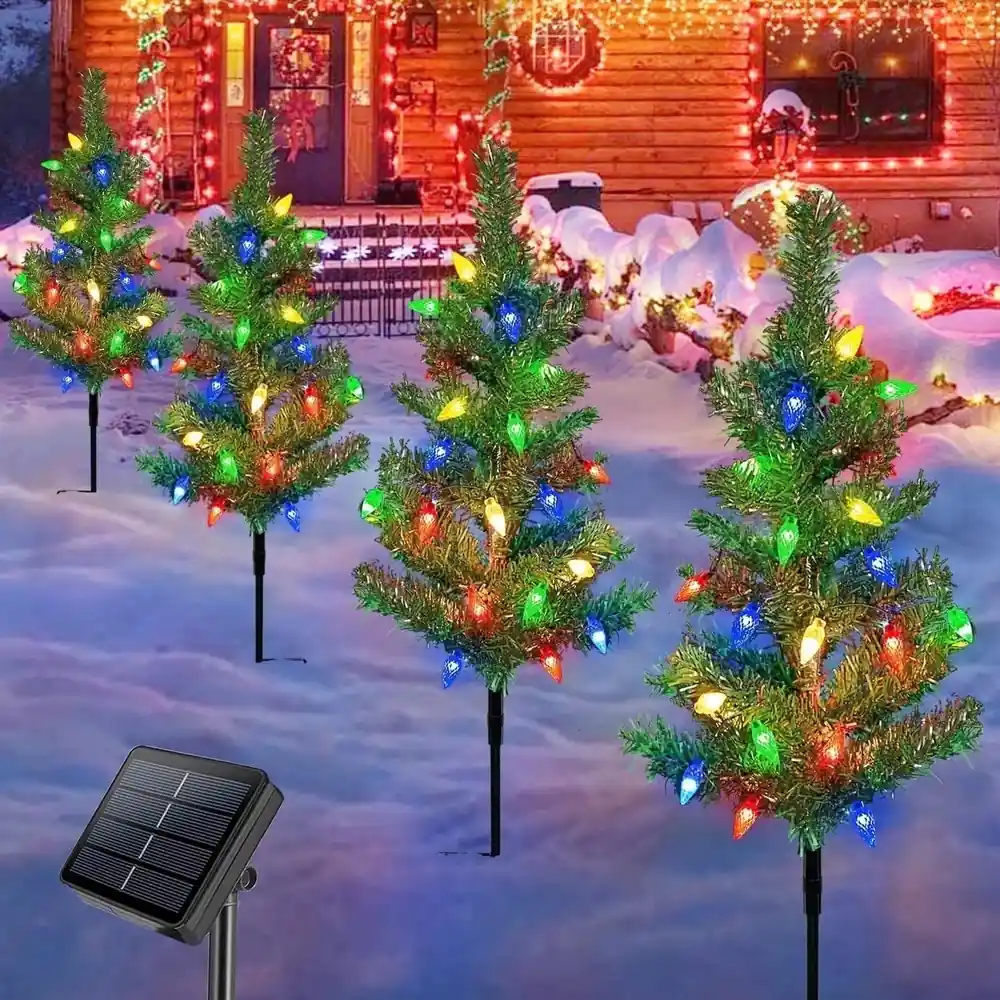
Tree Structure and Framework Materials
The foundation of quality Christmas tree solar lights begins with robust internal framework construction that provides structural integrity while supporting the tree’s natural appearance. Steel wire frameworks offer the best combination of strength, flexibility, and cost-effectiveness for most applications. High-carbon steel wire provides excellent spring characteristics that allow branches to flex naturally while maintaining their shape over multiple seasons.
The framework design typically employs a central trunk structure with radiating branch assemblies that create the characteristic Christmas tree silhouette. Branch spacing and angles must be carefully engineered to provide realistic proportions while accommodating LED placement and wiring requirements. Quality manufacturers use computer-aided design systems to optimize branch placement for both aesthetic appeal and structural performance.
Aluminum frameworks serve premium market segments where weight reduction and enhanced corrosion resistance justify higher material costs. Aluminum’s superior corrosion resistance makes it particularly valuable for coastal installations or areas with harsh environmental conditions. The material’s lightweight properties also reduce shipping costs and simplify installation for larger tree models.
Branch Materials and Foliage Systems
Realistic branch appearance requires careful selection of materials and manufacturing processes that replicate natural evergreen characteristics. High-quality PVC (polyvinyl chloride) remains the most popular choice for branch materials due to its excellent weather resistance, color retention, and ability to be formed into realistic needle-like textures.
The manufacturing process for PVC branches typically involves specialized extrusion techniques that create the fine, needle-like texture characteristic of evergreen trees. Multiple extrusion passes may be used to create varying needle lengths and densities that enhance realism. Color formulation includes UV stabilizers and fade-resistant pigments that maintain natural green coloration throughout extended outdoor exposure.
PE (polyethylene) branches offer enhanced flexibility and more natural feel compared to PVC alternatives. The material’s superior flexibility allows for more realistic branch movement and easier storage, though it may require more careful handling during manufacturing and installation. PE branches are often used in premium products where enhanced realism justifies higher material costs.
Mixed-material approaches combine different branch types to create more realistic appearance. Manufacturers may use denser PVC branches for the tree’s interior structure while employing softer PE branches for outer layers that provide natural texture and appearance. This approach optimizes both structural integrity and visual realism.
LED Integration and Lighting Systems
Integrating LED lighting into three-dimensional Christmas tree structures presents unique challenges for wire management, heat dissipation, and uniform light distribution. The most common approach involves pre-wired branch assemblies where LED strings are integrated during the branch manufacturing process rather than added afterward.
LED selection for Christmas tree applications typically favors mid-power LEDs (0.2-0.5W per chip) that provide good light output while minimizing heat generation and power consumption. The three-dimensional structure provides natural heat dissipation, but LED placement must avoid concentration points that could create hot spots or accelerated component degradation.
Wire management systems must accommodate the complex three-dimensional geometry while providing reliable electrical connections and weather protection. Quality manufacturers use marine-grade wiring with enhanced insulation and sealed connection points throughout the tree structure. Junction boxes and connection points require special attention to prevent water ingress and maintain electrical safety.
Color temperature selection affects the overall aesthetic appeal and market acceptance. Warm white LEDs (3000K-3500K) provide traditional Christmas lighting appearance, while cool white options (5000K-6500K) may appeal to customers seeking brighter, more contemporary effects. Multicolor LED systems require more complex control circuits but offer greater versatility and premium positioning opportunities.
Solar Panel Integration and Mounting
Solar panel integration for Christmas tree lights requires balancing charging performance with aesthetic considerations. The most common approach involves mounting solar panels at the top of the tree structure where they receive optimal sun exposure while remaining relatively inconspicuous within the overall design.
Panel mounting systems must accommodate the tree’s three-dimensional geometry while providing secure attachment and weather sealing. Custom mounting brackets are typically required to achieve proper panel orientation and secure attachment to the tree’s framework. The mounting system must also allow for easy panel replacement or service access.
Wiring between solar panels and control circuits requires careful routing through the tree structure to avoid interference with branch assemblies while maintaining weather protection. Flexible wiring harnesses with sealed connectors are essential for reliable long-term performance.
Battery Housing and Environmental Protection
Battery compartments for Christmas tree solar lights must provide complete weather protection while allowing for easy access during maintenance or replacement. The three-dimensional structure and potential for ground-level moisture exposure create challenging requirements for battery housing design.
Most quality designs incorporate sealed battery compartments located within the tree’s base structure where they receive protection from direct weather exposure while remaining accessible for service. The compartment design must provide adequate ventilation to prevent moisture buildup while maintaining weatherproof integrity.
Battery selection typically favors LiFePO4 (lithium iron phosphate) chemistry for its excellent cold-weather performance, long cycle life, and safety characteristics. The battery capacity must be sized to accommodate the tree’s LED count and desired operating duration while accounting for reduced solar charging during winter months.
Assembly and Quality Control Processes
Christmas tree solar light assembly requires specialized processes and quality control measures that address both electrical performance and aesthetic requirements. Pre-assembly testing of individual components helps identify defects before final assembly when corrections become more difficult and expensive.
Branch attachment systems must provide secure mechanical connection while maintaining electrical continuity for integrated LED systems. Quality manufacturers use standardized connection systems that ensure consistent assembly and facilitate field service if required.
Final assembly testing includes comprehensive electrical testing, photometric verification, and visual inspection for aesthetic quality. The three-dimensional nature of the product requires specialized testing equipment and procedures to verify performance across the entire tree structure.
Glowyard Lighting has developed specialized manufacturing processes for Christmas tree solar lights that ensure consistent quality, realistic appearance, and reliable performance. Our quality control systems include comprehensive testing of structural integrity, electrical performance, and aesthetic quality specific to three-dimensional holiday lighting applications.
What Quality Standards and Certifications Matter for Wholesale Buyers?
Quality standards and certifications for wholesale Christmas tree solar lights encompass both general outdoor lighting requirements and specific considerations related to three-dimensional decorative products, seasonal use patterns, and the complex electrical systems required for large LED installations. Understanding these standards helps wholesalers ensure product compliance, customer satisfaction, and market acceptance.
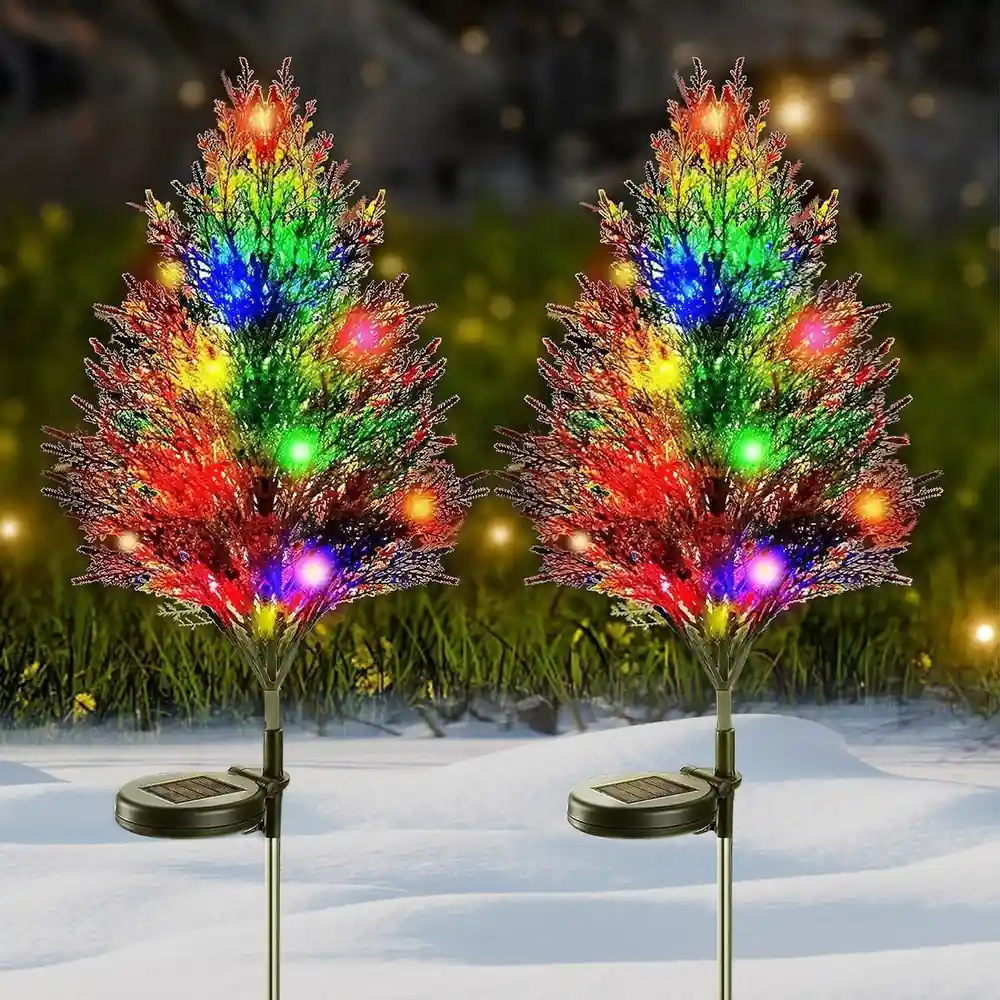
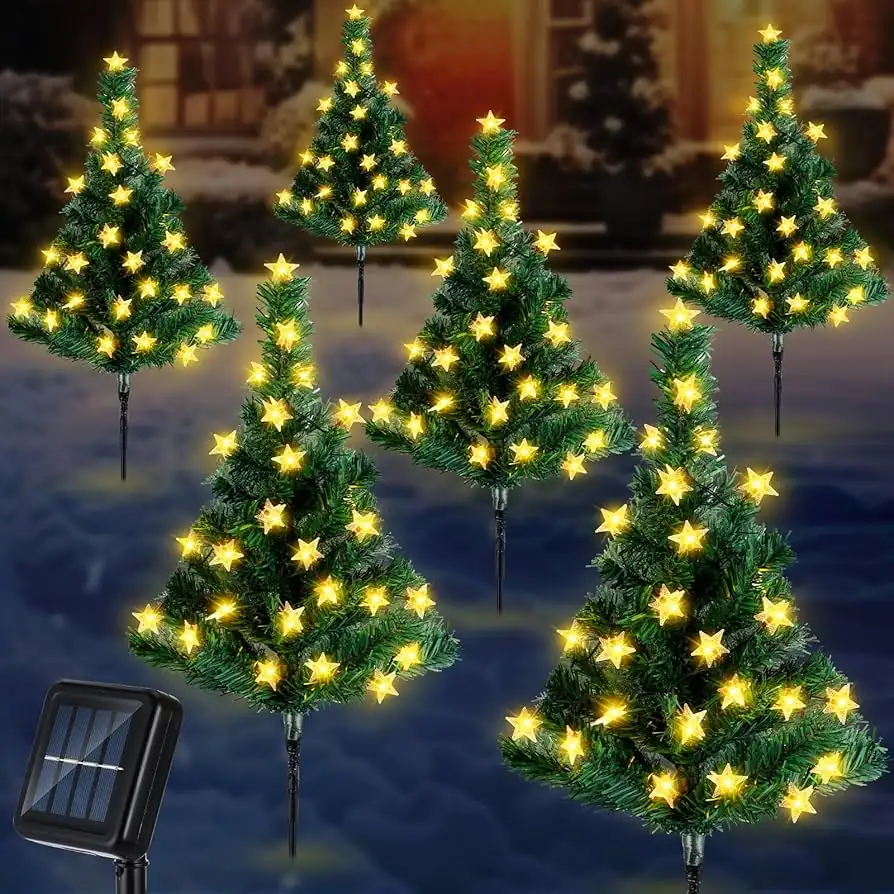
Electrical Safety and Performance Standards
CE marking remains essential for European markets, with Christmas tree solar lights falling under multiple EU directives including the Low Voltage Directive, EMC Directive, and potentially the Toy Safety Directive if marketed toward families with children. The three-dimensional nature and complex wiring systems require particular attention to electrical safety standards and insulation requirements.
UL 2108 certification for low-voltage lighting systems applies to North American markets, with additional considerations for outdoor decorative lighting applications that may be subject to handling, repositioning, or storage between seasons. The standard addresses electrical safety, fire resistance, and environmental durability requirements that are particularly relevant for products with complex internal wiring.
The extensive LED installations common in Christmas tree lights require special attention to electrical load management, thermal performance, and circuit protection. Quality control processes must verify that electrical systems operate within safe parameters throughout the tree structure and under various environmental conditions.
Structural Integrity and Mechanical Safety
Three-dimensional Christmas tree structures require mechanical testing that addresses wind loading, structural stability, and resistance to handling damage during installation, use, and storage. The extended height and branched structure create wind loading that must be considered in base design and anchoring systems.
Impact resistance testing becomes particularly important for Christmas tree lights due to their prominent placement and potential for accidental contact during installation or decoration activities. IK ratings help quantify impact resistance, with IK08 representing good protection for most residential applications.
Tip-over resistance testing ensures that tree structures remain stable under normal use conditions and reasonable wind loading. The testing should account for various installation surfaces and potential uneven ground conditions that may affect stability.
Environmental Durability Requirements
IP65 rating represents the minimum acceptable protection level for Christmas tree solar lights, providing complete dust protection and protection against water jets from any direction. However, the complex geometry and multiple connection points may require enhanced protection levels to ensure reliable performance.
Cold weather performance testing is critical for Christmas tree lights since they are specifically designed for winter holiday use. Battery performance, LED output, material flexibility, and electrical connections must be validated at low temperatures typical of winter installation periods. Quality products should maintain functionality down to -20C (-4F) or lower depending on target markets.
UV resistance testing addresses the long-term durability of branch materials, color retention, and structural integrity over multiple seasons of outdoor exposure. The green coloration and realistic appearance are critical quality factors that must be maintained throughout the product’s service life.
Fire Safety and Material Compliance
Fire resistance testing becomes particularly important for Christmas tree lights due to their association with traditional Christmas trees and potential proximity to other holiday decorations. Materials must meet appropriate flame spread and smoke generation requirements for outdoor decorative applications.
Material safety certifications including RoHS compliance restrict hazardous substances in electrical components, which is mandatory for European markets and increasingly required elsewhere. The complex electrical systems and multiple material types used in Christmas tree construction require comprehensive material compliance documentation.
CPSIA compliance may be required if products are marketed toward families or children, addressing lead content and other safety considerations. The holiday theme and attractive appearance may appeal to children, making safety compliance particularly important.
Photometric and Optical Performance
Light distribution testing must account for the three-dimensional geometry and ensure uniform illumination throughout the tree structure. Photometric testing should verify that light output is consistent across all branches and that no dark spots or excessively bright areas detract from the overall visual effect.
Color consistency testing ensures that LED color temperature and color rendering remain uniform across the entire tree structure and between production batches. This is particularly important for warm white applications where color variations are easily noticeable.
Lumen maintenance testing (LM-80) addresses long-term LED performance and helps predict maintenance requirements over the product’s service life. The complex thermal environment within tree structures requires careful attention to LED thermal management and long-term performance.
Seasonal Performance and Storage Durability
Thermal cycling testing simulates the temperature variations that seasonal products experience during storage and use. Christmas tree lights may be stored in hot warehouses during summer and installed in cold outdoor conditions during winter, creating significant thermal stress on materials and electrical components.
Storage durability testing addresses the unique requirements of seasonal products that may be stored for 10-11 months between use periods. Testing should verify that products maintain performance and appearance after extended storage in various environmental conditions.
Assembly and disassembly testing evaluates the product’s ability to withstand repeated setup and takedown cycles that are typical of seasonal decorative products. Connection systems, branch attachments, and structural elements must maintain integrity through multiple use cycles.
Certification Documentation and Verification
Three-dimensional decorative lighting products require comprehensive documentation that addresses both technical performance and safety considerations. Test reports should include structural testing, electrical safety validation, environmental performance verification, and photometric data.
Factory quality system certifications (such as ISO 9001) provide additional assurance of manufacturing consistency and quality control processes. These certifications are particularly important for complex products with multiple components and assembly requirements.
Regional and Application-Specific Requirements
Holiday lighting regulations may vary by region, with some areas having specific requirements for decorative lighting installations, fire safety, or environmental compliance. Understanding local requirements helps ensure market acceptance and avoid compliance issues.
Municipal and commercial applications may require additional certifications or compliance with specific standards for public display applications. These requirements often include enhanced fire safety, structural integrity, and electrical safety standards.
What Is the Market Demand and Customer Preferences?
The market demand for wholesale Christmas tree solar lights reflects the intersection of holiday decoration trends, environmental consciousness, and technological advancement in solar lighting. Understanding these demand patterns and customer preferences enables wholesalers to optimize product selection, pricing strategies, and market positioning for this high-value seasonal category.
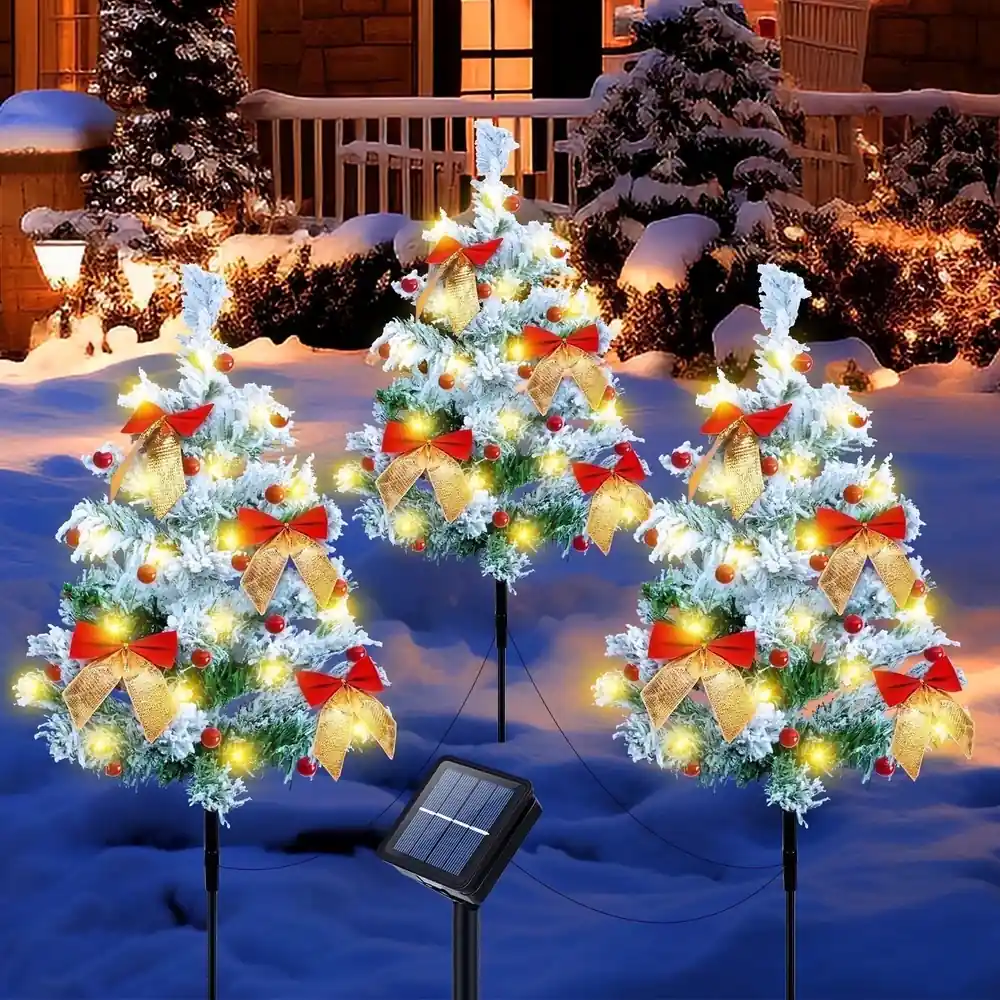
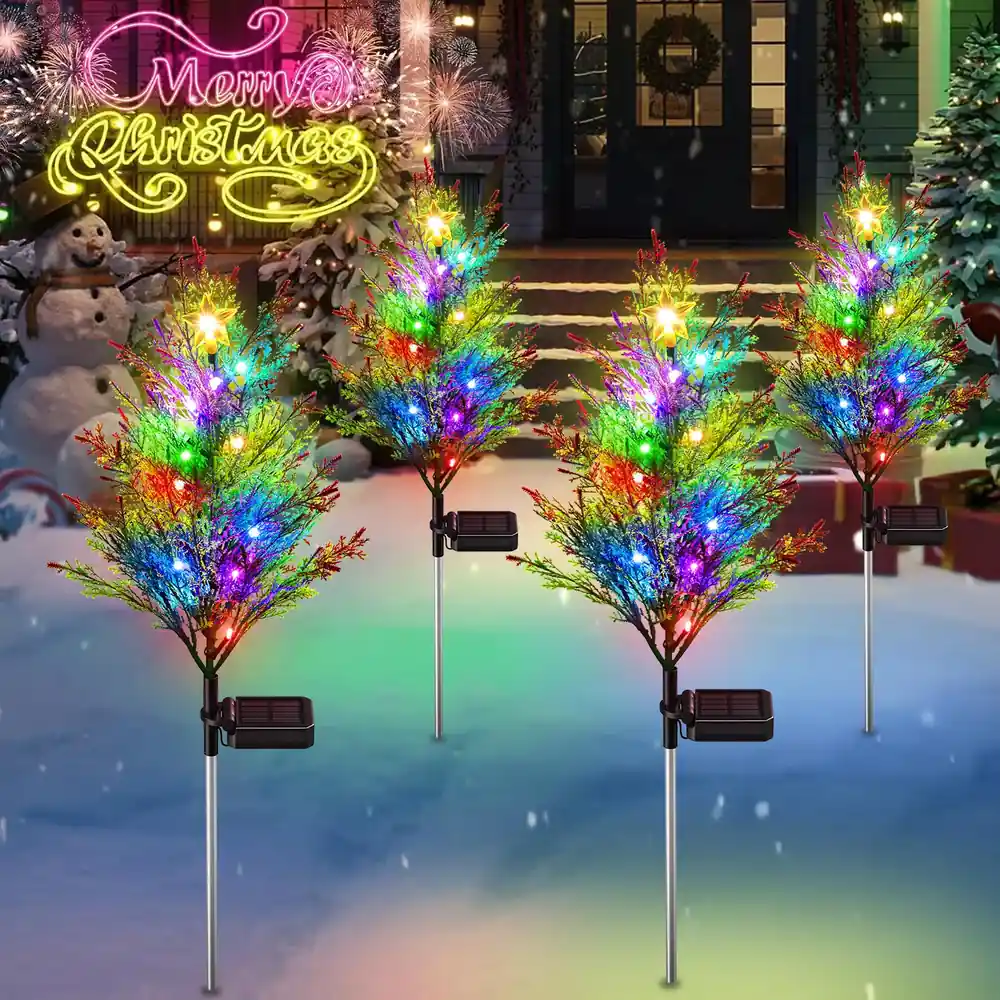
Seasonal Demand Concentration and Market Timing
Christmas tree solar lights experience the most concentrated seasonal demand of any holiday lighting category, with approximately 85-95% of annual sales occurring during the October through December period. This extreme concentration creates both significant opportunities for high-volume sales and challenges for inventory management and supply chain coordination.
Pre-season ordering typically begins in May-June, when retailers and distributors place orders for holiday inventory. Early ordering provides advantages including better pricing, production priority, and shipping arrangements, but requires accurate demand forecasting and substantial working capital investment. The high unit values of Christmas tree lights make inventory planning particularly critical.
Peak retail sales occur during the November-December period, with Thanksgiving weekend representing a critical sales period for many retailers. The visual impact and gift-giving potential of Christmas tree lights create strong impulse purchase opportunities during peak shopping periods.
Post-season clearance sales create opportunities for volume sales at reduced margins, but the high unit values and storage requirements make excess inventory particularly costly. Successful wholesalers develop clearance strategies and pricing plans before the season to minimize losses on unsold inventory.
Customer Segmentation and Buying Patterns
Residential Premium Customers represent the largest market segment by volume, purchasing Christmas tree solar lights for high-end home holiday decorations. This segment typically purchases 1-3 units per household, with buying decisions influenced by visual impact, quality perception, and convenience features. Premium residential customers often seek larger sizes (4-8 feet) and advanced features such as programmable lighting effects.
Commercial Property Managers purchase Christmas tree lights for shopping centers, hotels, restaurants, and office complexes. This segment values professional appearance, reliable performance, and coordinated aesthetics that enhance customer experience and brand image. Commercial buyers often purchase multiple units in matching specifications and may require custom sizing or features.
Event Planners and Decorators represent a specialized high-value segment that purchases Christmas tree lights for holiday events, festivals, corporate celebrations, and temporary installations. This segment requires flexible sizing, reliable performance, and easy setup/takedown capabilities to support event timelines and logistics.
Municipal and Institutional Buyers purchase Christmas tree lights for public holiday displays, parks, community centers, and government facilities. This segment often requires competitive bidding processes, specific certifications, and enhanced durability for public use applications. Municipal buyers may purchase very large units (8-12 feet) for prominent public displays.
Retail Chain Buyers represent high-volume opportunities for wholesalers who can meet the scale, quality, and logistics requirements of major retail operations. This segment requires consistent product availability, competitive pricing, and comprehensive support services including packaging, documentation, and logistics coordination.
Size Preferences and Market Segmentation
Market research indicates distinct preferences for different size categories that correspond to specific applications and customer segments. Tabletop models (12-24 inches) serve indoor decoration and gift markets, representing approximately 15-20% of unit volume but lower per-unit values.
Medium residential sizes (3-5 feet) represent the largest volume segment, accounting for approximately 50-60% of total sales. These sizes provide good visual impact for residential applications while remaining manageable for homeowner installation and storage.
Large residential and commercial sizes (6-8 feet) serve premium residential and commercial markets, representing approximately 20-25% of unit volume but higher per-unit values. These sizes require more sophisticated construction and may need professional installation assistance.
Oversized commercial models (8-12 feet) serve specialized commercial and institutional markets, representing small unit volumes but very high per-unit values. These products often require custom engineering and specialized logistics.
Technology Adoption and Feature Preferences
Smart lighting features including smartphone app control, programmable lighting sequences, and music synchronization are gaining acceptance in premium market segments. While representing a small portion of total volume currently, these advanced features command significant price premiums and appeal to tech-savvy customers seeking unique holiday displays.
Color-changing and multicolor capabilities appeal to customers seeking versatility and customization options. RGB LED technology allows for various color combinations and effects that can be adapted for different occasions or personal preferences beyond traditional Christmas applications.
Solar technology improvements including better battery performance, faster charging, and enhanced cold-weather operation drive customer satisfaction and repeat purchases. Customers increasingly expect reliable performance throughout the holiday season without maintenance or battery replacement.
Regional Market Variations and Preferences
North American markets show strong preference for traditional green trees with warm white lighting, reflecting cultural associations with Christmas celebrations. The market is relatively mature, with emphasis on product differentiation through size, quality, and advanced features.
European markets demonstrate growing interest in Christmas tree solar lights, particularly in countries with strong Christmas celebration traditions. However, market development may be slower due to different holiday decoration preferences and varying levels of solar lighting adoption.
Asian markets, particularly in regions with significant Western cultural influence, show emerging demand for Christmas tree lighting products. These markets may offer growth opportunities but require careful market development and cultural adaptation.
Price Sensitivity and Value Perception
Price sensitivity varies significantly across customer segments and purchase timing. Premium residential customers and commercial buyers may be less price-sensitive and more focused on quality, features, and visual impact. Value-oriented customers often prioritize basic functionality and competitive pricing.
Value perception extends beyond initial purchase price to include visual impact, convenience benefits, and multi-season durability. Customers increasingly consider total cost of ownership including replacement frequency, maintenance requirements, and energy savings compared to traditional plug-in alternatives.
Competitive Landscape and Market Positioning
The Christmas tree solar light market includes both specialized holiday lighting manufacturers and general outdoor lighting companies offering seasonal products. Competition focuses on visual impact, quality perception, feature differentiation, and retail channel access.
Product differentiation opportunities include enhanced realism, superior lighting effects, smart features, or specialized market focus. Successful wholesalers often develop expertise in holiday lighting markets and build relationships with specialized retail channels.
Market Growth Trends and Future Opportunities
The overall holiday lighting market continues to grow, driven by increasing consumer spending on holiday decorations, social media influence on elaborate displays, and growing environmental consciousness. Wholesale Christmas tree solar lights benefit from this growth while offering environmental advantages over traditional plug-in alternatives.
Smart home integration and IoT connectivity represent emerging opportunities for premium products. Integration with home automation systems, voice control, and smartphone apps may drive future market development and premium positioning opportunities.
What Are the Common Applications?
Wholesale Christmas tree solar lights serve diverse applications across residential, commercial, and institutional markets, with each application presenting unique requirements for size, performance, and installation considerations. Understanding these applications helps wholesalers identify target customers and optimize product specifications for different market segments.
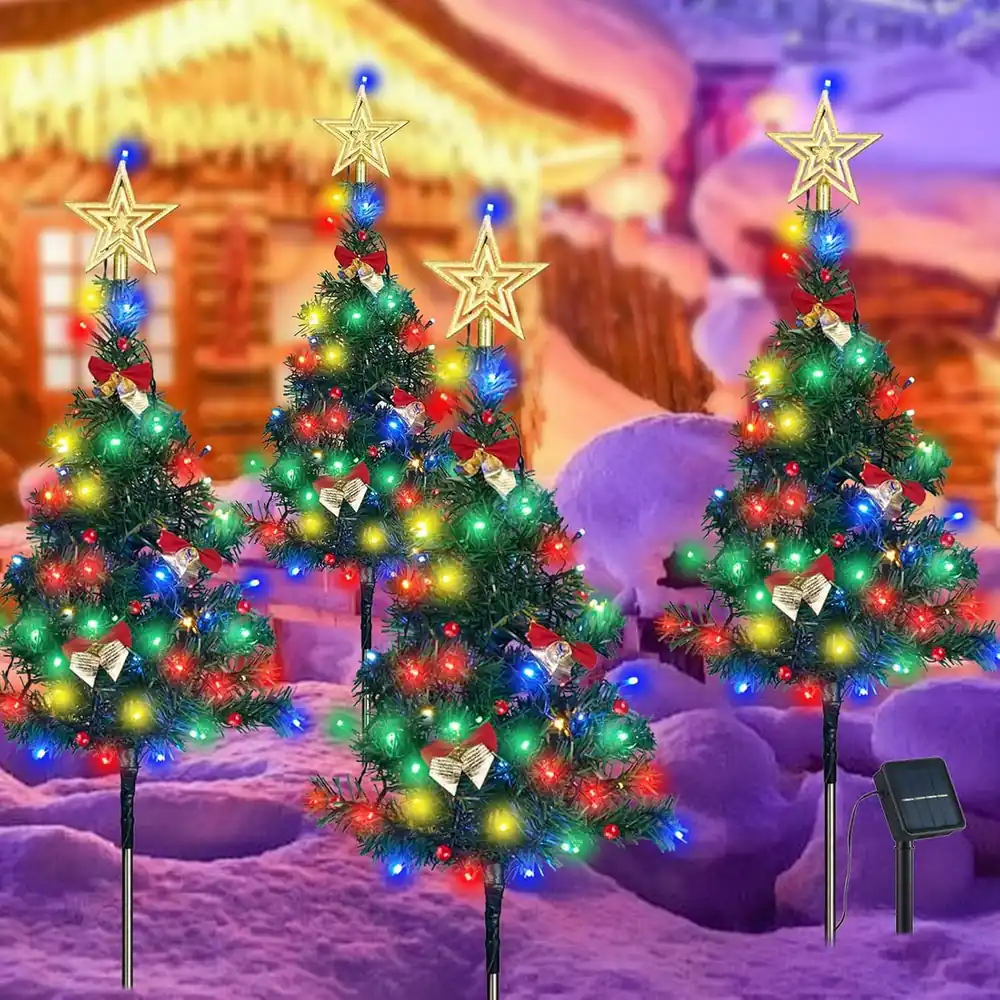
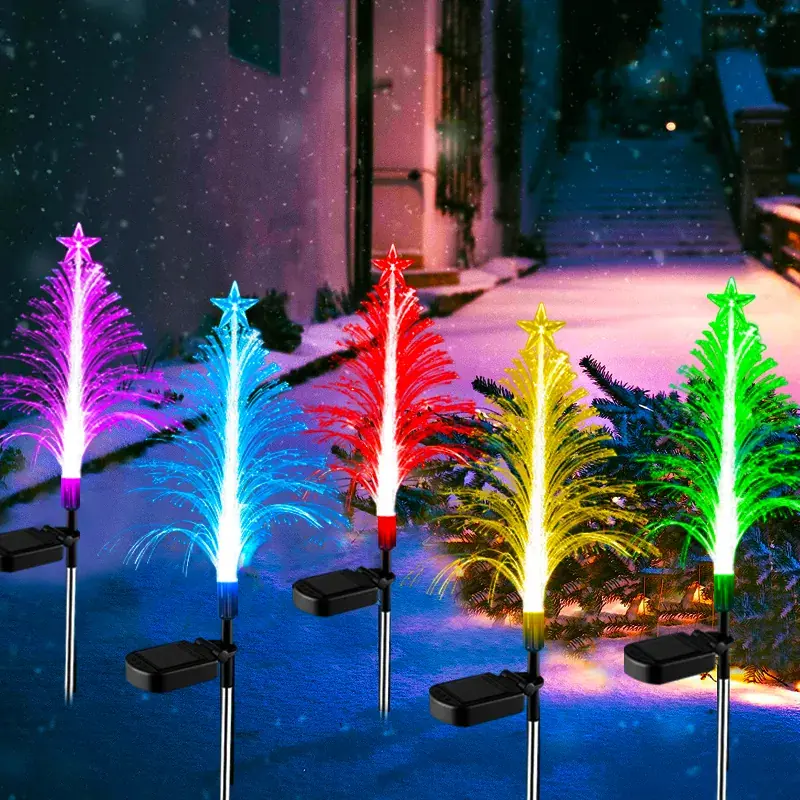
Residential Holiday Decorations
Home holiday decorating represents the primary application for Christmas tree solar lights, with homeowners using these fixtures as centerpiece elements in outdoor holiday displays. Typical residential installations involve 1-3 units positioned strategically in front yards, entryways, or prominent landscape areas where they create maximum visual impact for both residents and passersby.
Front yard centerpiece installations often feature larger Christmas tree lights (4-6 feet) positioned as focal points for comprehensive holiday lighting displays. These installations may be complemented by other holiday decorations such as wreaths, garlands, or additional lighting elements that create coordinated themes. The solar-powered operation eliminates the need for electrical connections, making installation simple and safe for homeowners.
Entryway and porch applications utilize medium-sized Christmas tree lights (3-4 feet) to create welcoming holiday atmospheres at main entrances. These installations often complement architectural features and may be integrated with existing landscape lighting or holiday decorations. The wireless nature of solar operation makes these applications particularly convenient.
Patio and backyard applications extend holiday decorating beyond front-facing areas, using Christmas tree lights to create festive environments for holiday entertaining and family gatherings. These installations often favor smaller sizes (2-3 feet) that complement outdoor furniture and entertainment areas without overwhelming smaller spaces.
Commercial Property Applications
Shopping centers and retail complexes use Christmas tree solar lights to create attractive holiday environments that draw customers and enhance the shopping experience. These installations often involve multiple large units (6-8 feet) arranged in coordinated patterns throughout parking areas, walkways, and entrance areas.
Restaurant and hospitality properties utilize Christmas tree lights to create festive dining environments and enhance curb appeal during the holiday season. Hotels, resorts, and event venues often incorporate these lights into larger holiday decoration schemes that create memorable experiences for guests and support seasonal marketing efforts.
Office complexes and business parks use Christmas tree solar lights for professional holiday decorating that acknowledges the season while maintaining appropriate business aesthetics. These applications typically favor elegant designs and coordinated installations that complement architectural features and corporate branding.
Municipal and Public Applications
Parks and recreational facilities incorporate Christmas tree solar lights into public holiday displays that serve community celebration and tourism promotion goals. Municipal installations often involve very large units (8-12 feet) arranged in prominent locations that create impressive displays for community events and festivals.
Downtown business districts and commercial corridors use Christmas tree lights as part of coordinated holiday decorating programs that support local business promotion and community identity. These installations often involve partnerships between municipal governments and business associations to create cohesive holiday themes.
Public buildings and facilities may use Christmas tree solar lights for holiday decorating that acknowledges the season while maintaining appropriate public sector aesthetics. Libraries, community centers, and government buildings often incorporate these lights into modest but welcoming holiday displays.
Event and Entertainment Applications
Holiday festivals and seasonal events utilize Christmas tree solar lights to create themed environments and enhance visitor experiences. Event planners value the impressive visual impact, easy installation, and wireless operation that these lights provide for temporary installations.
Theme parks and entertainment venues incorporate Christmas tree lights into seasonal decorating programs that transform facilities for holiday celebrations. These applications often require very large units with advanced lighting effects and reliable performance throughout extended operating seasons.
Corporate events and private parties use Christmas tree solar lights to create festive atmospheres for holiday celebrations and year-end events. Event rental companies often maintain inventories of various sizes for seasonal rental applications.
Specialized and Niche Applications
Photography and film production utilize Christmas tree solar lights as props or set decoration for holiday-themed content creation. The authentic appearance, impressive scale, and convenient operation make these lights valuable for commercial photography, social media content, and video production.
Retail display and merchandising applications use Christmas tree lights to enhance holiday product presentations and create seasonal shopping environments. Store displays, window decorations, and promotional installations often incorporate these lights to attract attention and reinforce holiday themes.
Religious institutions including churches and community organizations use Christmas tree solar lights for holiday celebrations and community outreach programs. These applications often emphasize traditional aesthetics and may require larger sizes for prominent display in community settings.
Application-Specific Design Requirements
Different applications require specific design considerations that affect product selection and performance requirements. Residential applications typically prioritize visual impact, ease of installation, and cost-effectiveness. Commercial applications emphasize durability, professional appearance, and coordinated aesthetics.
Public and municipal applications may require enhanced durability, vandal resistance, and compliance with accessibility standards. Event applications often need portable designs, reliable performance, and easy setup and removal capabilities.
Installation and Maintenance Considerations
Most Christmas tree solar light applications involve seasonal installation, requiring designs that facilitate easy setup and removal. Base systems must provide secure installation while allowing for removal without damage to lawns or landscaping.
Storage considerations become important for seasonal applications, as products must be stored for 10-11 months between use periods. The three-dimensional structure and potential fragility of branch systems require specialized storage solutions and protective packaging.
Market Opportunities and Trends
Smart city initiatives create opportunities for connected Christmas tree lighting systems that integrate with municipal infrastructure and provide data collection capabilities. These applications require advanced electronics and communication capabilities but offer higher value propositions.
Sustainable event planning trends favor solar-powered decorations over traditional plug-in alternatives, creating opportunities for event planners and rental companies. Environmental consciousness supports premium pricing for sustainable alternatives.
Tourism and destination marketing applications leverage holiday lighting displays to attract visitors and extend tourism seasons. Christmas tree solar lights contribute to these efforts while providing cost-effective installation and operation compared to traditional wired systems.
What OEM/ODM Customization Options Are Available for Wholesale Christmas Tree Solar Lights?
The wholesale Christmas tree solar lights market offers extensive OEM/ODM customization opportunities that enable distributors and retailers to create unique products, serve specialized markets, and build strong brand differentiation in the competitive holiday lighting sector. Understanding available customization options helps wholesalers develop competitive advantages and meet specific customer requirements.
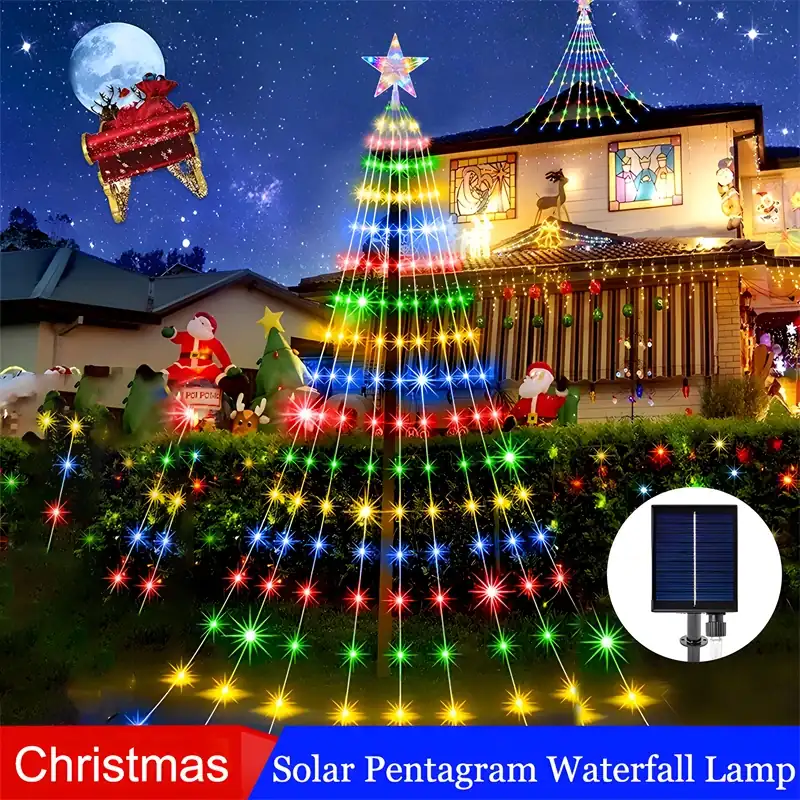
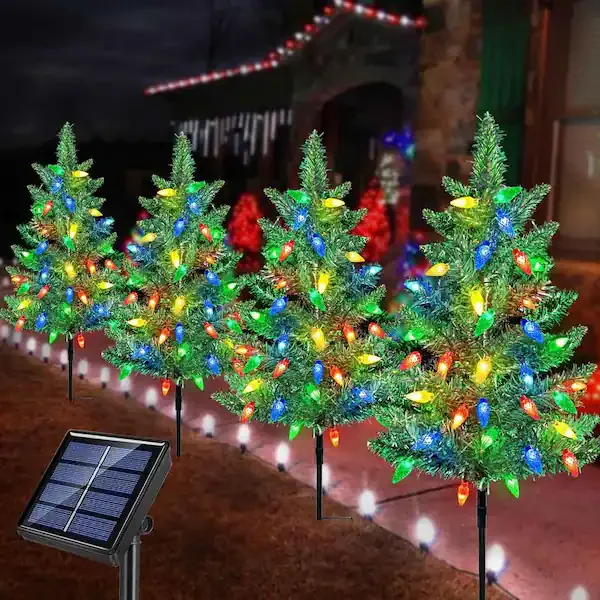
Size and Scale Customization
Custom sizing represents one of the most impactful differentiation opportunities for Christmas tree solar lights. Standard residential sizes can be modified to create unique market positioning, from compact tabletop models (18-24 inches) to impressive commercial displays (10-15 feet). Custom sizing enables products optimized for specific applications, market segments, or retail positioning strategies.
Proportional customization allows for modifications to tree shape, branch density, and overall silhouette to create distinctive visual characteristics. These modifications can address specific aesthetic preferences, cultural variations, or brand positioning requirements while maintaining the essential Christmas tree appearance.
Modular design systems enable customers to create custom configurations by combining multiple units or adding expansion elements. These systems appeal to commercial buyers and customers seeking scalable solutions that can be customized for specific spaces or applications.
Branch Design and Foliage Customization
Branch material and texture customization allows for variations in needle type, density, and color that create unique visual characteristics. Options include different needle lengths, varying green shades, or specialized textures that enhance realism or create distinctive brand characteristics.
Flocking and snow effect customization creates premium winter wonderland aesthetics that command higher prices and appeal to upscale markets. Custom flocking colors, densities, and application patterns enable unique seasonal themes that differentiate from standard green tree offerings.
Mixed-material branch systems combine different materials and textures to create enhanced realism and visual interest. These advanced systems may incorporate multiple needle types, varying densities, or specialized accent elements that create premium positioning opportunities.
Lighting System Customization
LED color and effect customization enables products tailored to specific aesthetic preferences or market requirements. Options include custom color temperatures, multicolor sequences, programmable effects, or specialized lighting patterns that create unique visual experiences.
Smart lighting integration including smartphone app control, programmable sequences, music synchronization, or integration with home automation systems creates premium product offerings that appeal to tech-savvy customers and command significant price premiums.
Advanced lighting effects such as twinkling, fading, color-changing, or animated sequences provide differentiation opportunities and enhanced customer engagement. These effects require sophisticated control systems but offer strong market positioning advantages.
Solar System and Power Customization
Battery capacity and solar panel sizing can be optimized for specific geographic locations, usage patterns, or performance requirements. Enhanced battery systems provide extended operation time, improved cold-weather performance, or faster charging capabilities for challenging applications.
Charging system customization includes fast-charging capabilities, backup charging options, or integration with external power sources for applications requiring guaranteed operation. Advanced charging systems may include intelligent battery management or remote monitoring capabilities.
Power management customization enables features such as automatic dimming, motion activation, or programmable operation schedules that optimize battery life and provide enhanced functionality for specific applications.
Structural and Mechanical Customization
Base and mounting system customization addresses specific installation requirements including alternative anchoring methods, portable designs, or integration with existing infrastructure. Custom mounting solutions enable installation in challenging environments or specialized applications.
Enhanced durability features including reinforced construction, upgraded materials, or specialized coatings provide improved performance in harsh environments or high-traffic applications. These enhancements appeal to commercial and institutional customers requiring extended service life.
Portable and modular designs facilitate easy installation, removal, and storage for seasonal applications. Features such as quick-assembly systems, compact storage configurations, or integrated transport solutions add value for temporary installations.
Aesthetic and Branding Customization
Custom color schemes extend beyond traditional green to include alternative holiday colors, corporate colors, or themed color combinations. Popular alternatives include white trees, silver trees, or multicolor options that appeal to diverse customer preferences.
Decorative element integration including custom ornaments, stars, ribbons, or themed accessories creates complete holiday decoration systems that provide higher value and stronger customer engagement. These elements can incorporate brand colors, logos, or specialized themes.
Brand integration and private labeling services allow wholesalers to market products under their own brand names with custom packaging, documentation, and marketing materials. Professional branding services help create cohesive product lines and support marketing efforts.
Packaging and Presentation Customization
Custom packaging design enhances product presentation and provides marketing opportunities. Options include retail-ready packaging, gift packaging, premium presentation boxes, or bulk packaging optimized for specific distribution channels.
Assembly and instruction customization includes detailed setup guides, video instructions, or specialized tools that enhance customer experience and reduce support requirements. Clear instructions are particularly important for complex three-dimensional products.
Marketing support materials including product literature, specification sheets, and promotional materials can be customized to support specific sales channels or customer segments.
Quality and Performance Customization
Enhanced quality control and testing protocols provide additional assurance for customers requiring higher reliability or specific performance validation. This may include extended burn-in testing, statistical quality sampling, or specialized environmental testing beyond standard requirements.
Custom certification and compliance testing address specific market requirements or customer specifications. This includes testing to regional standards, specialized performance validation, or third-party verification of custom features or performance claims.
Extended warranty programs and enhanced service support provide additional value for customers requiring long-term performance assurance or specialized technical support.
Seasonal and Themed Customization
Alternative holiday themes extend beyond Christmas to include other winter celebrations, cultural variations, or regional preferences. These variations leverage similar manufacturing processes while serving different seasonal markets or cultural segments.
Corporate and institutional themes enable custom products for business applications, promotional events, or institutional celebrations. Custom colors, logos, or messaging create unique products for specialized applications.
Cultural and regional customization addresses specific market preferences or cultural requirements. This may include alternative proportions, modified aesthetics, or specialized features that appeal to specific cultural or regional markets.
Glowyard Lighting offers comprehensive OEM/ODM services for Christmas tree solar lights, including custom sizing, advanced lighting systems, smart features integration, and complete private labeling solutions. Our engineering team specializes in three-dimensional holiday lighting products and understands the unique requirements of seasonal decoration markets.
Cost and Volume Considerations
Customization costs vary significantly based on complexity and scope of modifications. Simple aesthetic changes such as size or color modifications typically require minimal tooling investment, while complex structural or electronic customizations may require substantial development investment and higher minimum order quantities.
Minimum order quantities for custom Christmas tree lights typically range from 100-1000 units depending on customization complexity and size. Understanding the relationship between customization scope, development costs, and minimum volumes helps wholesalers make informed decisions about product differentiation strategies.
Development Timeline and Project Management
Custom Christmas tree solar light development typically requires 8-16 weeks depending on modification complexity. Simple size or aesthetic changes may be completed in 8-10 weeks, while complex structural or electronic customizations may require 12-16 weeks for complete development and validation.
Seasonal timing considerations are critical for holiday lighting products, as development must be completed well in advance of peak selling seasons. Planning custom product development 15-20 months ahead of target sales seasons ensures adequate time for development, testing, production, and market preparation.
Wholesale Buying Checklist
- [ ] Verify structural integrity and wind resistance for outdoor installation
- [ ] Confirm cold-weather battery performance and capacity for winter operation
- [ ] Check branch material quality and UV resistance for color retention
- [ ] Validate LED performance and light distribution throughout tree structure
- [ ] Review assembly/disassembly process and storage requirements
- [ ] Confirm compliance certifications for target markets (CE, UL, FCC)
- [ ] Assess packaging design for retail display and seasonal storage
- [ ] Check warranty terms and seasonal product support policies
- [ ] Evaluate shipping considerations for three-dimensional products
- [ ] Verify customization options and minimum order quantities
- [ ] Review quality control processes specific to three-dimensional lighting
- [ ] Confirm production capacity and delivery schedules for peak season demand
Quick RFQ Template for Wholesale Christmas Tree Solar Lights
Project Information:
- Application: [Residential/Commercial/Municipal/Event]
- Quantity Required: [Number of units]
- Target Delivery Date: [Month/Year – consider seasonal timing]
- Installation Location: [City, State/Country]
Size and Design Requirements:
- Height Preference: [2ft/3ft/4ft/5ft/6ft/8ft/Custom]
- Tree Style: [Traditional Green/Flocked/Multicolor/Custom]
- Branch Density: [Light/Medium/Full/Premium]
- Base Type: [Ground stake/Weighted base/Custom mounting]
Lighting Specifications:
- LED Type: [Warm White/Cool White/Multicolor/RGB]
- Light Count: [Approximate number of LEDs desired]
- Lighting Effects: [Static/Twinkling/Color-changing/Programmable]
- Smart Features: [App control/Timer/Music sync/None]
Performance Requirements:
- Operating Temperature Range: [Min/Max C for winter use]
- Battery Life: [Hours of operation required]
- Charging Time: [Hours in winter sunlight]
- Durability: [Seasons of expected use]
Technical Specifications:
- Solar Panel: [Monocrystalline/Polycrystalline/Size preference]
- Battery Type: [LiFePO4/Li-ion/Capacity requirements]
- IP Rating: [IP65/IP67]
- Wind Resistance: [Specific requirements if any]
Commercial Terms:
- Target Price Range: [Per unit in USD]
- Payment Terms: [Net 30/LC/Other]
- Shipping Terms: [FOB/CIF/DDP]
- Seasonal Delivery: [Pre-season/Peak season timing]
Customization Needs:
- Private Labeling: [Yes/No]
- Custom Packaging: [Retail/Gift/Bulk]
- Special Features: [Custom size/colors/effects]
- Assembly Requirements: [Pre-assembled/Partial assembly/Kit form]
How to Source Wholesale Christmas Tree Solar Lights from China Manufacturers and Suppliers?
Sourcing wholesale Christmas tree solar lights from China manufacturers requires specialized knowledge of three-dimensional product manufacturing, seasonal production planning, and quality control for complex decorative lighting systems. The sophisticated nature of these products creates unique challenges and opportunities that differ from standard outdoor lighting procurement.

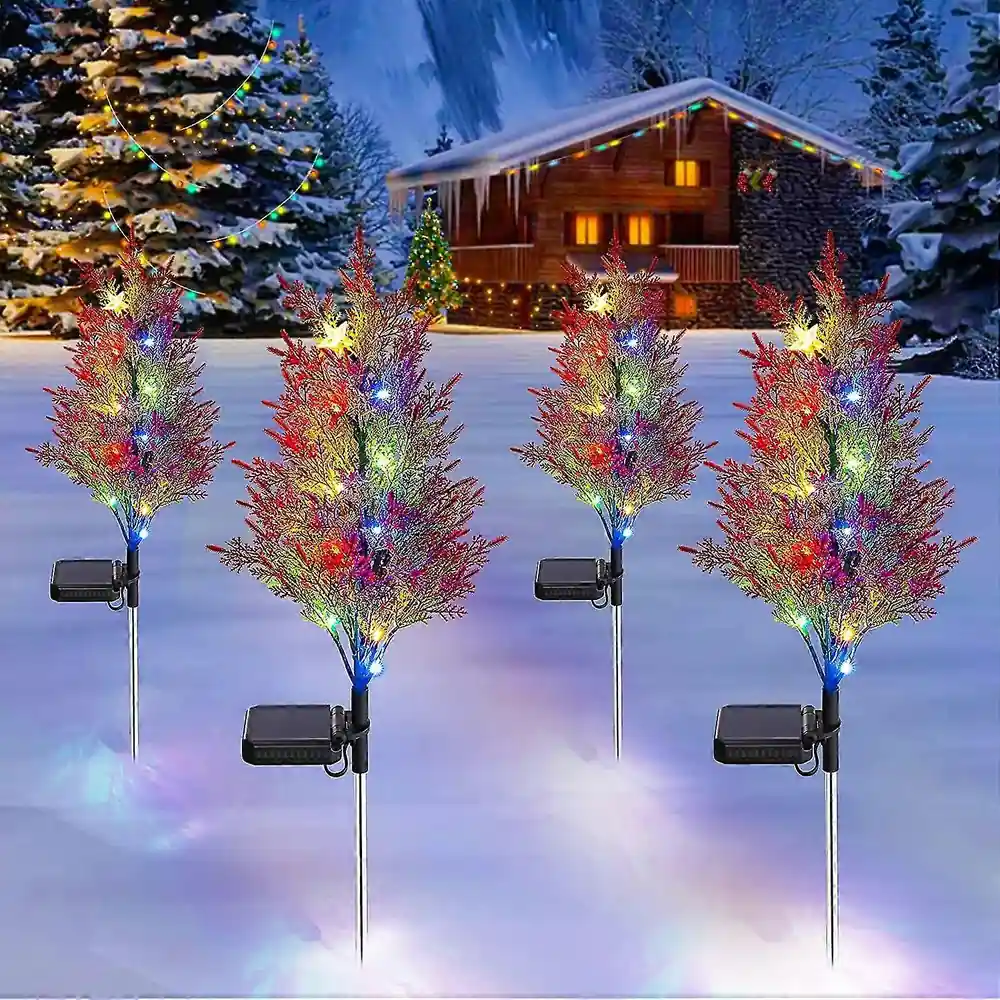
Supplier Identification and Specialization Assessment
Identifying suppliers with three-dimensional holiday lighting expertise is crucial for successful Christmas tree solar light sourcing. Look for manufacturers with dedicated holiday decoration production lines, experience with complex assembly processes, and understanding of seasonal market timing requirements. Suppliers specializing in Christmas decorations or three-dimensional lighting typically have better capabilities than general outdoor lighting manufacturers.
Manufacturing capability assessment should focus on structural engineering, assembly processes, and quality control systems specific to three-dimensional products. Evaluate suppliers’ ability to manage complex wire routing, branch attachment systems, and final assembly procedures that ensure both structural integrity and aesthetic quality.
Trade shows focused on holiday decorations, Christmas products, and seasonal lighting provide excellent opportunities to evaluate suppliers and products directly. The Canton Fair’s holiday decoration sections, specialized Christmas product exhibitions, and gift and decoration trade shows offer concentrated access to relevant suppliers and current product trends.
Production Capacity and Seasonal Planning
Understanding seasonal production cycles is essential for successful sourcing of Christmas tree solar lights. Most production occurs during the March-August period, with peak production in May-July. The complex assembly requirements and quality control needs mean that production capacity is more limited than for simple lighting products.
Early engagement with suppliers (February-April) ensures better pricing, production priority, and quality attention. Christmas tree lights require more production time than simple decorative products due to assembly complexity, testing requirements, and quality control procedures.
Quality control timing must account for the complexity of three-dimensional products and seasonal production pressures. Implement inspection and testing protocols early in the production cycle when suppliers have adequate time and resources for quality issues. Late-season production may face time pressures that compromise quality control.
Product Development and Sample Evaluation
Three-dimensional holiday lighting products require comprehensive sample evaluation that addresses structural integrity, electrical performance, and aesthetic quality. Request samples early in the development cycle to allow adequate time for testing, evaluation, and potential modifications before peak production periods.
Structural testing should include wind resistance, tip-over stability, and handling durability that addresses the unique challenges of three-dimensional tree structures. Evaluate branch attachment systems, base stability, and overall structural integrity under various conditions.
Electrical testing must validate LED performance, battery life, and charging efficiency across the entire tree structure. Pay particular attention to wire routing, connection reliability, and thermal management in the complex three-dimensional environment.
Quality Control for Three-Dimensional Products
Implementing quality control for three-dimensional Christmas tree lights requires attention to structural integrity, electrical performance, and aesthetic quality. Visual inspection protocols must verify branch placement, LED distribution, and overall appearance quality across the entire tree structure.
Assembly quality control becomes particularly critical for products with complex three-dimensional structures and multiple connection points. Establish clear assembly standards and inspection procedures that ensure consistent quality and reliability.
Electrical testing must validate performance across the entire tree structure, including LED functionality, color consistency, and electrical safety. The complex wiring systems require comprehensive testing to ensure reliable performance and safety compliance.
Supply Chain Management for Complex Products
Three-dimensional products require specialized supply chain planning to manage component sourcing, assembly scheduling, and quality control timing. The complexity of Christmas tree lights creates longer lead times and more complex logistics compared to simple lighting products.
Packaging and shipping considerations become more complex for three-dimensional products due to size, fragility, and protection requirements. Work with suppliers to develop packaging solutions that protect products during shipping while optimizing shipping costs and handling efficiency.
Storage and warehousing requirements may be more demanding for three-dimensional products due to size and handling considerations. Plan warehouse space and handling procedures that accommodate the unique requirements of Christmas tree products.
Contract Terms for Complex Seasonal Products
Seasonal lighting contracts should address specific timing requirements, quality standards, and performance guarantees relevant to three-dimensional holiday products. Include specific delivery schedules that account for production complexity and quality control requirements.
Quality specifications should address both functional performance and aesthetic requirements that are critical for decorative products. Include specific standards for structural integrity, electrical performance, and visual quality that ensure market acceptance.
Payment terms may need adjustment for complex seasonal products due to higher production costs, longer lead times, and concentrated cash flow patterns. Consider payment schedules that align with production milestones and quality approvals.
Building Supplier Relationships for Complex Products
Successful sourcing of three-dimensional holiday lighting requires strong supplier relationships built on mutual understanding of quality requirements, production complexity, and market expectations. Invest in supplier education about target markets, customer requirements, and quality expectations.
Technical collaboration with suppliers helps optimize product design, manufacturing processes, and quality control procedures. Suppliers who understand your market requirements and quality standards are better positioned to provide consistent performance and competitive advantages.
Glowyard Lighting specializes in three-dimensional solar lighting products and understands the unique requirements of complex holiday decoration manufacturing. Our production planning, quality control, and delivery systems are optimized for sophisticated seasonal lighting products, ensuring reliable performance during critical selling periods.
What Mistakes Can Cost You Money When Buying Christmas Tree Solar Lights in Bulk?
Avoiding costly mistakes when purchasing bulk Christmas tree lights requires understanding the unique challenges of three-dimensional seasonal products, complex quality requirements, and high-value inventory management. Learning from common pitfalls helps wholesalers maximize profitability and customer satisfaction in this sophisticated market segment.
Underestimating Production Complexity and Lead Times
One of the most expensive mistakes involves underestimating the production complexity and lead times required for three-dimensional Christmas tree lights. Many buyers assume these products can be manufactured as quickly as simple string lights, resulting in late deliveries that miss critical selling periods. Christmas tree lights require 16-20 weeks from order placement to delivery during peak production periods due to assembly complexity and quality control requirements.
Failing to account for structural engineering and testing requirements can result in production delays or quality compromises. Three-dimensional products require more extensive testing and validation than simple lighting products, including structural integrity testing, wind resistance validation, and comprehensive electrical testing.
Inadequate quality control planning for complex products can lead to quality issues that are expensive to correct after production. The three-dimensional structure and multiple assembly points create more opportunities for quality problems that require comprehensive inspection and testing protocols.
Quality Control Oversights for Three-Dimensional Products
Insufficient attention to structural integrity can result in products that fail during installation, use, or storage. Christmas tree lights must withstand wind loading, handling stress, and repeated assembly/disassembly cycles that require robust construction and quality validation.
Overlooking aesthetic quality control can lead to products that fail to meet customer expectations for decorative applications. Branch placement, LED distribution, color consistency, and overall visual appeal are critical factors that require specialized inspection procedures beyond standard electrical testing.
Inadequate packaging and shipping protection for three-dimensional products can result in significant damage during transit. Christmas tree lights with complex branch structures and extended profiles require specialized packaging to prevent damage during shipping and handling.
Inventory Management Errors for High-Value Products
Over-ordering based on optimistic seasonal sales projections can create significant carrying costs and potential obsolescence for high-value products. Christmas tree lights typically have higher unit values than simple decorative lighting, making excess inventory particularly costly.
Inadequate storage planning for three-dimensional products can result in damage during warehouse storage or handling. Christmas tree lights require more storage space and careful handling compared to flat or linear lighting products.
Failing to plan for post-season inventory clearance can result in significant losses on unsold high-value inventory. Develop clearance strategies and pricing plans before the season to minimize losses on excess inventory.
Supplier Selection and Due Diligence Failures
Choosing suppliers without three-dimensional product expertise often leads to quality problems, delivery delays, and communication difficulties. General outdoor lighting manufacturers may not understand the specific requirements and complexity of three-dimensional holiday products.
Failing to verify structural engineering capabilities can result in products with inadequate wind resistance, poor stability, or structural failures. Christmas tree lights require specialized engineering that differs significantly from simple lighting products.
Inadequate evaluation of assembly capabilities and quality control systems can lead to products with poor construction quality, unreliable electrical connections, or aesthetic defects that affect market acceptance.
Market and Customer Requirement Misalignment
Misunderstanding customer expectations for premium decorative products can result in products that are difficult to sell. Christmas tree lights compete based on visual impact, quality perception, and overall customer experience rather than just basic functionality.
Failing to account for size and installation requirements can limit market acceptance. Christmas tree lights require adequate space for installation and storage, and customers must be able to handle setup and takedown procedures.
Inadequate retail packaging and presentation can limit sales potential in competitive premium markets. High-value decorative products require attractive packaging and clear product presentation that justifies premium pricing.
Logistics and Import Complications for Large Products
Underestimating shipping costs and logistics complexity for three-dimensional products can significantly impact profitability. Christmas tree lights require more shipping space and specialized handling compared to compact lighting products.
Inadequate customs planning for large or complex products can result in delays or additional costs during import processing. Three-dimensional products may require more detailed customs documentation or specialized handling procedures.
Failing to account for seasonal shipping capacity constraints can result in delays or significantly higher shipping costs during peak import seasons. Plan shipping well in advance and consider alternative shipping methods for time-critical deliveries.
Financial and Risk Management Oversights
Inadequate cash flow planning for high-value seasonal inventory can create financial stress during peak inventory periods. Christmas tree lights require significant working capital investment with delayed cash flow recovery compared to lower-value products.
Failing to establish appropriate warranty reserves for complex products can create unexpected costs when quality issues occur. Three-dimensional products may have different failure patterns than simple lighting products, requiring adjusted warranty planning.
Inadequate insurance coverage for high-value seasonal inventory can create significant financial exposure. Consider product liability insurance and inventory insurance that addresses the specific risks of high-value seasonal products.
Risk Mitigation Strategies for Complex Products
Implement comprehensive supplier qualification processes that include structural engineering assessment, assembly capability evaluation, and quality system audits. Maintain relationships with multiple qualified suppliers to reduce dependency risks.
Develop detailed product specifications and quality standards that address both functional performance and aesthetic requirements. Include specific testing requirements and acceptance criteria in purchase contracts.
Establish quality control protocols specifically designed for three-dimensional seasonal products. Include structural testing, aesthetic evaluation, and comprehensive electrical testing in quality control processes.
Create flexible inventory management systems that allow for adjustments based on early season performance and market feedback. Consider staged deliveries and flexible ordering arrangements with suppliers.
Financial Protection and Insurance Considerations
Consider seasonal inventory insurance to protect against losses from unsold inventory, product defects, or supply chain disruptions. High-value seasonal products create concentrated financial risks that may justify insurance protection.
Establish warranty reserves appropriate for complex seasonal products and customer expectations. Three-dimensional holiday products may experience different failure patterns than simple installations, requiring adjusted warranty planning.
Develop contingency plans for supply disruptions, quality issues, and market changes that may affect seasonal business performance. Include alternative suppliers, backup inventory, and flexible product specifications in contingency planning.
Who Is Glowyard Lighting and What Do We Offer?
Glowyard Lighting is a specialized manufacturer of solar outdoor lighting solutions with particular expertise in three-dimensional decorative lighting products, including wholesale Christmas tree solar lights and comprehensive holiday lighting systems. Our company combines advanced manufacturing capabilities with deep understanding of complex seasonal product requirements to deliver reliable, impressive lighting products for wholesale, retail, and commercial applications.
Three-Dimensional Product Manufacturing Expertise
Our production facilities include specialized manufacturing lines equipped for three-dimensional product assembly, complex wire management, and aesthetic quality control specific to decorative lighting applications. We understand the unique engineering challenges of Christmas tree construction, including structural integrity, branch attachment systems, and LED integration in complex geometries.
Our manufacturing processes incorporate advanced assembly techniques, quality control stations, and testing equipment specifically designed for three-dimensional holiday lighting products. We maintain specialized tooling and fixtures that ensure consistent assembly quality and aesthetic appeal across production runs.
Quality control processes for three-dimensional products include comprehensive structural testing, electrical validation, and aesthetic inspection procedures that address the unique requirements of decorative holiday lighting. Our testing protocols verify wind resistance, electrical safety, and visual quality standards specific to Christmas tree applications.
OEM/ODM Services for Holiday Lighting
Glowyard Lighting offers comprehensive OEM/ODM services specifically designed for three-dimensional holiday lighting applications. Our engineering team has extensive experience with Christmas tree designs, structural engineering, and decorative lighting requirements that enable effective custom product development.
Our customization capabilities include size modifications, lighting system development, smart features integration, and complete private labeling solutions. We can develop unique Christmas tree products that differentiate from standard offerings while maintaining structural integrity and manufacturing efficiency.
We provide complete seasonal product development support including structural engineering, aesthetic design optimization, regulatory compliance, and retail packaging development. Our understanding of holiday markets helps ensure that custom products meet market requirements and customer expectations.
Quality Control and Testing for Complex Products
Our quality management systems include specialized protocols for three-dimensional decorative lighting products that address both technical performance and aesthetic requirements. Structural testing procedures verify wind resistance, tip-over stability, and handling durability specific to Christmas tree applications.
Environmental testing includes comprehensive weather resistance validation, cold weather performance testing, and UV resistance verification for branch materials and color retention. Our testing equipment includes environmental chambers, structural testing apparatus, and specialized equipment for three-dimensional product evaluation.
We maintain comprehensive documentation for all Christmas tree solar light products including structural engineering data, photometric specifications, material certifications, and compliance test reports. This documentation supports customer requirements and regulatory submissions in various markets.
Supply Chain Management for Complex Products
Our supply chain management systems are optimized for three-dimensional product requirements including specialized component sourcing, complex assembly scheduling, and quality control timing for seasonal production. We maintain relationships with qualified component suppliers and implement inventory systems that support complex product manufacturing.
Production scheduling and capacity allocation systems accommodate the longer lead times and more complex assembly requirements of three-dimensional products while maintaining quality standards and delivery commitments. Our manufacturing systems are designed for both standard seasonal products and custom orders within seasonal timing constraints.
Logistics and shipping coordination includes specialized packaging for three-dimensional products, seasonal shipping planning, and coordination with freight forwarders experienced in complex product logistics. We understand the unique shipping requirements of Christmas tree products and plan accordingly.
Technical Support and Market Understanding
Glowyard Lighting provides comprehensive technical support for three-dimensional holiday lighting applications including installation guidance, structural considerations, and performance optimization. Our technical team understands the unique requirements of Christmas tree installations and can provide specialized support.
We maintain current knowledge of holiday lighting market trends, customer preferences, and regulatory requirements that affect three-dimensional seasonal lighting products. This market understanding helps ensure that our products meet current market needs and anticipate future requirements.
Our customer support services include seasonal planning assistance, inventory management guidance, and market development support specifically for three-dimensional holiday lighting products. We work with customers to optimize their Christmas tree lighting business through product selection, timing coordination, and market positioning strategies.
Compliance and Certification Support
With extensive experience in international markets, we understand the regulatory requirements and quality standards necessary for successful three-dimensional holiday lighting business. Our products comply with relevant international standards including CE, UL, FCC, and RoHS requirements.
We maintain detailed technical documentation and certification support for all Christmas tree solar light products. This includes structural engineering data, electrical specifications, material certifications, and compliance test reports that support customer certification requirements.
Our export support services include proper product labeling, packaging compliance, customs documentation, and shipping coordination specifically designed for three-dimensional seasonal product requirements and timing constraints.
Frequently Asked Questions
How long do Christmas tree solar lights typically operate each night during winter months?
Quality wholesale Christmas tree solar lights typically provide 6-10 hours of operation during winter months, though performance varies based on battery capacity, LED count, and local weather conditions. Winter operation is challenging due to reduced daylight hours and cold weather effects on battery performance. Premium units with LiFePO4 batteries and oversized solar panels maintain better performance during winter conditions. Consider units with enhanced battery capacity for reliable winter operation.
What size Christmas tree solar light is most popular for residential applications?
The most popular size for residential bulk Christmas tree lights is 3-4 feet tall, which provides good visual impact while remaining manageable for homeowner installation and storage. This size offers the best balance of visual appeal, cost-effectiveness, and practical considerations. Smaller sizes (2-3 feet) work well for patios or secondary locations, while larger sizes (5-6 feet) serve as premium centerpiece installations.
How should Christmas tree solar lights be stored during off-season periods?
Proper storage is critical for maintaining product quality during 10-11 month off-season periods. Store in dry, temperature-controlled environments away from direct sunlight and extreme temperatures. Disassemble carefully following manufacturer instructions to prevent branch damage. Remove batteries if possible to prevent corrosion and extend battery life. Use protective wrapping or original packaging to prevent damage to branches and LED systems.
What are the most common quality issues with wholesale Christmas tree solar lights?
Common quality issues include structural instability, branch attachment failures, LED failures in complex wiring systems, and battery performance degradation in cold weather. Structural problems often result from inadequate engineering or poor assembly quality. LED issues typically occur at connection points or stress areas in the three-dimensional structure. Quality suppliers address these issues through proper structural engineering, robust assembly processes, and comprehensive testing.
How do I verify structural integrity and wind resistance for bulk orders?
Structural verification should include engineering documentation, wind load calculations, and physical testing of sample units. Request structural engineering data that shows wind resistance calculations and safety factors. Conduct physical testing including tip-over resistance, base stability, and wind loading simulation. Consider third-party structural testing for large orders or critical applications.
What certifications are most important for Christmas tree solar lights in different markets?
CE marking is mandatory for European markets, while UL listing is preferred for North American applications. The three-dimensional structure and complex electrical systems may require additional safety certifications. FCC certification may be required for units with advanced electronics or wireless features. Regional requirements may include specific structural standards or fire safety certifications depending on target markets.
How do seasonal demand patterns affect pricing and availability for Christmas tree lights?
Seasonal demand concentration creates significant pricing and availability fluctuations. Early season orders (February-May) typically receive better pricing and production priority. Peak season orders (August-October) may face higher prices and limited availability due to production capacity constraints. The high unit values and complex manufacturing requirements make early planning particularly important for Christmas tree lights.
What packaging considerations are important for retail Christmas tree solar lights?
Retail packaging must protect complex three-dimensional products during shipping while providing attractive presentation for high-value seasonal sales. Consider packaging that allows partial product visibility while protecting branches and electrical components. Include clear assembly instructions and performance specifications. Packaging should facilitate easy storage and handling for seasonal inventory management while supporting premium product positioning.