4 Most Common Battery Issues in Solar Garden Lights (And How to Prevent Them)
If a solar garden light is not performing well, the battery is often the first place to investigate.
In real outdoor use, most failures do not start with the LED itself. They start with battery-related problems that affect charging, runtime, brightness stability, and long-term reliability.
This guide focuses on the four battery issues buyers and users see most often in solar garden lights:
- poor charging performance
- capacity fade over time
- heat-related battery stress
- early battery failure or mismatched replacement
It also explains how these issues show up in real garden products — and what buyers can do to reduce returns and complaints.
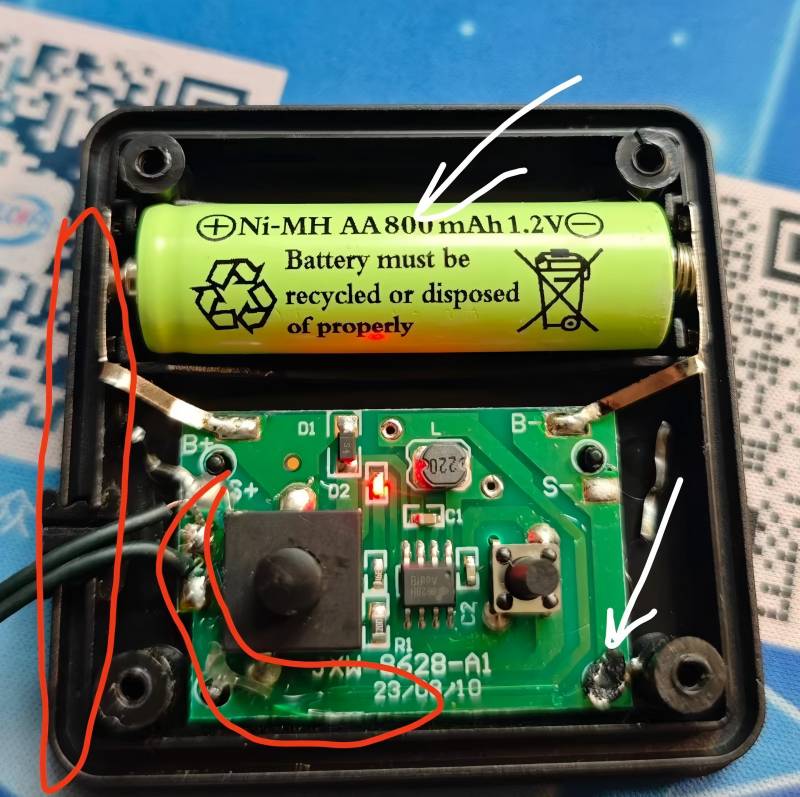
Battery and circuit layout inside a solar garden light
Quick Answer: What Usually Goes Wrong?
In most solar garden lights, battery-related problems are not random.
They usually happen because:
- the battery never charges fully
- the battery loses usable capacity over time
- heat accelerates degradation
- the replacement battery is poor quality or not well matched to the system
That is why the same product may look fine on day one, but begin showing dimmer output, shorter runtime, or inconsistent performance after one or two seasons outdoors.
1. Poor Charging Performance
The most common complaint is simple:
“The light turns on, but it doesn’t stay on for long.”
In many cases, the battery itself is not completely dead. It just isn’t receiving enough effective charge during the day.
Common causes
- dust or dirt on the solar panel
- tree shade, walls, fences, or decorative placement blocking sunlight
- weak winter sun or poor panel angle
- unstable charging caused by repeated cloudy days
Natural soiling is a real performance factor in photovoltaic systems, and NREL has documented soiling as a measurable source of output loss in field PV datasets. That same principle applies to small solar-light panels: less usable solar input means less battery charging. See NREL on PV soiling losses.
How it shows up in garden lights
- light turns off early at night
- brightness drops faster than expected
- one cloudy day causes a noticeable performance dip
- the product works better after manual repositioning into stronger sunlight
What buyers or users should check
- Is the panel surface clean?
- Is the light installed where it gets consistent sun?
- Is the panel blocked by plants, railings, ornaments, or walls?
- Is the battery issue actually a charging-input issue?
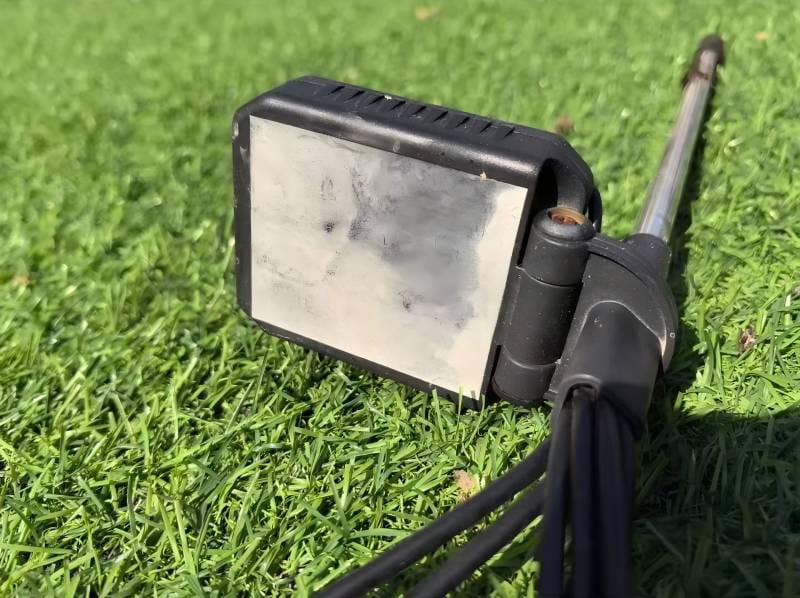
A dusty panel can reduce effective charging input
2. Capacity Fade Over Time
Another very common issue is when the light still charges, but it gradually becomes weaker.
This is usually a capacity fade problem.
The battery may still function, but it no longer stores as much usable energy as it did when new.
Typical signs
- shorter nightly runtime
- dimmer output after a few months or seasons
- weaker performance after cloudy days
- products from the same batch aging at different speeds
Why it happens
Battery capacity drops over time because of:
- repeated charge/discharge cycling
- deep discharge stress
- elevated temperature
- inconsistent charging patterns
- lower-quality cell chemistry or weaker cell consistency
Battery University also notes that elevated temperature and deeper discharge accelerate lithium battery aging. In practical outdoor products, that means systems with little energy margin usually show capacity fade sooner. See Battery University on prolonging lithium-based batteries.
Why this matters in garden products
In decorative garden lighting, battery fade often shows up as a visual quality problem before users think of it as a battery problem:
- the light no longer looks bright enough
- the effect is less attractive than before
- the product feels “old” after only one or two seasons
If your product direction is decorative assortment planning rather than technical troubleshooting, Decorative Garden Lights is the most natural category page behind this issue.
3. Heat-Related Battery Stress
Heat is one of the most common hidden reasons why battery life disappoints in outdoor solar lights.
Even when the light appears to work normally, high temperature can quietly shorten the battery’s useful life.
Where heat stress happens
- dark housings under direct summer sun
- enclosed structures with little airflow
- batteries positioned close to hot internal components
- regions with long hot seasons
What heat does
- speeds up chemical aging
- reduces long-term capacity
- increases performance drop from season to season
- shortens useful service life even before total failure occurs
This is one reason battery problems often appear “too early” in hot climates.
How to reduce it
- choose battery chemistry with better thermal stability
- avoid overly sealed hot enclosures where possible
- improve structure and airflow
- design with enough energy margin so the battery is not stressed daily
For buyers, this is not just about the cell itself. It is about whether the full product was designed for real outdoor exposure.
4. Early Battery Failure or Mismatched Replacement
Some solar garden lights fail much earlier than expected.
In many of those cases, the real problem is not simply “age.” It is either:
- a low-quality original battery
- a poorly matched replacement battery
- or weak compatibility between the cell, controller, and product design
Common triggers
- cheap or inconsistent battery cells
- replacing the original battery with the wrong chemistry or voltage
- using batteries that were never intended for the product’s charging profile
- battery packs with weak documentation or poor quality control
Why this matters more than many buyers expect
A battery replacement may look simple, but if the replacement cell is poorly documented or not properly matched, performance can become unstable very quickly.
For lithium-based replacements, buyers should also expect relevant transport and safety documentation tied to UN 38.3 lithium battery test summaries and battery safety requirements such as IEC 62133-2, especially in more formal B2B sourcing contexts.
How it shows up
- the light stops working entirely
- charging becomes erratic
- runtime is much shorter after replacement
- products in the same order behave inconsistently
This kind of failure creates disproportionate damage because users usually do not blame the battery alone — they blame the whole product.
How These Battery Issues Show Up in Real Garden Products
Battery problems are easy to see in decorative garden lighting because the product is judged not only on basic function, but also on appearance and reliability.
The most common visible results are:
- lights that look dimmer than expected
- inconsistent performance across the same yard or product batch
- products that fail after only one or two seasons
- decorative effects that no longer feel premium
- more complaints after cloudy weather or summer heat
This is why battery issues matter so much in garden categories. The product may still technically work, but it stops delivering the experience the customer expected.
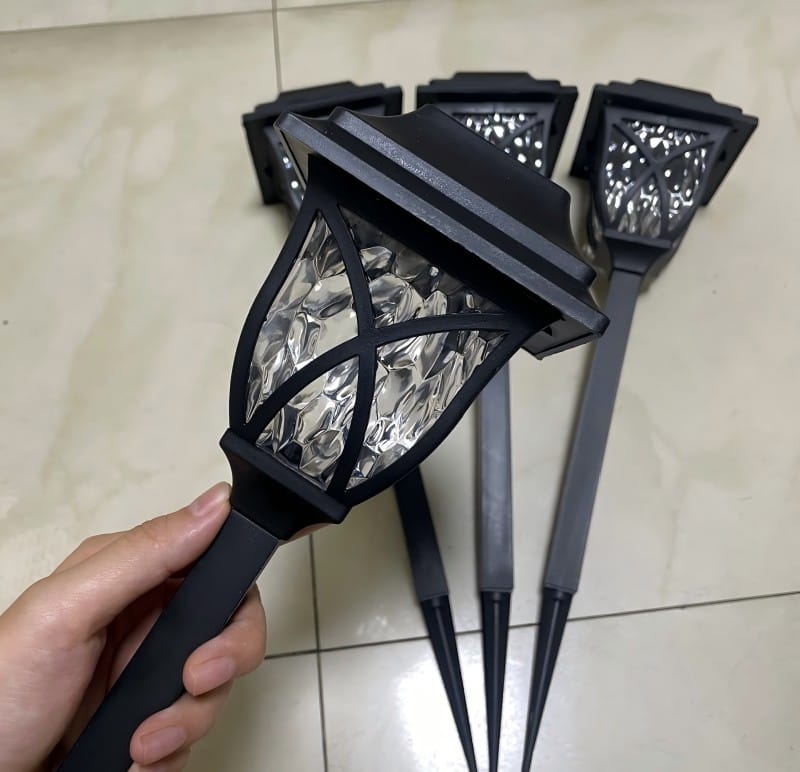
Testing sample consistency is one of the best ways to catch battery-related issues early
How Buyers Can Reduce Battery-Related Returns
For distributors, importers, and brand owners, battery issues usually become a business problem in three ways:
- more customer complaints
- more returns or replacements
- more inconsistency between samples and shipped goods
The best prevention strategy is not “fix it later.” It is screening for battery risk earlier.
Practical checks buyers should make
1. Confirm the battery chemistry
Do not rely on generic wording like “rechargeable battery included.”
Ask:
- lithium-ion or LiFePO4?
- NiMH?
- what nominal voltage?
- what capacity range?
- what replacement path is expected?
If you are comparing chemistries rather than troubleshooting issues, see Which Battery Is Best for Outdoor Solar Lights?.
2. Ask how the product performs after aging
Do not focus only on day-one brightness.
Ask:
- what happens after one season?
- what is the runtime after aging?
- how much margin exists after cloudy days?
If your problem is runtime rather than general battery issues, read How Battery Choice Impacts Night Runtime.
3. Check whether the product is designed for real outdoor exposure
Battery stability depends on:
- panel input
- controller logic
- enclosure sealing
- heat buildup
- placement of the battery inside the housing
4. Validate sample consistency, not just one good sample
A single strong sample is not enough.
Ask for:
- multiple samples
- repeat testing
- visible consistency after repeated charging/discharging
5. Avoid low-quality replacement practices
When battery replacement is part of the product lifecycle, poor replacement quality can create more problems than the original battery itself.
A More Useful Way to Think About Battery Problems
Most battery issues in solar garden lights are not isolated defects.
They are usually the result of one of these mismatches:
- not enough charging input
- not enough battery margin
- too much heat
- poor battery quality or poor replacement matching
That is why solving battery issues is rarely about one component alone.
It is about the full system:
- battery
- panel
- controller
- enclosure
- outdoor environment
Conclusion
The four most common battery issues in solar garden lights are:
- poor charging performance
- capacity fade over time
- heat-related battery stress
- early battery failure or mismatched replacement
The good news is that these issues are not random.
They can usually be reduced by:
- better charging exposure
- better battery selection
- better product design
- better sample validation
- and more disciplined replacement choices
For buyers, understanding these issues early helps reduce returns, improve long-term product reliability, and protect how customers perceive the product after one or two outdoor seasons.
Looking for a More Reliable Outdoor Lighting Manufacturer?
If you are sourcing outdoor solar lighting and want to reduce battery-related complaints, the right manufacturer makes a big difference.
At Glowyard, we focus on:
- more stable battery performance
- better system matching
- more consistent outdoor reliability
If you want to evaluate products with battery stability in mind, explore our broader capabilities as an outdoor lighting manufacturer.


![do solar lights work in winter at cemeteries [2026 guide]](https://glowyard.com/wp-content/uploads/2026/03/Do-Solar-Lights-Work-in-Winter-at-Cemeteries-2026-Guide.webp)