IP44 vs IP65 vs IP67: Which Waterproof Rating Do You Actually Need for Outdoor Solar Lights?
Many buyers compare outdoor solar lights by style, battery, or price first, but waterproof protection often becomes the real difference between a product that performs well outdoors and one that creates avoidable after-sales problems.
The right IP rating depends on the actual installation environment. A decorative lantern under a covered patio does not face the same risk as a grave solar light in an open cemetery, a pathway light on an exposed lawn, or a seasonal display left outside through wet winter weather.
This guide explains what IP44, IP65, and IP67 really mean in practical use, how waterproof needs change across different outdoor applications, and how buyers can choose the right level of protection without overspending or under-specifying.
Which Waterproof Rating Do You Actually Need for Outdoor Solar Lights?
Quick Answer: Match the Rating to the Real Installation Environment
IP44 → Covered or semi-protected outdoor areas
IP65 → Most exposed outdoor garden, cemetery, and decorative applications
IP67 → Water-prone areas such as poolside, pondside, or low-lying wet locations
The most important question is not which rating sounds higher. It is how much water, moisture, and weather exposure the light will actually face over time.
What Do These Numbers Actually Mean?
Outdoor lighting listings often mention IP ratings, but many buyers still do not get a practical explanation of what those numbers mean once the light is installed outside.
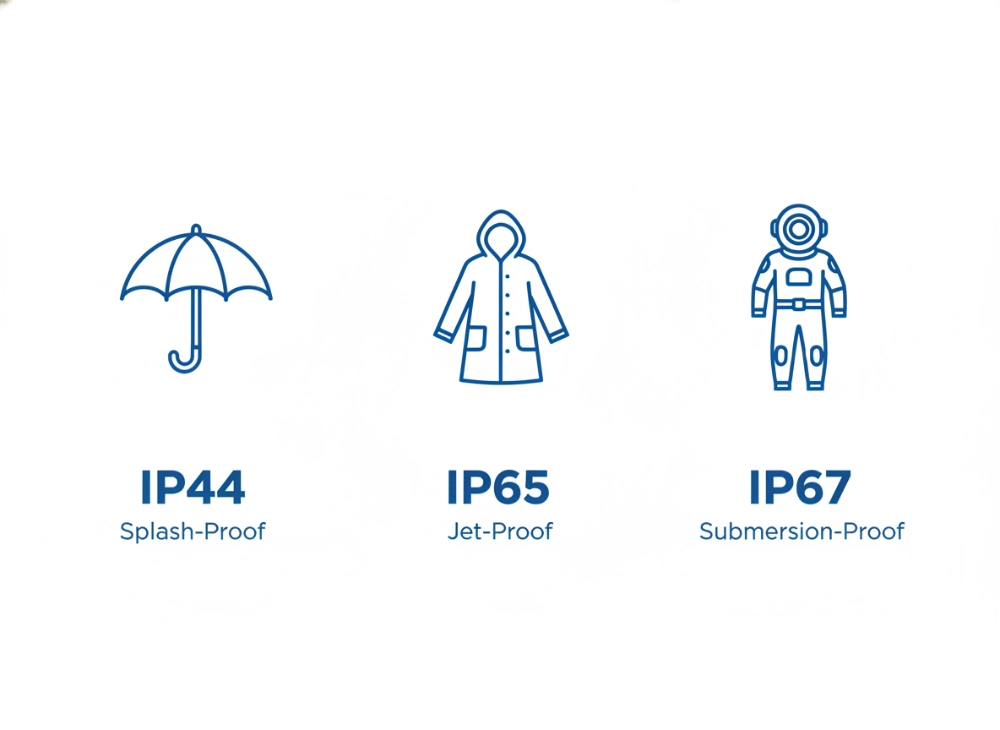
IP44 = Splash-Resistant Protection
- Suitable for light splashing and ordinary outdoor moisture
- Often works well in covered patios, porches, pergolas, or under eaves
- Not ideal for repeated direct spray, standing water, or heavy long-term exposure
IP65 = Stronger Weather Protection
- Better suited for rain from multiple angles and more exposed outdoor use
- Often the most practical level for pathways, open lawns, wall-mounted lights, and many standard outdoor decorative applications
- Not designed for temporary immersion or water accumulation around the housing
IP67 = Higher Protection for Water-Prone Conditions
- Suitable for areas with stronger water exposure or temporary immersion risk
- More appropriate for poolside, pondside, low-lying wet areas, and certain ground-level installations
- Not the same as permanent underwater use, but stronger than IP44 or IP65 for demanding wet environments
The technical breakdown
**IP Rating Format**: IP + [Dust Protection] + [Water Protection]
**First digit (Dust)**
– 4 = Protection against larger solid particles
– 6 = Dust-tight protection
**Second digit (Water)**
– 4 = Protection against splashing water
– 5 = Protection against water jets
– 7 = Protection against temporary immersion under defined test conditions
**Industry reference**: IEC 60529 is the standard commonly used to define IP test methods.
The IP code used for outdoor electrical enclosures is standardized under **[IEC 60529 IP ratings guide](https://www.iec.ch/ip-ratings)**, which defines how protection levels against solids and water are classified and tested.
A Practical Way to Think About the Difference
- IP44 = for protected or lightly exposed outdoor areas
- IP65 = for most normal exposed outdoor lighting applications
- IP67 = for splash-heavy or water-prone installations
A higher rating is not automatically the best choice for every project. The best choice is the one that matches the real outdoor environment.
Are Outdoor Solar Lights Waterproof?
Many buyers ask whether outdoor solar lights are waterproof, but the more accurate answer is that some are better described as weather-resistant, while others are designed for much stronger water protection. The difference depends on the IP rating, the sealing design, the housing construction, and the way the product will be used outdoors.
In other words, outdoor solar lights can often get wet, but not all of them are designed to handle the same level of wet conditions.
Can Solar Lights Get Wet?
Yes, outdoor solar lights are generally designed to handle some degree of moisture, rain, and outdoor exposure. However, “can get wet” does not always mean “can survive every outdoor condition.”
A solar light installed under a covered patio faces a very different risk level from a solar light placed:
- on an open lawn
- near a sprinkler system
- beside a pool
- in a cemetery with no overhead protection
- in a seasonal display exposed to repeated winter rain
That is why waterproof performance should always be evaluated in relation to the real installation environment.
Are Solar Garden Lights Waterproof?
Many solar garden lights are made for outdoor use, but the waterproof level varies greatly by product type and price range.
For example:
- a decorative hanging lantern under an eave may perform well with IP44
- a pathway light installed in open rain is usually better suited to IP65
- a decorative light near a pond or pool often requires IP67-level protection
So while many solar garden lights are marketed as waterproof, the more useful question is:
Are they waterproof enough for the way they will actually be used?
Is IP44 Good Enough for Outdoor Use?
Sometimes yes, but not always.
IP44 is often good enough for outdoor use when the installation area is relatively protected and the light will not be exposed to direct water pressure, persistent splash, or water accumulation. This makes it suitable for some decorative and seasonal installations in covered outdoor areas.
For decorative solar garden lights specifically, the decision is often more nuanced. Many low-voltage decorative products are used for ambience in flower beds, patios, balconies, and seasonal garden displays rather than harsh functional lighting. We explain this use-case logic in more detail here: why IP44 is enough for most decorative solar garden lights.
However, IP44 may not be sufficient for:
- open pathways
- exposed lawns
- grave lanterns placed in open cemetery areas
- poolside installations
- outdoor decorative displays left outside in harsh seasonal weather
For these applications, a higher waterproof level is often the safer long-term choice.
Waterproof Rating Is Only Part of the Story
Even when two products carry the same IP rating, real-world performance can still differ. That is because waterproof reliability also depends on factors such as:
- gasket quality
- housing fit and sealing accuracy
- battery compartment design
- screw closure structure
- material durability under UV exposure
- long-term aging of seals
This is one reason why experienced buyers usually evaluate both the IP label and the product structure behind it.
How Water Exposure Changes the Right IP Rating
The same outdoor solar light can perform very differently depending on how much water actually reaches the housing. In practice, waterproof selection is less about chasing the highest rating and more about understanding the real exposure level of the installation area.
A light placed in a covered decorative corner does not need the same protection as a light exposed to rainfall, ground moisture, repeated sprinkler spray, or seasonal standing water.
Covered and Semi-Protected Areas
Covered and semi-protected areas usually face the lowest waterproof demand.
Typical examples include:
- patios with roof cover
- porches under eaves
- pergolas
- decorative corners protected by walls or dense overhead structure
- some seasonal displays installed under partial cover
In these cases, IP44 may be sufficient if the product is well made and the area is not exposed to direct spraying or prolonged heavy rain.
Fully Exposed Outdoor Areas
Fully exposed outdoor areas face a much higher waterproof requirement.
This includes:
- open lawns
- pathways
- uncovered garden beds
- wall-mounted lights without overhang
- decorative stake lights installed in open weather
In these conditions, IP65 is usually the more practical minimum choice because the light may face repeated rain, wind-driven moisture, and occasional cleaning or sprinkler exposure.
For many standard outdoor solar lighting projects, this is where IP65 becomes the most useful balance between cost and long-term reliability.
Water-Prone or Splash-Heavy Areas
Some outdoor placements face more demanding moisture conditions than normal garden exposure.
These areas include:
- poolside decorative zones
- pond edges
- fountains or water-feature surroundings
- low-lying outdoor spots where water may collect
- ground-level placements with frequent wetting or temporary submersion risk
In these situations, IP67 is often the more suitable level because the sealing requirement is higher and ordinary splash resistance is not enough.
Why Exposure Level Matters More Than Product Category Alone
A common mistake is to assume that the product type itself decides the right waterproof rating. In reality, the installation environment matters more than the product label.
For example:
- a garden lantern under a covered patio may only need IP44
- a grave solar lantern in an open cemetery may need IP65
- a seasonal decorative solar light used only briefly under shelter may work well with IP44
- a seasonal display installed on an exposed lawn through wet winter weather may require IP65 or higher
This is why waterproof selection should always begin with questions such as:
- Will the light be fully exposed to rain?
- Can sprinklers or cleaning water hit it directly?
- Is there ground moisture or poor drainage?
- Is the product used temporarily or all year round?
- Is the area vulnerable to splashing, condensation, or freeze–thaw cycles?
Once the exposure level is clear, choosing between IP44, IP65, and IP67 becomes much more practical and much less confusing.
Choosing by Application: Garden, Cemetery, Seasonal, and Water-Prone Outdoor Use
Different outdoor solar lighting applications do not face the same waterproof risks. Even when products look similar, their installation environment, exposure level, and maintenance cycle can create very different waterproof requirements. This is why IP selection should be based on application logic rather than on product appearance alone.
Garden Solar Lights
Garden solar lights are one of the most varied outdoor lighting categories, which means waterproof needs can differ greatly even within the same project.
For example:
- a hanging lantern under a porch roof may only face occasional splashing
- a pathway light on an open lawn may face repeated rain and sprinkler spray
- a decorative figurine light placed near a pond may face persistent surface moisture
- a wall-mounted solar light without overhead cover may be exposed to direct wind-driven rain
Because of this variation, the recommended waterproof level for garden lights usually depends on the exact placement.
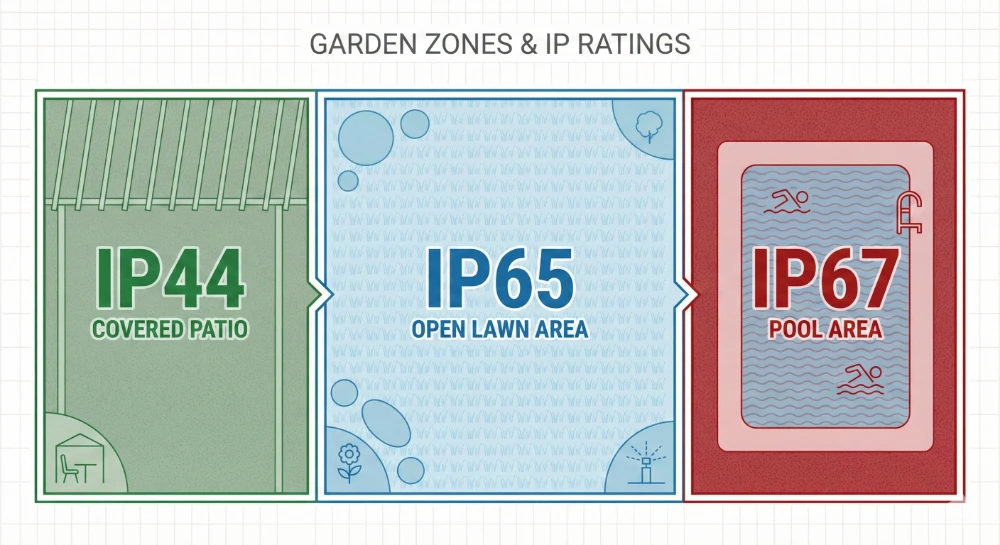
In most cases:
- IP44 works for covered or semi-protected decorative garden areas
- IP65 is the more practical standard for most exposed garden lighting
- IP67 is better suited to water-prone garden areas such as pond edges or poolside zones
For buyers sourcing decorative outdoor solar lighting in bulk, IP65 is often the most balanced specification for general-purpose garden use. It usually provides a stronger long-term safety margin for exposed outdoor installation without moving unnecessarily into a higher-cost waterproof level.
Cemetery and Grave Solar Lights
Cemetery and grave solar lights often face tougher waterproof demands than many decorative garden lights.
Unlike lights installed under patios, pergolas, or protected landscape structures, grave solar lights are usually placed in open cemetery environments with little or no overhead cover. This means they may be exposed to:
- direct rainfall for long periods
- ground moisture from grass or soil contact
- cold-weather condensation inside enclosed housings
- freeze–thaw cycles in winter markets
- long-term outdoor placement with minimal maintenance
For this reason, IP65 is usually the practical minimum for long-term cemetery and grave solar light use.
For markets with wetter winters or persistently high precipitation, it is sensible to review long-term climate averages before finalising waterproof specifications, because rainfall and seasonal moisture patterns can materially affect outdoor exposure over time. See Met Office climate averages for one example of long-term climate reference data.
In many cemetery applications, IP44 is too limited because the product is not just facing occasional splashing. It is facing a combination of open rain exposure, moisture accumulation, seasonal temperature changes, and extended outdoor duration. If the housing, battery compartment, or sealing joints are weak, water ingress can lead to corrosion, unstable lighting performance, or winter-related internal damage.
In cemetery applications:
- IP44 may only be acceptable in covered memorial areas or highly protected placements
- IP65 is generally the better baseline for standard grave placement
- IP67 may be more suitable for low-lying installations, flood-prone areas, or more demanding wet conditions
For a more detailed look at cemetery-specific structures, materials, and long-term outdoor performance, see our guide to grave and cemetery solar lights manufacturing.
Seasonal and Christmas Outdoor Lights
Seasonal and Christmas outdoor lights bring a different type of waterproof challenge. In some cases, the installation period is shorter, but the exposure conditions can still be demanding.
Seasonal displays may be installed:
- under rooflines or covered porches
- on open lawns
- around trees and shrubs
- along pathways
- in wet winter conditions with rain, condensation, and occasional snow or slush
Because these products are often installed, removed, and stored repeatedly, waterproof reliability is not only about the IP rating itself. It is also about how well the housing and seals tolerate repeated handling, seasonal storage, and reinstallation.
For seasonal and Christmas outdoor use:
- IP44 can work for temporary decorative use in covered or lightly exposed locations
- IP65 is often more suitable for exposed seasonal displays used outdoors through wet weather
- IP67 may be needed when the display is close to ground-level standing water, wet winter accumulation, or more demanding decorative installations
Poolside, Pondside, and Water-Feature Decorative Lights
Outdoor solar lights installed near water features usually need stronger waterproof protection than standard garden applications.
These areas may involve:
- repeated splashing
- heavy moisture concentration
- accidental temporary immersion
- poor drainage around the installation point
- higher corrosion risk in chemically treated or humid environments
In these placements, IP67 is often the safer choice because splash resistance alone may not be enough.
However, it is also important to remember that IP rating alone does not solve everything. In poolside, fountain, and pondside environments, material corrosion, seal aging, and fastening quality also become critical. A product may have a high IP rating but still perform poorly if the housing material or hardware is not suitable for long-term wet outdoor use.
What Typically Happens in Real Outdoor Use
Waterproof performance is rarely determined by IP rating alone. In actual outdoor use, the installation environment, housing structure, seal quality, and maintenance conditions all influence long-term results.
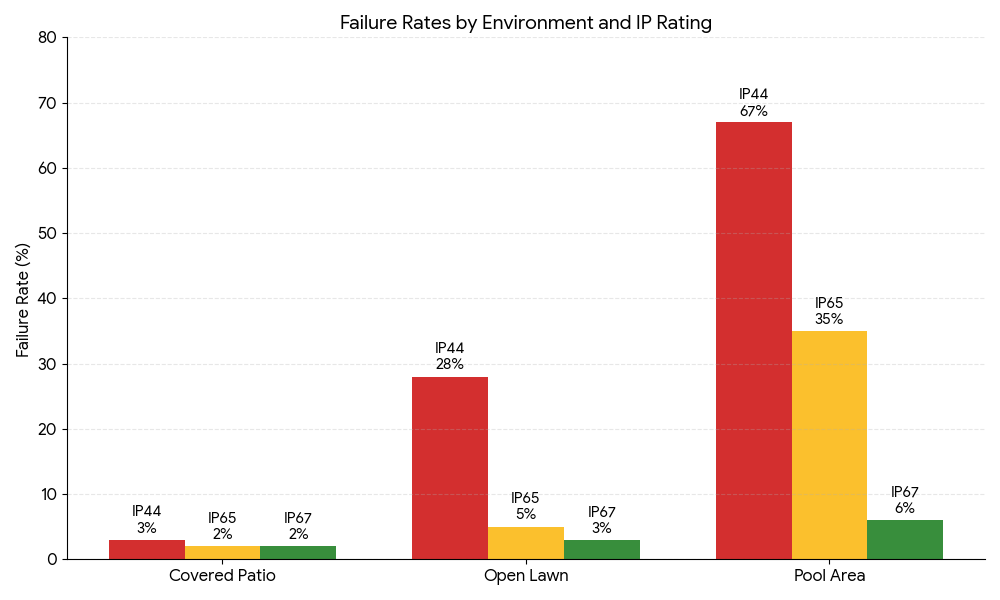
Typical Patterns Seen in Outdoor Applications
| Environment | Lower-Risk Choice | Higher-Risk Choice | Typical Problem |
|---|---|---|---|
| Covered patio | IP44 | — | Usually stable if placement stays protected |
| Under trees / partial cover | IP44–IP65 | IP44 in wetter climates | Heavy rain and moisture buildup |
| Open lawn | IP65 | IP44 | Rain and sprinkler exposure |
| Poolside / pondside | IP67 | IP44 / IP65 | Splashes, humidity, water accumulation |
| Open cemetery placement | IP65 | IP44 | Long-term rain exposure and ground moisture |
| Exposed seasonal display | IP65 | IP44 | Repeated wet-weather exposure |
Key Takeaways
- IP44 performs best where the installation is genuinely protected
- IP65 is usually the most practical standard for most exposed outdoor uses
- IP67 is more suitable where splash intensity, ground moisture, or temporary immersion risk becomes much higher
A product can still fail even with a good rating if the structure, seals, battery compartment, or assembly consistency are weak.
Cost vs Value: Is a Higher Rating Worth It?
Because waterproof mismatches often lead to early replacement, avoidable complaints, or higher maintenance pressure, cost should be judged against the real outdoor exposure level rather than unit price alone.
A higher IP rating usually increases cost, but the real question is whether that additional protection is actually needed for the application.

Typical Relative Cost Difference
While exact pricing varies by material, structure, and supplier, outdoor solar lights often follow this pattern:
- IP44: baseline cost
- IP65: usually higher due to stronger sealing and more robust structure
- IP67: often higher again because of more demanding waterproof construction and testing
What Usually Increases the Cost
- more reliable gaskets or sealing materials
- more controlled assembly at multiple sealing points
- stronger housing design
- higher waterproof testing requirements
- tighter quality inspection
How to Think About Value
IP44 in the right place
- good value in covered or semi-protected areas
- avoids unnecessary cost if the exposure is light
IP44 in the wrong place
- lower upfront price, but greater after-sales risk in exposed outdoor use
IP65 for normal exposed use
- often the best balance between cost and reliability
IP67 for water-prone areas
- worth the extra protection when splash intensity, ground moisture, or immersion risk is real
Practical Conclusion
The cheapest rating is not always the lowest-cost option in the long run. In many outdoor projects, choosing the right level of protection is more important than choosing the lowest initial price.
How to Verify Real IP Rating Claims
Some outdoor lights carry strong waterproof claims, but real long-term performance depends on the actual construction behind the label.

Visual Inspection Checklist
Check the seals
- ✅ clear gasket or O-ring structure
- ✅ even and secure sealing around housing joints
- ✅ no obvious gaps at seams
- ❌ thin or improvised sealing material is a warning sign
Check the battery compartment
- ✅ secure closure
- ✅ properly fitted seal around the cover
- ✅ stable structure for repeated opening and closing
- ❌ weak snap-on covers are often more vulnerable to water ingress
Check the overall housing fit
- ✅ tight and even assembly
- ✅ screws and joints aligned cleanly
- ✅ stable closure pressure on seals
- ❌ loose covers, uneven seams, or inconsistent assembly reduce trust in the claim
Why Documentation Matters
For bulk buyers, a claimed rating is more reliable when it is supported by:
- declared IP specification
- testing documentation
- certification support where applicable
- visible consistency in production quality
For products covered by relevant EU rules, the manufacturer is responsible for ensuring compliance, preparing the required technical documentation, and affixing the CE marking where applicable. See EU CE marking requirements.
If products are being placed on the market in Great Britain, buyers should also check the current UKCA and CE marking guidance for Great Britain, because the marking route can differ depending on the product category and applicable regulations.
You can also review broader quality and documentation pages such as:
A More Useful Buyer Question
Instead of only asking:
“What IP rating does this product claim?”
it is often more useful to ask:
“What structural details and production controls support that waterproof claim?”
Common Mistakes People Make
Waterproof mistakes often cause more after-sales problems than buyers expect, especially when decorative solar lights are placed in the wrong environment.

Mistake #1: Using IP44 in Fully Exposed Areas
This is one of the most common application errors.
IP44 may work well in covered or semi-protected locations, but it is often pushed too far into:
- open lawns
- exposed pathways
- open cemetery placement
- fully exposed seasonal displays
- wall-mounted areas with no cover
Mistake #2: Assuming IP67 Is Always Better
A higher waterproof rating is not automatically the smartest choice.
In protected areas, IP67 may increase cost without bringing meaningful additional value. Good specification is about matching the rating to the real exposure level.
Mistake #3: Treating IP Rating as the Only Quality Indicator
Two products with the same claimed IP rating can still perform very differently because of differences in:
- seal quality
- housing precision
- material durability
- battery compartment design
- assembly consistency
Mistake #4: Ignoring Long-Term Seal Aging
UV exposure, heat and cold cycling, repeated opening of battery covers, chlorine, salt, dust, and general outdoor aging can all reduce waterproof performance over time.
Mistake #5: Trusting Claims Without Checking Construction
For bulk sourcing, weak details such as poor gasket structure, weak covers, low-grade fasteners, or inconsistent assembly can matter more than the printed label itself.
What Else Affects Outdoor Waterproof Reliability Besides IP Rating?
An IP rating is a useful starting point, but it does not fully determine how well an outdoor solar light will perform over time. In real outdoor applications, waterproof reliability is influenced by a combination of structure, materials, assembly quality, and environmental stress.
Material Choice
Housing material plays a major role in long-term waterproof stability.
Different materials respond differently to:
- UV exposure
- temperature change
- humidity
- impact
- corrosion risk
For example, poor-quality plastic may become brittle or deform over time, which can weaken sealing pressure at joints and covers. Some metal housings may offer strong structure, but if corrosion resistance is weak, fasteners and edges can deteriorate and eventually compromise waterproof performance.
For a deeper comparison of housing materials, see resin vs iron vs plastic vs glass for solar garden lights.
UV Exposure and Seal Aging
Long-term sun exposure does not just affect surface color. It can also reduce the lifespan of seals, gaskets, and plastic components.
Over time, UV can contribute to:
- hardening of rubber-like sealing materials
- cracking or brittleness in lower-grade plastics
- deformation around battery covers or joints
- reduced sealing consistency after repeated expansion and contraction
For related material durability considerations, see how to improve the durability of plastic in solar garden lights under outdoor sun exposure.
Battery Compartment Design
The battery compartment is often one of the most vulnerable parts of an outdoor solar light.
Even when the outer housing looks well protected, waterproof failure can begin at the battery section if the closure design is weak, the seal is poorly fitted, or the cover becomes loose after maintenance.
For related battery-focused guidance, see best battery options for solar garden lights and common battery issues in solar garden lights.
Corrosion in Coastal, Humid, and Chemically Demanding Environments
Waterproof protection does not automatically prevent corrosion.
In some applications, products may face:
- salt spray in coastal areas
- chlorine near pools
- fertilizer exposure in garden environments
- long-term humidity in low-ventilation conditions
This is consistent with ISO 9223 atmospheric corrosion standard, which identifies the temperature-humidity complex, sulfur dioxide pollution, and airborne salinity as key factors in the atmospheric corrosion of metals and alloys.
Where metal parts, coatings, or fasteners are involved, suppliers often also refer to ISO 9227 salt spray testing standard when assessing corrosion resistance under artificial atmospheric conditions.
These factors can damage screws, metal housings, terminals, or internal connectors even when water ingress itself is limited.
How to Extend Waterproof Lifespan
Even well-designed outdoor solar lights benefit from basic inspection and maintenance. Waterproof performance is influenced not only by the rating, but also by how the product is used and maintained over time.
Annual Maintenance Checklist
- inspect seals and housing joints
- check covers and screws for looseness
- look for condensation inside the housing
- remove dirt and debris from seams and edges
- check exposed metal parts for early corrosion
- test lighting stability after wet weather
Signs That Waterproof Performance May Be Weakening
- fogging or moisture inside the cover
- sudden flickering after rain
- rust or corrosion near screws or terminals
- brittle sealing material
- battery covers that no longer fit tightly
- visible damage near seams
Cleaning and Seasonal Maintenance
- avoid harsh chemicals on seals and plastics
- remove leaves, soil, and debris that trap moisture
- rinse off chlorine or salt if relevant
- dry products fully before long-term seasonal storage
When Replacement Is More Practical Than Repair
If the housing is warped, the seal no longer fits properly, or corrosion has already affected the internal circuit, replacement is often more practical than repeated patching. This is especially true for lower-cost decorative products.
Final Practical Reference

Use This Rule of Thumb
- IP44 for protected decorative outdoor use
- IP65 for most standard exposed outdoor applications
- IP67 for splash-heavy, water-prone, or low-lying wet areas
Practical Reference Table
| Your Location | Recommended Minimum | Notes |
|---|---|---|
| Covered patio | IP44 | Good for protected decorative use |
| Under eaves / pergola | IP44 | Works when direct water exposure is limited |
| Open lawn | IP65 | Better for rain and sprinkler exposure |
| Pathway | IP65 | Suitable for long-term exposed placement |
| Wall-mounted with no overhang | IP65 | Better for wind-driven rain |
| Standard cemetery placement | IP65 | Better baseline for long-term outdoor use |
| Exposed seasonal outdoor display | IP65 | Better for winter moisture and repeated outdoor exposure |
| Poolside / pondside | IP67 | Safer for splash-heavy areas |
| Low-lying wet area | IP67 | Better where water can collect |
A good waterproof decision is not about choosing the highest number. It is about choosing the right level for the actual environment.
Typical Application Scenarios
For Pathway Lighting
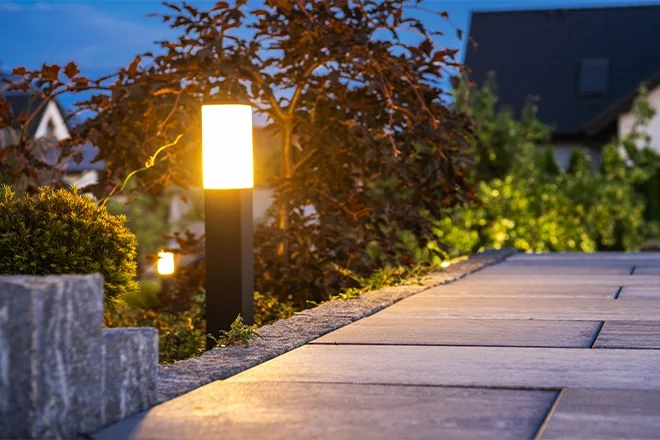
Recommended: IP65 minimum
Why: Pathway lights are usually exposed to rain, irrigation, and long-term outdoor installation.
Explore options: Solar Pathway Lights for Gardens
For Decorative Garden Lighting
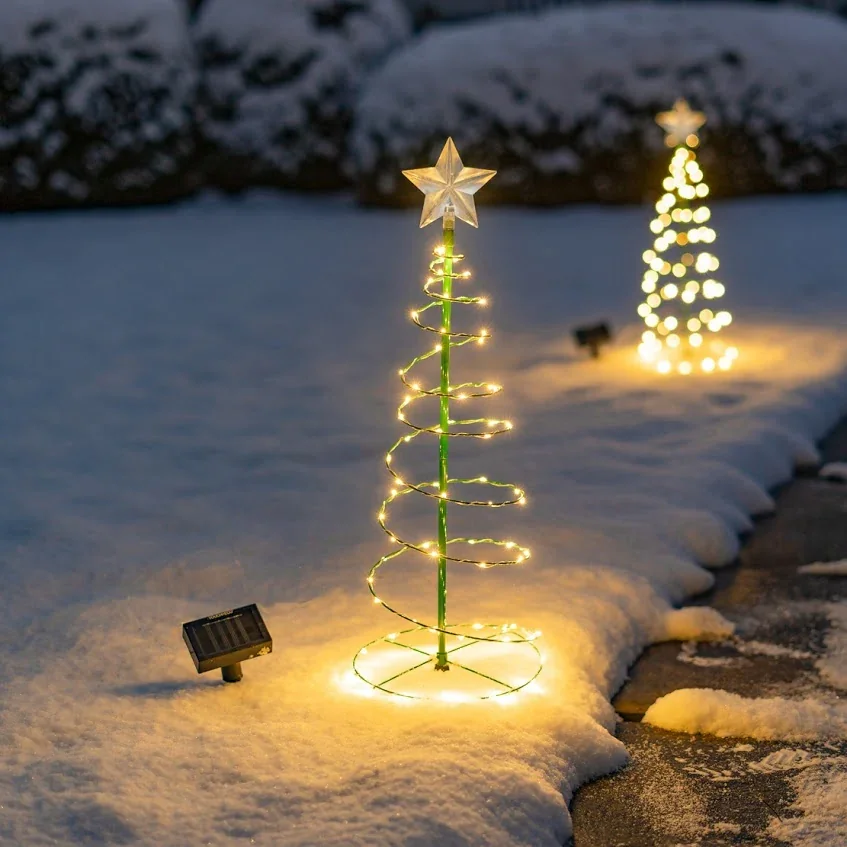
Recommended: Depends on placement
Why: Covered decorative areas can work with IP44, while open lawns and sprinkler-exposed placements are usually better with IP65.
Explore options: Decorative Outdoor Solar Garden Lights
For Pool / Water-Feature Decorative Lighting
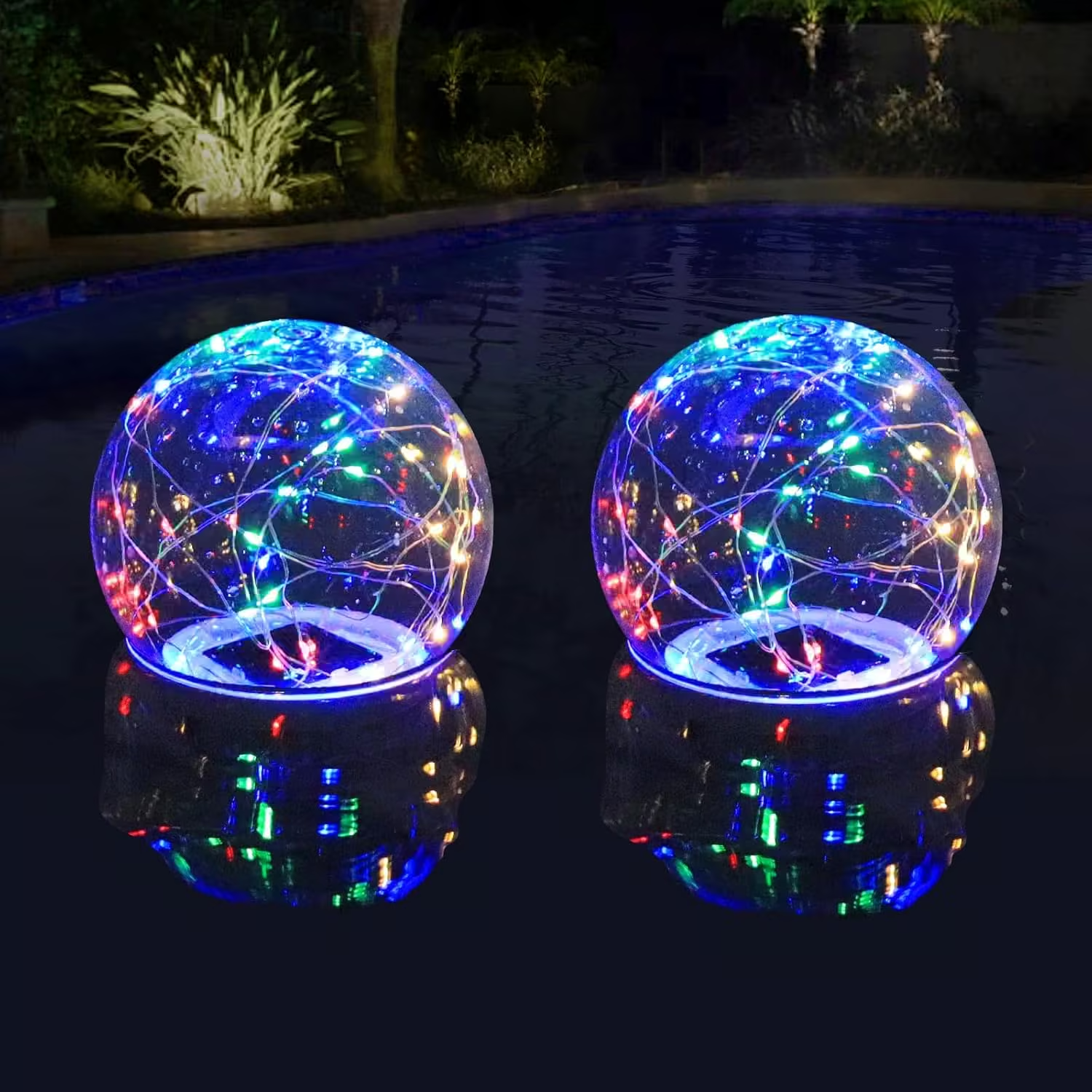
Recommended: IP67
Why: These installations face stronger splash exposure, heavy moisture, and a greater chance of temporary immersion.
For Seasonal / Christmas Outdoor Lighting
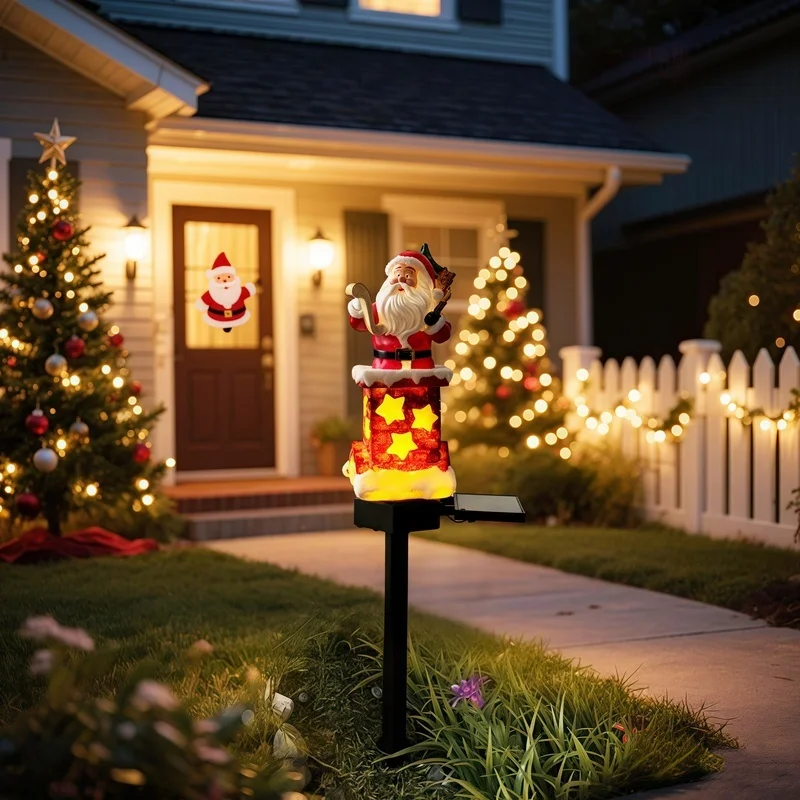
Recommended: IP44 for covered temporary use, or IP65 for exposed outdoor holiday displays
Why: Seasonal lights may not stay outside year-round, but repeated installation, storage, and winter moisture still place demands on the waterproof structure.
Explore options: Christmas Solar Garden Lights
Frequently Asked Questions
Are outdoor solar lights waterproof?
Many outdoor solar lights are made to handle rain and outdoor moisture, but not all offer the same level of waterproof protection. Their performance depends on the claimed IP rating, the quality of the sealing structure, and the real installation environment.
Can solar lights get wet?
Yes, outdoor solar lights are generally intended to handle some degree of moisture and rain. The more important question is whether they are protected enough for the way they will actually be used.
Is IP44 good enough for outdoor use?
IP44 can be sufficient for covered or semi-protected outdoor locations where the light is not exposed to direct spray, standing water, or long-term harsh weather. It is usually not the best choice for fully exposed installations.
What IP rating is recommended for grave solar lights?
For most standard cemetery applications, IP65 is usually the practical minimum, while IP67 is more suitable for more demanding wet or low-lying placements.
Does a higher IP rating mean better quality?
Not always. A higher IP rating indicates stronger enclosure protection under defined conditions, but overall quality also depends on materials, seals, battery design, corrosion resistance, and production consistency.
Do solar panels need IP protection too?
Yes. The panel area, housing joints, and battery compartment all contribute to overall waterproof reliability. A strong outer claim is less meaningful if one weak point compromises the full structure.
Can I upgrade IP44 lights to IP65?
Not in a practical way for most finished products. Waterproof structure is built into the housing and sealing design, so it is usually better to place IP44 lights in protected areas and use IP65 for more exposed installations.
Can I repair a light that got water inside?
Sometimes, especially if the issue is caught early. But if the housing is damaged, seals no longer fit properly, or corrosion has spread internally, replacement is often the more reliable solution.
Is IP68 better than IP67?
For some highly specialized wet applications, yes. But for most decorative outdoor solar lighting projects, IP67 is already the more relevant step above IP65.
Conclusion
IP44, IP65, and IP67 are not simply “good, better, best” labels. They describe different levels of enclosure protection for different kinds of outdoor exposure.
For buyers evaluating outdoor solar lights across garden, cemetery, and seasonal applications, the most practical approach is to choose the waterproof level that fits the real installation environment. A protected decorative area may only need IP44, while most exposed outdoor placements are better served by IP65. In water-prone or splash-heavy environments, IP67 often provides the stronger safety margin required.
At the same time, long-term waterproof reliability depends on more than the IP label alone. Sealing quality, material durability, battery compartment design, corrosion resistance, and production consistency all play important roles in how a light performs after months or years outdoors.
This is why a good waterproof decision is not only about choosing a rating. It is about understanding how the product is built, where it will be used, and what environmental stresses it will face over time.
More Resources
Related Guides
- Monocrystalline vs Polycrystalline Solar Panels
- Lithium vs NiMH vs NiCd
- 4 Most Common Battery Issues in Solar Garden Lights
- Resin vs Iron vs Plastic vs Glass
- How to Improve the Durability of Plastic in Solar Garden Lights Under Outdoor Sun Exposure
- Grave & Cemetery Solar Lights Manufacturer
- integrated outdoor lighting manufacturing system
- Quality Certifications


![do solar lights work in winter at cemeteries [2026 guide]](https://glowyard.com/wp-content/uploads/2026/03/Do-Solar-Lights-Work-in-Winter-at-Cemeteries-2026-Guide.webp)