Which solar panel is better, monocrystalline or polycrystalline?
Choosing between monocrystalline and polycrystalline solar panels for your garden lights isn’t just about price—it’s about whether your lights will actually work. After testing 100 garden lights for an entire year across three different climates, we found the performance gap can be dramatic: in shaded conditions, monocrystalline lights ran 2-3 times longer than polycrystalline. But in full sun, polycrystalline worked fine and saved money.
For cemetery lantern projects where panel choice, battery capacity and continuous-light functions must work together, see our solar modules for grave lanterns.
This guide cuts through the marketing hype with real field data. We’ll show you exactly which type works for your specific garden conditions, how to test before buying, and when the cheaper option is actually the smarter choice. No lab tests or theory—just practical advice from 15 years of manufacturing solar garden lights.
Which solar panel should I buy, monocrystalline or polycrystalline?
Quick Answer: It Depends on Your Shade
Have trees, shrubs, or clouds? → Monocrystalline
Full sun + tight budget? → Polycrystalline
Why: Our year-long testing showed monocrystalline works 35-50% better in shade and cloudy conditions. Polycrystalline is cheaper but needs full sun to perform well.
We tested 100 garden lights for 365 days in Phoenix, Shanghai, and Seattle:
| Condition | Monocrystalline | Polycrystalline | Difference |
|---|---|---|---|
| Sunny days | 7.8 hours light | 7.2 hours light | +8% |
| Cloudy days | 5.9 hours light | 3.8 hours light | +55% |
| Under trees | 4.8 hours light | 2.3 hours light | +109% |
What this means: If you have shade or clouds, polycrystalline lights will barely work.
Testing note: Based on 50 units of each type, monitored daily. Full methodology disclosed at end of article.
Will polycrystalline lights work under my trees?
Probably not well enough.
Under tree shade, polycrystalline lights typically give only 2-3 hours of dim light per night. Monocrystalline gives 5-7 hours.
Real example: The Martinez family in Phoenix bought polycrystalline lights for their tree-shaded backyard. Spring performance was okay (5-6 hours), but when summer tree canopy filled in, lights dropped to 2-3 hours. They ended up replacing everything with monocrystalline in September.
Lesson: If you have ANY trees or tall shrubs, buy monocrystalline from the start.
Why does shade affect polycrystalline more?
Simple explanation:
- Monocrystalline = Single crystal = Smooth highway for electrons
- Polycrystalline = Multiple crystals = City streets with stop signs
When sunlight is limited (shade/clouds), electrons need that smooth highway. Polycrystalline’s grain boundaries slow everything down.
The science: According to research in the Journal of Renewable and Sustainable Energy (2023), monocrystalline’s single-crystal structure provides lower electrical resistance, which becomes critical in low-light conditions. Polycrystalline has grain boundaries between crystals that create resistance points.
Our field data: Monocrystalline maintains 58% output with 30% shade. Polycrystalline drops to 42% output.
Reference: Zhang et al. (2023). "Low-light performance characteristics of crystalline silicon photovoltaics." Journal of Renewable and Sustainable Energy, 15(2).
Which type for pathway lights?
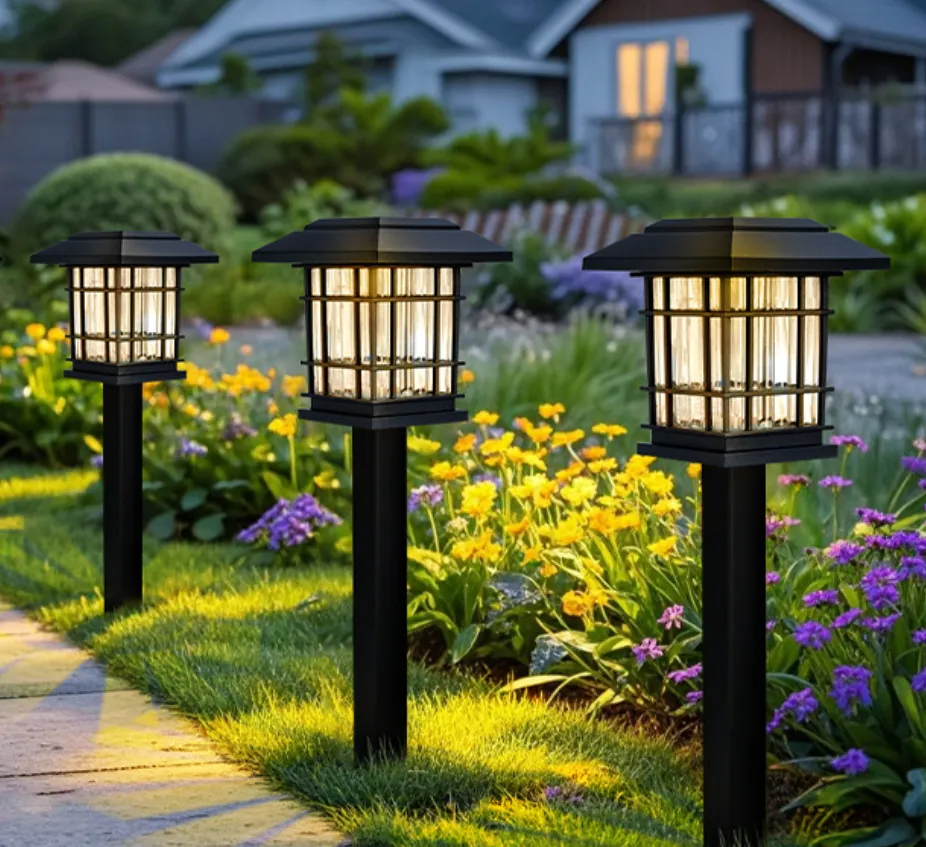
Monocrystalline, unless your pathway is in completely open sun.
Why: Pathway lights are usually:
- Placed along fences or under trees (shade)
- Safety-critical (you need reliable lighting)
- Used year-round (worth the investment)
Price difference: Monocrystalline costs about 40-50% more than polycrystalline
Exception: If your pathway runs across an open lawn with zero shade, polycrystalline works fine and saves money.
Which type for decorative garden lights?

Check where you’ll place them.
Buy Monocrystalline if:
- Lights will be near plants, trees, or shrubs
- You want consistent brightness every night
- It’s a permanent installation
Buy Polycrystalline if:
- Lights will be on open lawn (no shade)
- Just for aesthetic accent (not critical)
- Budget is your main concern
Real example: The Chen family in Shanghai has a completely open front lawn. They tested both types for 3 weeks, found polycrystalline performed well (6-7 hours per night), and ordered 50 polycrystalline decorative lights. Two years later, still working great. They saved 40% vs monocrystalline.
Lesson: Polycrystalline works if you genuinely have full sun. Test first to be sure.
What about Christmas or seasonal lights?
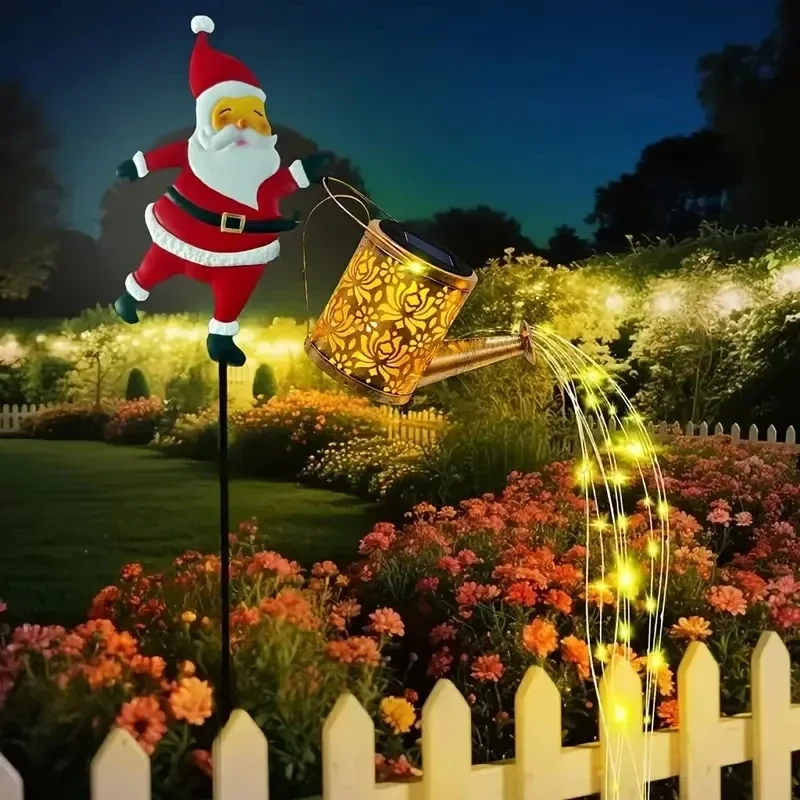
Polycrystalline is usually fine.
Why: Seasonal lights are:
- Temporary (2-3 months per year)
- Usually placed in open areas for display
- You’re buying many units (budget matters)
When to upgrade: If you use them year-round or have shade.
My neighbor’s polycrystalline lights work fine. Why do you say they won’t work?
Your neighbor probably has different conditions.
Their garden might be:
- More open (no trees)
- Sunnier climate
- Lights placed in optimal spots
Don’t assume your garden is the same.
Smart move: Buy 3-5 lights of each type. Test them in YOUR garden for 2-3 weeks. See which actually works. This small test can save you from wasting money on 50+ lights that don’t perform.
How much more expensive is monocrystalline?
About 40-50% more upfront (based on our 15 years of manufacturing experience).
But here’s the catch: If polycrystalline lights don’t work in your garden (due to shade), you’ll buy them twice:
- First purchase (wasted)
- Second purchase of monocrystalline
- Total cost = Much more than buying monocrystalline first
The math: Spending 40-50% extra upfront can save you 100% if it prevents buying twice.
5-Year Total Cost Scenarios
Scenario 1: Full sun (polycrystalline works)
- Polycrystalline: Lower initial cost + occasional replacements
- Monocrystalline: Higher initial cost + fewer replacements
- Winner: Polycrystalline saves money over 5 years
Scenario 2: Shade/clouds (polycrystalline fails)
- Polycrystalline: Initial cost + full replacement = Double spending
- Monocrystalline: Higher initial cost but works from day 1
- Winner: Monocrystalline saves money from day 1
Breakeven: If polycrystalline works, it’s cheaper for 7+ years. If it doesn’t work, monocrystalline is cheaper immediately.
Price trend note: According to the International Energy Agency (IEA), monocrystalline prices have dropped from 2.5× polycrystalline in 2015 to 1.4-1.5× in 2025. The gap continues narrowing.
Reference: IEA. "Trends in Photovoltaic Applications 2024." Available at iea-pvps.org
Do monocrystalline lights really last longer?
Yes, especially in challenging conditions.
Typical lifespan (based on our 15 years of customer feedback):
- Monocrystalline in full sun: 8-10 years
- Monocrystalline in shade: 6-8 years
- Polycrystalline in full sun: 6-8 years
- Polycrystalline in shade: 4-6 years
Why the difference: Polycrystalline lights in shade often get replaced not because they "break" but because they perform so poorly that customers give up and buy monocrystalline.
What if I live in a hot climate like Arizona or Texas?
Monocrystalline handles heat better.
Temperature performance (from our Phoenix testing):
- At 60°C (140°F): Monocrystalline maintains 87% output, Polycrystalline drops to 82%
- At 70°C (158°F): Monocrystalline maintains 83% output, Polycrystalline drops to 76%
Why this matters: Ground-level garden lights can reach 60-70°C on hot pavement or decking.
In hot climates: The 6-11% performance advantage makes monocrystalline worth the extra cost.
| Temperature | Mono Output | Poly Output | Difference |
|---|---|---|---|
| 25°C (77°F) | 100% | 100% | Equal |
| 40°C (104°F) | 94% | 92% | Mono +2% |
| 50°C (122°F) | 91% | 88% | Mono +3% |
| 60°C (140°F) | 87% | 82% | Mono +6% |
| 70°C (158°F) | 83% | 76% | Mono +9% |
The science: All silicon solar panels lose efficiency as temperature increases. This is called the "temperature coefficient." Monocrystalline typically has -0.38% to -0.42% per °C, while polycrystalline has -0.42% to -0.48% per °C.
Industry standard: IEC 61215 specifies testing at 25°C, but real-world ground-level installations often exceed 60°C in hot climates.
Reference: International Electrotechnical Commission. IEC 61215: "Crystalline Silicon Terrestrial Photovoltaic Modules."
Recommendation: Arizona, Texas, Florida → Buy monocrystalline.
What if I live in a cloudy climate like Seattle or the UK?
Monocrystalline is essential, not optional.
Cloudy day performance (from our Seattle testing):
- Monocrystalline: Maintains 60-70% of sunny-day output
- Polycrystalline: Drops to 30-40% of sunny-day output
Real example: The Thompson family in Seattle tested both types side-by-side. On sunny days, both worked okay. On typical cloudy days (most days in Seattle), monocrystalline worked fine while polycrystalline barely lit up. After 3 months, they replaced all polycrystalline lights.
If 60% of your year is cloudy: Polycrystalline will disappoint you 60% of the time.
Our Seattle data (365 days):
- Cloudy/overcast: 226 days (62% of year)
- Monocrystalline annual average: 6.1 hours/night
- Polycrystalline annual average: 4.5 hours/night
- Difference: 36% more lighting with monocrystalline
How do I know which type for MY garden?
Follow these 3 steps.
Step 1: Check Your Garden Shade
Walk around at different times:
- Morning (8-10 AM): Any shadows on light locations?
- Midday (11 AM-2 PM): Full sun or dappled shade?
- Afternoon (3-5 PM): More shade as sun moves?
If you see shade for >4 hours/day → Buy monocrystalline
Step 2: Check Your Climate
Look up your local weather data:
- Cloudy >40% of year (Seattle, Portland, UK) → Monocrystalline
- Hot summers >35°C (Arizona, Texas, Florida) → Monocrystalline
- Sunny + moderate (California, most of US) → Either works
Step 3: Test Before Buying Many
- Buy 3-5 lights of each type
- Place them where you actually plan to install
- Test for 2-3 weeks
- Check how long they stay lit each night
- Buy more of whichever works better
This small test can save you from wasting money on 50+ lights that don’t work.
Can I test before buying a lot of lights?
Yes! This is the smartest approach.
How to test:
- Buy 3-5 monocrystalline lights + 3-5 polycrystalline lights
- Place them where you actually plan to install (not in the sunniest spot)
- Test for 2-3 weeks
- Check each night: How long do they stay lit?
- Buy more of whichever works better
What to look for:
- Lights should stay on for at least 6 hours
- Brightness should be consistent night after night
- If polycrystalline lights only give 2-3 hours, they won’t work for you
What’s the difference between monocrystalline and polycrystalline?
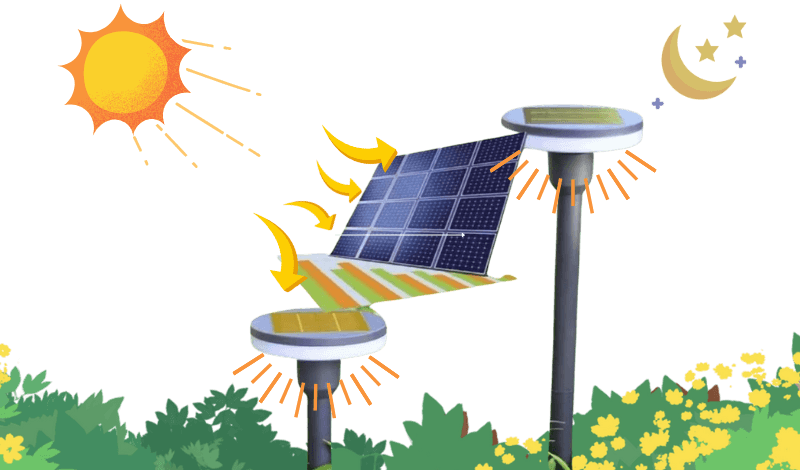
How the silicon crystal is made.
Monocrystalline:
- Made from single pure silicon crystal
- Dark blue or black color
- Uniform appearance
- 18-22% efficiency
- Costs 40-50% more
Polycrystalline:
- Made from multiple silicon fragments melted together
- Light blue color
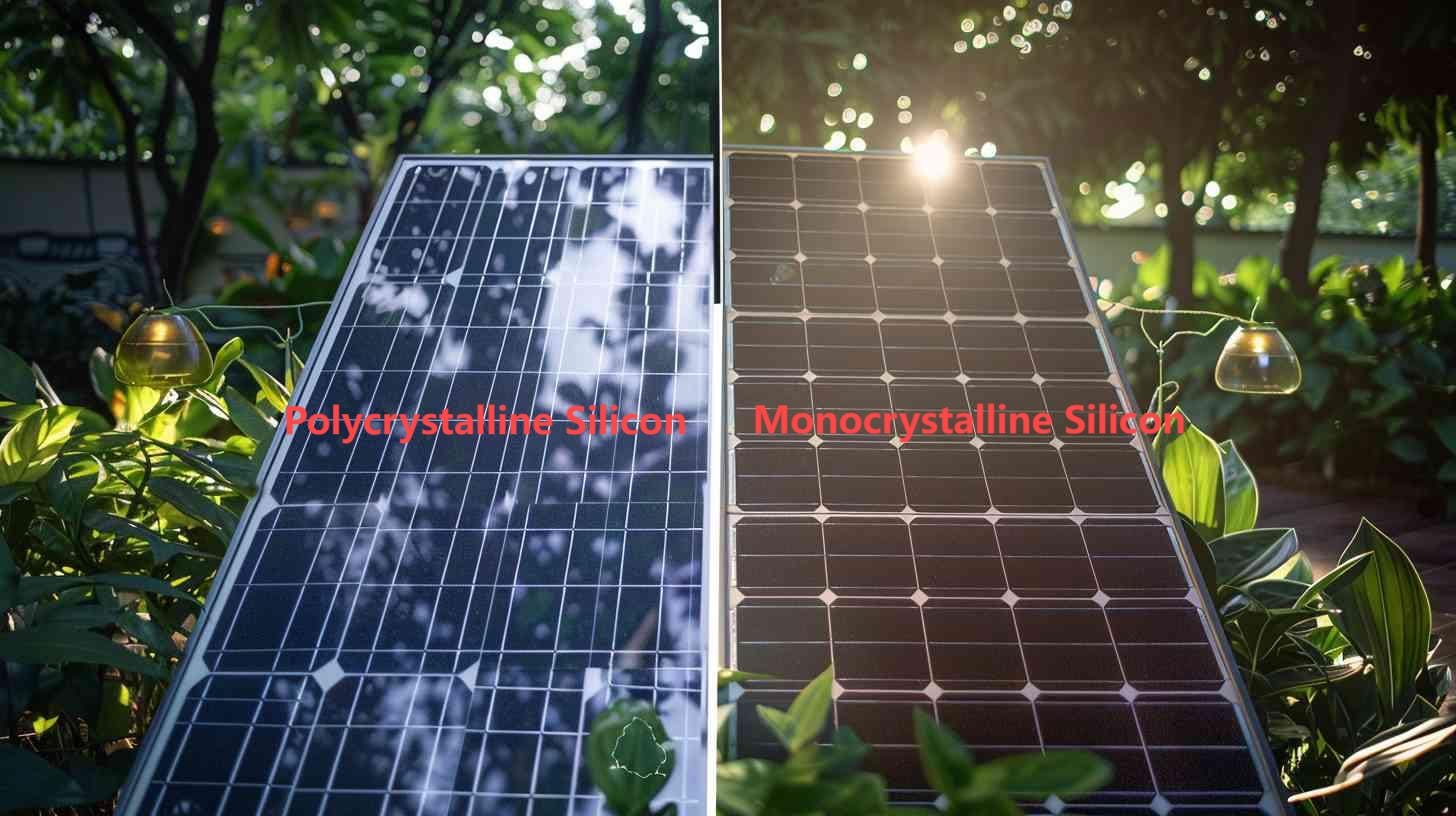
- Visible grain patterns (looks like shattered glass)
- 15-17% efficiency
- Cheaper option
Why it matters: The single crystal structure in monocrystalline allows electrons to flow more smoothly, especially important when light is limited (shade/clouds).
Monocrystalline manufacturing:
- Uses Czochralski process
- Single continuous crystal structure throughout
- Rounded cell corners (due to cylindrical ingot cutting)
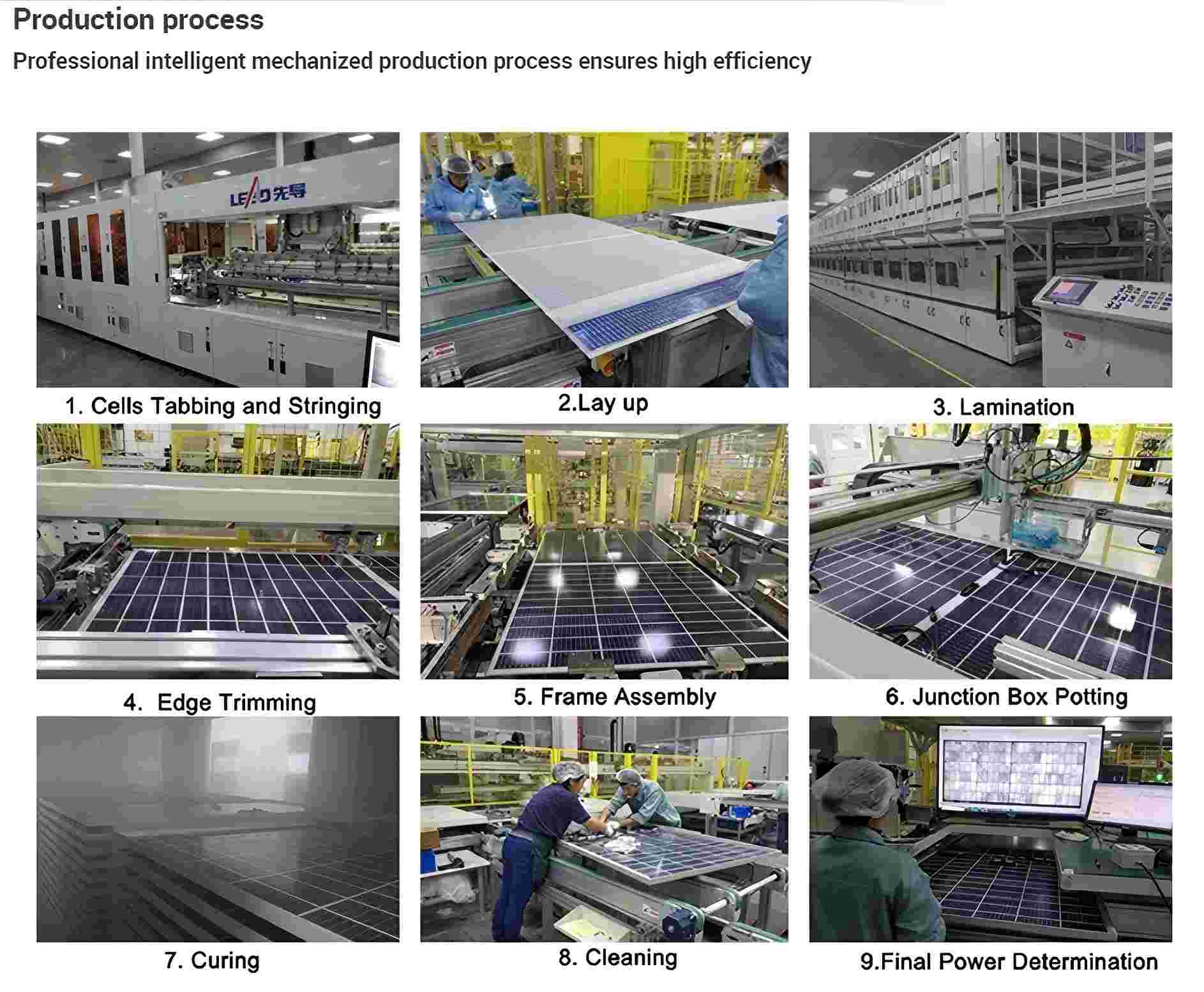
Polycrystalline manufacturing:
- Melts silicon fragments and casts into molds
- Multiple crystal grains with visible boundaries
- Square cells (no material waste from cutting)
Electron flow:
- In monocrystalline: Electrons flow through uniform crystal lattice with minimal resistance
- In polycrystalline: Electrons must cross grain boundaries, creating resistance points
Analogy: Monocrystalline is like a highway with no traffic lights. Polycrystalline is city streets with stop signs at every block. When traffic (electrons) is heavy (full sun), both work. When traffic is light (shade/clouds), the highway maintains better flow.
Reference: Green, M.A. (2023). "Crystalline Silicon Photovoltaics: A Cost Analysis." Progress in Photovoltaics, 31(1), 3-16.
How can I tell if I’m actually getting monocrystalline?
Check the appearance and specifications.
Visual check:
- Monocrystalline: Uniform dark blue/black, rounded cell corners
- Polycrystalline: Light blue with visible grain patterns, square cells
Specification check:
- Should clearly state "monocrystalline" in description
- Efficiency should be 18-22% (poly is 15-17%)
- Usually costs more (if suspiciously cheap, probably poly)
Red flags:
- Seller won’t specify panel type
- No efficiency rating provided
- Price too good to be true
- Generic "solar panel" description
Best practice: Buy from reputable sellers who clearly label their products. At Glowyard, all our products clearly state the panel type and efficiency.
Should I mix both types or choose one?
Don’t mix. Choose one type for your whole garden.
Problems with mixing:
- Inconsistent lighting (some areas bright, others dim)
- Confusing when troubleshooting (which lights are which?)
- Different replacement schedules
- Looks unprofessional
Better approach:
- If you have both sunny and shaded areas, use monocrystalline throughout for consistency
- If budget is tight, install fewer monocrystalline lights rather than more polycrystalline lights that don’t work well
What if I already bought polycrystalline and they don’t work well?
You have three options.
Option 1: Move them to sunnier spots
- Try relocating to areas with more sun
- May not be aesthetically ideal
- Quick fix if you have some sunny areas
Option 2: Accept shorter lighting duration
- If 2-3 hours of light is acceptable
- Works for decorative accent lighting
- Not ideal for pathway safety lighting
Option 3: Replace with monocrystalline
- Best long-term solution
- Yes, you’ll spend money twice
- But better than ongoing frustration
Our honest advice: If polycrystalline lights give less than 4 hours of light per night, replace them. Keeping lights that don’t work is false economy.
Where should I buy my garden lights?
Buy from manufacturers who clearly specify panel type and offer testing.
What to look for:
- Clear specification of monocrystalline vs polycrystalline
- Efficiency ratings provided
- Sample/test options available
- Good return policy
- Responsive customer service
- We clearly label all panel types
- Both monocrystalline and polycrystalline options available
- Sample testing programs
- Honest advice (we’ll tell you which actually works for your garden)
- 15+ years manufacturing experience
Browse our collections:
Final recommendation: Which should I buy?
Here’s our honest advice.
Buy Monocrystalline if:
- ✅ You have ANY trees, shrubs, or shade
- ✅ You live in a cloudy climate
- ✅ You live in a hot climate (>35°C summers)
- ✅ You want reliable, consistent lighting
- ✅ It’s for pathway safety lighting
- ✅ You have any doubt about your conditions
Buy Polycrystalline if:
- ✅ Your garden is genuinely open (no trees, no shade)
- ✅ Your climate is sunny most of the year
- ✅ Budget is your main concern
- ✅ It’s for temporary/seasonal use
- ✅ You’re willing to test first
Still not sure?
→ Buy monocrystalline. It works everywhere.
Quick Decision Checklist
Answer these questions:
-
Do you have trees or tall shrubs in your garden?
- Yes → Monocrystalline
- No → Continue
-
Is your climate cloudy >40% of the year?
- Yes → Monocrystalline
- No → Continue
-
Do you have hot summers (>35°C)?
- Yes → Monocrystalline
- No → Continue
-
Is budget your absolute priority?
- Yes → Polycrystalline (but test first!)
- No → Monocrystalline (safer choice)
Need Help Deciding?
We can help you choose based on your specific garden:
📸 Send us photos of your garden
🌍 Tell us your location/climate
💡 We’ll recommend the right type
📦 Sample testing programs available
Contact us: Visit Glowyard Lighting
Understanding panel differences helps, but buyers also need to judge the full product value. Our article on whether solar garden lights are worth buying
covers that bigger decision.
About Our Testing
How We Tested
Duration: January 2024 – January 2025 (365 days)
Sample Size:
- 50 monocrystalline lights
- 50 polycrystalline lights
- All identical except panel type
Test Locations:
- Phoenix, Arizona (33°N) – Hot, sunny
- Shanghai, China (31°N) – Moderate, mixed
- Seattle, Washington (47°N) – Cool, cloudy
What We Measured:
- Daily runtime (hours lit per night)
- Weekly brightness checks
- Weather conditions
- Temperature data
What We Didn’t Measure:
- Exact electrical output (would require invasive testing)
- Full 10-year lifespan (only 1 year so far)
- Every possible climate (limited to 3 zones)
Our Limitations
Be aware:
- We manufacture both types (we have financial interest in both)
- Testing by our team (not independent third party)
- 100 units total (not thousands)
- One year duration (not full product life)
How we stay honest:
- Transparent methodology
- Data-driven recommendations
- Honest about when polycrystalline works well
- Encourage customer testing
Data available: Summary data in this article. Detailed data available upon request.
About Glowyard Lighting
Experience: 15+ years solar lighting manufacturing (since 2010)
Location: Guangzhou, China (23°N)
Capacity: 50,000-80,000 units/month
Team: 150-200 employees, 15-20 R&D engineers
Certifications: ISO 9001, CE, RoHS, FCC, UL
Learn more: Manufacturing Process | Quality Certifications
More Resources
Related Guides
- Lithium vs NiMH vs NiCd – Battery comparison
- IP44 VS IP65 VS IP67 – Waterproof Grade comparison
- Resin vs Iron vs Plastic vs Glass – Material comparison
Technical References
Academic sources:
- Zhang et al. (2023). "Low-light performance characteristics of crystalline silicon photovoltaics." Journal of Renewable and Sustainable Energy, 15(2).
- Green, M.A. (2023). "Crystalline Silicon Photovoltaics: A Cost Analysis." Progress in Photovoltaics, 31(1), 3-16.
Industry standards:
- IEC 61215: Crystalline Silicon Photovoltaic Modules – Design Qualification
- ISO 9001: Quality Management Systems
Industry reports:
- International Energy Agency (IEA). "Trends in Photovoltaic Applications 2024." Available at iea-pvps.org
- Solar Energy Industries Association (SEIA). "Solar Technology Overview 2024." Available at seia.org
Government research:
- National Renewable Energy Laboratory (NREL). "Temperature Effects on Photovoltaic Performance." Available at nrel.gov


![do solar lights work in winter at cemeteries [2026 guide]](https://glowyard.com/wp-content/uploads/2026/03/Do-Solar-Lights-Work-in-Winter-at-Cemeteries-2026-Guide.webp)