

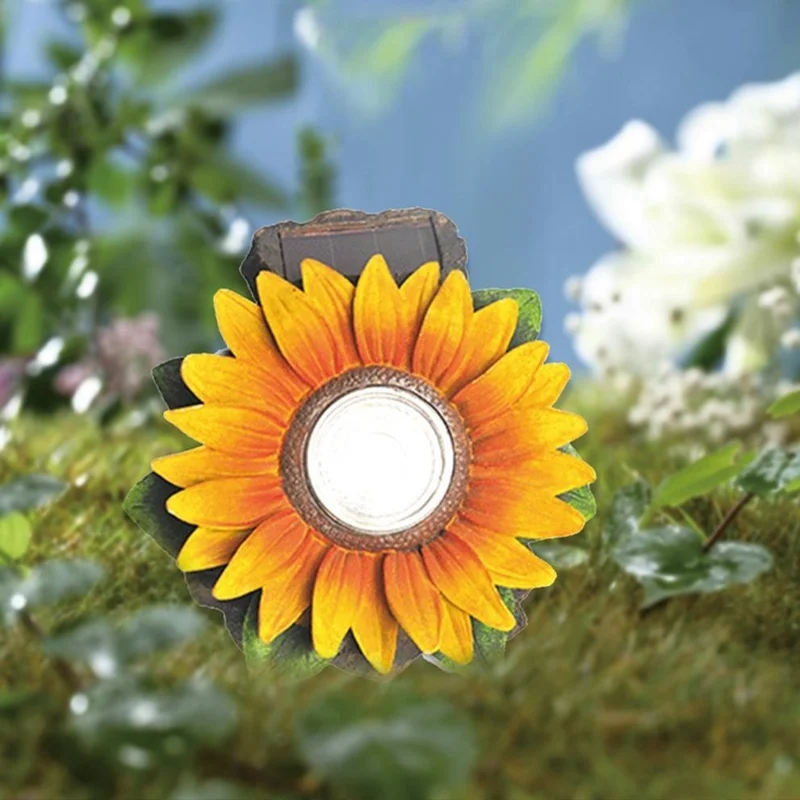
1. What Resin Types Are Used and How Do They Compare?

What Are the Primary Resin Materials?
Polyresin (Polyester Resin): Polyresin represents the most popular resin type for solar flower lights due to its excellent detail reproduction, durability, and cost-effectiveness. This material combines polyester resin with stone powder or other fillers, creating a dense, stone-like material that captures fine details beautifully. Polyresin accepts paint well, resists moisture, and provides substantial weight that conveys quality and stability.Quality polyresin formulations resist cracking, maintain color stability, and withstand outdoor temperature variations. The material’s density allows thin walls without sacrificing strength, enabling intricate petal details, delicate stems, and realistic textures. At Glowyard Lighting, our polyresin formulations undergo rigorous testing to ensure they maintain structural integrity and appearance through years of outdoor exposure.
Epoxy Resin: Epoxy resin offers superior clarity, UV resistance, and chemical resistance compared to polyester resin, making it ideal for products requiring transparent or translucent elements. Epoxy creates glass-like finishes, encapsulates decorative elements beautifully, and provides excellent adhesion for multi-material constructions. However, epoxy costs significantly more than polyresin and requires more careful processing.Epoxy resin works well for premium products where crystal-clear transparency, superior weather resistance, or encapsulation of decorative elements (dried flowers, glitter, embedded objects) justifies higher costs. The material’s self-leveling properties create smooth, bubble-free surfaces that enhance premium perception.
Fiberglass Reinforced Resin: Fiberglass reinforced resin combines resin with glass fiber reinforcement, creating lightweight yet strong structures suitable for larger products or those requiring exceptional durability. The reinforcement allows thinner walls and larger sizes without sacrificing strength. However, fiberglass reinforcement limits fine detail reproduction and creates visible fiber patterns that may not suit all design aesthetics.This material works well for large garden sculptures, architectural elements, or products where strength-to-weight ratio matters more than fine surface details. The manufacturing process requires skilled layup techniques and proper resin-to-fiber ratios to achieve optimal properties.
How Do Resin Types Affect Product Performance?
Detail Reproduction: Polyresin excels at capturing fine details including petal veining, surface textures, and intricate patterns. Epoxy resin provides excellent detail reproduction with superior surface smoothness. Fiberglass reinforced resin sacrifices some detail reproduction for structural strength. The detail reproduction capability directly impacts product realism and perceived quality. Weather Resistance: Quality resin formulations with UV stabilizers resist outdoor degradation for 3-5+ years. Polyresin with proper UV protection maintains color and structural integrity through temperature cycling and moisture exposure. Epoxy resin offers superior UV resistance and moisture resistance. Fiberglass reinforced resin provides excellent structural durability but requires quality gel coat or paint for UV protection. Weight and Stability: Polyresin’s density creates substantial products that resist tipping and convey quality through weight. This matters for stake-mounted or freestanding designs where stability affects customer satisfaction. Fiberglass reinforced resin offers lighter weight beneficial for wall-mounted or hanging designs. Epoxy resin weight varies based on formulation and filler content. Cost Considerations: Polyresin offers the best balance of cost, detail reproduction, and durability for most applications. Epoxy resin costs 50-100% more but provides superior clarity and weather resistance. Fiberglass reinforced resin costs vary based on construction complexity and reinforcement requirements. B2B buyers should match resin selection to target market positioning and performance requirements.What Resin Combinations Optimize Value?
Multi-Material Construction: Quality manufacturers often combine resins strategically—using polyresin for detailed decorative elements, epoxy for transparent or translucent components, and fiberglass reinforcement for large structural elements. This approach optimizes visual impact, durability, and cost-effectiveness. Resin and Metal Combinations: Combining resin decorative elements with metal structural components (stakes, mounting hardware, frames) creates products that balance artisan aesthetics with durability and stability. Metal provides strength and weather resistance while resin delivers the detailed, hand-crafted appearance that justifies premium pricing.—
2. What Manufacturing Processes Create Quality Resin Solar Lights?

How Is Resin Casting Performed?
Master Sculpture Creation: Resin manufacturing begins with creating master sculptures—original artworks that capture the desired design with all details, textures, and proportions. Skilled sculptors work in clay, wax, or other modeling materials to create masters that serve as the foundation for all subsequent production. Master quality directly determines final product quality, as molds can only reproduce what exists in the master.Quality manufacturers invest in skilled sculptors who understand botanical forms, artistic composition, and manufacturing constraints. The master sculpture process may take days or weeks for complex designs, with multiple iterations to perfect details, proportions, and technical feasibility. This upfront investment in master quality pays dividends through superior final products.
Mold Making: Creating production molds from master sculptures requires specialized expertise. Silicone rubber molds capture fine details while allowing easy part removal. Multi-part molds enable complex shapes with undercuts or internal details. Mold quality determines production efficiency, part consistency, and detail reproduction across thousands of castings.Quality molds last for hundreds or thousands of castings before requiring replacement. Cheap molds wear quickly, lose detail reproduction, and create quality variations across production runs. Verify that manufacturers maintain molds properly and replace them before quality degradation becomes apparent in finished products.
Casting Process: Resin casting involves mixing resin components (resin, hardener, fillers, pigments), pouring into molds, allowing curing, and demolding finished parts. Quality casting requires precise mixing ratios, proper degassing to eliminate bubbles, appropriate curing times and temperatures, and careful demolding to prevent damage.Process control significantly impacts final quality. Inadequate mixing creates weak spots or incomplete curing. Trapped air bubbles create surface defects or structural weaknesses. Premature demolding damages fine details. Quality manufacturers implement systematic processes with documented procedures, trained operators, and quality checkpoints.
What Post-Casting Processes Add Value?
Surface Finishing: Cast resin parts typically require surface finishing including sanding, filling, and smoothing to achieve final quality. Quality finishing removes mold lines, fills minor imperfections, and creates smooth surfaces that accept paint beautifully. Inadequate finishing leaves visible defects that undermine perceived quality even when underlying construction is sound. Hand-Painting and Detailing: Hand-painting transforms cast resin parts into lifelike flowers through careful color application, shading, highlighting, and detail work. Skilled painters apply multiple paint layers, create color gradients, add realistic details (petal edges, veining, natural variations), and seal surfaces for weather protection. Hand-painting quality directly impacts product realism and perceived value.The labor-intensive nature of hand-painting significantly affects costs and production capacity. Quality hand-painting requires skilled artisans, appropriate paints and tools, and adequate time for proper technique. Rushed painting creates flat, unrealistic appearance that undermines resin’s potential for botanical accuracy.
Assembly and Integration: Resin solar flower lights require assembly of cast resin components with solar panels, batteries, LEDs, control circuits, and structural elements (stakes, bases, mounting hardware). Quality assembly uses appropriate adhesives, mechanical fasteners, and weatherproof sealing that create secure, durable connections.What Equipment Indicates Manufacturing Capability?
Sculpting and Mold Making Facilities: Quality resin manufacturers have dedicated facilities for master sculpture creation and mold making, including sculpting tools, mold making materials, and skilled artisans. The presence of in-house sculpting and mold making capabilities indicates serious manufacturing operations and ability to handle custom designs. Casting Production Areas: Professional casting operations include climate-controlled mixing areas, organized mold storage, proper ventilation systems, and curing facilities. Quality manufacturers implement systematic processes that ensure consistent mixing, proper curing, and efficient production. Painting and Finishing Studios: Dedicated painting studios with proper lighting, ventilation, and organization indicate commitment to quality hand-painting. Quality manufacturers employ skilled painters, provide appropriate tools and materials, and allow adequate time for proper painting techniques.—
3. How Do Sculpting and Hand-Painting Add Value?

What Makes Sculpted Resin Flowers Realistic?
Botanical Accuracy: Quality resin flower sculptures capture botanical details including petal shapes, vein patterns, leaf structures, and natural growth patterns. Skilled sculptors study real flowers, understand plant anatomy, and translate three-dimensional botanical forms into sculptures that read as authentic even at close inspection. This botanical accuracy appeals to garden enthusiasts and customers who value realism over stylized representations. Surface Textures: Realistic surface textures including petal softness, leaf veining, stem bark, and natural irregularities transform generic shapes into lifelike representations. Sculptors create these textures through various techniques including sculpting tools, texture stamps, and hand-working surfaces. The textures catch light naturally and provide visual interest that flat, smooth surfaces cannot achieve. Proportional Accuracy: Proper proportions—petal sizes relative to flower centers, leaf sizes relative to stems, overall plant proportions—create believable representations. Disproportionate elements immediately signal artificial construction and undermine realism. Quality sculptors understand proportional relationships and create balanced compositions that appear natural.How Does Hand-Painting Enhance Realism?
Color Layering and Gradients: Realistic flower coloring requires multiple paint layers creating color depth, gradients, and natural variations. Base colors establish overall tones, mid-tones add dimension, highlights create focal points, and shadows provide depth. This layering mimics natural flower coloration where colors transition gradually rather than changing abruptly. Detail Painting: Fine details including petal edge coloring, vein highlighting, center details, and natural imperfections (spots, color variations, aging effects) add realism that uniform coloring cannot achieve. Skilled painters use fine brushes, appropriate techniques, and artistic judgment to add details that enhance rather than overwhelm overall appearance. Weathering and Aging Effects: Subtle weathering effects including slight fading, natural wear patterns, and organic aging create products that appear naturally integrated into garden environments rather than obviously artificial. These effects work particularly well for products targeting customers who value garden authenticity over pristine perfection.What Painting Techniques Create Premium Products?
Airbrushing: Airbrush techniques create smooth color gradients, soft transitions, and even coverage that brush painting struggles to achieve. Airbrushing works well for base coats, large areas, and gradient effects. However, airbrush alone cannot create the fine details and artistic character that hand-brush techniques provide. Dry Brushing: Dry brush techniques highlight raised details, create texture emphasis, and add dimensional effects. This technique applies small amounts of paint to brush tips, then lightly brushes raised surfaces, leaving paint only on high points. Dry brushing enhances sculpted details and creates visual depth. Wash and Glaze Techniques: Thin paint washes settle into recesses, emphasizing sculpted details and creating shadow effects. Glazes modify underlying colors while maintaining transparency, creating color depth and richness. These techniques require skill and experience to apply effectively without creating muddy or unnatural appearance.How Does Protective Coating Ensure Longevity?
UV-Resistant Clear Coats: Quality resin solar lights receive UV-resistant clear coat finishes that protect paint from fading and resin from degradation. Multiple thin coats provide better protection than single thick coats, creating durable finishes that maintain appearance through years of sun exposure. The clear coat also provides moisture resistance and makes surfaces easier to clean. Matte vs. Gloss Finishes: Finish selection affects perceived realism and maintenance requirements. Matte finishes create natural, non-reflective appearance suitable for botanical realism. Gloss finishes provide easier cleaning and enhanced color vibrancy but may appear less natural. Semi-gloss finishes balance these considerations, offering reasonable realism with practical maintenance benefits.—
4. What Quality Standards Should You Look For?

What Product Certifications Are Essential?
CE and RoHS Compliance: European markets require CE certification and RoHS compliance for resin solar lights. These certifications cover both resin materials (ensuring they don’t contain restricted substances) and electronic components. Quality manufacturers provide genuine certificates and can explain compliance for all product materials. Material Safety Standards: Resin materials should meet safety standards for outdoor consumer products, particularly regarding chemical content and off-gassing. Request material safety data sheets (MSDS) verifying resins are safe for outdoor use and don’t release harmful substances. This matters particularly for products that may be handled frequently or installed near living spaces. Paint and Coating Safety: Paints and coatings should meet safety standards and be formulated for outdoor use. Verify that manufacturers use paints designed for outdoor applications with appropriate UV resistance, weather resistance, and durability. Cheap indoor paints fade quickly and create customer dissatisfaction.How Do You Assess Resin Component Quality?
Visual Inspection: Examine resin components for consistent color, smooth surfaces, sharp detail reproduction, and absence of defects including bubbles, cracks, rough areas, or incomplete casting. Quality resin shows uniform appearance, clean mold lines, and professional finishing. Surface defects indicate inadequate process control or poor mold quality. Structural Integrity Testing: Test product durability by applying reasonable force to petals, stems, and mounting points. Quality resin products resist bending or breaking under normal handling stress. Brittle products that crack easily indicate inadequate resin formulation, insufficient wall thickness, or poor curing. Paint Quality Verification: Examine paint application for even coverage, appropriate color saturation, clean detail work, and absence of defects including runs, drips, or missed areas. Quality painting shows consistent technique, appropriate color choices, and professional execution. Poor painting undermines resin’s potential for realistic appearance.What Factory Certifications Indicate Quality?
ISO 9001 Quality Management: ISO 9001 certification demonstrates systematic approaches to quality control for resin manufacturing, painting, and assembly operations. Certified manufacturers maintain documented procedures, conduct regular audits, and implement corrective actions that ensure consistent quality. BSCI and Sedex Social Compliance: These certifications verify ethical manufacturing practices including fair labor conditions and safe working environments. This matters particularly for resin products requiring significant hand labor for sculpting, casting, and painting.At Glowyard Lighting, we maintain ISO 9001, BSCI, and Sedex certifications. Our quality control process implements four-stage inspection protocols ensuring consistent quality across all resin products.
What Testing Should You Conduct?
Weather Exposure Testing: Conduct outdoor exposure testing in your target climate for several weeks or months. Monitor for paint fading, resin degradation, cracking, or structural problems. Real-world testing provides reliable indication of long-term performance and helps identify potential problems before large-scale orders. Drop and Impact Testing: Test product durability by dropping samples from typical handling heights onto various surfaces. Quality resin products should survive reasonable impacts without breaking. High breakage rates indicate inadequate wall thickness, poor resin formulation, or structural design weaknesses. Paint Adhesion Testing: Conduct tape tests on painted surfaces—apply adhesive tape firmly, then remove quickly. Quality paint should show no removal or delamination. Poor paint adhesion indicates inadequate surface preparation or incompatible paint systems that will fail prematurely outdoors.—
5. What Is the Market Demand for Artisan Resin Lights?

What Market Segments Value Resin Construction?
Garden Enthusiasts: Customers passionate about gardening and botanical beauty seek resin solar lights for their realistic appearance and ability to extend garden aesthetics into evening hours. This segment values botanical accuracy, artistic quality, and products that complement rather than clash with living plants. Art and Craft Markets: Customers who appreciate handcrafted products, artisan work, and unique designs find resin solar lights appealing for their sculptural quality and hand-painted character. This segment willingly pays premium prices for products demonstrating craftsmanship and artistic merit. Gift Buyers: Resin solar flower lights excel as gifts for garden lovers, nature enthusiasts, and customers who appreciate decorative art. The combination of functional lighting and decorative sculpture creates gift appeal that purely functional products cannot match. Attractive packaging emphasizing handcrafted quality enhances gift positioning. Specialty Retail Channels: Garden boutiques, art galleries, craft fairs, and specialty retailers target customers seeking distinctive products rather than mass-market alternatives. These channels value products with artisan character, quality construction, and aesthetics that justify 100-150% retail markups.What Are the Seasonal Demand Patterns?
Spring Peak Season: Spring (March-May) represents primary selling season as customers refresh gardens and seek decorative elements for outdoor spaces. Resin solar lights’ botanical realism makes them particularly appealing during spring when customers focus on garden aesthetics. Year-Round Decorative Market: Unlike purely seasonal products, resin solar lights maintain relevance throughout the year as decorative art pieces. Customers display them indoors during winter or use them year-round in protected outdoor locations, providing more stable demand than purely seasonal alternatives. Gift Season Opportunities: Major gift-giving occasions including Mother’s Day, birthdays, housewarmings, and Christmas create demand peaks for resin solar lights. Attractive packaging emphasizing handcrafted quality and botanical realism positions these products as thoughtful, distinctive gifts.What Regional Preferences Affect Product Selection?
North American Market: US and Canadian buyers favor realistic flower designs, natural color palettes, and substantial sizing. The market shows strong preference for botanically accurate representations over stylized or abstract designs. Packaging must emphasize handcrafted quality, weather resistance, and artistic merit. European Market: European buyers often prefer more stylized, artistic interpretations with contemporary aesthetics. The market values CE and RoHS certifications highly, with increasing emphasis on environmental compliance and sustainable materials. Design preferences lean toward sophisticated, understated aesthetics. Asian Markets: Markets in Japan and South Korea show growing demand for resin solar lights as garden art and home décor. These markets value meticulous craftsmanship, attention to detail, and products that demonstrate artistic sensibility. Design preferences favor elegant, refined aesthetics over bold, colorful designs.—
6. What Are the Common Applications?

How Are Resin Solar Flower Lights Used in Residential Settings?
Garden Bed Focal Points: Homeowners install resin solar flower lights as focal points in garden beds, creating visual interest and extending garden beauty into evening hours. The realistic appearance allows them to integrate naturally with living plants, while the sculptural quality makes them attractive even during daytime. Pathway and Border Accents: Resin solar lights line pathways, driveways, and garden borders providing decorative elements that also offer subtle guidance lighting. The substantial weight and realistic appearance create upscale aesthetics that complement premium landscape design. Patio and Deck Decoration: Outdoor living spaces benefit from resin solar lights that serve as decorative art during daytime and provide ambient lighting in evenings. The handcrafted appearance complements quality outdoor furniture and architectural details.What Commercial Applications Drive B2B Sales?
Boutique Hotel and B&B Décor: Upscale accommodations use resin solar lights to create distinctive garden atmospheres that enhance guest experiences. The artisan quality and botanical realism reflect positively on property standards and create memorable visual impressions. Restaurant Garden Dining: Restaurants with garden dining areas or outdoor patios use resin solar lights to create inviting atmospheres that attract customers. The realistic flower designs complement garden settings while providing subtle evening illumination. Garden Centers and Nurseries: Garden centers use resin solar lights in display gardens and as retail products. The botanical realism appeals to gardening customers, while the quality construction justifies premium pricing that supports healthy retail margins. Event and Wedding Venues: Upscale venues use resin solar lights as permanent decorative elements or rental inventory. The realistic appearance photographs beautifully, creating attractive backdrops for events and social media sharing.How Do Landscape Professionals Utilize These Products?
High-End Landscape Design: Professional landscapers incorporate resin solar lights into comprehensive designs for clients who value botanical realism and artisan quality. The lights provide evening interest while maintaining garden authenticity that plastic alternatives cannot achieve. Specialty Installation Services: Landscape professionals offer resin solar light installation as premium services, creating recurring revenue through sales, installation, and seasonal repositioning. The products’ artisan positioning supports higher service fees.—
7. What Customization Options Are Available?

What Design Customizations Can Manufacturers Provide?
Custom Flower Species: Manufacturers can create custom master sculptures for specific flower species, allowing brand differentiation through unique botanical representations. Custom sculpting typically requires MOQs of 500-1000 units to justify master sculpture development and mold making costs. Color Scheme Customization: Modifying paint colors and techniques allows brand differentiation without requiring new sculptures or molds. Color customizations have lower MOQs (200-300 units) and modest cost impacts since they only affect painting processes. Size and Scale Adjustments: Modifying product dimensions creates distinctive offerings, though size changes typically require new master sculptures and molds. Size customizations need MOQs of 500-1000 units to justify tooling investments.What Technical Customizations Are Possible?
Solar Panel and Battery Upgrades: Upgrading solar components improves performance but increases costs. These customizations appeal to customers willing to pay more for extended runtime or faster charging. LED Customization: Customizing LED colors or brightness levels allows targeting specific preferences. LED customizations have moderate MOQs (300-500 units) and modest cost impacts. Smart Features: Adding remote controls or programmable features creates ultra-premium differentiation but significantly increases complexity and MOQs (1000+ units).How Does Packaging Customization Add Value?
Artisan Packaging: Premium packaging emphasizing handcrafted quality, botanical accuracy, and artistic merit enhances perceived value. Custom packaging should reflect artisan positioning through materials, graphics, and presentation quality. Storytelling Elements: Including information about sculpting processes, painting techniques, or botanical inspiration creates emotional connections that justify premium pricing. Gift Set Configurations: Offering coordinated sets of complementary flower species in premium packaging creates higher-value gift options and encourages larger purchases.—
8. How to Source from China: Factory Selection Guide?

Why Source Resin Solar Flower Lights from China?
Specialized Resin Manufacturing Expertise: China has developed world-class resin manufacturing capabilities with specialized expertise in sculpting, mold making, casting, and hand-painting. The concentration of skilled artisans and manufacturing infrastructure creates significant advantages. Cost Competitiveness with Quality: Chinese manufacturers offer pricing advantages of 30-50% compared to other regions while maintaining quality through skilled craftsmanship and systematic processes. Customization Capabilities: The competitive environment has driven innovation in custom sculpting, mold making, and painting techniques that enable distinctive product development.How Do You Find Reliable Resin Manufacturers?
Industry-Specific Sourcing: Focus on manufacturers specializing in resin solar lights or decorative resin products. Specialists understand sculpting requirements, casting processes, and painting techniques specific to outdoor resin products. Trade Show Evaluation: Attend lighting and gift shows to meet manufacturers, inspect products, and build relationships. Evaluate booth quality, product range, and artisan capabilities. Factory Audit Importance: Conduct audits to verify sculpting facilities, casting operations, painting studios, and quality control systems. Examine master sculptures, molds, and finished products to assess capabilities.What Should You Evaluate When Selecting Manufacturers?
Sculpting and Mold Making Capabilities: Verify in-house sculpting and mold making capabilities. Quality manufacturers employ skilled sculptors and mold makers who can create custom designs. Painting Quality and Capacity: Examine painting studios, painter skill levels, and quality control for painting. Quality manufacturers employ trained painters and implement systematic painting processes. Quality Control Systems: Evaluate quality control specific to resin products including casting inspection, painting verification, and assembly quality checks.What Red Flags Should You Watch For?
Poor Painting Quality: Samples showing uneven coverage, sloppy detail work, or inappropriate colors indicate inadequate painting capabilities that will create customer dissatisfaction. Casting Defects: Products with bubbles, cracks, or incomplete casting indicate inadequate process control that compromises quality and durability. Lack of Sculpting Capabilities: Manufacturers without in-house sculpting cannot create custom designs or modify existing designs effectively, limiting customization options.—
9. What Common Mistakes Should You Avoid When Sourcing?

What Quality-Related Mistakes Hurt Profitability?
Prioritizing Price Over Painting Quality: Selecting manufacturers based on lowest pricing often results in poor painting that undermines resin’s potential for realistic appearance. Painting quality directly impacts perceived value and customer satisfaction. Ignoring Casting Quality: Accepting products with casting defects to reduce costs creates structural problems and quality perception issues. Casting quality determines product durability and appearance. Overlooking UV Protection: Ordering products without adequate UV protection in resin formulation or clear coat causes premature fading and degradation. UV protection is critical for outdoor resin products.What Supplier Selection Mistakes Create Problems?
Choosing Manufacturers Without Artisan Capabilities: Sourcing from manufacturers lacking skilled sculptors and painters results in products that fail to achieve resin’s potential for botanical realism and artistic quality. Failing to Verify Painting Consistency: Ordering without verifying painting consistency across production batches creates quality variations that frustrate customers and damage brand reputation. Neglecting Weather Resistance Testing: Ordering without weather exposure testing creates risks of premature failure that erodes profitability through returns and replacements.What Market Positioning Mistakes Reduce Profitability?
Competing on Price: Resin solar lights command premium pricing due to handcrafted quality and botanical realism. Competing on price undermines artisan positioning and attracts customers who don’t value resin benefits. Inadequate Quality Communication: Failing to communicate handcrafted quality, botanical accuracy, and artistic merit leaves customers unable to justify premium pricing. Ignoring Artisan Market Opportunities: Focusing exclusively on mass market overlooks lucrative artisan and specialty markets where resin products excel.—
10. Who Is Glowyard Lighting and What Do We Offer?

What Is Our Company Background?
Glowyard Lighting has specialized in solar garden lighting since 2010, with over 15 years of expertise in decorative outdoor solar garden lights. Our resin lights manufacturing capabilities represent specialized competency in sculpting, mold making, casting, and hand-painting.What Resin Manufacturing Capabilities Do We Provide?
Master Sculpting: Our artisan team creates original master sculptures with botanical accuracy and artistic merit. We employ skilled sculptors who understand plant anatomy and artistic composition. Precision Mold Making: Our mold making capabilities produce high-quality silicone molds that capture fine details and enable efficient production while maintaining quality. Quality Casting and Painting: Our casting operations implement systematic processes ensuring consistent quality. Our painting studios employ trained artisans who apply multiple layers, create realistic details, and seal surfaces for weather protection.What Certifications Do We Meet?
Glowyard maintains ISO 9001, BSCI, and Sedex certifications. Our products carry CE, RoHS, FCC, UL, UKCA, and REACH certifications. View our certification portfolio.
What Services Support B2B Buyers?
Flexible MOQ Policies: We offer tiered MOQs starting from 200-300 units for color customizations, 500-1000 units for custom sculptures. Fast Sampling and Delivery: Sample production in 15-20 days, small batches in 25-30 days, bulk orders in 35-45 days. Comprehensive OEM/ODM Services: Custom sculpting, painting customization, technical specifications, and premium packaging design. After-Sales Support: 2-3 year warranties covering manufacturing defects, with 24-hour technical support response.How Can You Start Working With Us?
Contact our B2B sales team at glowyard.com to discuss resin solar flower light requirements. We provide detailed specifications, sculpting documentation, painting samples, and evaluation programs.
—
11. What Questions Do Buyers Ask About Resin Solar Flower Lights?

Product Quality Questions
How long do resin solar flower lights last?Quality resin lights with proper UV protection last 3-5+ years outdoors. Resin resists moisture and temperature variations. LED lifespan exceeds 50,000 hours, batteries last 2-3 years (replaceable).
Will resin lights fade or crack?Quality resin with UV protection and proper clear coat resists fading for 3-5+ years. Adequate wall thickness and proper formulation prevent cracking. Request UV testing documentation.
Are resin lights weatherproof?Quality resin lights with proper sealing achieve IP44-IP67 ratings. Resin naturally resists moisture. Verify weatherproofing at component interfaces.
How realistic do resin flowers look?Quality resin flowers with skilled sculpting and hand-painting achieve remarkable botanical accuracy. Examine samples for detail quality, painting technique, and overall realism.
Sourcing Questions
What are typical wholesale prices?Wholesale prices vary based on size, complexity, and painting quality. Resin products typically cost 30-60% more than plastic alternatives but less than premium glass or metal products.
What MOQs should I expect?MOQs: 200-300 units for color changes, 500-1000 units for custom sculptures. Resin products have higher MOQs than plastic due to specialized processes.
How long does production take?Sample production: 15-20 days, small batches: 25-30 days, bulk orders: 35-45 days. Resin products require additional time for casting, painting, and curing.
What warranty should I expect?Quality resin lights include 2-3 year warranties covering manufacturing defects in resin components, painting, and electronics.
Market Questions
Who buys resin solar lights?Garden enthusiasts, art and craft markets, gift buyers, and specialty retailers value resin construction for botanical realism and handcrafted quality.
How should I price resin lights?Resin lights command mid-premium pricing—30-60% higher than plastic, with 100-150% retail markups. Emphasize handcrafted quality and botanical accuracy.
What marketing messages work?Emphasize handcrafted quality, botanical realism, artisan techniques, and weather resistance. Use photography showing both daytime appearance and illuminated effects.
—
Conclusion
Resin solar flower lights offer B2B buyers opportunities to serve customers who value botanical realism, handcrafted quality, and artistic merit. Success requires attention to sculpting quality, painting excellence, and artisan market positioning. By following this guide, wholesalers can source resin lights that meet customer expectations while maintaining healthy margins through premium positioning.
Key Takeaways:- Resin construction enables unmatched botanical realism and detail reproduction
- Hand-painting quality directly impacts perceived value and customer satisfaction
- Multiple resin types serve different performance and cost requirements
- Artisan positioning requires quality communication and appropriate pricing
- Chinese manufacturers offer specialized expertise and cost advantages
At Glowyard Lighting, we support B2B buyers with quality resin solar flower lights, specialized sculpting expertise, and reliable service. Contact us to discuss your requirements and discover how our 15+ years of resin manufacturing experience can help your business succeed.
—
Ready to source quality resin solar flower lights? Visit glowyard.com or contact our B2B sales team for samples, custom sculpting options, and detailed quotations.