
Müssen Außenleuchten die RoHS-Richtlinien erfüllen? Ein Einkaufsratgeber
Wenn eine Außenleuchte enthält LEDs, Drähte, Lötzinn, Leiterplatten, Steckverbinder, Batterien, Treiber oder Ladekomponenten, RoHS ist oft Bestandteil der Compliance-Prüfung, die Käufer nicht ignorieren sollten.
Das liegt daran, dass RoHS nicht in erster Linie ein “grünes Marketinglabel” ist. In der realen Beschaffung ist es viel eher ein Problem der Komponenten- und Dokumentationskontrolle.
Die offizielle EU-Behörde Überblick über die RoHS-Richtlinie RoHS erklärt, dass es die Verwendung gefährlicher Stoffe in Elektro- und Elektronikgeräten einschränkt. In Großbritannien finden sich auf GOV.UK entsprechende Hinweise. RoHS-Verordnung 2012 (in der geänderten Fassung): Großbritannien erklärt, wie RoHS für elektrische und elektronische Geräte gilt, die auf dem britischen Markt in Verkehr gebracht werden.
Für Käufer stellt sich in der Praxis meist nicht die Frage:
“Kann der Lieferant eine RoHS-Datei vorlegen?”
Eine bessere Frage wäre:
Kann der Lieferant nachweisen, dass die in diesem Produkt tatsächlich verwendeten Komponenten einem echten RoHS-Prozess unterliegen?
Wenn Sie sich zunächst einen Überblick verschaffen möchten, können Sie mit unserem Hauptleitfaden beginnen. Zertifizierungen für den Import von Außenleuchten.
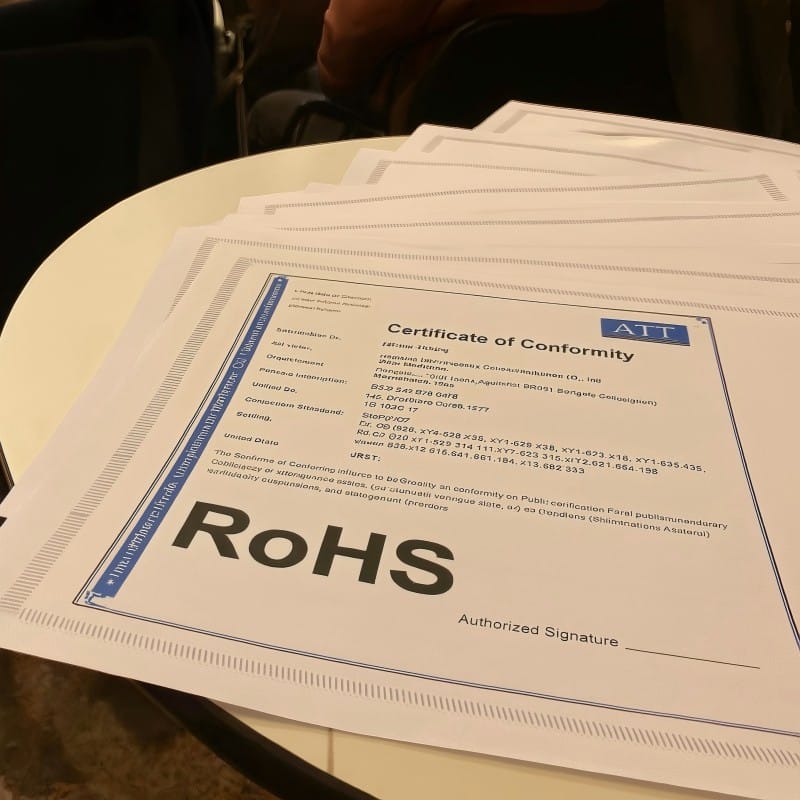
RoHS ist am nützlichsten, wenn Käufer es als ein Thema der Komponenten- und Dokumentenkontrolle betrachten und nicht nur als eine Logoprüfung.
Was RoHS für Außenleuchten bedeutet
RoHS steht für Beschränkung gefährlicher Stoffe.
Vereinfacht ausgedrückt handelt es sich um einen Rechtsrahmen, der bestimmte gefährliche Stoffe einschränkt. elektrische und elektronische Geräte (EEE). Die aktuellen RoHS-Regeln der EU beschränken 10 Substanzen, einschließlich Blei, Cadmium, Quecksilber, sechswertiges Chrom, PBB, PBDE, DEHP, BBP, DBP und DIBP.
Bei Außenleuchten ist dies wichtig, da viele Produkte, die von außen einfach aussehen, dennoch elektronische Bauteile im Inneren enthalten, wie zum Beispiel:
- LED-Chips
- Lötstellen
- Leiterplatten
- Drähte und Kabelbaugruppen
- Steckverbinder
- Batteriekontakte
- Ladeplatinen
- Sensormodule
- Treiber- oder Steuerungskomponenten
Das bedeutet, dass RoHS oft nicht deshalb relevant ist, weil das Produkt “für den Außenbereich” bestimmt ist, sondern weil es … elektrische oder elektronische Geräte mit kontrollierten Materialien im Inneren.
Die wichtigste Erkenntnis für den Käufer
Bei RoHS geht es in der Regel nicht darum, ob das Gehäuse von außen sicher aussieht.
Es geht darum, ob interne Materialien und Komponenten werden ordnungsgemäß verwaltet.
Fallen Außenleuchten üblicherweise unter die RoHS-Richtlinien?
In vielen Fällen ja.
Die EU legt fest, dass alle Produkte mit elektrischen und elektronischen Bauteilen, sofern nicht ausdrücklich ausgenommen, den RoHS-Bestimmungen entsprechen müssen. Die britischen Richtlinien von GOV.UK erklären ebenfalls, dass RoHS für Elektro- und Elektronikgeräte (EEE) gilt, die in Großbritannien in Verkehr gebracht werden, und dass alle EEE, einschließlich Kabel und Ersatzteile, unter die Richtlinie fallen, sofern nicht ausdrücklich ausgenommen.
Für die Entscheidung über die Beschaffung bedeutet dies, dass viele Außenleuchten unter die RoHS-Prüfung fallen könnten, wenn sie Folgendes enthalten:
- elektrischer Strom zum Betrieb
- elektronische Schaltung oder Steuerung
- Laden oder gespeicherte Energie
- PCB-bezogene Funktionalität
- Batterie- oder solarbetriebener Betrieb
Beispiele, bei denen Käufer unbedingt die RoHS-Frage stellen sollten
- Solar-Gartenleuchten
- batteriebetriebene Gedenkleuchten
- Dekorative Außenleuchten mit Leiterplatten oder Sensorteilen
- Dekorative Außenbeleuchtung zum Einstecken
- intelligente oder elektronisch gesteuerte Beleuchtungsprodukte
Warum manche Käufer RoHS unterschätzen
Viele Käufer verbinden RoHS immer noch mit Folgendem:
- Großgeräte
- offensichtliche Elektronik
- komplizierte Geräte
Aber auch eine relativ kleine Außenleuchte kann ein RoHS-Risiko darstellen, wenn das Lötmittel, die Drähte, die kunststoffummantelten Kabelteile, die Steckverbinder oder die Leiterplattenmaterialien nicht ordnungsgemäß kontrolliert werden.
Warum RoHS wichtiger ist, als vielen Käufern bewusst ist
RoHS erscheint auf den ersten Blick oft einfacher als CE, doch in der Praxis kann es aufdecken, ob ein Lieferant die RoHS-Richtlinien tatsächlich einhält. Komponentendisziplin.
Ein Lieferant könnte schnell eine RoHS-Erklärung vorlegen.
Was Käufer aber wirklich wissen müssen, ist Folgendes:
- Welche Komponenten wurden überprüft?
- Welche Materialien wurden geprüft oder deklariert?
- Stimmt die Datei noch mit der aktuellen Stückliste überein?
- Was passiert, wenn während der Produktion eine Komponente ausgetauscht wird?
Deshalb vermittelt RoHS Käufern oft mehr als nur die Aussage “Beschränkte Substanzen unterliegen der Kontrolle”.”
Es teilt ihnen auch mit, ob der Lieferant Folgendes besitzt:
- Transparenz der Lieferkette
- BOM-Disziplin
- Gewohnheiten im Umgang mit Veränderungen
- Versionskontrolle
- Dokumentenrückverfolgbarkeit
Mit anderen Worten:
RoHS ist oft einer der deutlichsten Indikatoren dafür, ob ein Hersteller seine Lieferkette für Elektronikprodukte ordnungsgemäß kontrolliert.
Welche Teile einer Außenleuchte bergen üblicherweise ein RoHS-Risiko?
Nicht alle RoHS-Risiken sind an derselben Stelle konzentriert.
Bei Außenleuchten sollten Käufer besonders auf die Bauteile achten, die am ehesten verbotene Stoffe oberhalb der zulässigen Grenzwerte freisetzen.
Häufige RoHS-Risikobereiche
| Komponentenbereich | Warum das wichtig ist |
|---|---|
| Löt- und Leiterplattenbestückungen | Dies sind einige der häufigsten Orte, an denen Bedenken im Zusammenhang mit Blei überprüft werden. |
| Draht- und Kabelisolierung | Weichmacher und die Materialzusammensetzung können eine Rolle spielen. |
| Steckverbinder und Klemmen | Metallbeschichtungen und Montagematerialien können ein Risiko darstellen |
| LED-Gehäuse und Steuerplatinen | Elektronische Subkomponenten müssen mit der RoHS-Richtlinie des Produkts übereinstimmen. |
| Batteriebezogene Kontakte und Baugruppen | Dies kann die Verwendung von Teilen aus verschiedenen Quellen und Materialdeklarationen beinhalten. |
| Adapter, Lademodule und Treiber | Komplexere Elektronik bedeutet in der Regel mehr RoHS-Prüfpunkte. |
| Kunststoffteile mit Additiven | Bestimmte beschränkte Stoffe können je nach Zusammensetzung und Lieferkettenkontrolle relevant sein. |
Was das in der Praxis bedeutet
Eine RoHS-Prüfung ist selten am aussagekräftigsten, wenn ein Käufer lediglich “ein RoHS-Zertifikat” verlangt.”
Am stärksten ist die Wirkung in der Regel dann, wenn der Käufer versteht Welche Teile des Produkts bergen das tatsächliche Materialkontrollrisiko?.
RoHS ist nicht nur ein Thema für Zertifizierungen.
Dies ist einer der wichtigsten Punkte im gesamten Artikel.
Ein Käufer kann ein mit dem RoHS-Label versehenes PDF erhalten und hat dennoch kein klares Bild davon, ob das Produkt tatsächlich ordnungsgemäß kontrolliert wird.
Das liegt daran, dass RoHS nicht nur ein einzelnes Dokument umfasst. Es geht auch um Folgendes:
- Materialdeklarationen
- Lieferantenerklärungen
- Komponentenrückverfolgbarkeit
- Prüfberichte, sofern zutreffend
- technische Dokumentation
- Übereinstimmung zwischen der deklarierten Datei und dem realen Produkt
Warum schwache RoHS-Dateien so verbreitet sind
Schwache RoHS-Behauptungen kommen häufig vor, wenn:
- Ein Dokument wird für mehrere Produkte wiederverwendet.
- Die Datei gehört zu einem ähnlichen Modell, nicht zu dem exakt gekauften.
- Die Stückliste hat sich geändert, aber das Dateipaket nicht.
- Der Lieferant verwendet veraltete Komponentendeklarationen.
- Es besteht kein klarer Zusammenhang zwischen der Produktstruktur und dem RoHS-Dateisatz.
Aus Käufersicht ist die sinnvollste Frage also nicht: “Haben Sie RoHS-konform?”
Eine bessere Frage wäre:
Wie hängt Ihre RoHS-Datei mit den tatsächlich in diesem Modell verwendeten Komponenten zusammen?
Warum Stücklistenänderungen und Komponentenaustausch ein verstecktes RoHS-Risiko darstellen
RoHS-Probleme treten häufig auf nach Ein Produkt war einmal konform, nicht nur vorher.
Das liegt daran, dass die Einhaltung der Vorschriften nachlassen kann, wenn ein Lieferant wechselt:
- Kabellieferant
- Leiterplattenlieferant
- Steckverbinderlieferant
- Kunststoffformulierung
- Lötprozess
- batteriebezogene Teile
- Treiber- oder Platinenlayout
Werden diese Änderungen ohne strenge Dokumentenkontrolle vorgenommen, kann es passieren, dass das Produkt von den ursprünglichen RoHS-Vorgaben abweicht.
Warum dies für OEM- und Eigenmarkenkäufer wichtig ist
Bei OEM-Projekten konzentrieren sich Käufer häufig auf Folgendes:
- Logo
- Farbe
- Verpackung
- äußeres Erscheinungsbild
- Produktfotografie
Aus Sicht des Compliance-Risikos ist das wichtigere Problem jedoch möglicherweise unsichtbar:
Gab es nach der genehmigten Version Änderungen an internen Material- oder Komponentenquellen?
Deshalb ist RoHS besonders wichtig für:
- individuelle Projekte
- Eigenmarkenbestellungen
- langjährige wiederkehrende Bestellungen
- Komponentenketten mit mehreren Lieferanten
- Produkte, die regelmäßig kostenoptimiert werden
Was Käufer Lieferanten bei einer RoHS-Prüfung fragen sollten
Eine sinnvolle RoHS-Prüfung umfasst in der Regel mehr als eine Datei.
Wichtige Fragen, die Käufer stellen sollten
| Dokument / Beweismittel | Warum das wichtig ist |
|---|---|
| RoHS-Erklärung oder Lieferantenerklärung | Ein Anfangspunkt, aber allein nicht ausreichend. |
| Technische Dokumentation | Hilft dabei, zu zeigen, wie die Einhaltung der Vorschriften unterstützt wird. |
| Konformitätserklärung (sofern zutreffend) | Hilft dabei, das Produkt mit dem anwendbaren regulatorischen Rahmenwerk zu verknüpfen. |
| Komponenten- oder Materialdeklarationen | Nützlich für risikoreiche Bauteile wie Leiterplatten, Drähte, Steckverbinder und Kunststoffteile. |
| Prüfberichte, sofern zutreffend | Unterstützung von Ansprüchen im Zusammenhang mit verbotenen Substanzen |
| Logik zur Rückverfolgbarkeit von Stücklisten oder Komponenten | Hilft Käufern zu verstehen, ob die Datei noch zum Produkt passt. |
Fünf praktische Fragen zur RoHS-Richtlinie, die Käufer stellen sollten
- Stimmt diese RoHS-Datei genau mit dem Modell überein, das ich kaufe?
- Welche Komponenten stellen die Hauptrisiken im Zusammenhang mit der RoHS-Richtlinie bei diesem Produkt dar?
- Wie lässt sich die Einhaltung der RoHS-Vorschriften sicherstellen, wenn ein Komponentenlieferant wechselt?
- Können Sie nachweisen, dass die aktuelle Stückliste noch mit den Vorgaben der Konformitätsdatei übereinstimmt?
- Wenn ich das Produkt unter meiner eigenen Marke vertreibe oder anpasse, welcher Teil der RoHS-Datei muss dann erneut geprüft werden?
Diese Fragen sind oft weitaus nützlicher als die Bitte um ein allgemeines “Zertifikat”.”
Worauf Käufer laut offiziellen GB-Richtlinien achten sollten
Die aktuellen GOV.UK-Richtlinien für Großbritannien sind hilfreich, weil sie die RoHS-Verantwortlichkeiten viel konkreter machen.
Darin wird Folgendes erklärt:
- Die Hersteller sind für die Vorbereitung und Instandhaltung verantwortlich. technische Dokumentation
- a Konformitätserklärung (DoC) muss ausgearbeitet werden
- Importeure müssen die Einhaltung der Vorschriften nachweisen können und eine Kopie des Konformitätsnachweises (DoC) besitzen.
- Die technische Dokumentation und das Konformitätsdokument müssen weiterhin verfügbar bleiben. 10 Jahre
- Produkte, die auf dem britischen Markt in Verkehr gebracht werden, müssen die geltenden RoHS-Anforderungen erfüllen, einschließlich der entsprechenden Kennzeichnungsvorschriften.
Darin wird auch erklärt, dass RoHS in Großbritannien 10 Stoffe beschränkt und das Inverkehrbringen von Elektro- und Elektronikgeräten verbietet, wenn solche Stoffe betroffen sind. homogenes Material überschreitet die zulässigen Konzentrationsgrenzwerte, es sei denn, es gilt eine Ausnahme.
Warum dies für Käufer wichtig ist
Dies ist wichtig, denn es zeigt, dass RoHS nicht nur ein “nice to have”-Dokument ist.
Es ist Teil eines realen Rechts- und Dokumentensystems.
Für B2B-Käufer bedeutet das, dass ein zuverlässigerer Lieferant Folgendes erklären können sollte:
- wie das Produkt den RoHS-Weg einschlägt
- Welches Dateipaket existiert?
- wie die Komponentensteuerung aufrechterhalten wird
- wie Produktversionen identifiziert werden
- wie Fragen von Importeuren beantwortet werden, wenn diese gestellt werden
RoHS und CE sind verwandt – aber nicht dieselbe Frage.
Käufer verwechseln oft RoHS und CE. Das ist verständlich, kann aber zu Verwirrung führen.
Die einfache Unterscheidung
- CE Es geht um die umfassendere EU-Konformitätslogik des Produkts, abhängig vom jeweils anwendbaren EU-Rahmenwerk.
- RoHS Es geht insbesondere um eingeschränkte Stoffe in elektrischen und elektronischen Geräten
- In einigen Fällen kann RoHS Teil der umfassenderen CE-Konformitätsgeschichte für Produkte sein, die für die EU bestimmt sind.
- RoHS sollte aber trotzdem überprüft werden, da es eigenes Materialkontrollthema
Warum das wichtig ist
Ein Lieferant mag zwar ein CE-bezogenes Dokumentenpaket haben, Käufer sollten aber trotzdem nachfragen:
- Was die RoHS-Grundlage ist
- ob Komponentendeklarationen aktuell sind
- ob die Stückliste noch ausgerichtet ist
- ob das Produkt eine Ausnahmeregelung beinhaltet
- ob Lieferantenwechsel kontrolliert wurden
Wenn Sie mehr über die EU-Konformität erfahren möchten, siehe Benötigen Außenleuchten eine CE-Zertifizierung? Worauf Käufer achten sollten.
RoHS in Großbritannien im Vergleich zur EU: Was Käufer wissen sollten
Wenn Sie sowohl für die EU als auch für Großbritannien einkaufen, sollte RoHS nicht als alleinige Lösung betrachtet werden.
GOV.UK erklärt, dass Großbritannien eigene RoHS-Vorschriften hat, dass einige Bestimmungen in Großbritannien und Nordirland unterschiedlich gelten und dass Großbritannien ein eigenes Ausnahmeregelungssystem betreibt. Weiterhin wird erläutert, dass die CE-Kennzeichnung in Großbritannien in vielen Fällen weiterhin für RoHS anerkannt wird, sofern die Anforderungen der EU und Großbritanniens übereinstimmen.
Die praktische Lektion für den Käufer
Bei Bestellungen in mehreren Märkten bitten Sie den Lieferanten, die Bestellungen aufzuteilen:
- EU-/EWR-Dateilogik
- GB-Dateilogik
- DoC-Bearbeitung
- Markierungsroute
- Annahmen zur Befreiung, falls vorhanden
Dies ist besonders wichtig, wenn das Produkt unter Ihrer eigenen Marke in mehr als einem Markt verkauft wird.
Wenn Ihr Projekt auf Großbritannien ausgerichtet ist, können Sie auch Folgendes lesen: UKCA für Außenbeleuchtung: Was Importeure wissen müssen.
Wie man schwache oder generische RoHS-Ansprüche erkennt
Viele RoHS-Ansprüche scheinen akzeptabel, bis ein Käufer zwei oder drei Nachfragen stellt.
Häufige Warnsignale
| Rote Flagge | Warum Käufer innehalten sollten |
|---|---|
| Lediglich ein einfaches RoHS-Logo ohne zugehörige Datei | Ein Logo allein beweist sehr wenig. |
| Ein RoHS-Papier, das für viele unabhängige Modelle verwendet wird | Die Datei entspricht möglicherweise nicht dem tatsächlichen Produkt. |
| Keine Erklärung zur Steuerung auf Komponentenebene. | Deutet auf eine schwache Stücklistendisziplin hin. |
| Kein Aktualisierungspfad bei Komponentenänderungen | Verstecktes Risiko bei wiederholten Bestellungen |
| Alte oder vage Erklärungen | Die Datei spiegelt möglicherweise nicht die aktuelle Produktversion wider. |
| Der Lieferant kann nicht erklären, welche Teile das höchste Risiko bergen. | Geringes Vertrauen in den tatsächlichen RoHS-Prozess |
Eine einfache Käuferregel
Eine überzeugendere RoHS-Erklärung ist spezifisch, komponentenorientiert und mit der aktuellen Stückliste verknüpft – und nicht einfach nur als generische PDF-Datei angehängt.
Wie Glowyard die RoHS-Richtlinien für Käufer von Außenbeleuchtung unterstützt
Bei Außenbeleuchtungsprojekten steigt das RoHS-Risiko in der Regel dann, wenn:
- Die genehmigte Muster- und die Produktionsstückliste weichen voneinander ab.
- Der Lieferant der Leiterplatte oder der Verkabelung wechselt stillschweigend.
- Eine kostengünstigere Komponente wird ersetzt.
- Das Dateipaket wird nicht mit der Produktversion aktualisiert.
- Käufer prüfen lediglich Aussehen und Verpackung, nicht die interne Konfiguration.
Deshalb betrachten wir die RoHS-Prüfung als Teil eines umfassenderen Beschaffungsprozesses.
Was wir koordinieren helfen
- Modell- und Dateiabgleich bei der Probenahme und Auftragsbestätigung
- grundlegende Komponentenrisikoprüfung für elektronische Außenleuchtenmodelle
- Dokumentenkoordination für OEM- und Eigenmarkenprojekte
- Versionskontrollprüfungen vor der Massenproduktion
- klarere Kommunikation darüber, welche Teile des Produkts das größte Compliance-Risiko darstellen.
Wenn Sie ein umfassenderes, individuelles Programm planen, können Sie auch unsere [Website/Plattform einfügen] einsehen. OEM-Lösungen Seite.
Häufig gestellte Fragen
Müssen alle Außenleuchten eine RoHS-Prüfung durchlaufen?
Nicht alle Außenleuchten geben gleichermaßen Anlass zur Sorge hinsichtlich der RoHS-Richtlinien, doch viele Leuchten mit elektrischen oder elektronischen Bauteilen sollten nach diesen Kriterien überprüft werden. Je mehr Elektronik im Produkt enthalten ist, desto relevanter wird die Frage in der Regel.
Reicht ein RoHS-Zertifikat aus?
In der Regel nicht. Käufer sollten prüfen, wie die RoHS-Datei mit dem konkreten Modell, der aktuellen Stückliste und der tatsächlichen Lieferkette der Komponenten zusammenhängt.
Welche Teile einer Außenleuchte bergen üblicherweise das größte RoHS-Risiko?
Zu den häufigsten Risikopunkten zählen Lötstellen, Leiterplattenbaugruppen, Drähte, Steckverbinder, Batteriekontaktbaugruppen, Lademodule und bestimmte Kunststoffteile mit Zusätzen.
Warum ist RoHS insbesondere bei OEM-Aufträgen wichtig?
Da OEM-Aufträge häufig Verpackungsänderungen, Branding-Anpassungen, Lieferantenanpassungen und manchmal auch den Austausch von Komponenten beinhalten, kann es passieren, dass die RoHS-Datei nicht mehr mit dem tatsächlichen Produkt übereinstimmt, wenn diese Änderungen nicht kontrolliert werden.
Kann ein Produkt CE-gekennzeichnet sein und dennoch eine separate RoHS-Prüfung benötigen?
Ja. RoHS kann zwar in den umfassenderen EU-Konformitätsrahmen eingeordnet werden, Käufer sollten es aber dennoch als eigenständiges Thema der Kontrolle beschränkter Stoffe und Komponenten betrachten.
Abschluss
Bei Außenleuchten spielt RoHS in der Regel dann die größte Rolle, wenn Käufer aufhören, es als einfache Logofrage zu betrachten, und es stattdessen als umfassende Sicherheitsmaßnahme ansehen. Frage zur Komponentensteuerung, Stücklistensteuerung und Dokumentensteuerung.
Genau darin liegt der eigentliche Wert der Beschaffung.
Wenn der Lieferant Folgendes klar erklären kann:
- Welche Teile bergen ein RoHS-Risiko?
- wie diese Teile gesteuert werden
- wie die aktuelle Stückliste mit dem Dateisatz übereinstimmt
- wie Veränderungen im Laufe der Zeit gehandhabt werden
Dann ist die RoHS-Theorie in der Regel viel überzeugender.
Wenn das nicht möglich ist, dann reduziert selbst ein ansprechend gestaltetes RoHS-Dokument das Risiko möglicherweise kaum.




![Funktionieren Solarleuchten im Winter auf Friedhöfen? [Leitfaden 2026]](https://glowyard.com/wp-content/uploads/2026/03/Do-Solar-Lights-Work-in-Winter-at-Cemeteries-2026-Guide.webp)